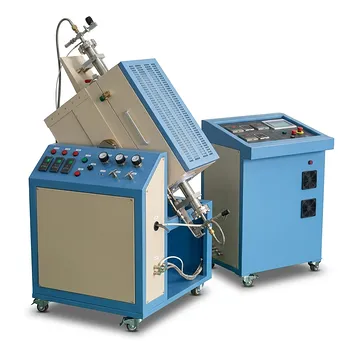
What role does a high-temperature tube furnace play in reducing titanium gypsum with pyrite? Achieve Pure Phase Results
Updated 3 months ago
The high-temperature tube furnace serves as a precision-controlled reactor that facilitates the redox reaction between titanium gypsum and pyrite. By maintaining a stable thermal field and a strictly controlled atmosphere (such as nitrogen), the furnace enables the chemical reduction of sulfates while ensuring the uniform nucleation and growth of the resulting mineral phases.
Core Takeaway: A high-temperature tube furnace is essential for providing the stable thermal environment and inert atmosphere required to drive the controlled redox reactions and phase transformations necessary to convert titanium gypsum and pyrite into stable, pure-phase materials.
Precision Thermal Control for Redox Reactions
Facilitating the Chemical Reduction
The primary role of the tube furnace is to provide the energy required for the controlled redox reaction between the sulfates in titanium gypsum and the iron disulfide in pyrite. At specific temperatures, such as 550°C, the furnace allows these components to interact chemically, facilitating the transformation of raw mineral waste into value-added products like hematite.
Ensuring Uniform Nucleation and Growth
The stable thermal field distribution within the furnace tube is critical for achieving a uniform particle size distribution. Consistent heat ensures that crystals, such as hematite nanoparticles, grow at a steady rate, typically reaching a precise size of approximately 45 nm without unwanted agglomeration.
Driving Phase Transformations
Beyond simple heating, the furnace provides the thermal energy necessary for atomic rearrangement. This process transitions materials from an amorphous or unstable state into highly crystalline, stable phases, which is vital for the material’s final chemical and physical properties.
Atmospheric Management and Phase Purity
Maintaining an Inert Environment
The ability to introduce gases like nitrogen or argon is a defining feature of the tube furnace in this process. An inert atmosphere prevents the oxidation of pyrite and titanium components, ensuring that the reduction process proceeds along the intended chemical pathway rather than reacting with atmospheric oxygen.
Reducing Structural Defects
Extended calcination periods at high temperatures (e.g., 770°C to 790°C) help to eliminate structural defects within the material. This continuous heating environment effectively reduces exciton-like traps and oxygen vacancies, which significantly improves the crystallinity and purity of the final powder.
Removing Impurities and Volatiles
The furnace facilitates the removal of residual organic impurities and moisture through a staged heating program. By precisely controlling the heating rate, the furnace allows gaseous byproducts to exit the material slowly, preventing structural damage such as cracks or pores.
Understanding the Trade-offs
Heating Rate vs. Material Integrity
While rapid heating can increase throughput, it often leads to thermal stress and defects like bloating or surface cracks. A slower, staged heating program is necessary for high-quality results but increases the overall energy consumption and processing time.
Atmospheric Precision vs. Operating Cost
Maintaining a high-purity nitrogen or vacuum environment is essential for preventing embrittlement or unwanted oxidation. However, the continuous flow of inert gases adds significant operational costs and requires sophisticated sealing and monitoring equipment.
Temperature Uniformity Challenges
In larger tube furnaces, maintaining a perfectly uniform temperature across the entire length of the tube can be difficult. Variations in the thermal field can lead to inconsistent grain sizes and mixed-phase compositions, potentially compromising the quality of the batch.
How to Apply This to Your Project
Recommendations for Success
- If your primary focus is phase purity and crystallinity: Use an extended calcination time at a stable temperature (above 750°C) under a continuous nitrogen flow to ensure complete atomic rearrangement.
- If your primary focus is nanoparticle size control: Prioritize a furnace with a highly stable thermal field distribution and maintain a lower calcination temperature (around 550°C) to prevent excessive grain growth.
- If your primary focus is preventing structural defects: Implement a multi-stage heating program with slow ramps to allow for the gradual decomposition and escape of volatile impurities.
- If your primary focus is preventing oxidation of the titanium matrix: Ensure the furnace is capable of maintaining a high vacuum or a strictly controlled inert gas environment throughout the entire heating and cooling cycle.
By mastering the intersection of precise thermal distribution and atmospheric control, the tube furnace transforms industrial byproducts into high-performance crystalline materials.
Summary Table:
| Feature | Role in Calcination Process | Key Benefit |
|---|---|---|
| Thermal Control | Precise heating at 550°C - 790°C | Facilitates redox reactions and phase purity |
| Atmosphere Management | Controlled N₂/Ar or Vacuum environments | Prevents oxidation and ensures chemical pathway |
| Stable Thermal Field | Uniform energy distribution | Controls crystal growth (e.g., 45nm nanoparticles) |
| Staged Heating | Multi-step ramp and soak programs | Removes impurities and prevents structural defects |
Elevate Your Material Research with THERMUNITS
Are you looking to optimize the reduction of industrial byproducts or advance your material science R&D? THERMUNITS is a leading manufacturer of high-temperature laboratory equipment, providing the precision and reliability required for complex calcination processes.
Our comprehensive range of thermal solutions—including Atmosphere Tube Furnaces, Vacuum Furnaces, Rotary Kilns, and CVD Systems—is designed to give you total control over thermal fields and atmospheric purity. Whether you are working on phase transformations, nanoparticle synthesis, or industrial waste recycling, we offer the technical expertise to enhance your lab's efficiency.
Ready to achieve superior heat treatment results?
Contact THERMUNITS Today for a Professional Consultation
References
- Genkuan Ren, Xiushan Yang. A Novel Fabrication of Hematite Nanoparticles via Recycling of Titanium Slag by Pyrite Reduction Technology. DOI: 10.3390/nano14161330
Mentioned Products
- High Temperature Tube Furnace 1500C with Sliding Flanges and 50mm OD for Rapid Thermal Processing Fast Heating and Cooling
- High Temperature 1700C Tube Furnace with High Vacuum Turbomolecular Pump System and Multi Channel Mass Flow Controller Gas Mixer
- 1750°C High Temperature Benchtop Vacuum Atmosphere Tube Furnace with Kanthal Super 1800 Heating Elements and 60mm Alumina Processing Tube
- High Temperature 1700C Benchtop Tube Furnace with 5 Inch Heating Zone High Purity Alumina Tube and Vacuum Sealing Flanges
- High Temperature Split Tube Furnace 1500C for Material Research Vacuum and Atmosphere Thermal Processing
People Also Ask
- How are high-temperature tube furnaces utilized to repair etching damage? Precision Lattice Restoration Solutions
- What core conditions does a high-temperature tube furnace provide for rGO aerogels? Mastering Precision Synthesis.
- What role does a high-temperature tube furnace play in CVD synthesis of silicon nanowires? Master VLS Growth Precision.
- How does precision tube furnace control influence CoFe nanoparticle formation? Master Your Bimetallic Synthesis.
- What role does a high-temperature tube furnace play in the sulfidation heat treatment of CoS@C/MXene nanocomposites? Guide

Tech Team · ThermUnits
Last updated on Jun 02, 2026
Related Products

High Temperature Tube Furnace 1500C with Sliding Flanges and 50mm OD for Rapid Thermal Processing Fast Heating and Cooling

High Temperature 1700C Tube Furnace with High Vacuum Turbomolecular Pump System and Multi Channel Mass Flow Controller Gas Mixer
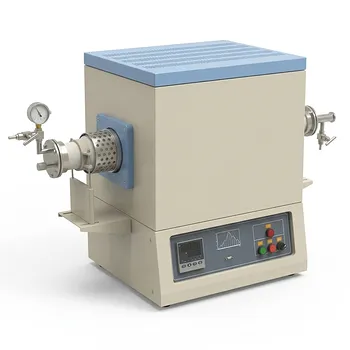
1750°C High Temperature Benchtop Vacuum Atmosphere Tube Furnace with Kanthal Super 1800 Heating Elements and 60mm Alumina Processing Tube

High Temperature 1700C Benchtop Tube Furnace with 5 Inch Heating Zone High Purity Alumina Tube and Vacuum Sealing Flanges
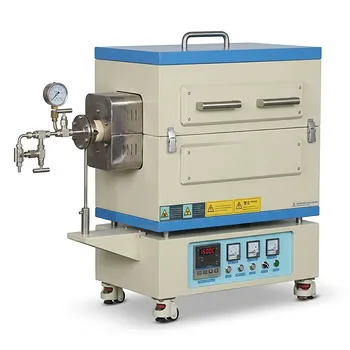
High Temperature Split Tube Furnace 1500C for Material Research Vacuum and Atmosphere Thermal Processing
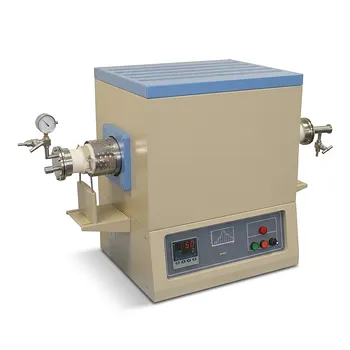
1700C High Temperature Alumina Tube Furnace with 18 Inch Heated Zone and Vacuum Sealing Flanges

1800C High Temperature Compact Vacuum Tube Furnace with 60mm OD Alumina Tube and Kanthal MoSi2 Heating Elements

Compact High Temperature 1600C Tube Furnace with 50mm Alumina Tube and Vacuum Flanges for Material Sintering
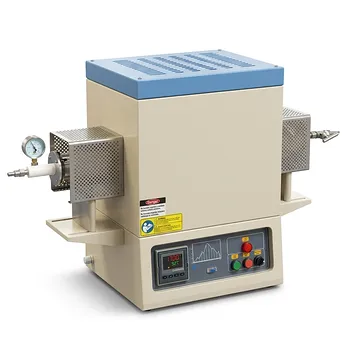
High Temperature Three Zone Tube Furnace 1700C with Alumina Tube and Water Cooled Flanges
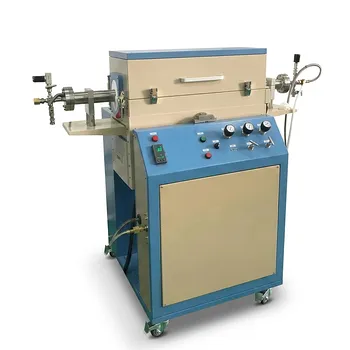
High Temperature Rocking Tube Furnace 1700°C Alumina Processing Tube with Precision Oscillation for Material Synthesis
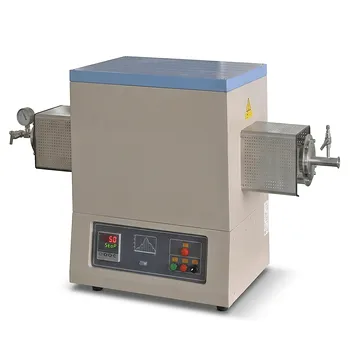
High Temperature 1700C Tube Furnace with 4 Inch OD Alumina Tube and Vacuum Sealing Flanges

High Temperature 1700C Vertical Tube Furnace for Powder Spherification and Material Sintering
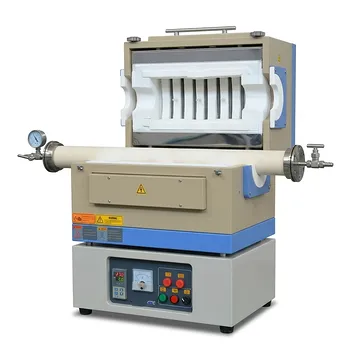
High Temperature 1600C Split Tube Furnace Vacuum Flanges Valves Optional 60mm 80mm Alumina Tube

High Temperature Automated 5 Inch Tube Furnace for Autonomous Material Research and Advanced Laboratory R&D

High Temperature 1700C Six Zone Split Tube Furnace with Alumina Tube and Water Cooled Flanges
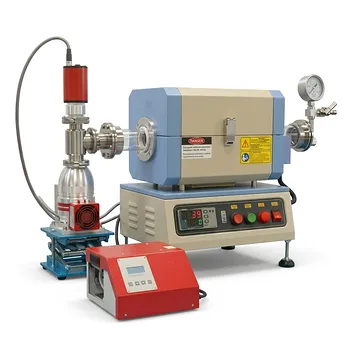
High Vacuum Compact Tube Furnace 1200C with Integrated Turbo Pump System and 8 Inch Heating Zone
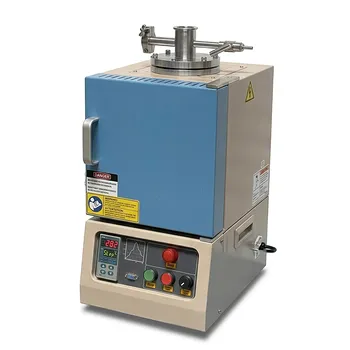
High Temperature Hybrid Muffle and Tube Furnace with Vacuum Capability and PID Control
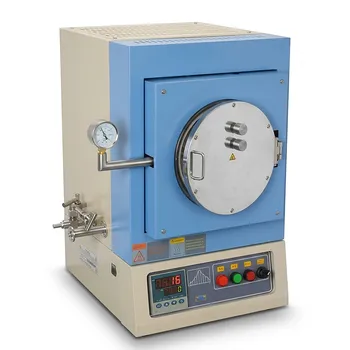
1100°C High Temperature Quartz Chamber Furnace 8 Inch OD with 7.6 Liter Capacity and Vacuum Atmosphere Capability

1100C Tube Furnace with Vacuum Flange and Programmable Temperature Controller for Material Science and Industrial Heat Treatment