Why must a controlled atmosphere tube furnace be used for the calcination of NiO/Ni catalysts? Engineer Core-Shell Success
Updated 3 months ago
The use of a controlled atmosphere tube furnace is essential for NiO/Ni catalysts because it allows for "incomplete calcination," a process that precisely regulates oxygen exposure to create a specific core-shell heterostructure. By strictly controlling the heating rate and gas composition, the furnace develops a high-activity nickel oxide (NiO) shell on the surface while preserving a metallic nickel (Ni) core for superior electrical conductivity.
A controlled atmosphere tube furnace provides the necessary precision to balance oxidative decomposition with the preservation of metallic phases and support integrity. This environmental control is the only way to engineer the specific grain sizes and metal-support interactions required for high-performance electrocatalysis and chemical reforming.
Engineering the Core-Shell Heterostructure
Preserving the Metallic Core
Standard calcination in an open-air muffle furnace often results in the total oxidation of nickel into NiO, which can sacrifice the material's internal conductivity.
A tube furnace allows for an incomplete calcination process where the air atmosphere is metered. This maintains a metallic nickel core that acts as a conductive pathway, while only the surface is transformed into an active oxide shell.
Creating High-Activity Surface Sites
The precise control of the oxygen-to-inert gas ratio ensures that the resulting nickel oxide shell possesses high electrocatalytic activity.
This unique concentric-ring core-shell heterostructure is only achievable when the oxidation front is halted at a specific depth through rigorous temperature and atmosphere management.
Managing Metal-Support Interactions
Preventing Support Degradation
Many Ni-based catalysts use sensitive supports like activated carbon or Titanium Nitride (TiN).
Using a tube furnace with an inert nitrogen flow prevents the oxidative combustion of carbon supports or the degradation of TiN during the high-temperature decomposition of metal nitrate precursors.
Controlling Grain Size and Dispersion
The furnace’s ability to follow precise heating curves directly determines the final grain size of the NiO nanoparticles.
Stable thermal uniformity ensures that the active components form nano-scale particles within the pores of supports like $\gamma-Al_2O_3$ rather than agglomerating into large, inactive clusters.
Chemical Transformation and Phase Control
Facilitating Partial Reduction
In some applications, such as methane dry reforming, the furnace is used to manage the partial reduction of nickel species within complex structures like NiAl2O4 spinels.
The controlled environment allows for the birth of catalytically active metallic nickel (Ni0) nanoparticles without destroying the underlying carrier framework.
Pre-sulfidation and Coordination
For catalysts requiring a sulfide phase (Ni-Mo-S), the tube furnace regulates the $H_2S/H_2$ gas mixture flow and pressure.
This precision induces the formation of specific Fe-N coordination structures or sulfide phases that are critical for hydrodesulfurization activity.
Understanding the Trade-offs
Complexity of Gas Management
While a controlled atmosphere furnace provides superior precision, it introduces significant operational complexity.
Users must carefully manage gas flow rates and pressures, as even minor fluctuations can lead to over-oxidation or unintended reduction, ruining the catalyst's heterostructure.
Thermal Lag and Scaling
The enclosed nature of a tube furnace can lead to thermal gradients if the sample mass is too large.
This means that while it is perfect for high-precision lab-scale synthesis, translating these exact atmospheric conditions to large-scale production requires highly sophisticated engineering to ensure uniformity across the entire catalyst bed.
How to Apply This to Your Project
Selecting the Right Parameters
Success with a controlled atmosphere tube furnace depends on aligning your gas environment with your specific catalyst support and desired nickel phase.
- If your primary focus is electrical conductivity: Use an inert gas ramp with a limited air dwell time to preserve the metallic nickel core while forming a thin NiO shell.
- If your primary focus is maximum surface area on porous supports: Utilize a slow heating rate (low ${^\circ}$C/min) under a steady nitrogen flow to prevent nanoparticle agglomeration within the pores.
- If your primary focus is using carbon-based supports: Ensure the furnace is completely purged of oxygen before exceeding 300°C to prevent the loss of your support material through combustion.
By mastering the atmosphere and thermal profile of the tube furnace, you can transition from simple material heating to precise atomic-level engineering of the NiO/Ni interface.
Summary Table:
| Key Feature | Benefit for NiO/Ni Catalysts | Technical Outcome |
|---|---|---|
| Atmosphere Control | Regulates "incomplete calcination" | Creates NiO shell while preserving Ni core |
| Precise Heating Ramps | Prevents nanoparticle agglomeration | Ensures uniform nano-scale grain size |
| Inert Gas Purging | Protects sensitive supports (C, TiN) | Prevents oxidative combustion of carriers |
| Phase Management | Facilitates partial reduction | Optimizes metal-support interactions |
Elevate Your Catalyst Research with THERMUNITS
Precision in atmosphere and temperature is the foundation of high-performance material science. THERMUNITS is a leading manufacturer of high-temperature laboratory equipment for industrial R&D. Our specialized controlled atmosphere tube furnaces are engineered to provide the exact environmental stability required for complex NiO/Ni heterostructures and sensitive support materials.
From Vacuum and Atmosphere Tube Furnaces to CVD/PECVD systems and Vacuum Induction Melting (VIM) units, we offer a comprehensive range of thermal processing solutions tailored to your laboratory's needs.
Ready to optimize your heat treatment process? Contact THERMUNITS Today to Discuss Your Project
References
- Cong Xiang, Xiaomei Cheng. Efficient synergism of concentric ring structures and carbon dots for enhanced methanol electro-oxidation. DOI: 10.1039/d4ra04685d
Mentioned Products
- 1200°C Atmosphere Controlled Automatic Bottom Loading Furnace with 6 Inch Quartz Tube
- Compact Vertical Split Quartz Tube Furnace with Stainless Steel Vacuum Flanges for Rapid Thermal Quenching and Controlled Atmosphere Material Processing
- Compact Hybrid Muffle and Tube Furnace for 1000C Controlled Atmosphere Laboratory Material Sintering
- 1200C Hybrid Muffle and Tube Furnace for Material Research with Dual Atmosphere Control Quartz Tubes
- 1650C High Temperature Atmosphere Controlled Box Furnace with 65L Chamber for Advanced Material Sintering and Industrial Heat Treatment
People Also Ask
- Why is a tube furnace required for FGM-PhG structural color ceramics? Key to Carbon Preservation & Vibrant Color
- Why is an atmosphere-controlled tube furnace required for 800 °C CNF annealing? Essential for Oxidative Protection.
- Why is an atmosphere-controlled tube furnace required for the pre-sulfidation of NiMo/gamma-Al2O3 catalysts?
- Why is an atmosphere-controlled tube furnace required for [email protected]/C preparation? Key for Purity & Structure
- Why is an atmosphere-controlled tube furnace required for single-atom sensor calcination? Ensure Atomic Dispersion.

Tech Team · ThermUnits
Last updated on Jun 02, 2026
Related Products
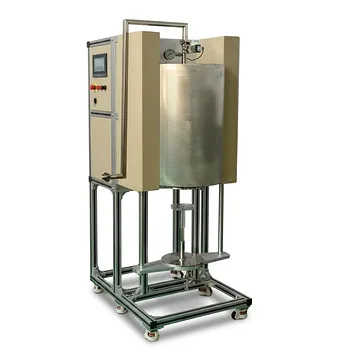
1200°C Atmosphere Controlled Automatic Bottom Loading Furnace with 6 Inch Quartz Tube
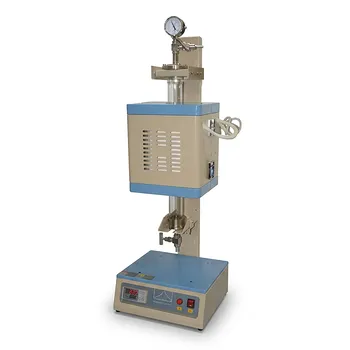
Compact Vertical Split Quartz Tube Furnace with Stainless Steel Vacuum Flanges for Rapid Thermal Quenching and Controlled Atmosphere Material Processing
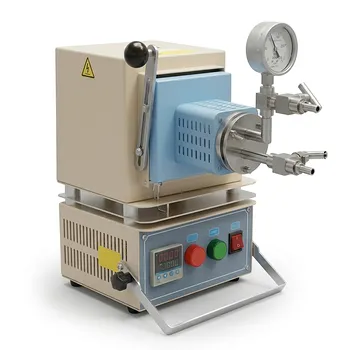
Compact Hybrid Muffle and Tube Furnace for 1000C Controlled Atmosphere Laboratory Material Sintering
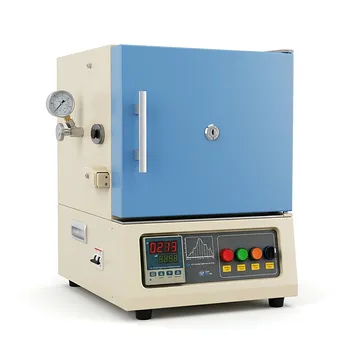
1200C Hybrid Muffle and Tube Furnace for Material Research with Dual Atmosphere Control Quartz Tubes
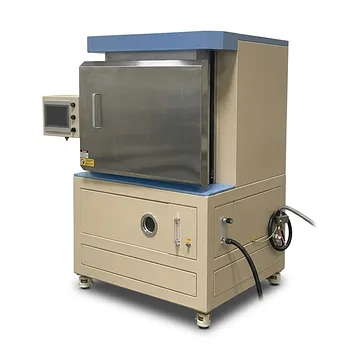
1650C High Temperature Atmosphere Controlled Box Furnace with 65L Chamber for Advanced Material Sintering and Industrial Heat Treatment
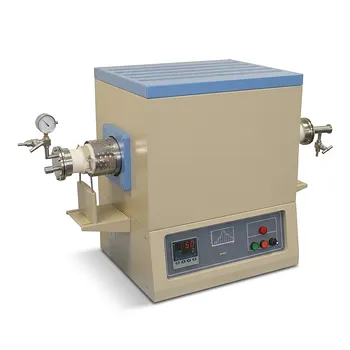
1700C High Temperature Alumina Tube Furnace with 18 Inch Heated Zone and Vacuum Sealing Flanges
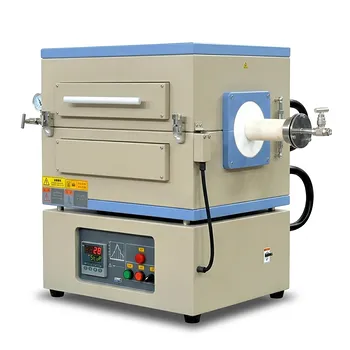
1500°C Split Tube Furnace with Alumina Tube and Vacuum Sealing Flanges for Material Research
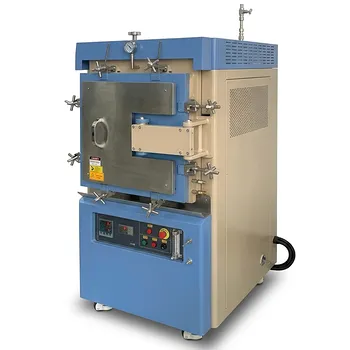
Atmosphere Controlled Muffle Furnace 1700C Maximum Temperature 80L High Capacity Vacuum Inert Gas Box Furnace
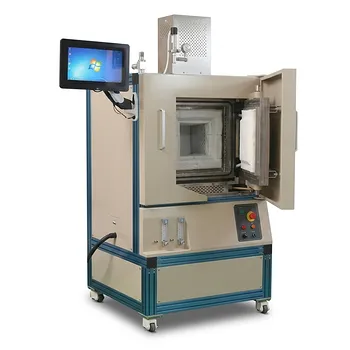
High Temperature Oxygen and Inert Atmosphere Controlled Furnace 8 Liter 1700C Sintering System for Advanced Materials RD
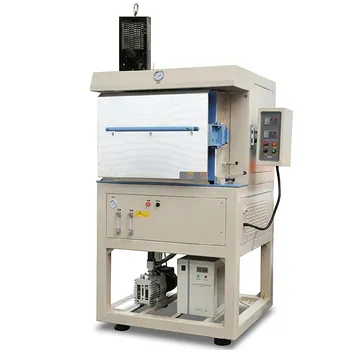
1200C Hydrogen Atmosphere Box Furnace with 5 Heated Sides and 64L Chamber

Vertical 1700C Vacuum and Atmosphere Tube Furnace with 80mm Alumina Tube
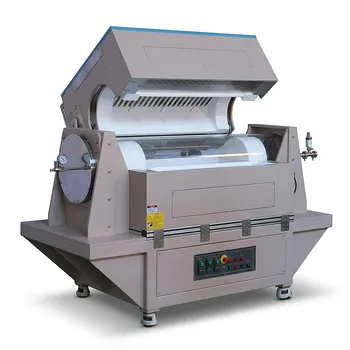
Three Zone Tube Furnace with 11 Inch or 15 Inch Quartz Tube and Hinged Flanges for Vacuum Atmosphere Heat Treatment
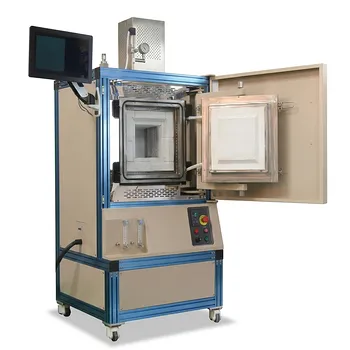
High Temperature Hydrogen Atmosphere Box Furnace 1650C Max Reducing Environment Material Synthesis System 8x8x8 Chamber

High Temperature 1700C Tube Furnace with High Vacuum Turbomolecular Pump System and Multi Channel Mass Flow Controller Gas Mixer
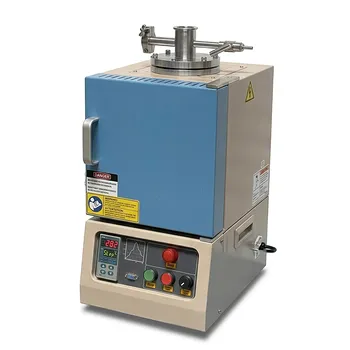
High Temperature Hybrid Muffle and Tube Furnace with Vacuum Capability and PID Control
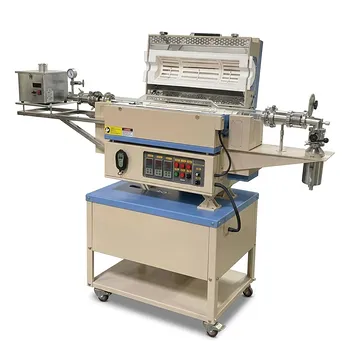
5 Inch Rotary Tube Furnace with Automatic Feeding and Receiving System 1200C Three Zone CVD Powder Processing
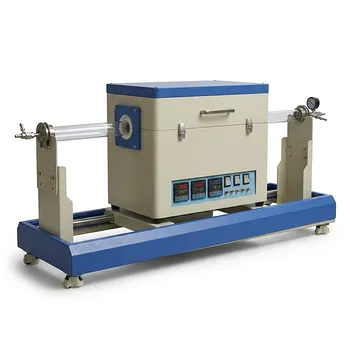
Double Temperature Zone Double Cover Tube Furnace for High Temperature CVD and Vacuum Annealing
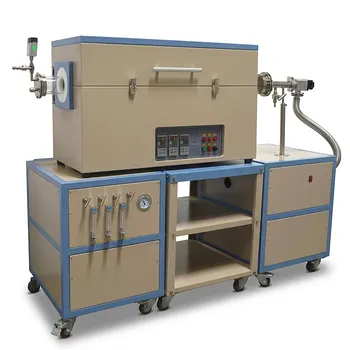
Three Zone Quartz Tube Furnace with 3 Channel Gas Mixer Vacuum Pump and Anti Corrosive Vacuum Gauge
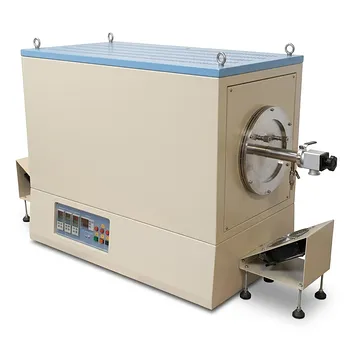
Four Zone Tube Furnace 1100C with 600mm Large Diameter Quartz Tube and Vacuum Flanges
