Why must MoS2 samples undergo high vacuum dehydration? Key to a-IGZO Heterojunction Stability
Updated 3 months ago
The dehydration of Molybdenum Disulfide ($MoS_2$) in a high vacuum is a mandatory step to ensure the electronic stability and interface quality of the resulting heterojunction. By removing adsorbed water and oxygen molecules, this process prevents the formation of charge-trapping sites that would otherwise cause significant device instability and degrade performance.
Dehydration in a high vacuum environment creates a pristine interface for the $MoS_2$/a-IGZO heterojunction by eliminating interfacial moisture. This step is essential because moisture is the primary driver of charge trapping, which leads to unpredictable behavior and poor carrier transport in 2D semiconductor devices.
Eliminating Interfacial Contaminants
Desorption of Water and Oxygen Molecules
A high vacuum chamber provides an extremely low-pressure environment that facilitates the thorough desorption of molecules from the $MoS_2$ surface. This ensures that the thin film is chemically "clean" before the subsequent a-IGZO layer is deposited.
Preventing Oxidative Contamination
Removing residual air from the environment prevents the unintended oxidation of the $MoS_2$ film and its precursors. Maintaining high purity is essential for preserving the optimal electronic characteristics required for high-performance transistors.
Establishing a Repeatable Starting Condition
Evacuating the chamber provides a consistent physical environment for carrier gas control and thin film growth. This repeatability is critical for achieving uniform results across different fabrication batches.
Enhancing Device Performance and Stability
Mitigation of Charge-Trapping Sites
Moisture at the interface between $MoS_2$ and a-IGZO creates charge-trapping sites. These sites capture and release carriers, leading to device instability and hysteresis in phototransistors.
Optimizing Carrier Transport Efficiency
A clean, dehydrated heterojunction interface allows for the seamless movement of charge carriers between the two materials. This lack of interference significantly enhances the overall efficiency of the carrier transport process.
Ensuring High-Crystalline Quality
Precise control of the vacuum and thermal environment during the synthesis phase ensures the $MoS_2$ recrystallizes into high-quality structures, such as the 2H phase. Dehydration is a key component of this environmental control, ensuring the final product is free of performance-limiting defects.
Understanding the Trade-offs
The Risk of Residual Impurities
Relying solely on a single vacuum pull can be insufficient, as trace amounts of moisture may remain. Effective dehydration often requires multiple evacuation-filling cycles with high-purity nitrogen to ensure the complete elimination of air and impurities.
Influence on Lattice Defects
While vacuum environments are necessary for cleanliness, extremely low pressures can alter gas transport and reaction kinetics. In some cases, this can induce high-density sulfur vacancy defects, which may require careful management to avoid unintended changes to the material's electronic properties.
Practical Recommendations for Sample Preparation
How to Apply This to Your Project
- If your primary focus is device stability: Prioritize a high vacuum state to ensure the complete removal of moisture, which is the leading cause of charge trapping.
- If your primary focus is material purity: Implement multiple nitrogen purging cycles alongside high-vacuum pumping to eliminate oxygen and residual atmospheric contaminants.
- If your primary focus is maximizing mobility: Ensure the dehydration process occurs immediately before the deposition of the a-IGZO layer to maintain the most pristine interface possible.
Mastering the vacuum environment is the fundamental requirement for building reliable, high-performance heterojunctions in 2D-material electronics.
Summary Table:
| Dehydration Factor | Impact on Material | Device Performance Benefit |
|---|---|---|
| High Vacuum Environment | Desorption of H2O and O2 molecules | Creates a pristine, contaminant-free interface |
| Nitrogen Purging | Elimination of residual atmospheric air | Ensures high chemical purity and repeatability |
| Thermal Control | Recrystallization (e.g., 2H phase) | Enhances crystalline quality and reduces defects |
| Moisture Removal | Mitigation of charge-trapping sites | Eliminates hysteresis and improves carrier transport |
Optimize Your Thin-Film Research with THERMUNITS
Achieving the perfect high-vacuum environment is crucial for building reliable, high-performance 2D-material electronics. THERMUNITS is a leading manufacturer of high-temperature laboratory equipment, providing the precision tools necessary for advanced material science and industrial R&D.
Our comprehensive range of thermal processing solutions includes:
- Vacuum & Atmosphere Furnaces for moisture-free sample preparation.
- CVD/PECVD Systems for high-quality thin-film deposition.
- Tube, Muffle, & Rotary Furnaces for versatile heat treatments.
- Specialized Solutions: Hot Press, Vacuum Induction Melting (VIM), and Dental Furnaces.
Ensure the electronic stability and interface quality of your samples with our industry-leading technology. Contact THERMUNITS today to find the perfect solution for your lab!
References
- Jidong Jin, Jaekyun Kim. Improved Process Stability and Light Detection in Phototransistors via Inverted MoS<sub>2</sub>/a‐IGZO Heterojunction Integration. DOI: 10.1002/pssa.202400536
Mentioned Products
- High Vacuum Pressure Chamber Furnace 800C 3.5 Bar Sintering System for Superconducting Materials
- High Temperature Cold Wall High Vacuum Chamber Furnace 1400C for Advanced Material Processing
- Compact High Vacuum Box Furnace 1050C Max 6.2L Ceramic Chamber Stainless Steel Shell Programmable Temperature Controller for Material Science Research
- High Temperature 1000C Vacuum Furnace with 8 Inch ID Chamber for Material Sintering and Research Annealing
- 1100C High Temperature Vacuum Crucible Furnace with Quartz Chamber for Thermal Processing and Sintering
People Also Ask
- How does a vacuum or atmosphere sintering furnace contribute to the congener-welding process of carbon nitride membranes?
- What Role Does a Vacuum Sintering Furnace Play in Ni-Mn-Ga Alloy Fabrication? Optimizing Porous Structures
- How does vacuum hot pressing improve the quality of sputtering targets? Achieve High Density & Purity for Thin-Films
- What role does a high-vacuum tube sintering furnace play in NAB composites? Enhance Density and Phase Control.
- What are the advantages of vacuum sintering in powder metallurgy? Achieve Superior Purity and Near-Theoretical Density

Tech Team · ThermUnits
Last updated on Jun 03, 2026
Related Products
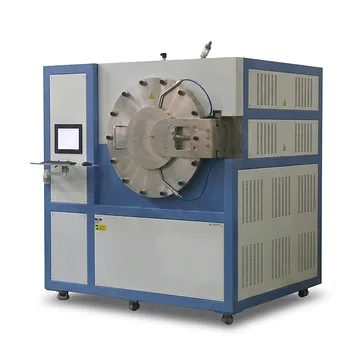
High Vacuum Pressure Chamber Furnace 800C 3.5 Bar Sintering System for Superconducting Materials
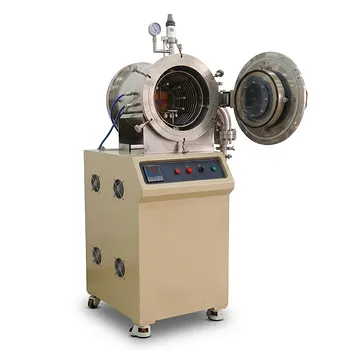
High Temperature Cold Wall High Vacuum Chamber Furnace 1400C for Advanced Material Processing
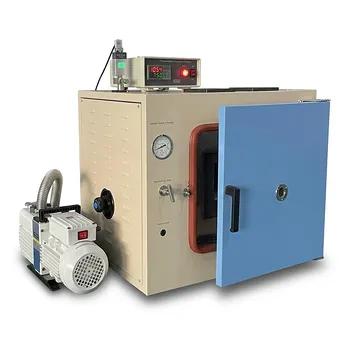
Compact High Vacuum Box Furnace 1050C Max 6.2L Ceramic Chamber Stainless Steel Shell Programmable Temperature Controller for Material Science Research
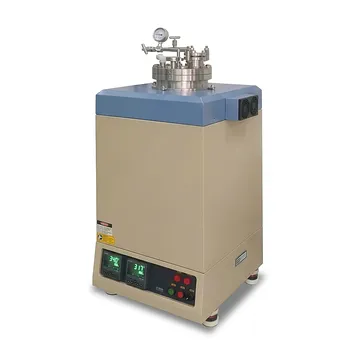
High Temperature 1000C Vacuum Furnace with 8 Inch ID Chamber for Material Sintering and Research Annealing
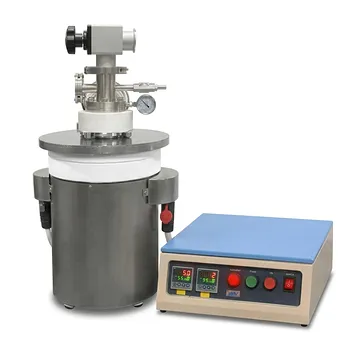
1100C High Temperature Vacuum Crucible Furnace with Quartz Chamber for Thermal Processing and Sintering
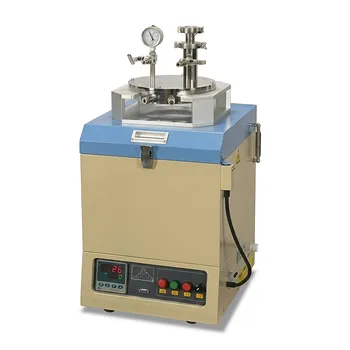
Vertical Vacuum Furnace 1100C High Temperature 8 Inch Quartz Chamber Water Cold Flange System
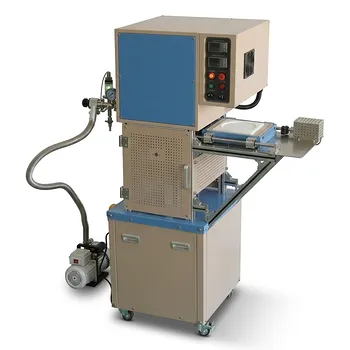
1200°C Bottom Loading Vacuum Furnace with Rapid Gas Cooling and 8.6 Inch Diameter Quartz Chamber
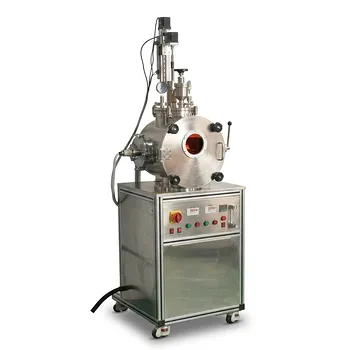
High Vacuum Melting Casting Furnace with Mechanical Stirring and Secondary Charge for Metallic Alloy Research
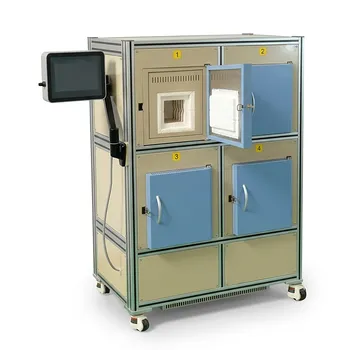
High Temperature Four Chamber Box Furnace for High Throughput Materials Research and Space Saving Thermal Processing

High Vacuum Compact Tube Furnace 1200C with Integrated Turbo Pump System and 8 Inch Heating Zone
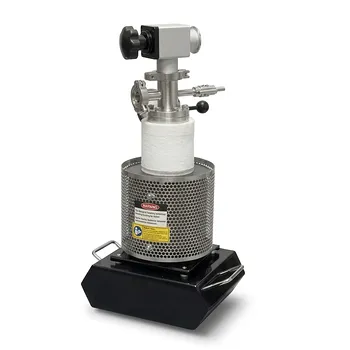
High Temperature 1100C Compact Top Loading Vertical Vacuum Tube Furnace for High Vacuum Noble Metal Melting and Material Research
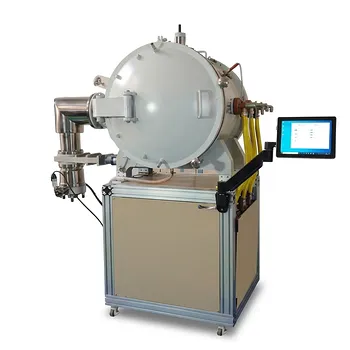
High Temperature Cold Wall Vacuum Furnace for Advanced Material Sintering and Annealing 1600C Heating Area 200x200x300mm
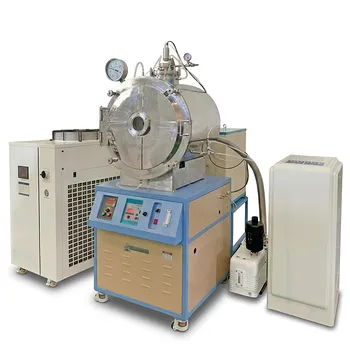
Ultra High Temperature Induction Heated Vacuum Furnace with Molten Salt Electrolysis Capability and 3000 Degree Precision Control
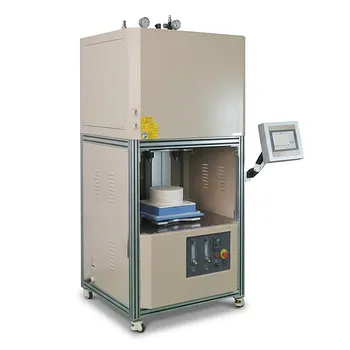
High Temperature Vertical Atmosphere Controlled Furnace 1700C Automatic Bottom Loading 13 Liter Vacuum Thermal System

1800C High Temperature Compact Vacuum Tube Furnace with 60mm OD Alumina Tube and Kanthal MoSi2 Heating Elements
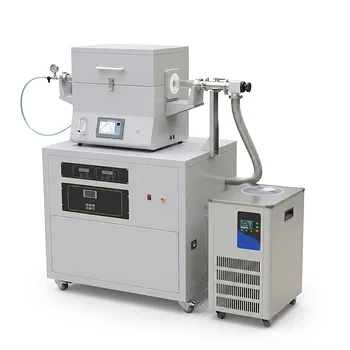
Split Chamber CVD Tube Furnace with Vacuum Station Chemical Vapor Deposition System Machine
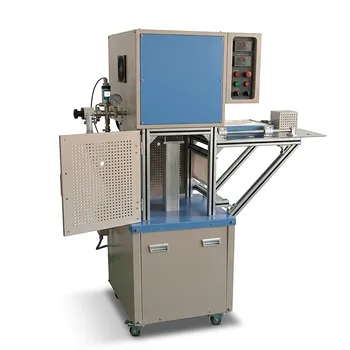
Bottom Loading Vacuum Furnace 1200C Rapid Cooling Atmosphere Control Quartz Chamber
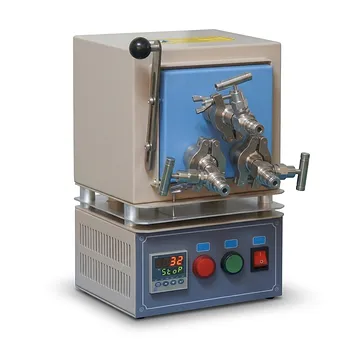
Triple Tube Compact Hybrid Muffle Furnace 1000C High Vacuum Thermal Processing System
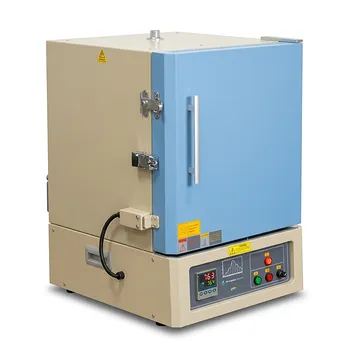
Large Capacity 1200C Muffle Furnace 64 Liter Chamber with Digital PID Controller and Built In Venting Port