Why must the crystallization process of BNBT-xBMN thin films be conducted in a high-temperature Tubular Furnace at 700°C?
Updated 3 months ago
The 700°C crystallization process is the definitive stage where BNBT-xBMN thin films transition from an amorphous precursor into a functional ceramic. At this specific temperature, the tubular furnace provides the thermal energy required for atoms to rearrange into the perovskite lattice. This structural transformation is mandatory to unlock the material's ferroelectric, dielectric, and piezoelectric properties.
Core Takeaway: Conducting crystallization at 700°C within a high-precision tubular furnace is essential to ensure the formation of a dense, low-defect perovskite structure. This process eliminates interlaminar stress and optimizes grain growth, which are the primary drivers of superior ferroelectric polarization and energy storage stability.
Driving Structural Transformation
Achieving the Perovskite Phase
The primary reason for the 700°C environment is to trigger the crystalline phase transition. At this temperature, the amorphous precursor layer gains enough thermal energy to rearrange into a typical perovskite structure.
This specific atomic arrangement is what grants the BNBT-xBMN film its piezoelectric activity. Without reaching this thermal threshold, the film remains functionally inert or exhibits significantly degraded electrical properties.
Orientation and Lattice Integration
Precise temperature control at 700°C, often combined with specific buffer layers, induces a preferred [001] orientation within the film. This alignment is fundamental for achieving high piezoelectric performance and uniform crystallinity throughout the material.
Furthermore, this thermal energy allows for the effective incorporation of dopants, such as neodymium ions, into the lattice. This creates necessary crystal defects and controls grain size to optimize the film's functional activity.
The Role of Tubular Furnace Precision
Thermal Field Stability and Defect Reduction
A high-temperature tubular furnace is utilized because it offers exceptional thermal field stability. Maintaining a uniform temperature distribution is critical to prevent local thermal stress, which can lead to micro-cracks during the cooling or heating phases.
By ensuring a stable environment, the furnace facilitates full crystallization while maintaining a low defect density. Fewer defects directly translate to higher ferroelectric polarization intensity and improved dielectric properties.
Controlled Pyrolysis and Heating Rates
Before crystallization, the furnace manages a pyrolysis stage at approximately 410°C. Using controllable heating curves, it ensures the complete decomposition of organic additives and solvent residues.
Removing these organics is vital for establishing a dense foundation. If the heating rate (typically around 5°C/min) is not strictly controlled, residual organics can cause structural voids that undermine the film's final integrity.
Enhancing Dielectric and Energy Storage Performance
Stress Relief and Grain Growth
The 700°C process also serves as an annealing step that eliminates residual interlaminar stress. This stress is naturally generated during the multi-layer coating process and must be neutralized to prevent delamination.
This stage further optimizes grain growth, increasing the overall density of the BNBT-xBMN film. A denser film is more robust and capable of withstanding higher electrical loads.
Impact on Breakdown Field Strength
A high film density, achieved through precise crystallization, is vital for enhancing the Breakdown Field Strength (BDS). By minimizing structural gaps and defects, the film can store more energy without failing.
This optimization is the key to achieving long-term energy storage stability. Consistent 700°C processing ensures that the film performs reliably under high-voltage applications over time.
Critical Constraints and Potential Pitfalls
The Risk of Thermal Gradients
Inconsistent heating within the furnace chamber can lead to non-uniform crystallinity. If one section of the film crystallizes faster than another, the resulting internal strain can cause the film to peel or crack.
Managing Organic Outgassing
If the temperature ramps too quickly toward 700°C without a proper pyrolysis dwell, trapped organics may outgas violently. This creates micro-pores, which significantly lower the dielectric constant and weaken the material's insulation properties.
Phase Impurity
Deviating from the 700°C setpoint can result in unwanted phase transitions. For example, excessive heat might induce secondary phases that interfere with the perovskite symmetry, thereby reducing the total ferroelectric polarization.
Implementing Precise Thermal Processing
The success of BNBT-xBMN thin film production depends on the rigorous application of thermal energy to meet specific performance targets.
- If your primary focus is Ferroelectric Polarization: Ensure the tubular furnace maintains maximum thermal field stability to minimize lattice defects and promote full perovskite formation.
- If your primary focus is Energy Storage Density: Prioritize the annealing aspect of the 700°C cycle to maximize grain density and eliminate interlaminar stress, which directly boosts breakdown field strength.
- If your primary focus is Piezoelectric Sensitivity: Utilize a precise 5°C/min heating rate to induce the preferred [001] crystal orientation and ensure proper ion incorporation into the lattice.
By mastering the 700°C crystallization window, you ensure the structural integrity and functional excellence required for advanced electronic applications.
Summary Table:
| Process Parameter | Impact on BNBT-xBMN Film | Key Benefit achieved |
|---|---|---|
| 700°C Thermal Energy | Triggers amorphous-to-perovskite phase transition | Unlocks ferroelectric & piezoelectric activity |
| Tubular Thermal Stability | Eliminates local thermal stress & micro-cracks | High film density & low defect concentration |
| Controlled Pyrolysis | Complete decomposition of organic additives | Prevents structural voids & improves insulation |
| Annealing Effect | Neutralizes residual interlaminar stress | Enhanced breakdown field strength (BDS) |
| 5°C/min Heating Rate | Induces preferred [001] lattice orientation | Optimized grain growth & performance uniformity |
Elevate Your Material Research with THERMUNITS Precision
Achieving the perfect perovskite lattice in BNBT-xBMN thin films requires uncompromising thermal control. THERMUNITS is a leading manufacturer of high-temperature laboratory equipment for material science and industrial R&D. We provide the high-precision thermal solutions necessary to eliminate defects and maximize the energy storage potential of your advanced materials.
Our comprehensive range includes:
- Advanced Furnaces: Tube, Muffle, Vacuum, Atmosphere, Rotary, and Hot Press furnaces.
- Specialized Systems: CVD/PECVD systems, Dental Furnaces, and Vacuum Induction Melting (VIM) furnaces.
- Support: High-quality Thermal Elements and custom laboratory heat treatment equipment.
Ready to optimize your crystallization process? Contact our technical team today to discover how our tailored thermal solutions can enhance your lab's efficiency and material performance.
References
- Jianhua Wu, Yong Li. Excellent Energy Storage and Photovoltaic Performances in Bi0.45Na0.45Ba0.1TiO3-Based Lead-Free Ferroelectricity Thin Film. DOI: 10.3390/ceramics7030068
Mentioned Products
- High Temperature 1700C Vertical Split Tube Furnace for Material Quenching and Single Crystal Growth
- High Temperature 1700C Vertical Tube Furnace for Powder Spherification and Material Sintering
- Compact High Temperature 1600C Tube Furnace with 50mm Alumina Tube and Vacuum Flanges for Material Sintering
- 950C Rapid Thermal Processing Furnace for 12 Inch Wafer CSS Coating with Rotating Substrate Holder
- High Temperature Tube Furnace 1500C with Sliding Flanges and 50mm OD for Rapid Thermal Processing Fast Heating and Cooling
People Also Ask
- What is the primary function of a high-temperature split tube furnace in nitrogen metastable particle research? Expert Guide
- What role does a high-temperature vertical tube furnace play in simulating high-carbon ferromanganese slag formation?
- Why integrate a vertical split tube furnace with hydraulic loading for HSECC? Essential for In-Situ Fire Simulation.
- What functions does a vertical high-temperature tube furnace perform? Master Industrial Sintering & R&D Simulation
- What is the role of a split vertical tube furnace during flash sintering of 8YSZ and 20SDC? Master Ultra-Fast R&D

Tech Team · ThermUnits
Last updated on Jun 03, 2026
Related Products
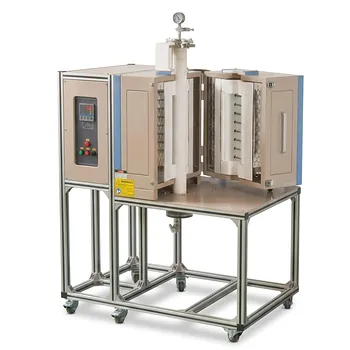
High Temperature 1700C Vertical Split Tube Furnace for Material Quenching and Single Crystal Growth

High Temperature 1700C Vertical Tube Furnace for Powder Spherification and Material Sintering

Compact High Temperature 1600C Tube Furnace with 50mm Alumina Tube and Vacuum Flanges for Material Sintering
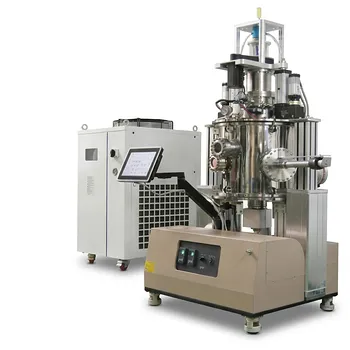
950C Rapid Thermal Processing Furnace for 12 Inch Wafer CSS Coating with Rotating Substrate Holder

High Temperature Tube Furnace 1500C with Sliding Flanges and 50mm OD for Rapid Thermal Processing Fast Heating and Cooling

High Temperature 1700C Tube Furnace with High Vacuum Turbomolecular Pump System and Multi Channel Mass Flow Controller Gas Mixer

1800C High Temperature Compact Vacuum Tube Furnace with 60mm OD Alumina Tube and Kanthal MoSi2 Heating Elements

High Temperature Automated 5 Inch Tube Furnace for Autonomous Material Research and Advanced Laboratory R&D

1750°C High Temperature Benchtop Vacuum Atmosphere Tube Furnace with Kanthal Super 1800 Heating Elements and 60mm Alumina Processing Tube

High Temperature 1700C Benchtop Tube Furnace with 5 Inch Heating Zone High Purity Alumina Tube and Vacuum Sealing Flanges
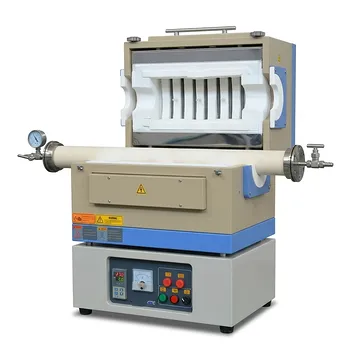
High Temperature 1600C Split Tube Furnace Vacuum Flanges Valves Optional 60mm 80mm Alumina Tube
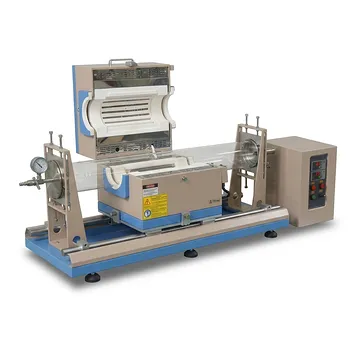
1200C High Temperature 5 Inch Sliding Tube Furnace for Rapid Thermal Processing RTP and Wafer Annealing
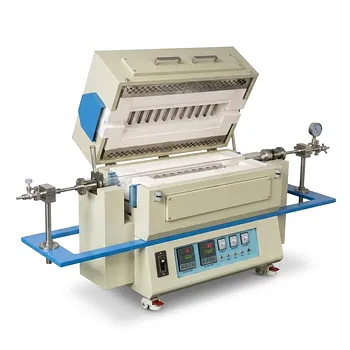
High Temperature Dual Zone Rotating Tube Furnace 1500C Silicon Carbide Heating for Advanced Material Synthesis
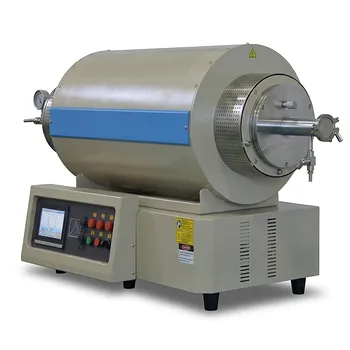
1200C Max Three Zone Tube Furnace 6 Inch OD Max with Tube and Flange
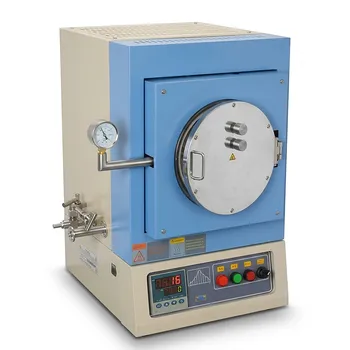
1100°C High Temperature Quartz Chamber Furnace 8 Inch OD with 7.6 Liter Capacity and Vacuum Atmosphere Capability
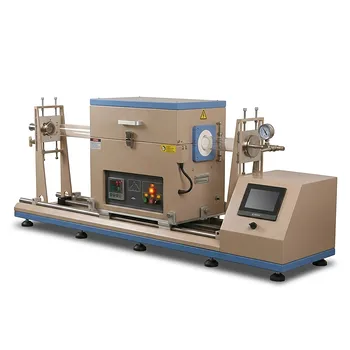
1200C Sliding Tube Furnace for Rapid Thermal Processing and CVD Graphene Growth with 100mm OD Capacity
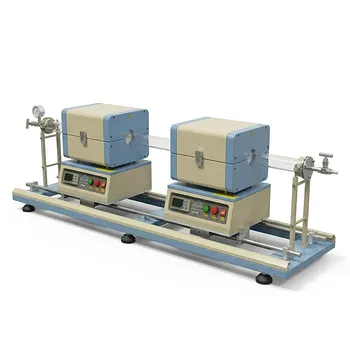
1200C Max Dual Sliding Tube Furnace with 50 mm Tube Flanges for CVD
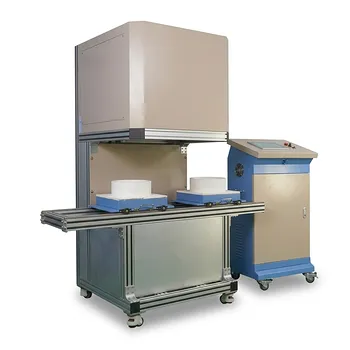
High Temperature Bottom Loading Vertical Furnace 1700C Dual Stage Sample Processing System 18L Large Capacity Thermal Treatment Equipment

Vertical 1700C Vacuum and Atmosphere Tube Furnace with 80mm Alumina Tube
