Atomic Choreography: The Tube Furnace and the Architecture of 2D Materials
Jun 19, 2026
The Invisible Scaffold
In material science, we often talk about the finished product—the 2D nanosheet—as if it appeared by magic. We celebrate its conductivity, its transparency, and its strength.
But for a 2D perovskite oxide to exist, it must first be "born" in a precursor state. This precursor is a high-stakes architectural project. If the lattice isn't perfect at the atomic level, the subsequent exfoliation won't just be difficult; it will be impossible.
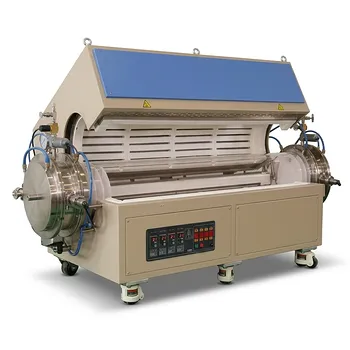
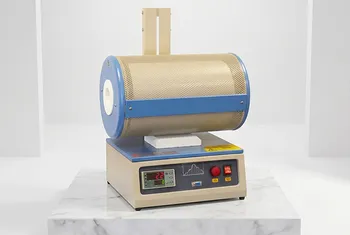
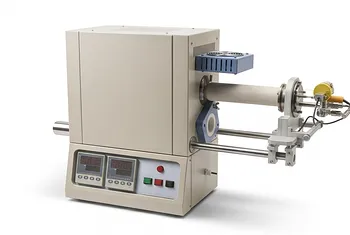
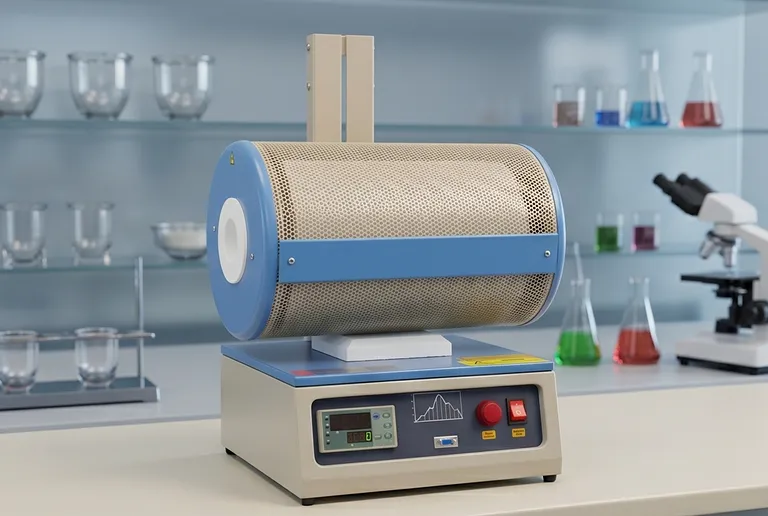
The tube furnace is the site of this birth. It is not merely a heater; it is a high-precision reactor where entropy is forced into order.
The Physics of Patience
Chemistry on a chalkboard is instantaneous. Chemistry in a crucible is a test of patience. To synthesize precursors like those derived from potassium carbonate and niobium pentoxide, we move into the realm of Solid-State Sintering.
At 1200°C, atoms don't just move; they migrate. This is solid-state diffusion. The furnace provides the activation energy for ions to cross grain boundaries and find their rightful place in a layered crystalline structure.
Without this sustained energy, the material remains a chaotic mixture of raw oxides. With it, it becomes a blueprint for a 2D world.
The Mechanics of Mastery
- Diffusion Driven by Heat: High temperatures break existing atomic bonds, allowing multi-component metals to merge.
- Stoichiometric Integrity: Managing the "A-site" cations is a balancing act. If the furnace fluctuates, volatile elements like potassium vanish into the atmosphere, ruining the ratio.
- Layered Geometry: A 2D material requires a perfectly ordered "stacked" lattice. The furnace allows these atoms to reach their most thermodynamically stable positions.
The Margin for Error
In engineering, as in medicine, the "system" is what saves us. A researcher might know the chemistry, but the furnace manages the variables that a human cannot.
Consider the Heating Curve. Why 2°C per minute? Because materials, like people, do not respond well to sudden trauma. Rapid heating creates internal thermal stress.
A controlled ramp prevents cracks and structural defects that would later cause the 2D sheet to crumble.
Critical Processing Variables
| Variable | Technical Role | Consequence of Failure |
|---|---|---|
| Soak Time | Morphology tuning | Inconsistent grain growth |
| Atmosphere | Preventing oxidation | Phase impurities / Contamination |
| Thermal Gradient | Uniformity of the batch | Variable stoichiometry across the sample |
| Cooling Rate | Quenching phases | Loss of metastable structures |
The Psychology of Precision
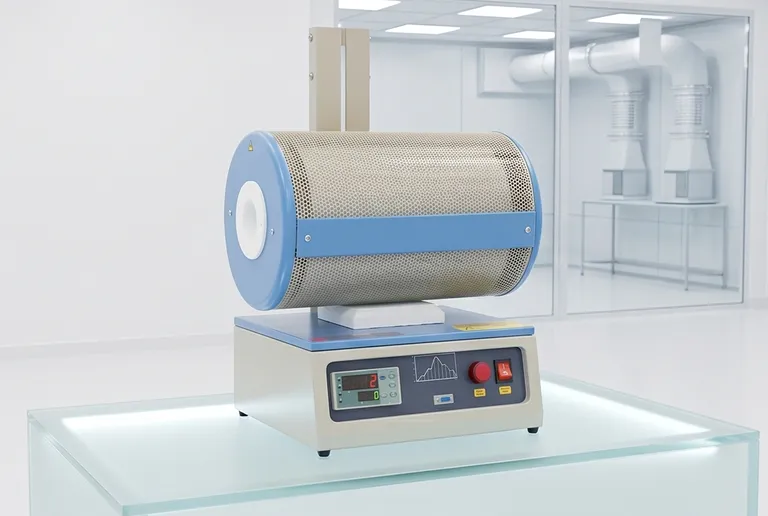
There is a specific kind of "engineer’s romance" in the sealed tube of a furnace. It is a closed system—an isolated environment where we control the very air the material breathes.
Whether using Argon to prevent oxidation or managing the vapor pressure of volatile alkali metals, the tube furnace acts as a guardian of purity. It protects the material from the messy, unpredictable world outside.
As we scale from milligram research to high-throughput production, the challenge shifts from making the material to replicating it. Consistency is the only metric that matters in the transition from the laboratory to the industry.
Choosing the Vessel
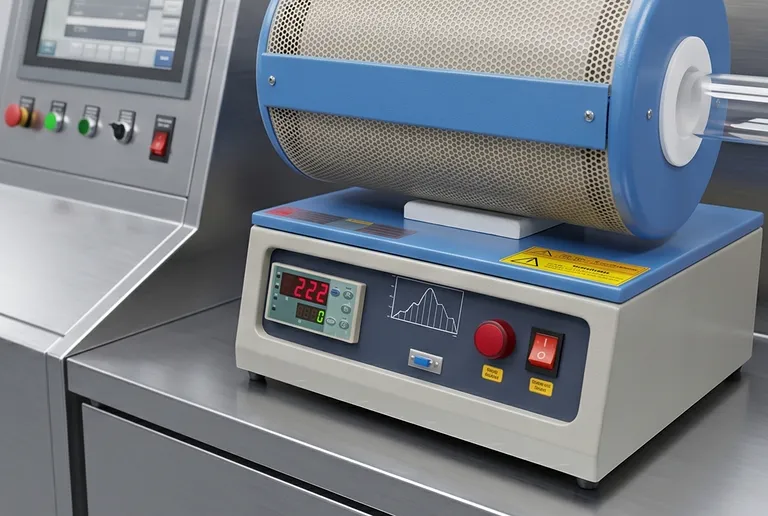
The quality of your 2D nanosheet is fundamentally capped by the quality of your precursor. To achieve breakthrough results, your thermal environment must be a known constant, not a variable.
THERMUNITS understands this fundamental necessity. We design high-temperature systems for researchers who refuse to compromise on structural integrity. From vacuum induction melting (VIM) to high-precision tube furnaces, we provide the tools that turn raw powders into organized crystalline phases.
Our equipment is built to handle the rigors of R&D, ensuring that your ramp rates are exact, your atmospheres are stable, and your results are reproducible.
To find the thermal architecture that fits your next breakthrough, Contact Our Experts.
Quick Links
Suggested Products
1200C High Throughput Multi Channel Tube Furnace with 50mm Quartz Tubes for Annealing and Material Phase Diagram Research High Throughput 1200C Four Channel Tube Furnace with 3 Inch Quartz Tubes for Multi Zone Annealing and Material Research Automated 1200 C Tube Furnace for AI Material Research with 6 Inch OD and Sliding Flange High Vacuum Compact Tube Furnace 1200C with Integrated Turbo Pump System and 8 Inch Heating Zone Compact High Temperature 1600C Tube Furnace with 50mm Alumina Tube and Vacuum Flanges for Material SinteringFurther Reading
The Architecture of Isolation: Why Atmosphere Defines Material Destiny The Invisible Architect: Precision Thermal Oxidation in NiO@Ni Synthesis The Architecture of the Interface: Why 200°C Defines the Memristor The Architecture of Absence: Engineering the Carbon Lattice through Precision Pyrolysis The Architecture of Absence: The Invisible Logic of Nitrogen Purging
ThermUnits
Last updated on Apr 14, 2026
Related Products
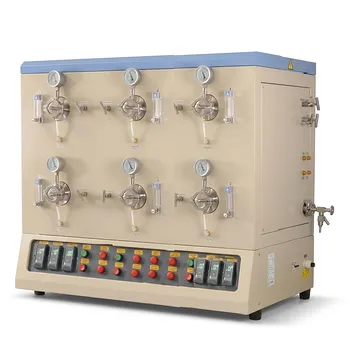
1200C High Throughput Multi Channel Tube Furnace with 50mm Quartz Tubes for Annealing and Material Phase Diagram Research
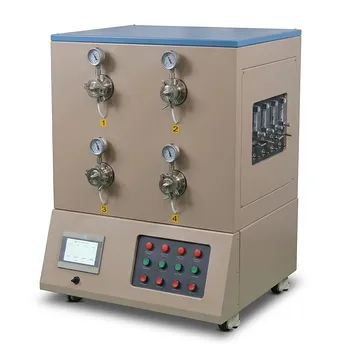
High Throughput 1200C Four Channel Tube Furnace with 3 Inch Quartz Tubes for Multi Zone Annealing and Material Research
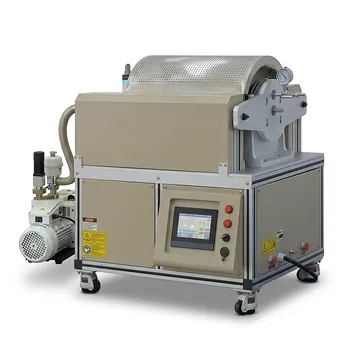
Automated 1200 C Tube Furnace for AI Material Research with 6 Inch OD and Sliding Flange

High Vacuum Compact Tube Furnace 1200C with Integrated Turbo Pump System and 8 Inch Heating Zone

Compact High Temperature 1600C Tube Furnace with 50mm Alumina Tube and Vacuum Flanges for Material Sintering

High Temperature Automated 5 Inch Tube Furnace for Autonomous Material Research and Advanced Laboratory R&D

High Temperature Tube Furnace 1500C with Sliding Flanges and 50mm OD for Rapid Thermal Processing Fast Heating and Cooling

1800C High Temperature Compact Vacuum Tube Furnace with 60mm OD Alumina Tube and Kanthal MoSi2 Heating Elements

High Temperature 1700C Vertical Tube Furnace for Powder Spherification and Material Sintering

High Temperature 1700C Tube Furnace with High Vacuum Turbomolecular Pump System and Multi Channel Mass Flow Controller Gas Mixer

High Temperature 1700C Six Zone Split Tube Furnace with Alumina Tube and Water Cooled Flanges

High Temperature 1700C Benchtop Tube Furnace with 5 Inch Heating Zone High Purity Alumina Tube and Vacuum Sealing Flanges
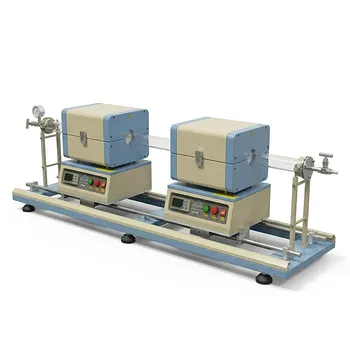
1200C Max Dual Sliding Tube Furnace with 50 mm Tube Flanges for CVD

Vertical 1700C Vacuum and Atmosphere Tube Furnace with 80mm Alumina Tube
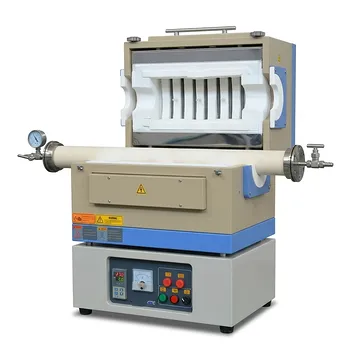
High Temperature 1600C Split Tube Furnace Vacuum Flanges Valves Optional 60mm 80mm Alumina Tube
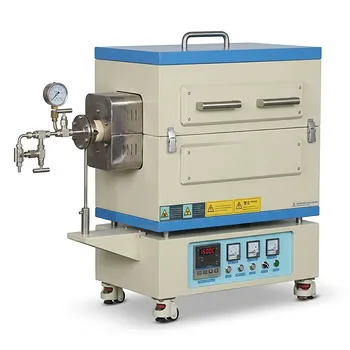
High Temperature Split Tube Furnace 1500C for Material Research Vacuum and Atmosphere Thermal Processing
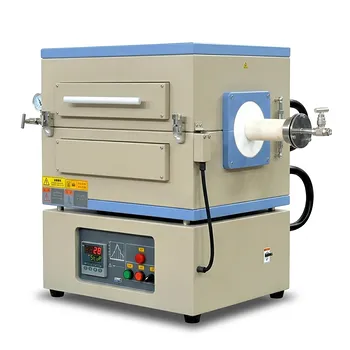
1500°C Split Tube Furnace with Alumina Tube and Vacuum Sealing Flanges for Material Research

1200°C 5 Inch Vertical Quartz Tube Furnace with Stainless Steel Vacuum Flanges

1750°C High Temperature Benchtop Vacuum Atmosphere Tube Furnace with Kanthal Super 1800 Heating Elements and 60mm Alumina Processing Tube