The Alchemy of Survival: Why Gas-Phase Precision Dictates the Life of Industrial Tools
May 30, 2026
In the world of high-speed machining, the difference between success and catastrophic failure is measured in microns.
When a carbide insert hits a titanium workpiece at high velocity, the interface becomes a site of extreme violence. Temperatures soar, pressures peak, and the very atoms of the tool begin to migrate into the workpiece. Without protection, even the hardest steel softens and "heals" into the material it was meant to cut.
This is where the engineering of the invisible takes over. Chemical Vapor Deposition (CVD) is not just a coating; it is a molecular graft that redefines the limits of what materials can endure.
The Margin of Hardness
In industrial R&D, we often look for a "margin of safety." For a cutting tool, that margin is surface hardness.
While the core of a tool provides structural toughness, the surface must resist the relentless abrasion of friction. CVD coatings, such as Titanium Nitride (TiN) and Titanium Carbide (TiC), provide a surface hardness often exceeding 20 GPa.
When we move into the realm of MPCVD diamond coatings, the Vickers hardness reaches approximately 10,000 kg/mm². This isn't just a slight improvement; it is an order-of-magnitude shift that allows tools to survive environments that would vaporize standard components.
Why Chemical Bonding Wins
Most coatings fail because they are "stuck" on. In Physical Vapor Deposition (PVD), the bond is often a mechanical "line-of-sight" attachment.
CVD operates on a different logic. It utilizes thermal decomposition and gas-phase reactions to create a dense, adherent film that is chemically integrated with the substrate.
- Atomic Integration: The coating doesn't just sit on the surface; it anchors into the molecular lattice.
- Conformal Mastery: Because the precursors are gases, they don't care about the complexity of the geometry. They flow into internal threads, deep recesses, and 3D microstructures with total uniformity.
- Thermal Defense: These coatings act as a heat shield, preserving the structural integrity of the tool core by reducing the friction coefficient.
The Physics of Efficiency
The economic impact of CVD is profound. By creating a chemically inert barrier, these coatings prevent "built-up edge"—the phenomenon where workpiece material sticks to the tool.
| Feature | Industrial Performance Benefit | Key Materials |
|---|---|---|
| Surface Hardness | Extends tool life 5x to 100x | TiN, TiC, Diamond |
| Thermal Stability | Reduces heat generation at high speeds | MPCVD Diamond, DLC |
| Chemical Inertness | Prevents material adhesion (anti-stick) | TiN, Al2O3 |
| Conformal Coating | Uniform protection for complex 3D parts | Gas-phase Precursors |
Choosing the Right Path: CVD vs. PECVD
The "Engineer’s Paradox" is that the heat required to create a perfect CVD coating (often >1,000°C) can sometimes weaken the very steel it is meant to protect.
This is where Plasma-Enhanced CVD (PECVD) changes the game. By using ion bombardment to drive reactions, PECVD allows for high-performance coatings at much lower temperatures. This ensures that temperature-sensitive substrates, like aluminum or specialized alloys, can benefit from low-stress, high-durability films without losing their core temper.
Engineering the Future with THERMUNITS
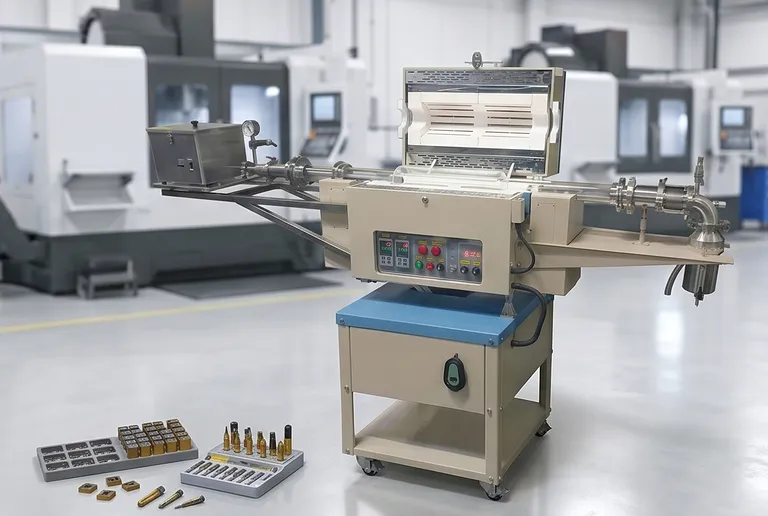
Mastering the gas-phase reaction requires more than just chemistry; it requires a perfectly controlled thermal environment.
At THERMUNITS, we build the furnaces that make these molecular transformations possible. From advanced CVD and PECVD systems to high-vacuum induction melting and rotary kilns, we provide the precision instruments necessary for cutting-edge material science.
Whether you are seeking to extend tool life by 100x or developing the next generation of wear-resistant components, your process is only as reliable as your thermal foundation.
Quick Links
Suggested Products
HFCVD Machine System for Nano Diamond Coating on Drawing Dies and Industrial Tools Versatile Chemical Vapor Deposition Tube Furnace System for Advanced Material Research and Industrial Coating Processes Radio Frequency Plasma Enhanced Chemical Vapor Deposition RF PECVD System for Laboratory and Industrial Thin Film Growth Two Zone Rotary Tube Furnace for Powder CVD Coating and Core Shell Material Synthesis 1100C Three Zone Rotary Tube Furnace with Automatic Powder Feeding for Large Scale CVD Coating 1100CFurther Reading
The Geometry of Silence: Why Depth Demands a Chemical Solution The Choreography of Carbon: Why CVD Precision Defines the Next Era of Material Science The Architecture of Inertness: Why Nitrogen is the Silent Guardian of CVD Synthesis The Choreography of Heat: Achieving Molecular Precision in Simultaneous Pyrolysis and CVD The Invisible Architecture: Engineering Reality from the Gas Phase
ThermUnits
Last updated on Apr 14, 2026
Related Products
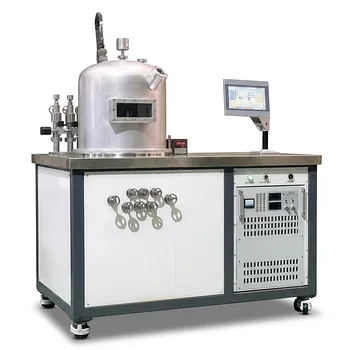
HFCVD Machine System for Nano Diamond Coating on Drawing Dies and Industrial Tools
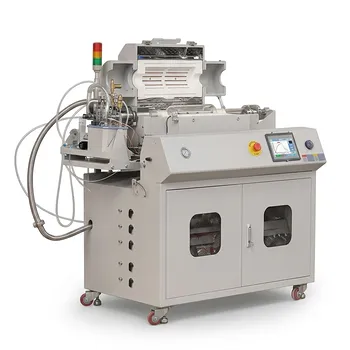
Versatile Chemical Vapor Deposition Tube Furnace System for Advanced Material Research and Industrial Coating Processes
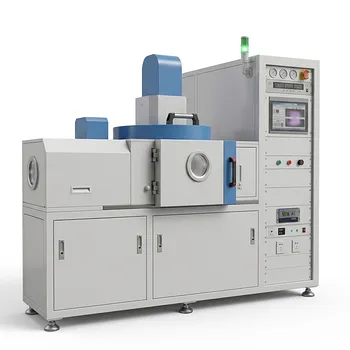
Radio Frequency Plasma Enhanced Chemical Vapor Deposition RF PECVD System for Laboratory and Industrial Thin Film Growth
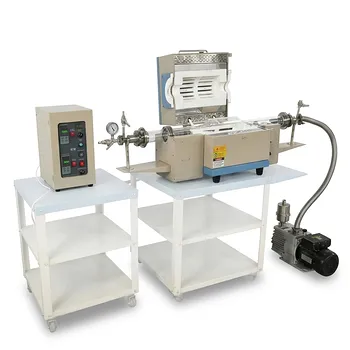
Two Zone Rotary Tube Furnace for Powder CVD Coating and Core Shell Material Synthesis 1100C
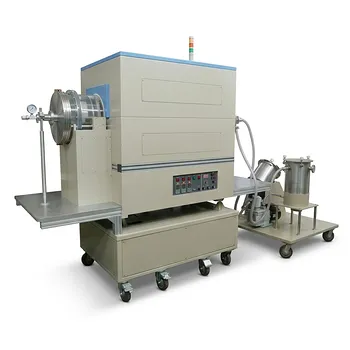
Three Zone Rotary Tube Furnace with Automatic Powder Feeding for Large Scale CVD Coating 1100C
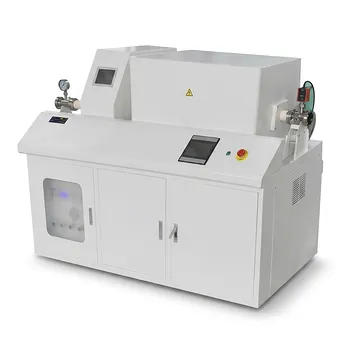
Chemical Vapor Deposition CVD System Slide PECVD Tube Furnace with Liquid Gasifier PECVD Machine
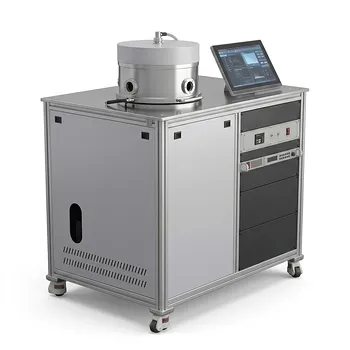
Inclined Rotary Plasma Enhanced Chemical Vapor Deposition PECVD System for Thin Film Deposition and Nanomaterial Synthesis
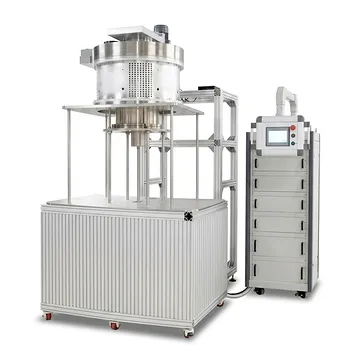
915MHz MPCVD Diamond Machine Microwave Plasma Chemical Vapor Deposition System Reactor
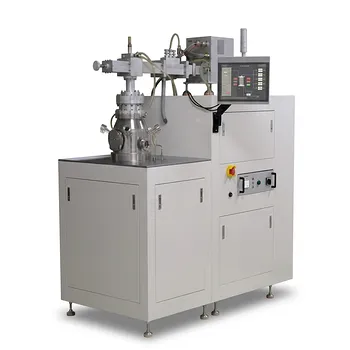
Cylindrical Resonator MPCVD Machine System for Microwave Plasma Chemical Vapor Deposition and Lab Diamond Growth
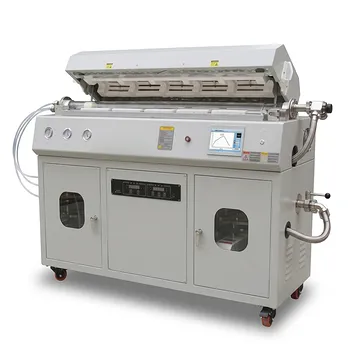
Multi Heating Zones CVD Tube Furnace System for Precision Chemical Vapor Deposition and Advanced Material Synthesis

Vertical Openable Tube Furnace 0-1700c High Temperature Laboratory System for CVD and Vacuum Heat Treatment
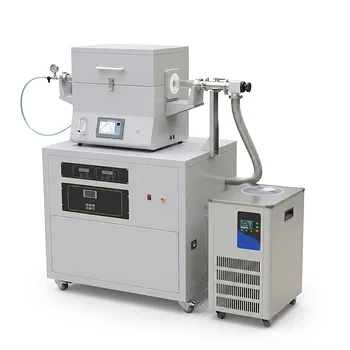
Split Chamber CVD Tube Furnace with Vacuum Station Chemical Vapor Deposition System Machine
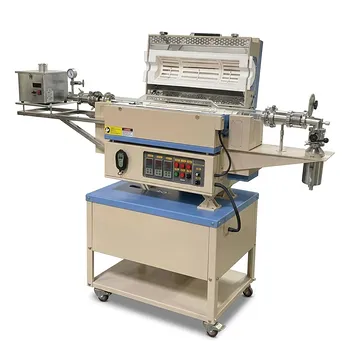
5 Inch Rotary Tube Furnace with Automatic Feeding and Receiving System 1200C Three Zone CVD Powder Processing
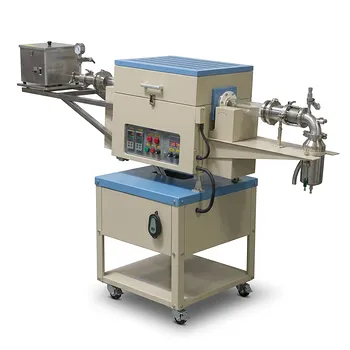
Two Zone Rotary CVD Furnace with Automatic Feeding and Receiving System for Powder Processing
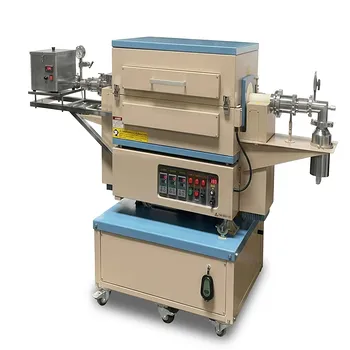
1500C 3-Zone Rotary Tube Furnace 60mm with Automatic Powder Feeding and Receiving System for Continuous Material Synthesis
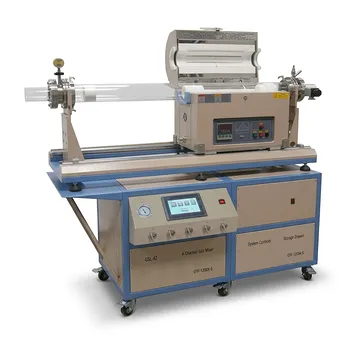
Dual Tube 100mm 80mm CVD Sliding Furnace with 4 Channel Gas Mixing and Vacuum System
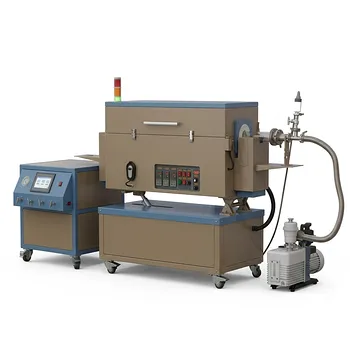
5 Inch Three Zone Rotary Tube Furnace with Integrated Gas Delivery System and 1200C Capability for Advanced Material CVD Processing
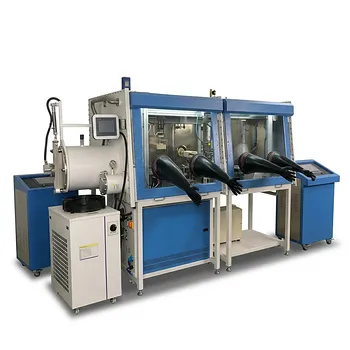
Automatic 10 Crucible Induction Melting and Casting System with Stirring Function and Glovebox Integration 2000C

High Temperature 1700C Tube Furnace with High Vacuum Turbomolecular Pump System and Multi Channel Mass Flow Controller Gas Mixer