The Choreography of Heat: Achieving Molecular Precision in Simultaneous Pyrolysis and CVD
Jul 03, 2026
The In Situ Alchemy
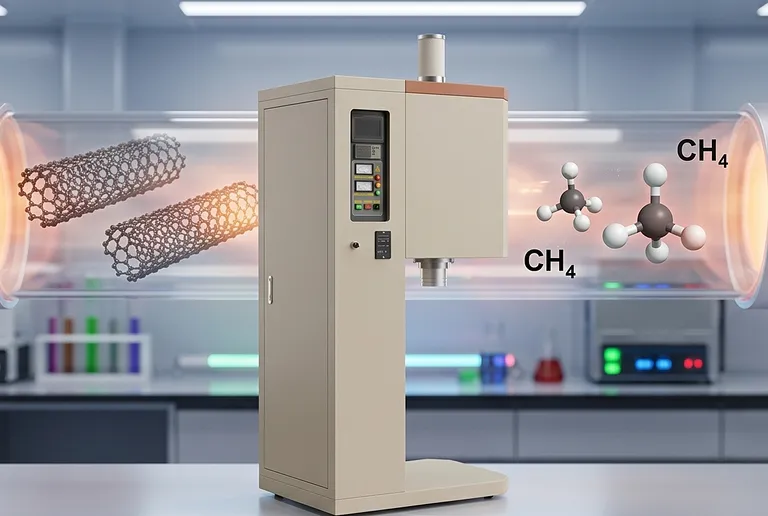
In material science, we often talk about "in situ" processes as if they were simple conveniences. In reality, simultaneous pyrolysis and Chemical Vapor Deposition (CVD) is a high-stakes performance. It is the art of breaking something down to build something better, all within the same quartz tube.
This process requires a delicate balance: the furnace must act as a stage for two opposing forces. First, the kinetic decomposition of organic precursors (pyrolysis). Second, the thermodynamic synthesis of nanostructures (CVD).
If the temperature control misses a beat, the performance fails. The resulting material becomes a graveyard of amorphous carbon rather than a masterpiece of aligned nanotubes.
The Narrative of the Ramp Rate
In the world of thermal processing, the ramp rate is several things at once. It is a timer, a regulator, and a gatekeeper of specific surface area.
When carbonizing polymer fibers, a heating rate of 5–10 °C/min is not a suggestion—it is a requirement for structural integrity.
- Orderly Decomposition: If the ramp is too aggressive, the organic framework collapses violently. This ruins the hierarchical pore structure required for high-end applications.
- Catalytic Synchronization: The ramp ensures that volatile carbon sources are released precisely when the metal catalysts reach their activation temperature.
Synchronization is the difference between a coating and a growth. Without it, the "in situ" advantage evaporates.
The 900 °C Threshold: Where Chemistry Meets Stability
The industry has converged on 900 °C as a sacred number for Carbon Nanotube (CNT) growth. It is the temperature where energy levels are sufficient to crack methane on a catalyst surface without vaporizing the catalyst itself.
At this thermal plateau, stability is everything. A fluctuation of a few degrees can shift the reaction from a growth regime to an etching regime.
The Coordination Table: Thermal & Atmospheric Synergy
| Parameter | Requirement | Role in Synthesis |
|---|---|---|
| Heating Rate | 5–10 °C/min | Controls the "pore-opening" phase of carbonization |
| Operating Temp | 900 °C (Steady State) | Provides the thermal energy for CVD activation |
| Atmosphere | H₂/CH₄ Balance | Regulates the reduction and growth kinetics |
| Zone Control | Independent Multi-Zone | Manages the distance between sublimation and reaction |
Spatial Logistics: The Multi-Zone Advantage
Material synthesis is rarely uniform. Often, the precursor needs to be pampered at a lower temperature to control its vapor pressure, while the substrate waits in a "hot zone" for the reaction to occur.
This creates a thermal gradient—a spatial distribution of energy.
By employing multi-zone independent control, engineers can manipulate vapor concentration matching. It allows for the fine-tuning of film thickness and morphology at the molecular level. It is, effectively, the ability to control the "weather" inside the furnace tube.
The Engineer’s Paradox: Inertia vs. Responsiveness
Every furnace designer grapples with the same psychological weight: Thermal Inertia.
A heavy furnace with massive insulation is incredibly stable at 900 °C. It is the reliable "old guard." However, high-performance R&D often requires rapid cooling to "freeze" a morphology in place before it can degrade.
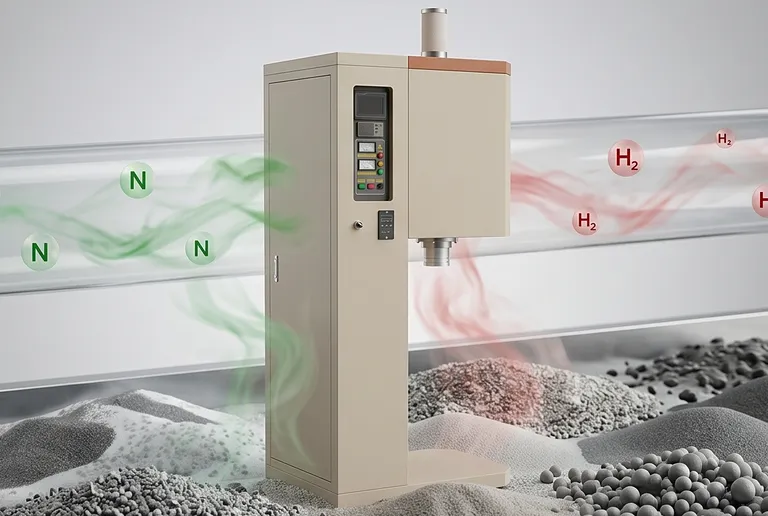
Choosing the right system means understanding this trade-off. You aren't just buying a heater; you are buying a control system that must manage the byproducts of its own success—such as the tars and volatile organics produced during the pyrolysis phase.
Engineering the Future of Synthesis
Precise thermal processing isn't just about reaching a temperature; it’s about the journey to that temperature and the stability once you arrive. At THERMUNITS, we build the instruments that make this level of control possible.
Our systems are designed for researchers who refuse to compromise on the fidelity of their materials. From multi-zone CVD furnaces to specialized Vacuum Induction Melting (VIM) systems, we provide the hardware for the next generation of material breakthroughs.
If you are navigating the complexities of simultaneous pyrolysis or developing new heterostructures, our team is ready to help you calibrate your success.
Quick Links
Suggested Products
Radio Frequency Plasma Enhanced Chemical Vapor Deposition RF PECVD System for Laboratory and Industrial Thin Film Growth Versatile Chemical Vapor Deposition Tube Furnace System for Advanced Material Research and Industrial Coating Processes Cylindrical Resonator MPCVD Machine System for Microwave Plasma Chemical Vapor Deposition and Lab Diamond Growth Chemical Vapor Deposition CVD System Slide PECVD Tube Furnace with Liquid Gasifier PECVD Machine HFCVD Machine System for Nano Diamond Coating on Drawing Dies and Industrial ToolsFurther Reading
The Geometry of Silence: Why Depth Demands a Chemical Solution The Low-Temperature Alchemy: Navigating the Thermal Budget with PECVD The Alchemy of Cold Fire: Decoupling Energy from Temperature in Thin Film Deposition The Choreography of Carbon: Why CVD Precision Defines the Next Era of Material Science The Architecture of Ions: Decoding the Geometry of Plasma Coupling
ThermUnits
Last updated on Apr 14, 2026
Related Products
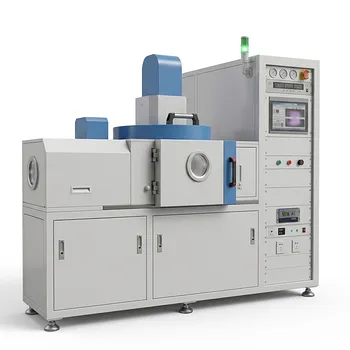
Radio Frequency Plasma Enhanced Chemical Vapor Deposition RF PECVD System for Laboratory and Industrial Thin Film Growth
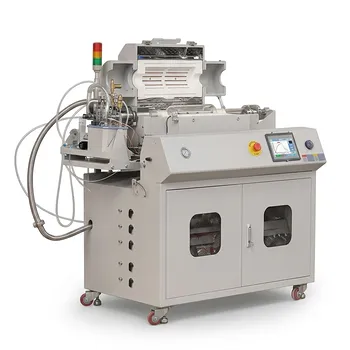
Versatile Chemical Vapor Deposition Tube Furnace System for Advanced Material Research and Industrial Coating Processes
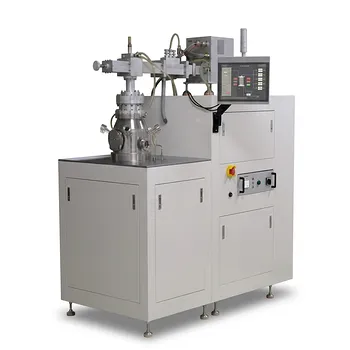
Cylindrical Resonator MPCVD Machine System for Microwave Plasma Chemical Vapor Deposition and Lab Diamond Growth
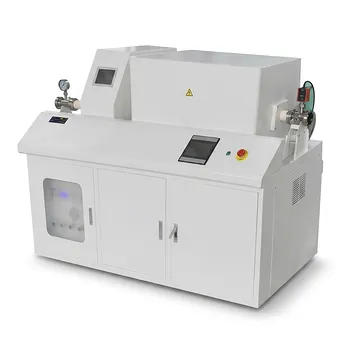
Chemical Vapor Deposition CVD System Slide PECVD Tube Furnace with Liquid Gasifier PECVD Machine
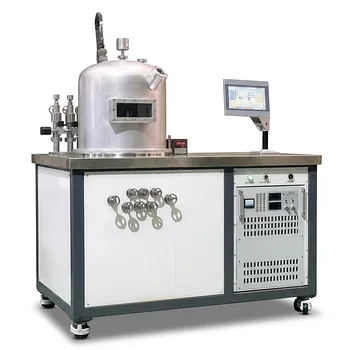
HFCVD Machine System for Nano Diamond Coating on Drawing Dies and Industrial Tools
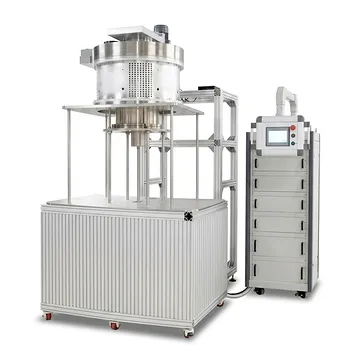
915MHz MPCVD Diamond Machine Microwave Plasma Chemical Vapor Deposition System Reactor
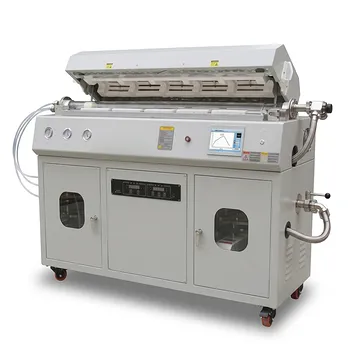
Multi Heating Zones CVD Tube Furnace System for Precision Chemical Vapor Deposition and Advanced Material Synthesis
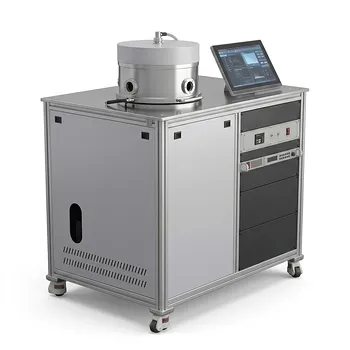
Inclined Rotary Plasma Enhanced Chemical Vapor Deposition PECVD System for Thin Film Deposition and Nanomaterial Synthesis
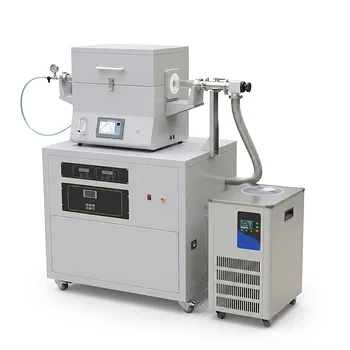
Split Chamber CVD Tube Furnace with Vacuum Station Chemical Vapor Deposition System Machine
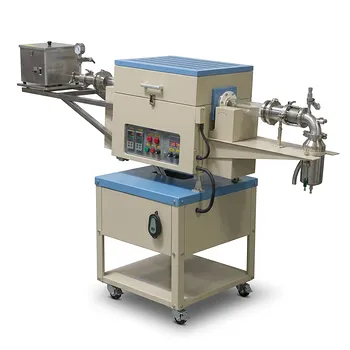
Two Zone Rotary CVD Furnace with Automatic Feeding and Receiving System for Powder Processing
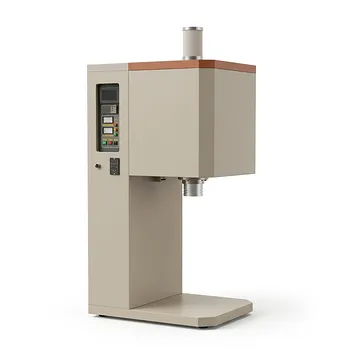
Vertical Openable Tube Furnace 0-1700c High Temperature Laboratory System for CVD and Vacuum Heat Treatment

High Temperature 1700C Tube Furnace with High Vacuum Turbomolecular Pump System and Multi Channel Mass Flow Controller Gas Mixer
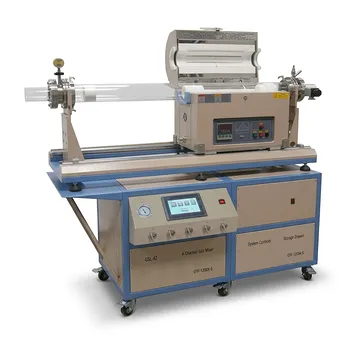
Dual Tube 100mm 80mm CVD Sliding Furnace with 4 Channel Gas Mixing and Vacuum System
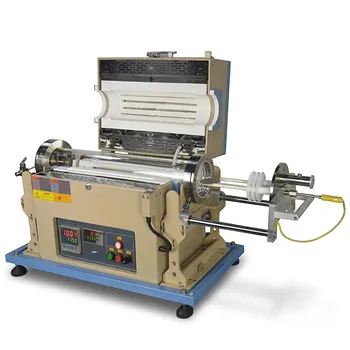
1200°C High Temperature 4 Inch Tube Furnace with Sliding Flange for CVD Systems
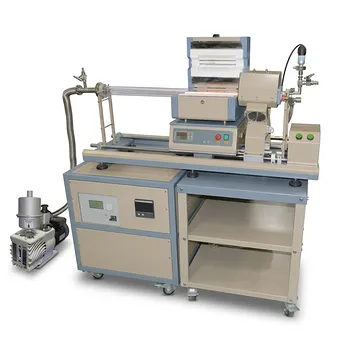
1200C Max Compact Auto-Sliding PECVD Furnace with 2 Inch Tube and Vacuum Pump
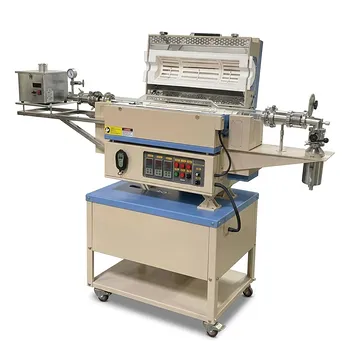
5 Inch Rotary Tube Furnace with Automatic Feeding and Receiving System 1200C Three Zone CVD Powder Processing
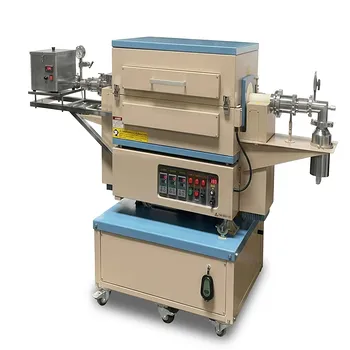
1500C 3-Zone Rotary Tube Furnace 60mm with Automatic Powder Feeding and Receiving System for Continuous Material Synthesis
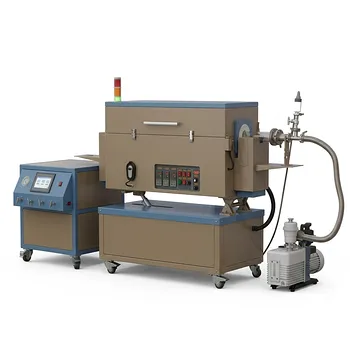
5 Inch Three Zone Rotary Tube Furnace with Integrated Gas Delivery System and 1200C Capability for Advanced Material CVD Processing
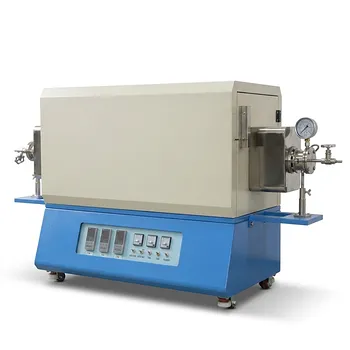
Three Temperature Zone High Temperature Vacuum Tube Furnace for CVD and Material Sintering