The Architect of the Interface: Why Thermal Precision Governs Catalyst Evolution
Jul 15, 2026
The Invisible Margin of Error
In material science, the distance between a breakthrough and a failed experiment is often measured in degrees Celsius and parts per million of oxygen.
The synthesis of CoO-C-SnO2 catalysts is a delicate dance of structural transformation. It is not merely a chemical reaction; it is an architectural project executed at the atomic level.
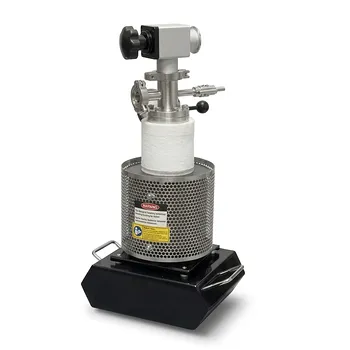
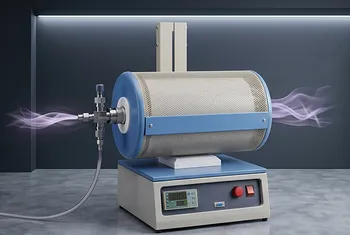
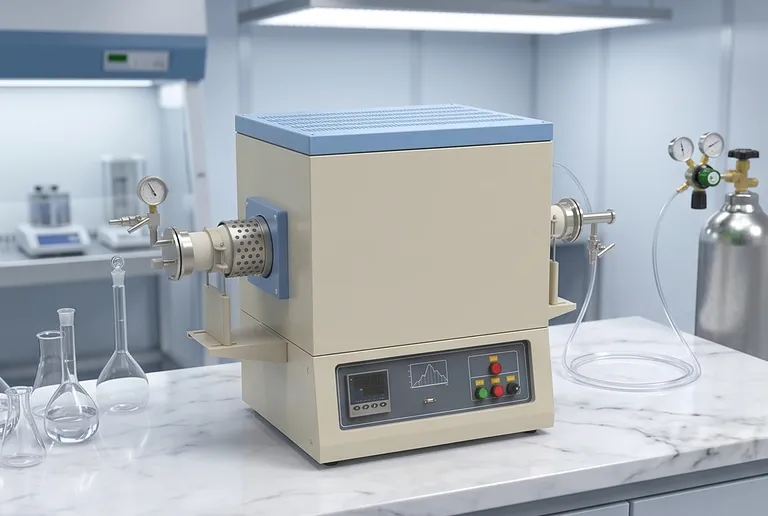
To transform organic precursors into high-performance catalysts, the environment must be more than stable—it must be absolute. This is where the high-vacuum atmosphere tube furnace transitions from a tool to a primary participant.
The 200-Degree Paradox
Most high-performance catalysts exist within a narrow thermal "Goldilocks zone." For CoO-C-SnO2, this window sits precisely between 300°C and 500°C.
- Below 300°C: The organic ligands fail to carbonize. You are left with a precursor, not a catalyst.
- Above 500°C: The delicate carbon framework collapses, and metal nanoparticles begin to "agglomerate"—a polite term for the structural suicide of the active sites.
Precision is not just about reaching a number; it is about staying there. Thermal fluctuations during this stage don't just slow down the process; they alter the microscopic phase composition of the final material.
The Psychology of the Inert Shield
Oxygen is the enemy of the carbon matrix. In the world of energy conversion, carbon is the skeleton and the nervous system.
By utilizing a continuous flow of high-purity Argon (Ar), the furnace creates a sanctuary. This inert atmosphere ensures that the decomposition of precursors like H2BDC results in a stable, conductive carbon matrix rather than ash.
| Feature | Requirement | Impact on Catalyst |
|---|---|---|
| Atmosphere | Ultra-pure Argon (Ar) | Prevents oxidation; preserves carbon channels. |
| Heating Rate | 5°C/min | Prevents structural rupture from gas release. |
| Gas Flow | ~60 sccm | Ensures thermal uniformity across the sample. |
Engineering the "Inverse Hydrogen Spillover"
The true magic of the CoO-C-SnO2 catalyst lies in the inverse hydrogen spillover effect. This phenomenon requires specific electronic transmission channels at the interface of the oxides and the carbon.
These channels do not occur by accident. They are "baked" into existence.
A controlled heating rate—specifically 5°C/min—allows for the steady pyrolysis of components. This gradual release of volatile fragments leaves behind a porous network. Without this specific tempo, the gases escape violently, rupturing the very channels required for electron transport.
The Cost of Atmospheric Failure
If a furnace seal fails, the experiment dies silently.
A microscopic leak introduces oxygen that causes "carbothermal reduction" to go awry. Instead of anchoring metal ions within a protective carbon matrix, the ions sinter. They group together, reducing surface area and killing the catalyst’s efficiency before it ever reaches the laboratory test cell.
Choosing the Right Instrument for Discovery
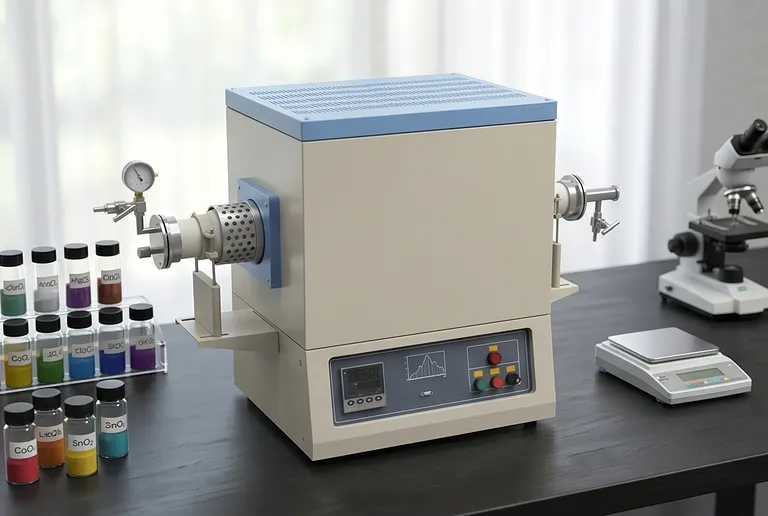
At THERMUNITS, we view a furnace not as a box that gets hot, but as a system for managing kinetic energy and chemical purity.
Our thermal processing solutions are designed with the engineer’s need for "repeatable perfection" in mind. Whether you are scaling a process in a Rotary Kiln or perfecting a thin film in a CVD system, the logic remains the same: Control the environment, and you control the material's destiny.
Our portfolio includes the specific hardware necessary for elite catalyst research:
- Atmosphere Tube Furnaces for precise Ar-flow carbonization.
- Vacuum Induction Melting (VIM) for high-purity alloy precursors.
- CVD/PECVD Systems for advanced interface engineering.
- Muffle and Rotary Furnaces for scalable R&D.
Building the future of material science requires a foundation of absolute thermal stability.
Quick Links
Suggested Products
Compact Vertical Split Quartz Tube Furnace with Stainless Steel Vacuum Flanges for Rapid Thermal Quenching and Controlled Atmosphere Material Processing 1000C Mini Tube Furnace with 20mm Quartz Tube and Vacuum Flanges for Material Science Research and Controlled Atmosphere Small Sample Processing 1750°C High Temperature Benchtop Vacuum Atmosphere Tube Furnace with Kanthal Super 1800 Heating Elements and 60mm Alumina Processing Tube Vertical 1700C Vacuum and Atmosphere Tube Furnace with 80mm Alumina Tube 1700C High Temperature Alumina Tube Furnace with 18 Inch Heated Zone and Vacuum Sealing FlangesFurther Reading
The Silent Guardian of Kinetics: The Engineering Logic Behind Stable Molten Salt Environments The Architecture of Isolation: Why Atmosphere Defines Material Destiny The Invisible Architect: Precision Thermal Oxidation in NiO@Ni Synthesis The Invisible Architect: Why Atmosphere Control Defines the High-Performance Catalyst The Architecture of Stability: Why Precision Aging is the Soul of Gas Sensor Reliability
ThermUnits
Last updated on Apr 14, 2026
Related Products

Compact Vertical Split Quartz Tube Furnace with Stainless Steel Vacuum Flanges for Rapid Thermal Quenching and Controlled Atmosphere Material Processing
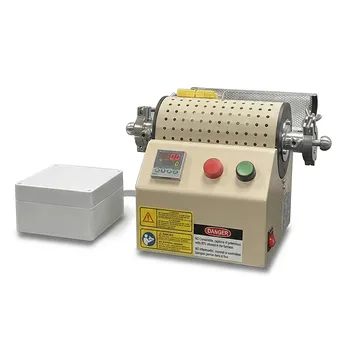
1000C Mini Tube Furnace with 20mm Quartz Tube and Vacuum Flanges for Material Science Research and Controlled Atmosphere Small Sample Processing
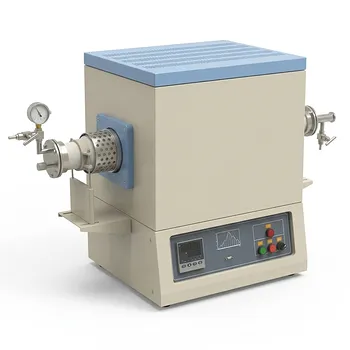
1750°C High Temperature Benchtop Vacuum Atmosphere Tube Furnace with Kanthal Super 1800 Heating Elements and 60mm Alumina Processing Tube

Vertical 1700C Vacuum and Atmosphere Tube Furnace with 80mm Alumina Tube
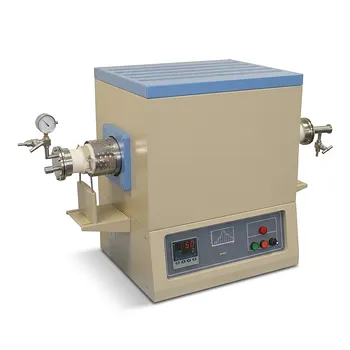
1700C High Temperature Alumina Tube Furnace with 18 Inch Heated Zone and Vacuum Sealing Flanges
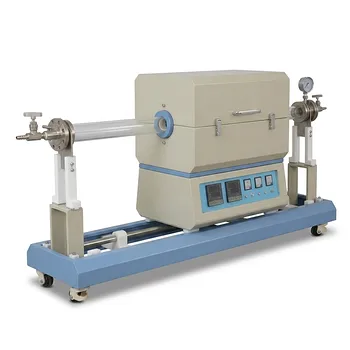
Double Zone Fast Heating Tube Furnace High Temperature Vacuum Atmosphere System
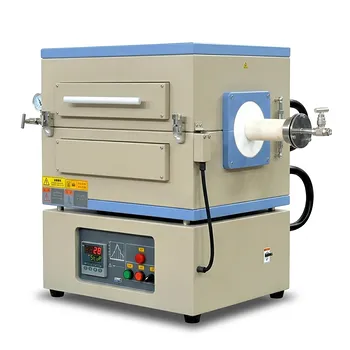
1500°C Split Tube Furnace with Alumina Tube and Vacuum Sealing Flanges for Material Research

Three Zone Tube Furnace with 11 Inch or 15 Inch Quartz Tube and Hinged Flanges for Vacuum Atmosphere Heat Treatment
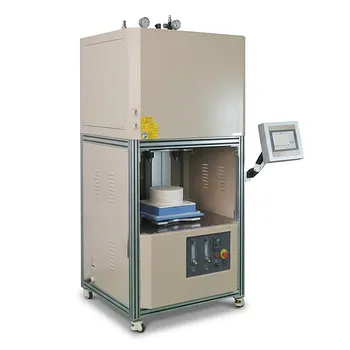
High Temperature Vertical Atmosphere Controlled Furnace 1700C Automatic Bottom Loading 13 Liter Vacuum Thermal System
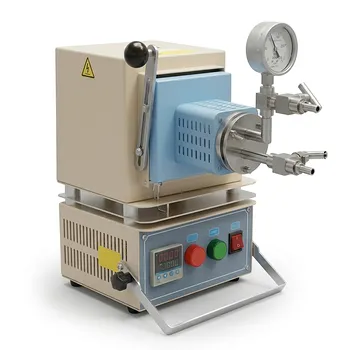
Compact Hybrid Muffle and Tube Furnace for 1000C Controlled Atmosphere Laboratory Material Sintering
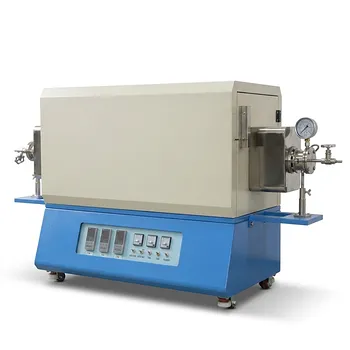
Three Temperature Zone High Temperature Vacuum Tube Furnace for CVD and Material Sintering
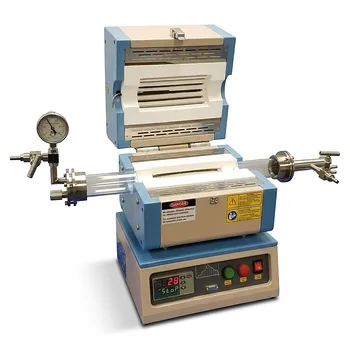
Compact Split Tube Furnace with Integrated Vacuum System and Precision Temperature Calibrator

High Temperature 1700C Tube Furnace with High Vacuum Turbomolecular Pump System and Multi Channel Mass Flow Controller Gas Mixer
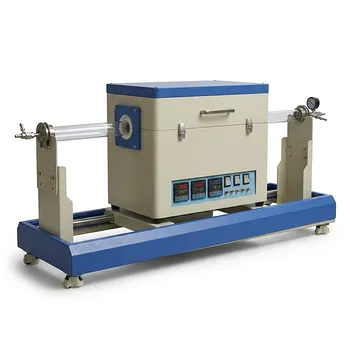
Double Temperature Zone Double Cover Tube Furnace for High Temperature CVD and Vacuum Annealing
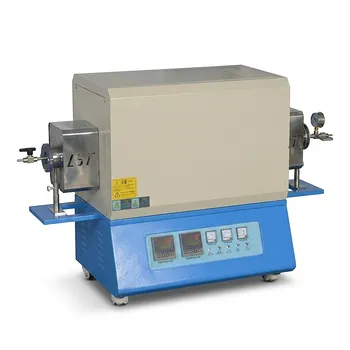
High Temperature Dual Zone Vacuum Tube Furnace for Material Research and CVD Processing
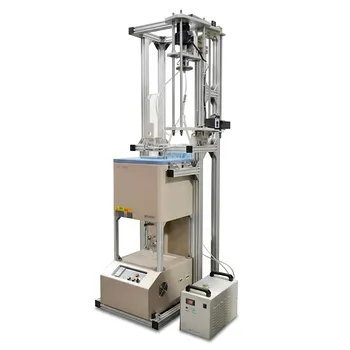
500C Vacuum Vertical Tube Furnace 84mm OD Sample Rotation Lifting System

1800C High Temperature Compact Vacuum Tube Furnace with 60mm OD Alumina Tube and Kanthal MoSi2 Heating Elements
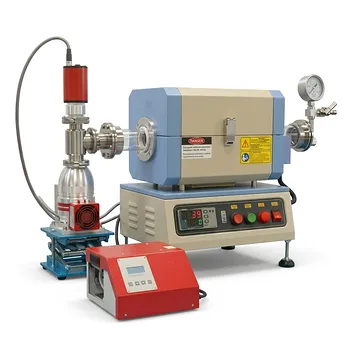
High Vacuum Compact Tube Furnace 1200C with Integrated Turbo Pump System and 8 Inch Heating Zone

High Temperature 1700C Vertical Tube Furnace for Powder Spherification and Material Sintering