The Architecture of Ions: Decoding the Geometry of Plasma Coupling
Jun 07, 2026
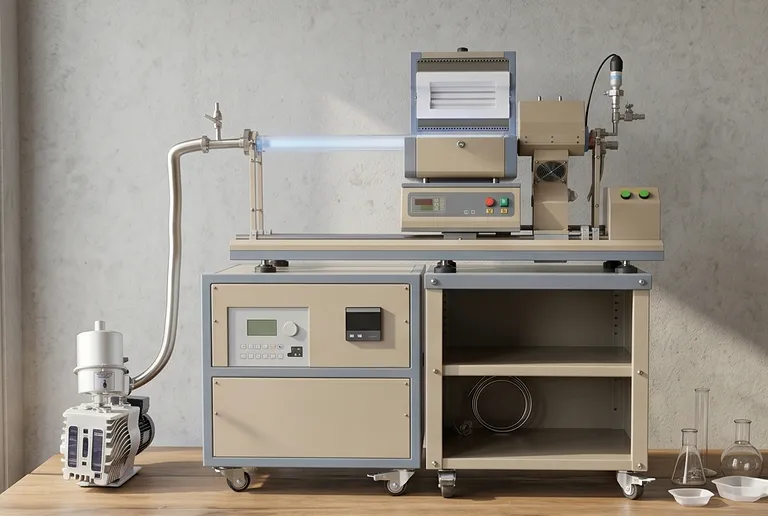
In the precision-obsessed world of thin-film deposition, we often treat the vacuum chamber as a black box. We pump in precursors, apply RF power, and expect a perfect layer to emerge.
But the way that energy enters the gas—the invisible handshake between electromagnetic fields and matter—defines the limits of what we can build. In the evolution of Plasma Enhanced Chemical Vapor Deposition (PECVD), the transition from Capacitively Coupled Plasma (CCP) to Inductively Coupled Plasma (ICP) is not just a hardware upgrade; it is a fundamental shift in the physics of growth.
The Parallel Plate Paradox: Simplicity as a Constraint
For decades, Capacitively Coupled Plasma (CCP) has been the industry’s steady workhorse. Its architecture is elegantly simple: two parallel electrodes facing each other. An oscillating electric field accelerates electrons back and forth, sustaining a glow discharge.
This setup is the "assembly line" of deposition. It is reliable, cost-effective, and provides exceptional uniformity over large, flat surfaces. However, it carries a systemic limitation.
In a CCP system, the plasma density and the ion bombardment energy are inextricably linked. You cannot increase the density without also increasing the energy with which ions strike your substrate. For delicate films or complex 3D architectures, this "blunt force" approach eventually reaches its breaking point.
The Inductive Leap: Breaking the Density Ceiling
Inductively Coupled Plasma (ICP) solves this by decoupling the energy source. Instead of parallel plates, an external induction coil wraps around the chamber.
Through Faraday’s Law, a high-frequency current in the coil induces a magnetic field, which in turn creates a circular electric field within the gas. This creates a "transformer" effect where the plasma itself acts as the secondary circuit.
Why Density Changes Everything
The results are numerically staggering. While a CCP system typically hovers around $10^9$ particles per cubic centimeter, an ICP system pushes this to $10^{11} \text{ cm}^{-3}$ or higher.
- Efficient Decomposition: Precursor gases like methane or silane are ripped apart with surgical efficiency.
- Lower Operating Pressures: ICP can maintain a stable plasma at pressures where CCP would simply extinguish.
- The Mean Free Path: At lower pressures, particles travel further before colliding. This allows them to penetrate deep into microscopic structures without "bouncing" off course.
The Physics of Vertical Growth
In the landscape of modern R&D, we are moving away from flat films and toward complex, high-aspect-ratio structures.
Consider Carbon Nanowalls (CNWs)—vertically oriented graphene sheets. Growing these requires a specific "Goldilocks" environment: high radical density but low substrate temperature.
ICP-PECVD provides this high-activity environment. Because the plasma is so dense, the chemical reactions required for growth happen "in the air" (the plasma phase), allowing the substrate to remain relatively cool. This makes it possible to grow advanced carbon structures on temperature-sensitive materials that would otherwise melt or degrade in a traditional furnace.
Comparing the Two Paths
| Feature | CCP (Capacitive) | ICP (Inductive) |
|---|---|---|
| Mechanism | Electric field between plates | Electromagnetic induction via coils |
| Plasma Density | Moderate ($\approx 10^9 \text{ cm}^{-3}$) | High ($> 10^{11} \text{ cm}^{-3}$) |
| Ion Energy Control | Limited (Coupled) | High (Independent) |
| Pressure Range | Higher | Lower (High vacuum) |
| Best Used For | Large-scale flat films | 3D features, MEMS, Nanowalls |
| System Complexity | Low | High |
The Engineer’s Choice: Precision vs. Production
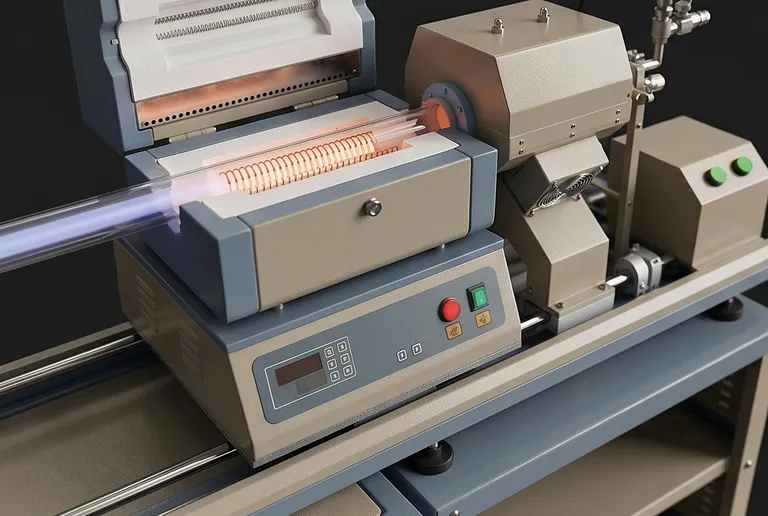
Choosing between CCP and ICP is an exercise in balancing the "Psychology of the Project."
If the goal is high-throughput production of standard insulating layers (like $SiO_2$ or $Si_3N_4$) on flat wafers, the simplicity of CCP is unmatched. It is the economical choice for stability and broad-area uniformity.
However, if the project involves deep silicon etching, the growth of vertically aligned nanotubes, or the fabrication of high-aspect-ratio MEMS devices, ICP is the only logical path. It offers the "independent variables" that researchers need to fine-tune the dance of ions.
Engineering the Future of Heat
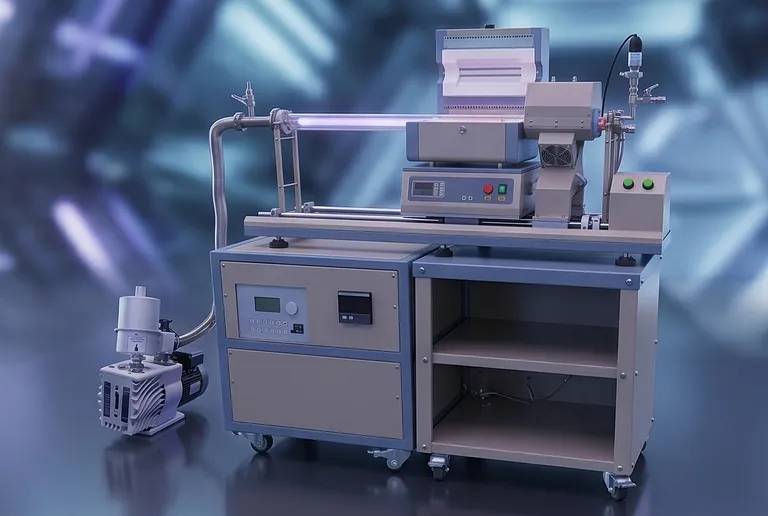
At THERMUNITS, we understand that the difference between a successful experiment and a failed one often lies in the precision of the thermal environment. We design our CVD and PECVD systems to bridge the gap between complex plasma physics and reliable industrial performance.
Whether you are scaling up thin-film production or pioneering the next breakthrough in carbon-based nanotechnology, our range of Muffle, Vacuum, and Atmosphere furnaces—alongside our specialized PECVD solutions—provides the stability your research demands.
Contact Our Experts to determine which plasma configuration will define your next breakthrough.
Quick Links
Suggested Products
Chemical Vapor Deposition CVD System Slide PECVD Tube Furnace with Liquid Gasifier PECVD Machine Inclined Rotary Plasma Enhanced Chemical Vapor Deposition PECVD System for Thin Film Deposition and Nanomaterial Synthesis Radio Frequency Plasma Enhanced Chemical Vapor Deposition RF PECVD System for Laboratory and Industrial Thin Film Growth 1200C Max Compact Auto-Sliding PECVD Furnace with 2 Inch Tube and Vacuum Pump 1200C Dual Sliding Tube Furnace with Dual Tubes and Flanges for PECVD ProcessesFurther Reading
The Geometry of Silence: Why Depth Demands a Chemical Solution The Choreography of Carbon: Why CVD Precision Defines the Next Era of Material Science The Architecture of Clouds: Mastering the RF Equilibrium in PECVD The Low-Temperature Alchemy: Navigating the Thermal Budget with PECVD The Alchemy of Cold Fire: Decoupling Energy from Temperature in Thin Film Deposition
ThermUnits
Last updated on Apr 14, 2026
Related Products
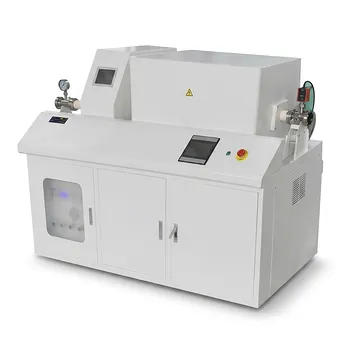
Chemical Vapor Deposition CVD System Slide PECVD Tube Furnace with Liquid Gasifier PECVD Machine
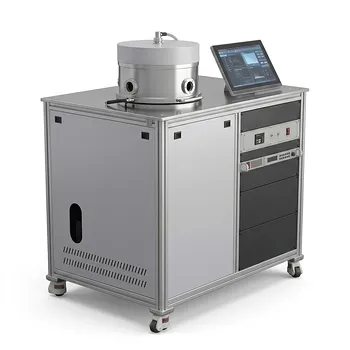
Inclined Rotary Plasma Enhanced Chemical Vapor Deposition PECVD System for Thin Film Deposition and Nanomaterial Synthesis
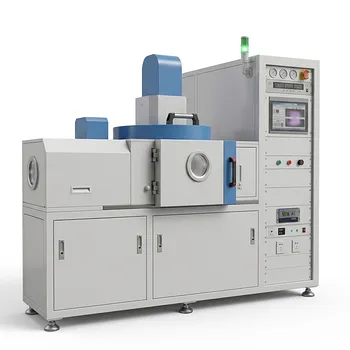
Radio Frequency Plasma Enhanced Chemical Vapor Deposition RF PECVD System for Laboratory and Industrial Thin Film Growth
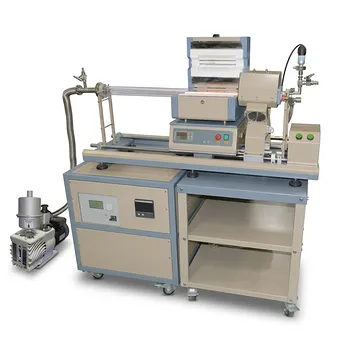
1200C Max Compact Auto-Sliding PECVD Furnace with 2 Inch Tube and Vacuum Pump
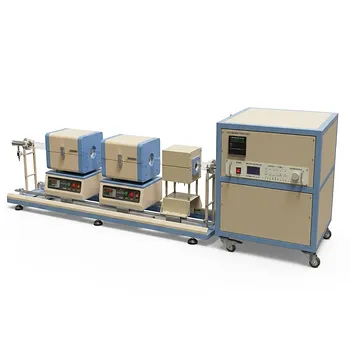
1200C Dual Sliding Tube Furnace with Dual Tubes and Flanges for PECVD Processes
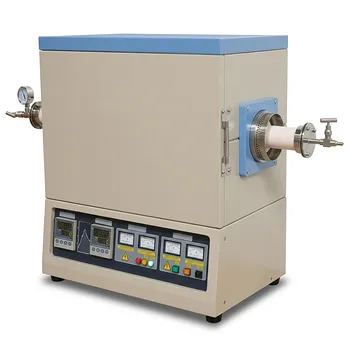
High Temperature 1700C Dual Zone Tube Furnace for Material Science and Industrial Chemical Vapor Deposition Research
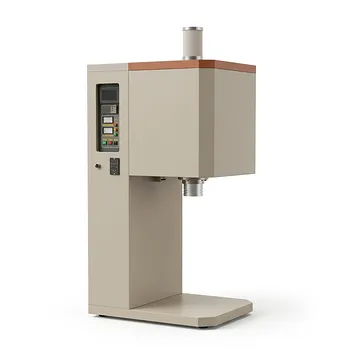
Vertical Openable Tube Furnace 0-1700c High Temperature Laboratory System for CVD and Vacuum Heat Treatment
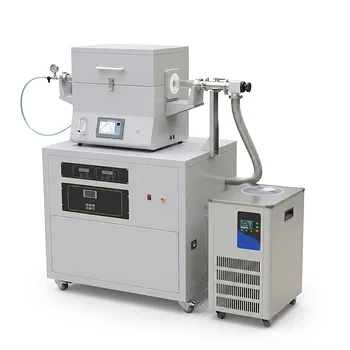
Split Chamber CVD Tube Furnace with Vacuum Station Chemical Vapor Deposition System Machine

High Temperature 1700C Tube Furnace with High Vacuum Turbomolecular Pump System and Multi Channel Mass Flow Controller Gas Mixer
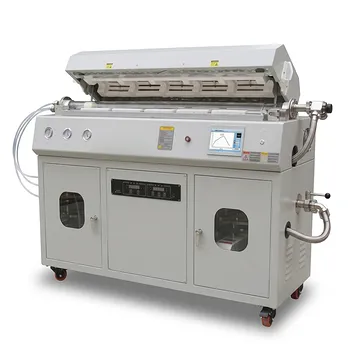
Multi Heating Zones CVD Tube Furnace System for Precision Chemical Vapor Deposition and Advanced Material Synthesis
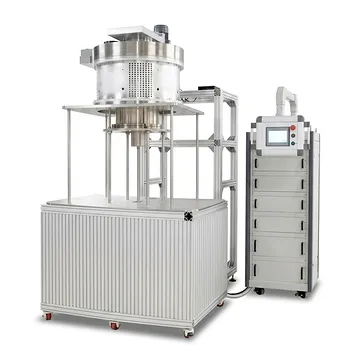
915MHz MPCVD Diamond Machine Microwave Plasma Chemical Vapor Deposition System Reactor
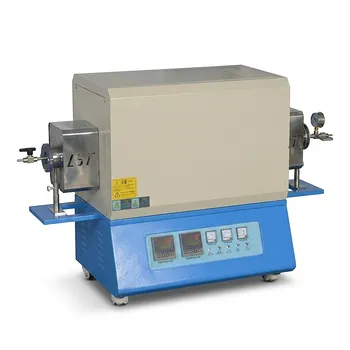
High Temperature Dual Zone Vacuum Tube Furnace for Material Research and CVD Processing
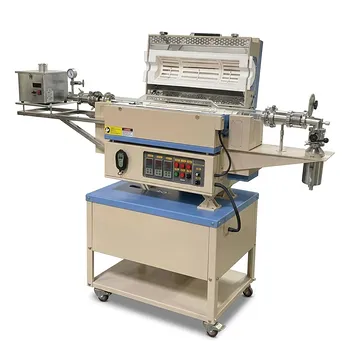
5 Inch Rotary Tube Furnace with Automatic Feeding and Receiving System 1200C Three Zone CVD Powder Processing
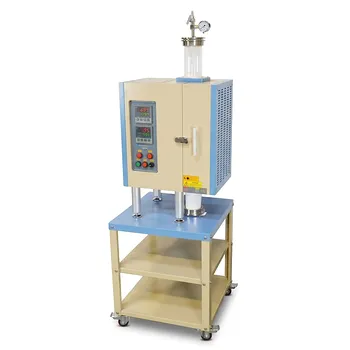
1100°C Dual Zone Split Vertical Tube Furnace with 4 Inch Quartz Tube and Vacuum Sealing Flanges
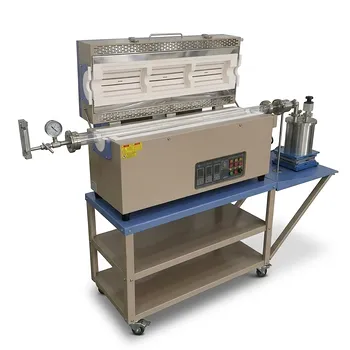
5 Inch Two Zone Rotary Tube Furnace 1100C for Powder CVD and Material Synthesis
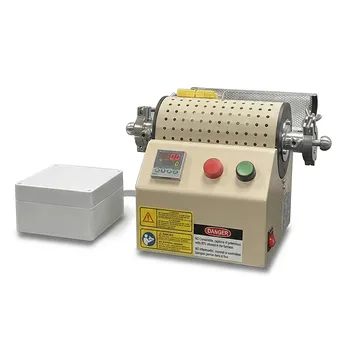
1000C Mini Tube Furnace with 20mm Quartz Tube and Vacuum Flanges for Material Science Research and Controlled Atmosphere Small Sample Processing
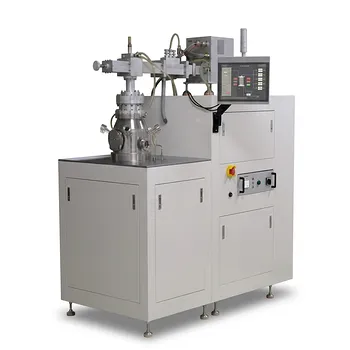
Cylindrical Resonator MPCVD Machine System for Microwave Plasma Chemical Vapor Deposition and Lab Diamond Growth
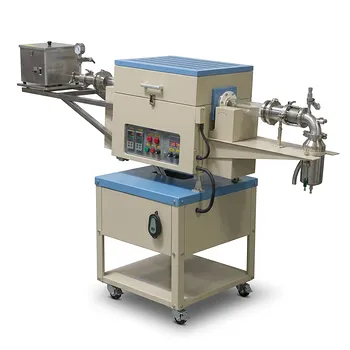
Two Zone Rotary CVD Furnace with Automatic Feeding and Receiving System for Powder Processing
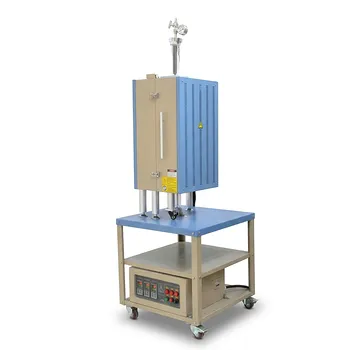
1200C Three Zone Vertical Tube Furnace with 2 Inch Quartz Tube and Vacuum Flanges