The Geometry of Silence: Why Environment Decides the Fate of TNZTF Alloys
Jul 08, 2026
The High Stakes of Invisible Chemistry
In materials science, as in medicine, the difference between a breakthrough and a failure is often a matter of managing what you cannot see.
TiNbZrTaFe (TNZTF) alloys are designed to be the ultimate biocompatible material. They are engineered to mimic the elastic modulus of human bone, preventing "stress shielding" where an implant is too stiff, causing the surrounding bone to wither.
But TNZTF is a "getter" material. It has a ravenous appetite for oxygen and nitrogen. If the sintering environment contains even a whisper of these gases, the alloy embrittles. The dream of a bone-mimicking implant dies in the furnace.
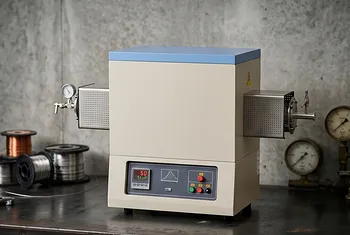
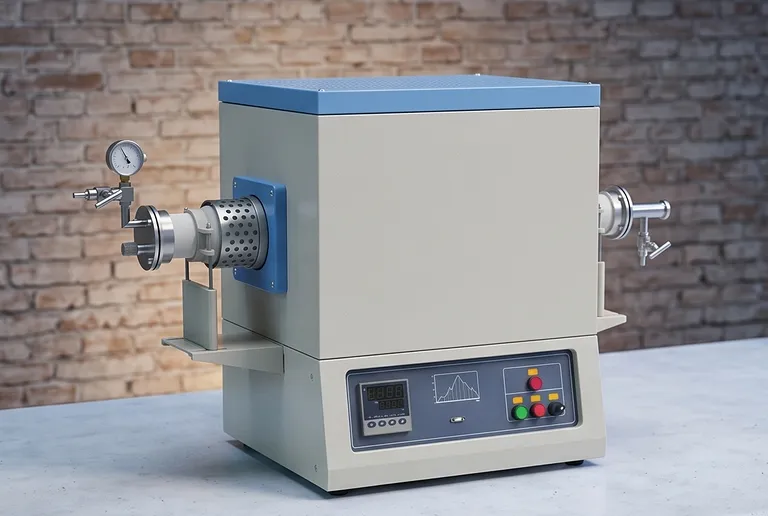
This is why the vacuum atmosphere tube furnace is not merely a heat source. It is a system of environmental exclusion.
The Metallurgy of Absence
The first task of a precision furnace is not to add heat, but to remove interference.
Titanium, Niobium, and Tantalum are chemically aggressive at high temperatures. To prevent catastrophic oxidation, the system must establish a high vacuum—typically $10^{-2}$ Pa or better.
By stripping away the atmosphere, we prevent the "hard case" effect:
- Oxidation Prevention: Eliminates the pickup of interstitial gases that turn a ductile alloy into a brittle ceramic.
- Atmospheric Purification: Replacing air with high-purity argon creates a controlled thermodynamic shield, facilitating heat transfer without chemical compromise.
A Staged Choreography: From Debinding to Densification
Successful sintering is a chronological narrative. It requires the furnace to follow a precise script of temperature intervals.
1. The Clean Exit (Debinding)
Before the atoms begin to fuse, the "space holders"—organic materials used to create the desired porosity—must be removed. The furnace acts as an exhaust system, decomposing these polymers at low temperatures. If this is done incorrectly, carbon residues remain, poisoning the alloy's purity.
2. Solid-State Diffusion
At temperatures between 1200°C and 1600°C, the "sintering necks" form. Atoms move across particle boundaries, closing internal pores. In this high-heat stage, the furnace must maintain absolute stability to reach a relative density of ~97%.
Engineering the $\beta$-Phase
The "Engineer’s Romance" in TNZTF lies in the $\beta$-phase. This specific atomic arrangement is what gives the alloy its low elastic modulus.
Stabilizing this phase requires the uniform distribution of refractory elements like Niobium and Tantalum. The vacuum atmosphere furnace achieves this through:
- Microstructural Homogenization: Ensuring heavy atoms diffuse evenly.
- Controlled Crystallization: Managing cooling rates to prevent massive grain growth, ensuring the material remains both strong and flexible.
The Engineering Trade-offs
In thermal processing, you never get something for nothing. Every decision has a psychological and technical cost.
| Variable | The Trade-off | Impact on TNZTF |
|---|---|---|
| Vacuum Depth | Energy vs. Purity | Higher vacuum reduces oxidation but increases cycle time. |
| Sintering Temp | Diffusion vs. Grain Size | High heat accelerates diffusion but risks rapid grain coarsening. |
| Soaking Time | Density vs. Fatigue Life | Longer soaking improves density but may degrade tensile strength. |
The Final Arbiter of Quality
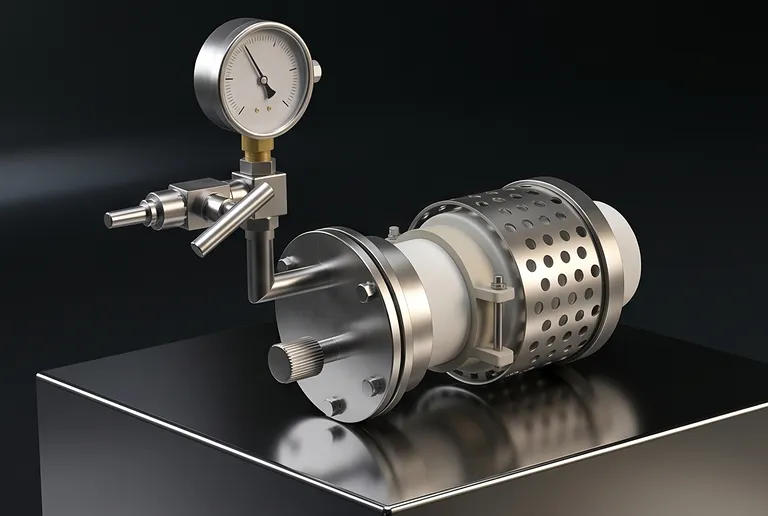
Precision is a choice, not an accident. The furnace is the final gatekeeper that transforms a reactive powder mixture into a chemically pure, microstructurally sound medical device.
At THERMUNITS, we provide the hardware for this transformation. From high-vacuum tube furnaces to advanced VIM (Vacuum Induction Melting) systems, our equipment is built for the R&D professional who knows that in the world of high-performance alloys, the environment is everything.
Whether you are stabilizing the $\beta$-phase or engineering the next generation of porous implants, your success depends on the environment you create.
To discover how our thermal solutions can refine your material outcomes, Contact Our Experts
Quick Links
Suggested Products
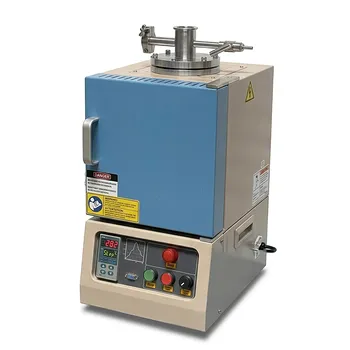
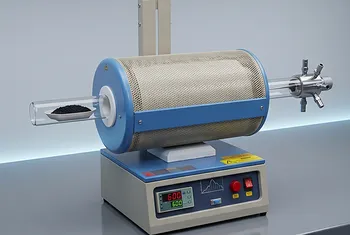
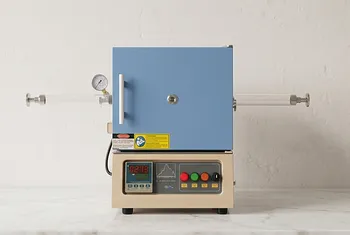
1750°C High Temperature Benchtop Vacuum Atmosphere Tube Furnace with Kanthal Super 1800 Heating Elements and 60mm Alumina Processing Tube Vertical 1700C Vacuum and Atmosphere Tube Furnace with 80mm Alumina Tube Three Zone Tube Furnace with 11 Inch or 15 Inch Quartz Tube and Hinged Flanges for Vacuum Atmosphere Heat Treatment Compact Vertical Split Quartz Tube Furnace with Stainless Steel Vacuum Flanges for Rapid Thermal Quenching and Controlled Atmosphere Material Processing 1500°C Split Tube Furnace with Alumina Tube and Vacuum Sealing Flanges for Material ResearchFurther Reading
The Geometry of Heat: Engineering Magnetic Biochar Through Controlled Pyrolysis The Architecture of Absence: Why Atmosphere Control Defines the Fate of Mesoporous Carbon The Architecture of Controlled Disorder: Engineering Hard Carbon for the Sodium-Ion Era The Geometry of Heat: Forging the Structural DNA of Dicalcium Ferrite The Thermodynamic Sanctuary: Managing Atomic Migration in High-Vacuum Furnaces
ThermUnits
Last updated on Apr 14, 2026
Related Products

1750°C High Temperature Benchtop Vacuum Atmosphere Tube Furnace with Kanthal Super 1800 Heating Elements and 60mm Alumina Processing Tube

Vertical 1700C Vacuum and Atmosphere Tube Furnace with 80mm Alumina Tube

Three Zone Tube Furnace with 11 Inch or 15 Inch Quartz Tube and Hinged Flanges for Vacuum Atmosphere Heat Treatment

Compact Vertical Split Quartz Tube Furnace with Stainless Steel Vacuum Flanges for Rapid Thermal Quenching and Controlled Atmosphere Material Processing
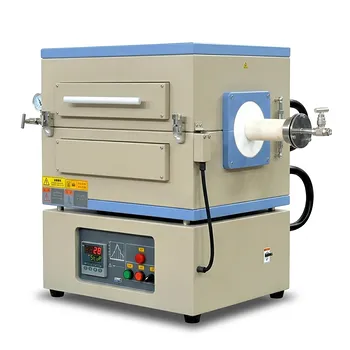
1500°C Split Tube Furnace with Alumina Tube and Vacuum Sealing Flanges for Material Research
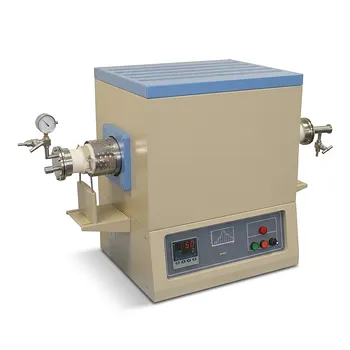
1700C High Temperature Alumina Tube Furnace with 18 Inch Heated Zone and Vacuum Sealing Flanges
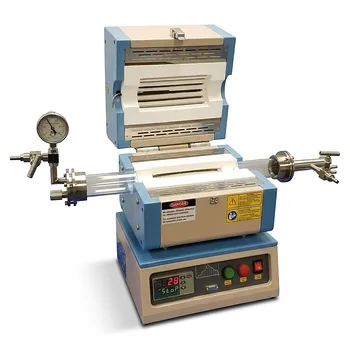
Compact Split Tube Furnace with Integrated Vacuum System and Precision Temperature Calibrator
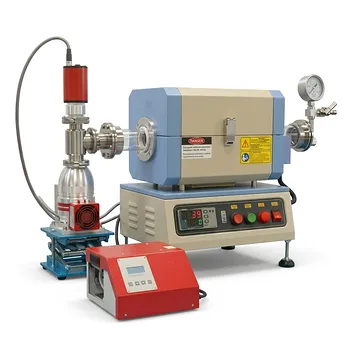
High Vacuum Compact Tube Furnace 1200C with Integrated Turbo Pump System and 8 Inch Heating Zone

1200°C 5 Inch Vertical Quartz Tube Furnace with Stainless Steel Vacuum Flanges
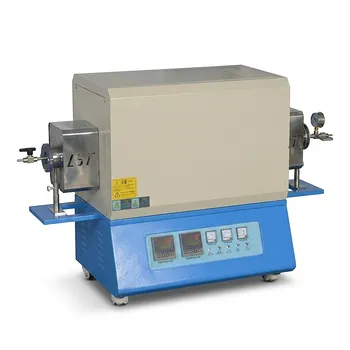
High Temperature Dual Zone Vacuum Tube Furnace for Material Research and CVD Processing
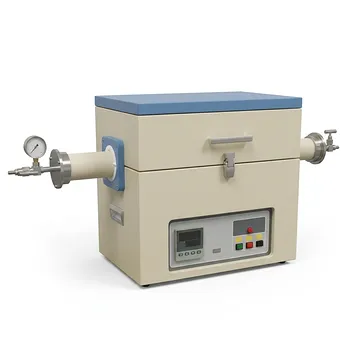
1250C Split Tube Furnace with 3 Inch Mullite Tube and Vacuum Sealing Flanges for Precision Thermal Processing
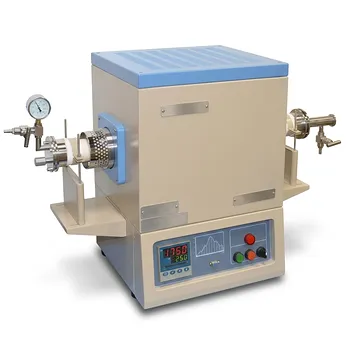
High Temperature Compact Vacuum Tube Furnace 1750C Max 60mm OD Alumina Tube
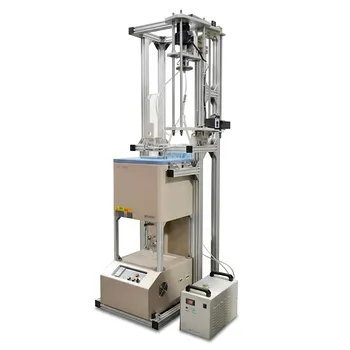
500C Vacuum Vertical Tube Furnace 84mm OD Sample Rotation Lifting System

1100C Tube Furnace with Vacuum Flange and Programmable Temperature Controller for Material Science and Industrial Heat Treatment

1800C High Temperature Compact Vacuum Tube Furnace with 60mm OD Alumina Tube and Kanthal MoSi2 Heating Elements

High Temperature 1700C Tube Furnace with High Vacuum Turbomolecular Pump System and Multi Channel Mass Flow Controller Gas Mixer
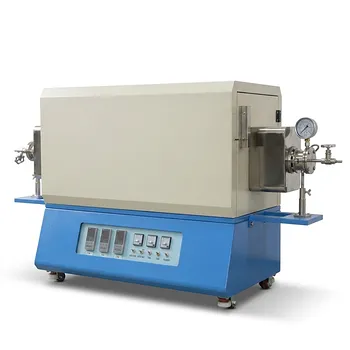
Three Temperature Zone High Temperature Vacuum Tube Furnace for CVD and Material Sintering
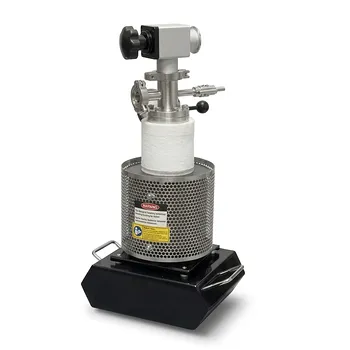
High Temperature 1100C Compact Top Loading Vertical Vacuum Tube Furnace for High Vacuum Noble Metal Melting and Material Research
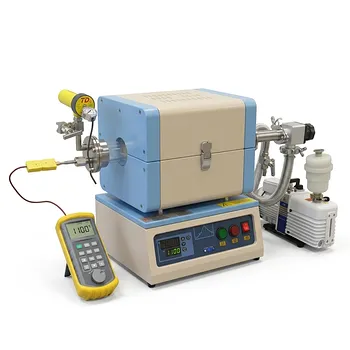
Compact Split Tube Furnace with Insertable Temperature Calibrator and Integrated Vacuum System