How do high-temperature controlled-atmosphere reaction furnaces influence the growth of FeNi nanostructures? - AACVD Guide
Updated 6 months ago
High-temperature controlled-atmosphere reaction furnaces function as the critical regulatory environment for Aerosol-Assisted Chemical Vapor Deposition (AACVD). By providing a stable thermal field, these furnaces ensure that Fe and Ni precursors decompose and crystallize with the precision required to form high-performance nanostructures.
The reaction furnace dictates the outcome of the AACVD process by controlling the diffusion paths and reaction kinetics of the aerosol. This level of environmental control is essential for producing FeNi alloys with the specific morphologies and intrinsic activities required for advanced catalytic applications.
The Role of the Thermal Field in Precursor Transformation
Inducing Precise Precursor Decomposition
The furnace provides the activation energy necessary to break the chemical bonds within the Fe and Ni precursors. This decomposition must occur at a controlled rate to prevent the formation of unwanted side products or inconsistent material phases.
Maintaining a Constant Environment for Crystal Growth
A constant thermal field within the furnace is vital for the steady nucleation and growth of FeNi crystals. Without this stability, the resulting nanostructures would lack the structural integrity needed for high-performance applications.
Diffusion Dynamics and Surface Reactions
Influencing Aerosol Path and Concentration
The combination of furnace temperature and carrier gas flow rate determines how the aerosol moves through the reaction chamber. This synergy dictates the concentration of reactants reaching the substrate, directly impacting the thickness and density of the FeNi layer.
Optimizing Reaction Rates at the Substrate
The temperature at the substrate surface determines the kinetics of the reaction, influencing how atoms arrange themselves into a lattice. Proper thermal management ensures that the Fe and Ni atoms integrate into the desired alloy structure rather than remaining as separate, less effective phases.
Structural Tailoring and Material Properties
Engineering Specific FeNi Alloy Phases
Precise temperature control allows researchers to induce specific alloy nanostructures between Iron and Nickel. By "tuning" the furnace, it is possible to target specific atomic ratios that maximize the intrinsic activity of the resulting catalyst.
Achieving Morphological Uniformity
Uniformity in size and shape is a hallmark of well-controlled AACVD processes. The furnace’s ability to maintain a homogeneous temperature distribution prevents localized variations, ensuring that the entire batch of nanostructures performs consistently.
Understanding the Trade-offs
The Risk of Gas-Phase Precipitation
If the furnace temperature is too high before the aerosol reaches the substrate, precursors may react in the gas phase. This leads to the formation of large, non-adherent particles rather than the desired nanostructured film on the substrate.
Thermal Gradients and Non-Uniformity
Maintaining a perfectly uniform thermal field is technically challenging in large-scale furnaces. Even minor temperature gradients can lead to variations in the FeNi ratio across the substrate, potentially creating "dead zones" in catalytic activity.
How to Apply This to Your Project
The success of your FeNi nanostructure synthesis depends on how you balance furnace parameters against your specific material requirements.
- If your primary focus is high intrinsic catalytic activity: Prioritize the precision of the furnace’s temperature control to ensure the formation of the exact FeNi alloy phase required for your reaction.
- If your primary focus is large-scale morphological uniformity: Focus on optimizing the carrier gas flow rate in conjunction with the furnace’s thermal distribution to ensure even precursor delivery across the entire substrate.
Mastering the furnace environment is the definitive step in transforming raw precursors into highly engineered FeNi catalysts.
Summary Table:
| Furnace Parameter | Influence on FeNi Growth | Key Benefit |
|---|---|---|
| Thermal Field Stability | Regulates nucleation and crystal growth | Morphological uniformity and structural integrity |
| Activation Energy | Induces precise precursor decomposition | Prevention of unwanted side products or phases |
| Diffusion Dynamics | Controls aerosol path and concentration | Optimized layer thickness and reactant density |
| Atmosphere Control | Manages chemical environment/purity | Precision-engineered FeNi alloy phases |
Elevate Your Nanostructure Research with THERMUNITS
Precision is the foundation of material science. At THERMUNITS, we provide the cutting-edge thermal processing solutions required to master complex processes like AACVD, CVD, and PECVD. As a leading manufacturer of high-temperature laboratory equipment, our systems are designed to deliver the stable thermal fields and atmospheric precision necessary for high-performance FeNi catalyst development.
Our comprehensive range includes:
- CVD/PECVD Systems & Atmosphere Controlled Furnaces
- Tube & Rotary Furnaces for advanced material synthesis
- Vacuum & Muffle Furnaces for precise heat treatment
- Hot Press Furnaces & Vacuum Induction Melting (VIM) equipment
Ready to achieve superior morphological uniformity and phase control in your R&D projects? Contact us today to find your solution.
References
- Muthumariappan Akilarasan, J. Morris Princey. <i>In Situ</i> Electrochemical Conversion of Biomass-Derived 5-Hydroxymethylfurfural into 2,5-Furandicarboxylic Acid by Time-Controlled Aerosol-Assisted Chemical Vapor Deposited FeNi Catalyst. DOI: 10.1021/acsomega.4c04274
Mentioned Products
- High Temperature Oxygen and Inert Atmosphere Controlled Furnace 8 Liter 1700C Sintering System for Advanced Materials RD
- 1000C Mini Tube Furnace with 20mm Quartz Tube and Vacuum Flanges for Material Science Research and Controlled Atmosphere Small Sample Processing
- Rapid Thermal Processing RTP Atmosphere Controlled Bottom Loading Furnace 1100C High Throughput 50C per Second Heating Rate
- 1500°C Atmosphere Controlled Rapid Heating Furnace for Material Science and Battery Powder Sintering
- High Throughput Induction Melting and Casting Furnace for Superalloy Research 1700C Atmosphere Controlled Multi Sample System
People Also Ask
- What role does atmosphere control play in technical ceramics and glass? Master Material Purity and Precision
- What are the advantages of using an atmosphere-controlled high-temperature sintering furnace? Precise Oxygen Control
- Why is a tube furnace required for FGM-PhG structural color ceramics? Key to Carbon Preservation & Vibrant Color
- How does sintering furnace accuracy affect copper-graphene composites? Master Microstructure & Performance
- What role does a high-temperature atmosphere furnace play in the preparation of modified graphite materials? R&D Guide

Tech Team · ThermUnits
Last updated on Apr 14, 2026
Related Products
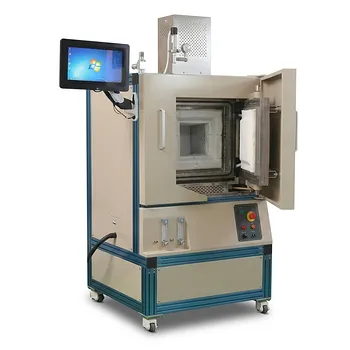
High Temperature Oxygen and Inert Atmosphere Controlled Furnace 8 Liter 1700C Sintering System for Advanced Materials RD
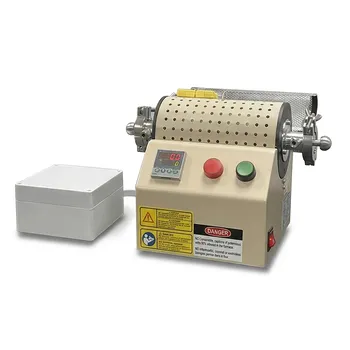
1000C Mini Tube Furnace with 20mm Quartz Tube and Vacuum Flanges for Material Science Research and Controlled Atmosphere Small Sample Processing
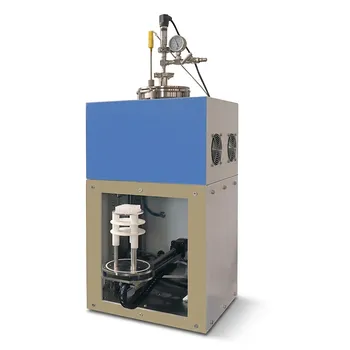
Rapid Thermal Processing RTP Atmosphere Controlled Bottom Loading Furnace 1100C High Throughput 50C per Second Heating Rate
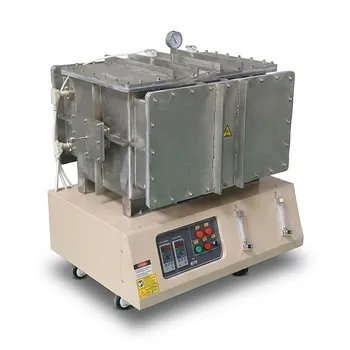
1500°C Atmosphere Controlled Rapid Heating Furnace for Material Science and Battery Powder Sintering
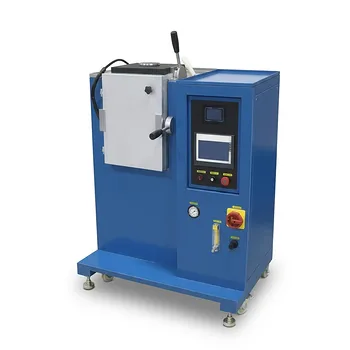
High Throughput Induction Melting and Casting Furnace for Superalloy Research 1700C Atmosphere Controlled Multi Sample System
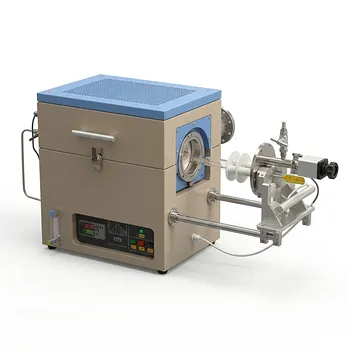
Compact Atmosphere Controlled Rapid Thermal Processing RTP Furnace with 4 Inch ID Quartz Tube 1100C
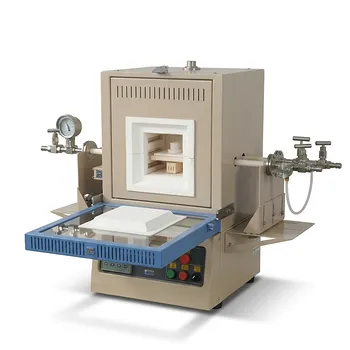
1700C Compact Hybrid Furnace with Dual Layer Box Sintering and Controlled Atmosphere Alumina Tubes
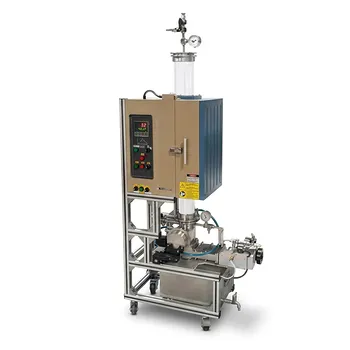
1200C High Temperature Atmosphere Controlled Vertical Quenching Tube Furnace with 4 Inch Quartz Tube
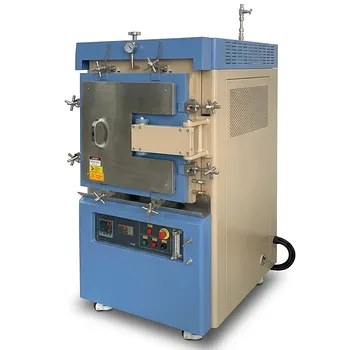
Atmosphere Controlled Muffle Furnace 1700C Maximum Temperature 80L High Capacity Vacuum Inert Gas Box Furnace
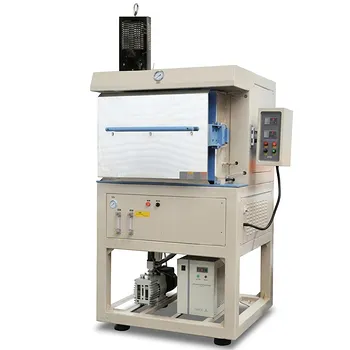
1200C Hydrogen Atmosphere Box Furnace with 5 Heated Sides and 64L Chamber
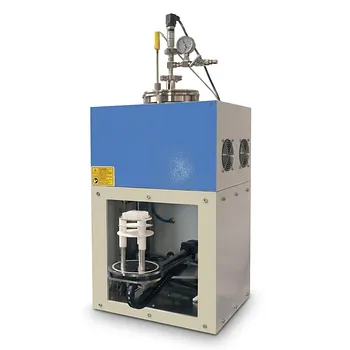
Rapid Thermal Processing Atmosphere Controlled Bottom Loading Furnace 1100C with 50C Per Second Heating Rate for Wafer Annealing
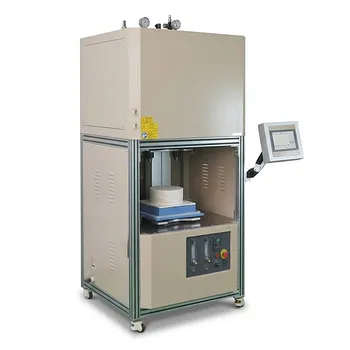
High Temperature Vertical Atmosphere Controlled Furnace 1700C Automatic Bottom Loading 13 Liter Vacuum Thermal System
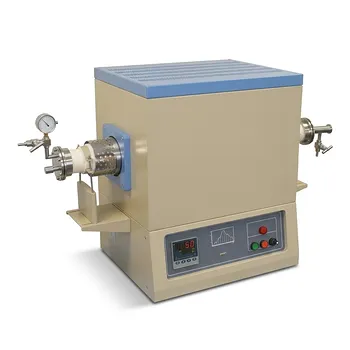
1700C High Temperature Alumina Tube Furnace with 18 Inch Heated Zone and Vacuum Sealing Flanges
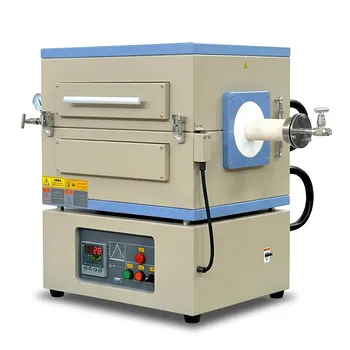
1500°C Split Tube Furnace with Alumina Tube and Vacuum Sealing Flanges for Material Research
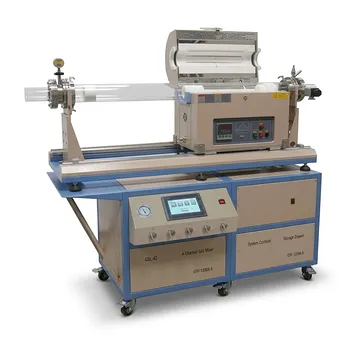
Dual Tube 100mm 80mm CVD Sliding Furnace with 4 Channel Gas Mixing and Vacuum System
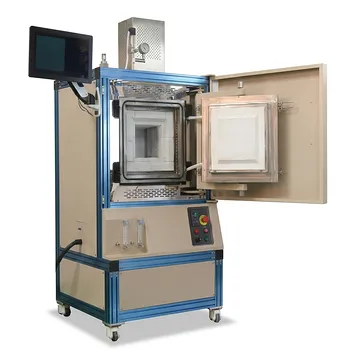
High Temperature Hydrogen Atmosphere Box Furnace 1650C Max Reducing Environment Material Synthesis System 8x8x8 Chamber
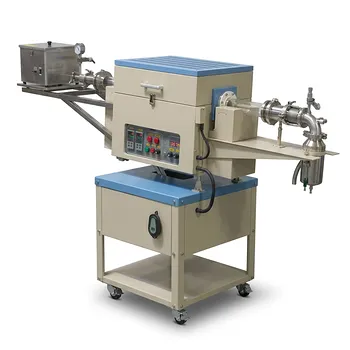
Two Zone Rotary CVD Furnace with Automatic Feeding and Receiving System for Powder Processing
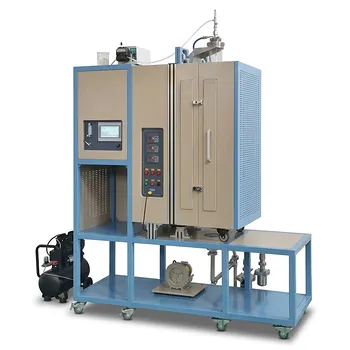
1500C Three Zone Vertical Pyrolysis Furnace for Nanoparticle Synthesis and Advanced Oxide Coating
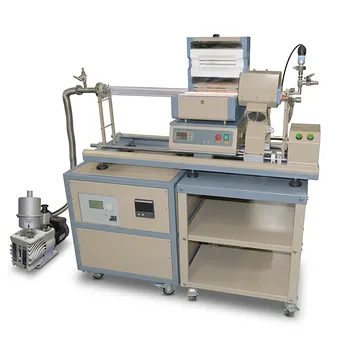
1200C Max Compact Auto-Sliding PECVD Furnace with 2 Inch Tube and Vacuum Pump