How do tube furnaces ensure rigor in thermal shock testing of barrier coatings? Precision Solutions for TBC R&D
Updated 3 months ago
Laboratory tube furnaces ensure experimental rigor by combining high-precision temperature control with integrated rapid-handling systems. These furnaces maintain isothermal stability within ±1°C and utilize mechanical loading devices to precisely time the transition between extreme heat and quenching environments, ensuring that every thermal shock cycle is identical and statistically significant.
The core of experimental rigor in thermal shock testing lies in the ability to eliminate variables through sub-degree temperature stability and automated timing. By standardizing the "dwell" and "quench" phases, researchers can isolate the material's performance from the inconsistencies of the testing apparatus.
Ensuring Thermodynamic Stability and Repeatability
Precision Isothermal Control
Modern tube furnaces utilize advanced control systems to maintain a constant temperature field with a fluctuation margin of only ±1°C. This level of precision is critical for establishing a baseline high-temperature environment that does not inadvertently introduce thermal stress before the actual "shock" occurs.
Elimination of Performance Fluctuations
A uniform thermal field ensures that the entire volume of the Thermal Barrier Coating (TBC) sample reaches the desired phase transition or densification point simultaneously. By providing a repeatable thermodynamic environment, the furnace hardware eliminates sample performance fluctuations, ensuring the resulting data is statistically significant.
Simulation of High-Temperature Aging
To evaluate long-term reliability, these furnaces can maintain stable temperatures (such as 450°C or up to 1100°C) for hundreds of hours. This allows researchers to study oxidation resistance and Thermally Grown Oxide (TGO) growth rates under controlled, real-world atmospheric conditions.
Managing the Temporal Dynamics of Thermal Shock
Rapid Loading and Unloading Devices
The transition from a high-temperature zone to a room-temperature environment must be instantaneous to simulate a true "shock." Integrated mechanical devices allow for precise control of movement time, ensuring that the cooling rate is governed by the quenching medium (water or air) rather than human error or slow mechanical transit.
Cyclic Thermal Fatigue Testing
For materials like thin films or 7YSZ coatings, furnaces are programmed to cycle between extremes—such as room temperature and 1100°C—hundreds of times. This cyclic fatigue testing is essential for verifying whether the coating can maintain physical integrity, such as avoiding cracking or peeling, over its intended service life.
Verification of Modification Layers
By accurately simulating the harsh operating conditions of gas turbines or aero-engines, tube furnaces provide the necessary stress to verify the effectiveness of modification layers (like Al2O3). This helps researchers determine if these layers successfully inhibit TGO growth and prevent coating spallation under severe fluctuations.
Understanding the Trade-offs and Constraints
Isothermal vs. Gradient Heating
While tube furnaces excel at providing a uniform temperature, real-world turbine blades often experience a thermal gradient (different temperatures on the surface versus the substrate). Testing in an isothermal tube furnace may not fully capture the stress-strain state caused by these internal temperature differences.
Loading Speed Limitations
Even with rapid loading devices, there is a finite time required to move a sample from the furnace core to the quenching tank. If this transit time is too long, the sample begins to cool through radiation, which can "soften" the thermal shock and lead to underestimated failure risks.
Atmospheric Interference
While tube furnaces can control the atmosphere, the high-velocity gas flow found in jet engines is difficult to replicate. Researchers must recognize that a static heated environment may produce different oxidation kinetics than the high-pressure, high-velocity environments of actual industrial applications.
Applying Furnace Data to Experimental Goals
Recommendations for Research and Development
- If your primary focus is evaluating material durability: Use long-term isothermal sintering (exceeding 100 hours) to observe the anti-sintering performance and primary failure modes of the coating.
- If your primary focus is simulating engine startups/shutdowns: Utilize automated rapid loading devices to cycle samples between 1050°C and a water-cooling system to maximize thermal stress.
- If your primary focus is industrial MEMS or thin films: Prioritize cyclic thermal fatigue tests between room temperature and 400°C to ensure stable performance below depolarization thresholds.
By standardizing the thermal and temporal variables of the test environment, laboratory tube furnaces transform subjective observations into a definitive assessment of a coating's survival limits.
Summary Table:
| Feature | Technical Capability | Experimental Rigor Benefit |
|---|---|---|
| Temperature Control | Precision within ±1°C | Eliminates thermodynamic variables and performance fluctuations |
| Rapid Handling | Automated loading/unloading | Ensures repeatable shock timing and consistent cooling rates |
| Cyclic Fatigue | Programmable thermal cycles | Accurately simulates engine startup/shutdown stresses |
| Atmosphere Control | Controlled gas/vacuum | Isolates oxidation kinetics and TGO growth mechanisms |
Optimize Your Thermal Barrier Coating Research with THERMUNITS
Ensure the highest level of experimental rigor for your high-temperature material studies. THERMUNITS is a leading manufacturer of high-performance laboratory equipment, providing the precision and reliability needed for advanced material science and industrial R&D.
Our comprehensive range of thermal processing solutions includes:
- Specialized Furnaces: Tube, Muffle, Vacuum, Atmosphere, Rotary, and Hot Press furnaces.
- Advanced Systems: CVD/PECVD systems, Dental Furnaces, Electric Rotary Kilns, and Vacuum Induction Melting (VIM) furnaces.
- Essential Components: High-quality Thermal Elements and laboratory heat treatment equipment.
Ready to enhance your laboratory’s thermal testing capabilities?
Contact THERMUNITS Today to explore how our tailored heating solutions can deliver the precise results your research demands.
References
- Dongbo Li, Guizhong Yang. Synthesis and thermophysical properties of rare-earth tantalate ZrO<sub>2</sub>-Dy<sub>3</sub>TaO<sub>7</sub> ceramics. DOI: 10.1088/1742-6596/2842/1/012065
Mentioned Products
- Multi Position Tube Furnace 1100C for Laboratory Material Research and Advanced Industrial Thermal Processing
- Ten Zone Multi Orientation Laboratory Tube Furnace for 1200C High Temperature Gradient Thermal Processing
- High Temperature 1200C Split Tube Furnace with Hinged Vacuum Flanges and 4 Inch Quartz Tube for Laboratory Research
- 1100°C Vertical Laboratory Furnace for DIY Tubular Reactors with PID Temperature Controller
- High Temperature Automated 5 Inch Tube Furnace for Autonomous Material Research and Advanced Laboratory R&D
People Also Ask
- Why use a tube furnace for oxygen annealing LaCrO3/LaMnO3? Optimize Phase Transition & Magnetic Performance.
- What key role does a laboratory high-temperature tube furnace play in the production of carbon nanofibers? Guide
- How is a laboratory high-temperature tube furnace utilized to research the products of aluminothermic reduction? Advanced Metallurgical Solutions
- What is the role of a laboratory tube furnace in the carbonization process of porous carbon foam (PCF)? Master 3D Synthesis
- What role does a laboratory tube furnace play in the pyrolysis and carbonization of biomass? Optimize Thermal Research.

Tech Team · ThermUnits
Last updated on Jun 02, 2026
Related Products
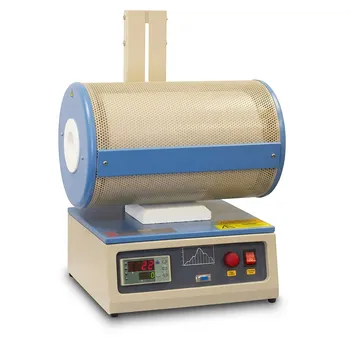
Multi Position Tube Furnace 1100C for Laboratory Material Research and Advanced Industrial Thermal Processing
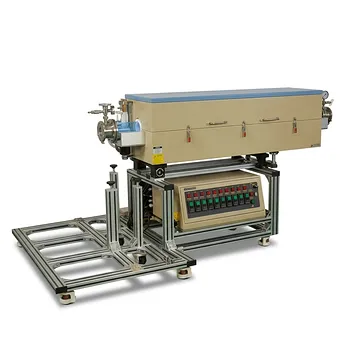
Ten Zone Multi Orientation Laboratory Tube Furnace for 1200C High Temperature Gradient Thermal Processing
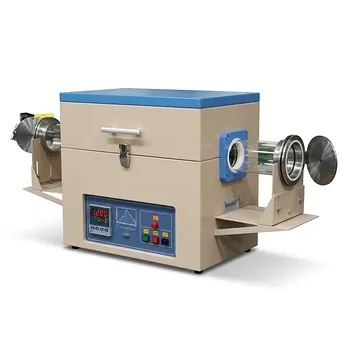
High Temperature 1200C Split Tube Furnace with Hinged Vacuum Flanges and 4 Inch Quartz Tube for Laboratory Research
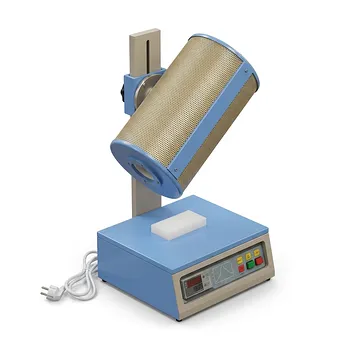
1100°C Vertical Laboratory Furnace for DIY Tubular Reactors with PID Temperature Controller

High Temperature Automated 5 Inch Tube Furnace for Autonomous Material Research and Advanced Laboratory R&D
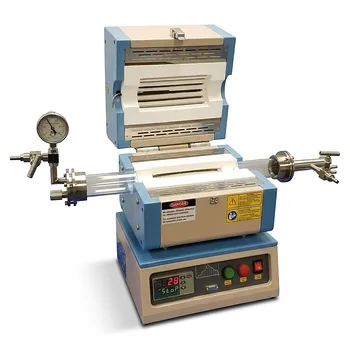
Compact Split Tube Furnace with Integrated Vacuum System and Precision Temperature Calibrator

1800C High Temperature Compact Vacuum Tube Furnace with 60mm OD Alumina Tube and Kanthal MoSi2 Heating Elements
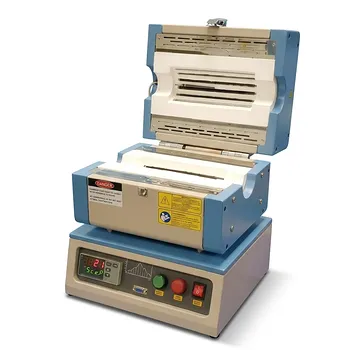
1250C Compact Split Tube Furnace with 8 Inch Heating Zone and Programmable Controller
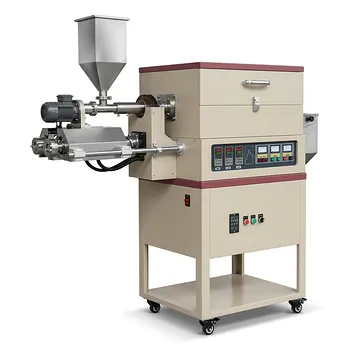
Laboratory Tilting Rotary Tubular Furnaces for Material Science and Industrial Heat Treatment
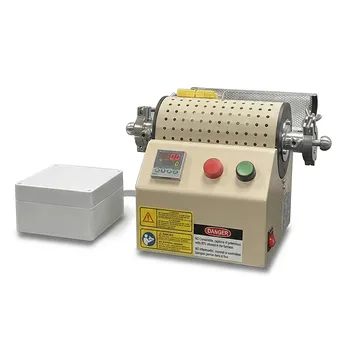
1000C Mini Tube Furnace with 20mm Quartz Tube and Vacuum Flanges for Material Science Research and Controlled Atmosphere Small Sample Processing
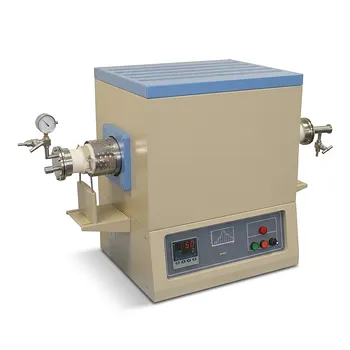
1700C High Temperature Alumina Tube Furnace with 18 Inch Heated Zone and Vacuum Sealing Flanges
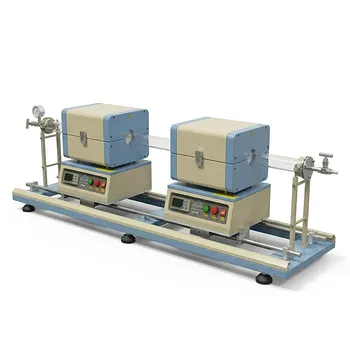
1200C Max Dual Sliding Tube Furnace with 50 mm Tube Flanges for CVD
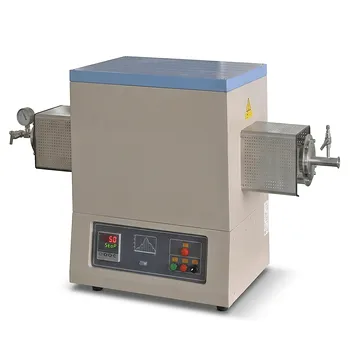
High Temperature 1700C Tube Furnace with 4 Inch OD Alumina Tube and Vacuum Sealing Flanges
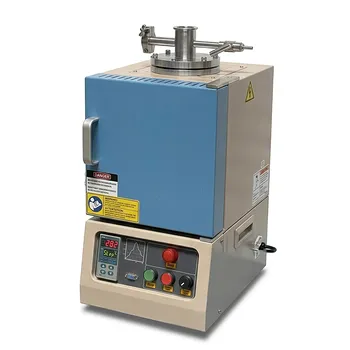
High Temperature Hybrid Muffle and Tube Furnace with Vacuum Capability and PID Control
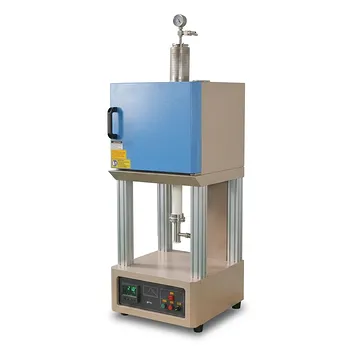
Hybrid High Temperature Tube and Box Furnace 1700C with 2 Inch Alumina Tube for Material Research
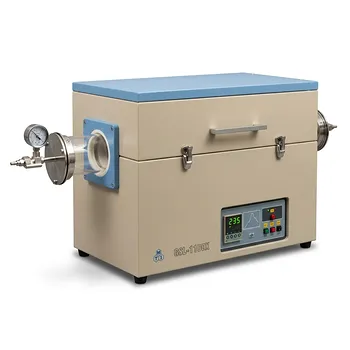
Single Zone Tube Furnace 5 Inch Quartz Tube 36 Inch Heating Zone Vacuum Flanges

High Temperature 1700C Vertical Tube Furnace for Powder Spherification and Material Sintering

1100C Tube Furnace with Vacuum Flange and Programmable Temperature Controller for Material Science and Industrial Heat Treatment

High Temperature 1700C Tube Furnace with High Vacuum Turbomolecular Pump System and Multi Channel Mass Flow Controller Gas Mixer
