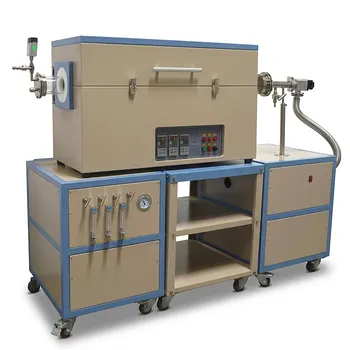
How do temperature regimes influence the growth rate of films in a CVD system? Master CVD Kinetics for Superior Thin Films
Updated 5 months ago
The growth rate of films in a Chemical Vapor Deposition (CVD) system is fundamentally governed by temperature-dependent kinetic regimes. Temperature dictates whether the speed of film formation is limited by the chemical reactions occurring on the substrate surface or the physical transport of reactants through the gas phase.
Core Takeaway: Film growth shifts from an exponential, reaction-driven phase at low temperatures to a stable, diffusion-driven phase at high temperatures. Mastering these regimes allows engineers to balance production speed with the structural integrity and uniformity of the deposited material.
The Surface-Reaction Limited Regime (Low Temperatures)
Exponential Growth via Arrhenius Behavior
At lower temperatures, the chemical reactions required to decompose precursors and form a solid film occur slowly. In this regime, the growth rate is highly sensitive to temperature changes, increasing exponentially as the temperature rises.
The Kinetic Bottleneck
The "bottleneck" here is the chemical energy required for adsorption and reaction on the substrate. Because the supply of reactants exceeds the speed at which the surface can process them, the growth rate is determined solely by the surface reaction kinetics.
Precision and Stoichiometry
This regime is often preferred when high precision is required for chemical stoichiometry. For example, maintaining specific temperatures for precursors ensures a controllable mass flow rate, which is critical for maintaining steady growth rates in complex oxides like Thorium Dioxide.
The Mass-Transport Limited Regime (High Temperatures)
The Role of the Boundary Layer
As temperatures increase, surface reactions become extremely rapid, and the system enters the mass-transport limited regime. At this stage, the growth rate is no longer limited by the reaction speed but by how quickly precursors can diffuse through a stagnant "boundary layer" of gas to reach the substrate.
Stability and Diffusion
In this regime, the growth rate remains relatively constant even if the temperature fluctuates slightly. The process is governed by the physical laws of gas diffusion rather than chemical activation energy.
Ensuring Film Uniformity
To achieve high-quality films in this regime, the system must maintain a stable temperature gradient. Precise multi-zone temperature control ensures that precursors sublimate accurately and react uniformly across large-scale substrates.
How Temperature Shapes Nucleation and Morphology
Controlling Nucleation Kinetics
Temperature regulates the free energy during the initial formation of "islands" or nuclei on the substrate. By adjusting the thermal environment, operators can shift the growth outcome between different structural forms of the same element.
Morphological Transitions
Specific temperature ranges, such as 750°C to 850°C, can determine whether a process yields carbon nanotubes or planar graphene nanoribbons. Higher temperatures generally favor 3D structures like nanotubes, while lower temperatures favor 2D planar growth.
Management of Thermal Stress
The cooling phase is just as critical as the heating phase for film quality. Precise cooling rates are required to release thermal stress between the film and the substrate, preventing the formation of cracks or wrinkles in materials like MoS2.
Understanding the Trade-offs and Pitfalls
Throughput vs. Control
Operating in the surface-reaction regime offers excellent control over film thickness but results in much slower production speeds. Conversely, the mass-transport regime offers high throughput but requires sophisticated reactor designs to ensure gas flow is uniform across the entire substrate.
Precursor Depletion
In high-temperature regimes, precursors may react prematurely in the gas phase before reaching the substrate. This leads to "precursor depletion," where the growth rate drops off at the far end of the reaction chamber, resulting in non-uniform film thickness.
Thermal Decomposition Risks
Excessive heat can lead to the unwanted thermal decomposition of precursors in the storage tanks or delivery lines. Maintaining precise temperatures in precursor storage is essential to ensure a constant saturated vapor pressure and a stable mass flow rate.
How to Optimize Your CVD Process
To achieve the best results, your temperature strategy must align with your specific material requirements and production goals.
- If your primary focus is thickness precision and stoichiometry: Operate in the lower-temperature, surface-reaction limited regime to ensure the growth rate is strictly governed by chemical kinetics.
- If your primary focus is high-volume production and throughput: Shift to the higher-temperature, mass-transport limited regime, but ensure your reactor has optimized gas flow dynamics to maintain uniformity.
- If your primary focus is structural integrity and defect reduction: Prioritize programmed heating and cooling rates to manage nucleation density and minimize thermal stress-induced cracking.
Effective CVD growth is a delicate balance between the energy required for chemical transformation and the physical dynamics of gas delivery.
Summary Table:
| Regime | Temperature Level | Primary Limiting Factor | Growth Rate Behavior |
|---|---|---|---|
| Surface-Reaction Limited | Low | Chemical reaction kinetics | Exponential increase with temperature; high precision |
| Mass-Transport Limited | High | Gas diffusion through boundary layer | Stable/constant rate; sensitive to gas flow dynamics |
| Precursor Depletion | Very High | Reactant supply exhaustion | Growth rate decline; potential for non-uniformity |
Optimize Your Thermal Processing with THERMUNITS
At THERMUNITS, we understand that precision in temperature control is the difference between a flawed sample and a breakthrough material. As a leading manufacturer of high-temperature laboratory equipment, we provide specialized CVD/PECVD systems, Vacuum furnaces, and Multi-zone Tube furnaces designed to master both surface-reaction and mass-transport regimes.
Whether you are a material scientist focusing on 2D materials like graphene or an industrial R&D engineer scaling up production, our solutions offer the thermal stability and gas flow precision required for uniform, high-quality film deposition.
Ready to enhance your lab's efficiency? Contact our expert team today to find the perfect thermal processing solution for your specific research needs.
Mentioned Products
- Chemical Vapor Deposition CVD System Slide PECVD Tube Furnace with Liquid Gasifier PECVD Machine
- Versatile Chemical Vapor Deposition Tube Furnace System for Advanced Material Research and Industrial Coating Processes
- Radio Frequency Plasma Enhanced Chemical Vapor Deposition RF PECVD System for Laboratory and Industrial Thin Film Growth
- Inclined Rotary Plasma Enhanced Chemical Vapor Deposition PECVD System for Thin Film Deposition and Nanomaterial Synthesis
- 915MHz MPCVD Diamond Machine Microwave Plasma Chemical Vapor Deposition System Reactor
People Also Ask
- What are the advantages of PECVD systems for nano flame retardant films? Protect Heat-Sensitive Polymers with Precision
- How does a sliding rail design benefit the CVD process within a furnace ventilation hood? Enhance Control & Quenching
- What is the role of CVD/PECVD systems in the research of optoelectronic materials and functional coatings? Expert Guide
- How does PECVD differ from conventional thermal CVD? Key Advantages of Low-Temperature Deposition for R&D
- What role do by-product desorption and evacuation play in CVD film quality? Key Factors for High-Purity Films

Tech Team · ThermUnits
Last updated on Apr 14, 2026
Related Products
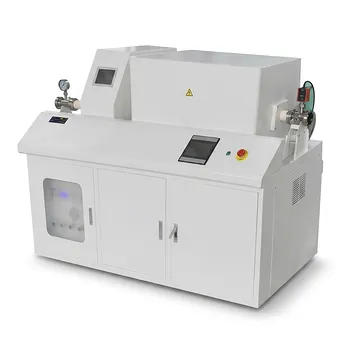
Chemical Vapor Deposition CVD System Slide PECVD Tube Furnace with Liquid Gasifier PECVD Machine
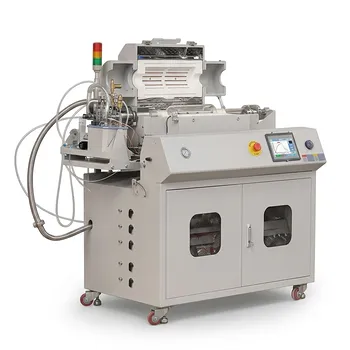
Versatile Chemical Vapor Deposition Tube Furnace System for Advanced Material Research and Industrial Coating Processes
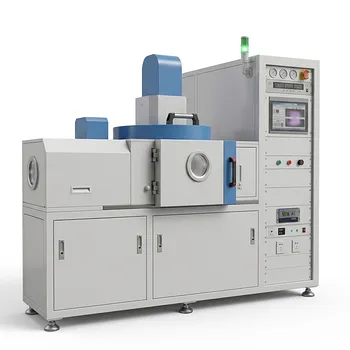
Radio Frequency Plasma Enhanced Chemical Vapor Deposition RF PECVD System for Laboratory and Industrial Thin Film Growth
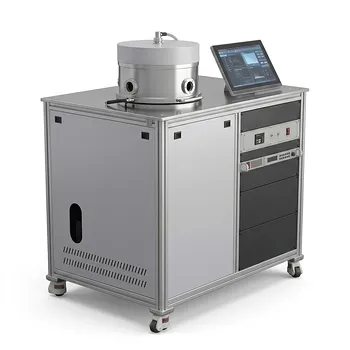
Inclined Rotary Plasma Enhanced Chemical Vapor Deposition PECVD System for Thin Film Deposition and Nanomaterial Synthesis
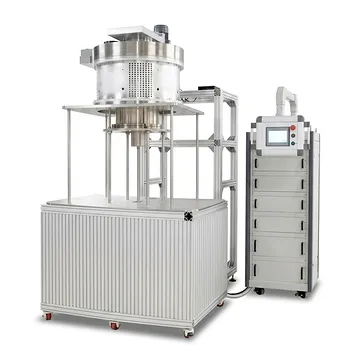
915MHz MPCVD Diamond Machine Microwave Plasma Chemical Vapor Deposition System Reactor
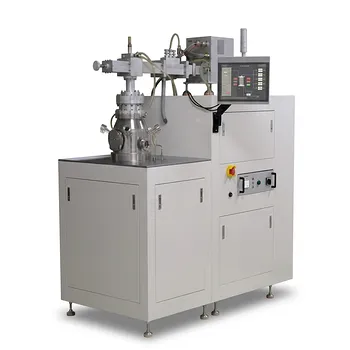
Cylindrical Resonator MPCVD Machine System for Microwave Plasma Chemical Vapor Deposition and Lab Diamond Growth
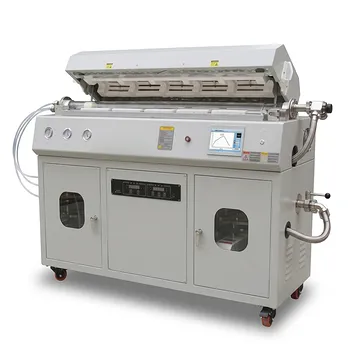
Multi Heating Zones CVD Tube Furnace System for Precision Chemical Vapor Deposition and Advanced Material Synthesis
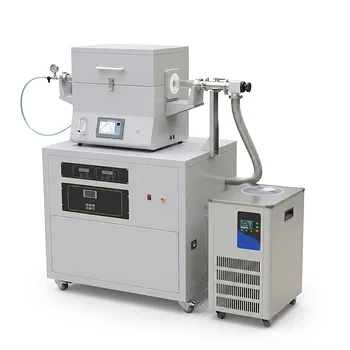
Split Chamber CVD Tube Furnace with Vacuum Station Chemical Vapor Deposition System Machine
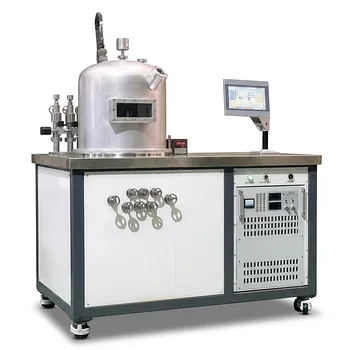
HFCVD Machine System for Nano Diamond Coating on Drawing Dies and Industrial Tools
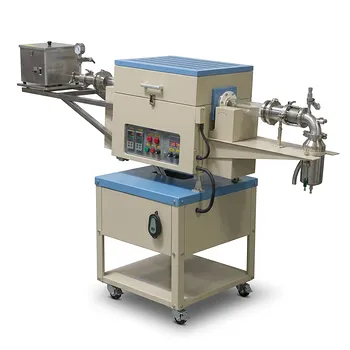
Two Zone Rotary CVD Furnace with Automatic Feeding and Receiving System for Powder Processing
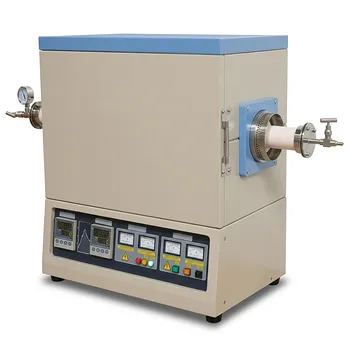
High Temperature 1700C Dual Zone Tube Furnace for Material Science and Industrial Chemical Vapor Deposition Research
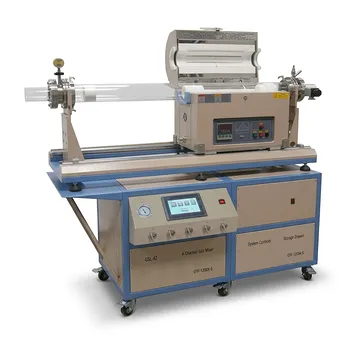
Dual Tube 100mm 80mm CVD Sliding Furnace with 4 Channel Gas Mixing and Vacuum System
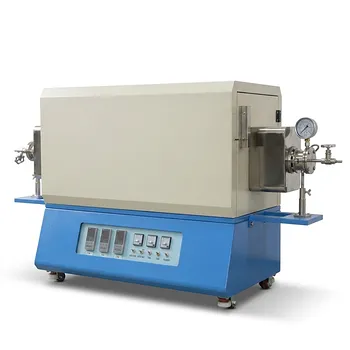
Three Temperature Zone High Temperature Vacuum Tube Furnace for CVD and Material Sintering
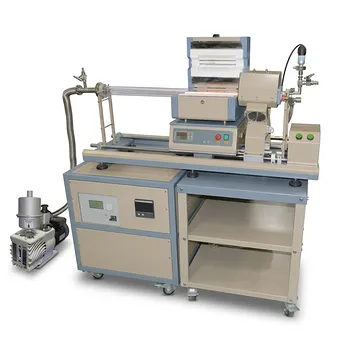
1200C Max Compact Auto-Sliding PECVD Furnace with 2 Inch Tube and Vacuum Pump
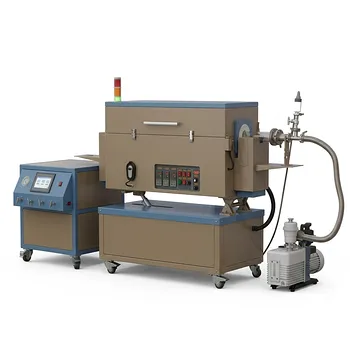
5 Inch Three Zone Rotary Tube Furnace with Integrated Gas Delivery System and 1200C Capability for Advanced Material CVD Processing

High Temperature 1700C Tube Furnace with High Vacuum Turbomolecular Pump System and Multi Channel Mass Flow Controller Gas Mixer
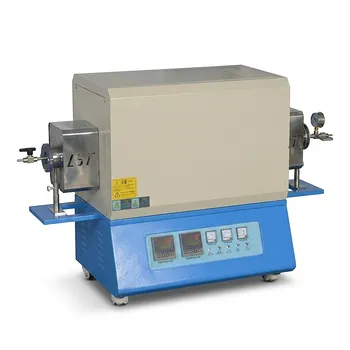
High Temperature Dual Zone Vacuum Tube Furnace for Material Research and CVD Processing
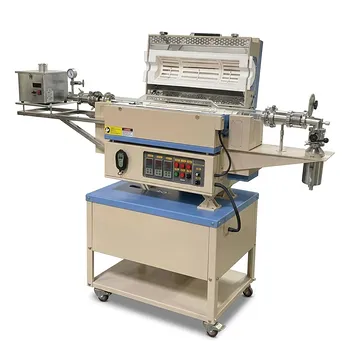
5 Inch Rotary Tube Furnace with Automatic Feeding and Receiving System 1200C Three Zone CVD Powder Processing
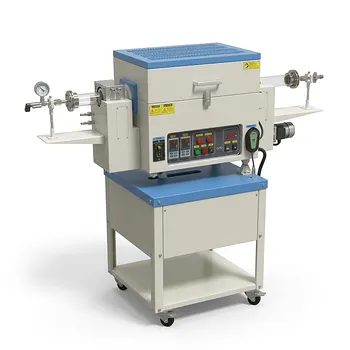
4 Inch Two Zone Rotary CVD Tube Furnace for High Temperature Battery Material Synthesis and Advanced Material Calcination