How does a benchtop horizontal tube furnace contribute to slow pyrolysis experiments for wind turbine blade materials?
Updated 3 months ago
The benchtop horizontal tube furnace serves as the primary thermal reactor for decomposing complex wind turbine blade composites. It creates a highly controlled environment where researchers can apply specific heating rates—typically between 15 and 30 °C/min—to observe the thermal degradation of epoxy resin matrices. This precision is vital for separating high-quality glass fibers from organic components while optimizing the recovery of combustible gases and oils.
The horizontal tube furnace is the linchpin of slow pyrolysis, providing the stable thermal and anaerobic conditions necessary to transform waste composites into reusable fibers and energy. By precisely mediating temperature and atmosphere, it allows for the systematic optimization of resource recovery efficiency.
Precise Thermal Management in Slow Pyrolysis
Controlled Heating Rates
The furnace allows for the selection of specific heating rates, which is the defining characteristic of slow pyrolysis. By maintaining rates such as 15 to 30 °C/min, researchers can accurately study how the speed of temperature increase influences the final distribution of gas, oil, and solid products.
Uniform Thermal Fields
The design of the horizontal tube ensures a stable and uniform temperature field throughout the heating zone. This uniformity is critical for wind turbine blades, as it ensures the epoxy resin matrix degrades consistently across the entire sample, preventing localized over-heating.
Programmed Multi-Stage Profiles
Modern tube furnaces support programmable heating profiles, such as holding at lower temperatures for insulation before rising to peak pyrolysis levels. This capability allows for the complex cracking and polymerization reactions required to reorganize carbon elements into stable frameworks.
Atmospheric Integrity and Chemical Protection
Anaerobic Environment via Inert Purging
Sealed flanges allow for the continuous introduction of high-purity nitrogen or argon, maintaining a strict oxygen-free atmosphere. This inert environment is essential to prevent the combustion of the sample, allowing for the study of pure thermochemical conversion and gas release.
Volatile Product Migration
The horizontal orientation facilitates the seamless connection of downstream devices, such as condensers and absorption units. This setup enables the complete collection of tar and gases, allowing researchers to map the migration path of pyrolysis products from the solid composite.
High-Temperature Stability
These furnaces typically operate between 350°C and 700°C, the optimal range for the thermal degradation of resins. Maintaining these temperatures for specific durations (e.g., 3 hours) ensures the complete removal of volatile matter and the dealkylation of organic components.
Material Recovery and Optimization
Separation of Glass Fibers
The primary goal in wind turbine blade recycling is the effective separation of glass fibers from the resin matrix. The tube furnace drives the degradation of the resin while preserving the structural integrity of the fibers, providing a basis for researching fiber recovery quality.
Enhancing Combustible Gas Yields
Experiments in these furnaces verify that specific heating rates can increase the proportion of combustible gases. This data provides the experimental foundation for designing larger-scale industrial recycling plants that focus on energy recovery.
Solid Phase Synthesis
The furnace facilitates the reorganization of carbon into stable graphitic or amorphous frameworks. This results in high-quality solid yields that can be used as raw materials for subsequent catalytic processes or biochar applications.
Understanding the Trade-offs
Sample Selection and Size Constraints
The physical dimensions of the quartz tube limit the size of the blade fragments that can be tested. While this provides high precision, it may not perfectly replicate the thermal gradients found in large-scale industrial batch reactors.
Processing Time vs. Energy Efficiency
Slow pyrolysis, by definition, requires longer residence times at high temperatures. This provides excellent data and high-quality products, but researchers must balance these gains against the energy consumption required to maintain the furnace for extended periods.
Maintenance of the Quartz Interface
The quartz tubes used in these furnaces are susceptible to fouling from the heavy tars produced during resin degradation. Frequent cleaning and maintenance are required to ensure the optical and thermal clarity of the reaction vessel stay consistent over multiple experiments.
How to Apply This to Your Project
Recommendations for Research Goals
To maximize the utility of a horizontal tube furnace in your experiments, consider the following strategic focuses:
- If your primary focus is Fiber Quality: Use lower peak temperatures and slower heating rates to prevent thermal damage to the glass fiber surface.
- If your primary focus is Energy Recovery: Experiment with the higher end of the 15 to 30 °C/min range to maximize the production of combustible gases.
- If your primary focus is Chemical Feedstocks: Utilize multi-stage heating profiles and downstream condensation to capture and analyze the chemical composition of pyrolysis oils.
Precision in the laboratory today is the prerequisite for sustainable material lifecycles in the wind energy industry tomorrow.
Summary Table:
| Feature | Benefit for Slow Pyrolysis | Impact on Blade Recycling |
|---|---|---|
| Controlled Heating (15-30°C/min) | Enables precise study of degradation rates | Optimizes separation of resin from glass fibers |
| Uniform Thermal Fields | Prevents localized overheating/hotspots | Ensures consistent resin cracking across the sample |
| Inert Atmosphere (N2/Ar) | Maintains strict anaerobic conditions | Prevents combustion; allows pure chemical recovery |
| Programmable Multi-Stage Profiles | Supports complex cracking/polymerization | Facilitates high-quality solid & gas yield optimization |
| Horizontal Orientation | Seamless connection to downstream condensers | Efficient collection of tars and combustible gases |
Elevate Your Material Recovery Research with THERMUNITS
Are you looking to optimize your slow pyrolysis experiments for complex composites? THERMUNITS is a leading manufacturer of high-temperature laboratory equipment, providing the precision needed for advanced material science and industrial R&D.
Our high-performance Tube Furnaces and Atmosphere Furnaces offer the atmospheric integrity and programmable thermal control required to separate high-quality glass fibers and maximize energy yields from wind turbine waste. Beyond tube furnaces, we offer a comprehensive range of solutions including Muffle, Vacuum, Rotary, and Hot Press furnaces, CVD/PECVD systems, Dental Furnaces, and Vacuum Induction Melting (VIM) furnaces.
Contact THERMUNITS today to discuss how our advanced heat treatment solutions can enhance your lab's recycling efficiency and research outcomes!
References
- Dongwang Zhang, Man Zhang. Experimental Study and Process Simulation on Pyrolysis Characteristics of Decommissioned Wind Turbine Blades. DOI: 10.3390/en17133229
Mentioned Products
- High Temperature 1700C Benchtop Tube Furnace with 5 Inch Heating Zone High Purity Alumina Tube and Vacuum Sealing Flanges
- 1750°C High Temperature Benchtop Vacuum Atmosphere Tube Furnace with Kanthal Super 1800 Heating Elements and 60mm Alumina Processing Tube
- High Temperature Benchtop Muffle Furnace with Quartz Observation Window for Thermal Imaging and Material Analysis
- 1200°C 10-Zone Split Tube Furnace with Horizontal and Vertical Mounting for Multi-Zone Thermal Gradients and Large Diameter Material Processing
- Multi Position Tube Furnace 1100C for Laboratory Material Research and Advanced Industrial Thermal Processing
People Also Ask
- How are high-temperature tube furnaces utilized to repair etching damage? Precision Lattice Restoration Solutions
- What is the function of a high-temperature tube furnace in the synthesis of g-C3N4? Optimize Thermal Polycondensation
- What impact does the heating rate of a tube furnace have on biochar microstructure? Optimize Your Material R&D.
- What is the role of a high-temperature tube furnace in the calcination process of ZnO/In2O3 nanocomposites?
- Conditions for nZVI Synthesis in Tube Furnaces? Learn to Optimize Thermal and Atmospheric Control for High Purity.

Tech Team · ThermUnits
Last updated on Jun 02, 2026
Related Products

High Temperature 1700C Benchtop Tube Furnace with 5 Inch Heating Zone High Purity Alumina Tube and Vacuum Sealing Flanges
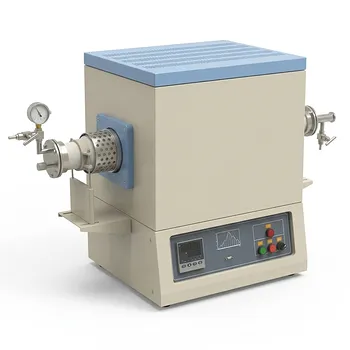
1750°C High Temperature Benchtop Vacuum Atmosphere Tube Furnace with Kanthal Super 1800 Heating Elements and 60mm Alumina Processing Tube
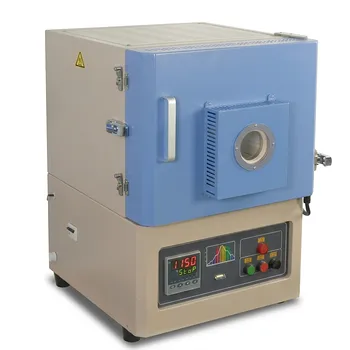
High Temperature Benchtop Muffle Furnace with Quartz Observation Window for Thermal Imaging and Material Analysis
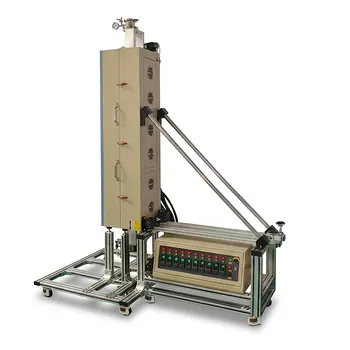
1200°C 10-Zone Split Tube Furnace with Horizontal and Vertical Mounting for Multi-Zone Thermal Gradients and Large Diameter Material Processing
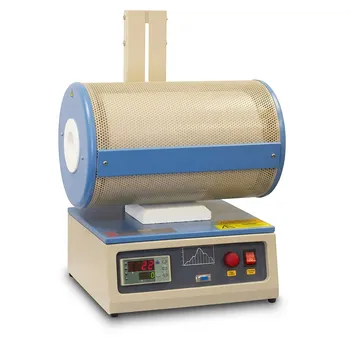
Multi Position Tube Furnace 1100C for Laboratory Material Research and Advanced Industrial Thermal Processing
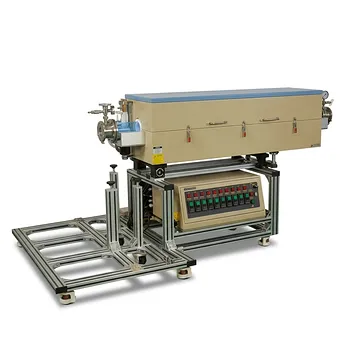
Ten Zone Multi Orientation Laboratory Tube Furnace for 1200C High Temperature Gradient Thermal Processing

Vertical 1700C Vacuum and Atmosphere Tube Furnace with 80mm Alumina Tube
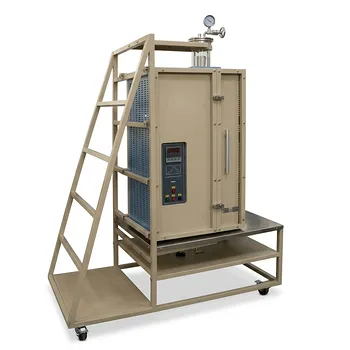
Split Vertical Tube Furnace with 1200C Quartz Tube and Stainless Steel Vacuum Flanges for Rapid Thermal Processing

1200°C 5 Inch Vertical Quartz Tube Furnace with Stainless Steel Vacuum Flanges
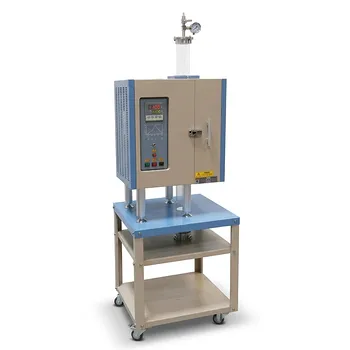
1100°C Split Vertical Tube Furnace with 80mm Quartz Tube and Stainless Steel Vacuum Flanges

Compact Vertical Split Quartz Tube Furnace with Stainless Steel Vacuum Flanges for Rapid Thermal Quenching and Controlled Atmosphere Material Processing
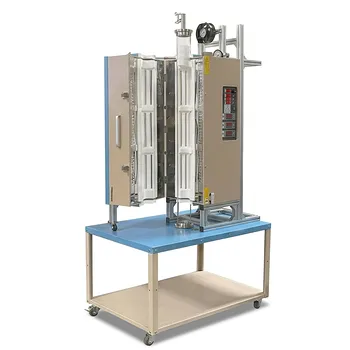
1200C Three Zone Split Vertical Tube Furnace 4 Inch Quartz Tube Stainless Steel Vacuum Flanges
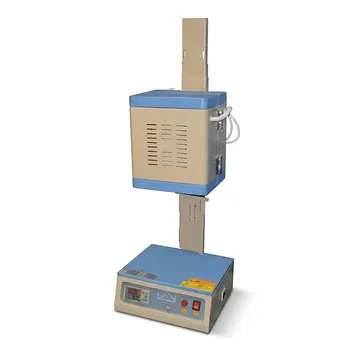
High Temperature Vertical Split Tube Furnace with PID Temperature Controller for 1 and 2 Inch Processing Tubes
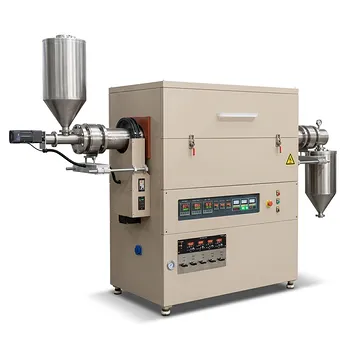
High Temperature Tilting Rotary Tube Furnace with Integrated Mass Flow Control and Multi Zone Heating

High Temperature Tube Furnace 1500C with Sliding Flanges and 50mm OD for Rapid Thermal Processing Fast Heating and Cooling
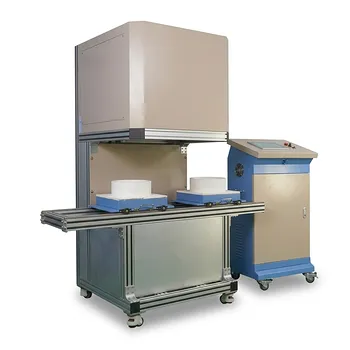
High Temperature Bottom Loading Vertical Furnace 1700C Dual Stage Sample Processing System 18L Large Capacity Thermal Treatment Equipment
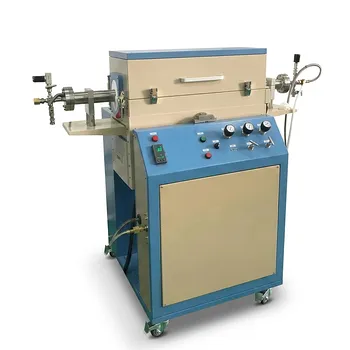
High Temperature Rocking Tube Furnace 1700°C Alumina Processing Tube with Precision Oscillation for Material Synthesis
Sixteen Channel Rocking Tube Furnace for High Throughput Heat Treatment and Material Science Research with Individual Temperature Control up to 1100C
High Temperature Rocking Tube Furnace with Quartz Tube and Vacuum Flange for Materials Synthesis
