How does a Benchtop Tube Furnace control temperature gradients for simulated zone melting processes? Expert Insights
Updated 3 months ago
Benchtop Tube Furnaces control temperature gradients through a combination of specialized heating zone architecture and the precise mechanical movement of the sample. By establishing a stable thermal profile that transitions from a hot center to cooler ends, the furnace creates a "liquid-solid interface." This allows researchers to drive a crystallization front at controlled speeds, typically between 0.1 and 3.3 mm/min, to effectively simulate industrial-scale impurity separation.
The success of simulated zone melting depends on the furnace’s ability to maintain a sharp, stable temperature gradient while moving the sample boat through the thermal field. By precisely modulating the axial position and cooling rates, the system forces impurities to migrate, resulting in a refined material with a specific crystal structure.
The Mechanics of Thermal Gradient Formation
Specialized Heating Zone Design
A benchtop tube furnace is engineered to create a non-uniform but stable temperature profile along its length. The heating elements are concentrated to ensure the center of the tube reaches the highest temperature, while the natural heat loss at the tube ends creates a predictable thermal decay.
The Role of Axial Positioning
To simulate the "melting zone," the axial position of the crucible boat is physically adjusted within the tube. By moving the boat through the furnace's internal gradient, the material is subjected to a moving temperature wave that melts and سپس re-solidifies the substance.
Managing the Crystallization Front
The transition from liquid to solid is where the purification occurs. The furnace uses a programmable control system to manage the speed of this transition, ensuring the crystallization front moves slowly enough to reject impurities into the melt but fast enough to maintain process efficiency.
Achieving Precision in Material Synthesis
Programmable Cooling and Solidification
Precision control is not limited to heating; the furnace must also manage the cooling rate of the environment. High-end benchtop units allow for granular adjustments to the thermal curve, which is essential for synthesizing advanced materials with specific crystal phase structures.
Atmospheric Control and Integrity
The tube furnace acts as a sealed microenvironment, protecting the sample from external contamination. This allows researchers to introduce specific flow rates of inert or reactive gases, ensuring that the chemical surface morphology of the sample remains consistent during the high-temperature melting process.
Speed Regulation for Impurity Segregation
The movement of the crystallization front is typically maintained between 0.1 and 3.3 mm/min. This specific speed range is critical for "simulated zone melting," as it mimics the kinetics required for effective impurity separation found in much larger industrial equipment.
Understanding the Trade-offs
Sample Geometry and Volume Constraints
Because the process relies on the physical dimensions of the furnace tube, the sample volume is strictly limited. Large-scale purification is not possible in a benchtop unit; it is designed for experimental validation and small-batch material synthesis.
Gradient Steepness vs. Tube Longevity
Creating an extremely steep temperature gradient can put significant thermal stress on the furnace tube. Repeated high-intensity cycling between the hot center and cool ends can lead to material fatigue in the alumina or quartz tubing over time.
Manual vs. Automated Movement
While some systems automate the movement of the crucible boat, many benchtop setups require manual adjustment. Human error in positioning can lead to inconsistencies in the crystallization front, which may negatively impact the purity of the final material.
Making the Right Choice for Your Goal
When configuring a benchtop tube furnace for zone melting simulations, your choice of control parameters should align with your specific material objectives.
- If your primary focus is Maximum Material Purity: Utilize the slowest possible movement speeds (near 0.1 mm/min) and high-purity inert gas flows to prevent oxidation.
- If your primary focus is Crystal Growth Morphology: Prioritize the precision of the programmable cooling curve to ensure a stable and uniform crystallization front.
- If your primary focus is High-Throughput Testing: Opt for a multi-zone furnace design that can establish multiple independent thermal gradients for faster experimental cycles.
By mastering the spatial and temporal control of heat within the furnace, you can transform a standard benchtop tool into a powerful platform for advanced metallurgical refinement.
Summary Table:
| Key Feature | Control Mechanism | Process Benefit |
|---|---|---|
| Heating Zone | Concentrated central elements | Establishes stable liquid-solid interface |
| Movement Speed | 0.1 to 3.3 mm/min regulation | Optimizes impurity separation kinetics |
| Axial Position | Mechanical crucible adjustment | Simulates moving crystallization fronts |
| Atmosphere | Inert/Reactive gas flow | Protects chemical surface morphology |
| Cooling Rate | Programmable thermal curves | Ensures specific crystal phase structures |
Elevate Your Material Research with THERMUNITS
Precision is the foundation of breakthrough material science. THERMUNITS is a leading manufacturer of high-temperature laboratory equipment designed for rigorous R&D environments. Whether you are performing simulated zone melting, crystal growth, or advanced synthesis, our comprehensive range of thermal solutions—including Tube, Muffle, Vacuum, Atmosphere, and Rotary furnaces, as well as CVD/PECVD systems—delivers the thermal stability and gradient control you require.
Ready to enhance your lab's capabilities? Contact our technical experts today to find the perfect furnace for your application and see how our heat treatment solutions can accelerate your results!
References
- Alex Scrimshire, Paul A. Bingham. Benchtop Zone Refinement of Simulated Future Spent Nuclear Fuel Pyroprocessing Waste. DOI: 10.3390/ma17081781
Mentioned Products
- High Temperature 1700C Benchtop Tube Furnace with 5 Inch Heating Zone High Purity Alumina Tube and Vacuum Sealing Flanges
- 1750°C High Temperature Benchtop Vacuum Atmosphere Tube Furnace with Kanthal Super 1800 Heating Elements and 60mm Alumina Processing Tube
- 1800C Bench Top Muffle Furnace 18 Liters with Kanthal Super 1900 Heating Elements for High Purity Ceramic Sintering and Material Research
- Large Bench Top 1700C High Temperature Muffle Furnace with 19L Chamber for Advanced Material Sintering and Annealing
- High Temperature Benchtop Muffle Furnace with Quartz Observation Window for Thermal Imaging and Material Analysis
People Also Ask
- How are high-temperature tube furnaces utilized to repair etching damage? Precision Lattice Restoration Solutions
- What is the function of a high-temperature tube furnace in the synthesis of g-C3N4? Optimize Thermal Polycondensation
- What impact does the heating rate of a tube furnace have on biochar microstructure? Optimize Your Material R&D.
- What is the role of a high-temperature tube furnace in the calcination process of ZnO/In2O3 nanocomposites?
- Conditions for nZVI Synthesis in Tube Furnaces? Learn to Optimize Thermal and Atmospheric Control for High Purity.

Tech Team · ThermUnits
Last updated on Jun 03, 2026
Related Products

High Temperature 1700C Benchtop Tube Furnace with 5 Inch Heating Zone High Purity Alumina Tube and Vacuum Sealing Flanges

1750°C High Temperature Benchtop Vacuum Atmosphere Tube Furnace with Kanthal Super 1800 Heating Elements and 60mm Alumina Processing Tube
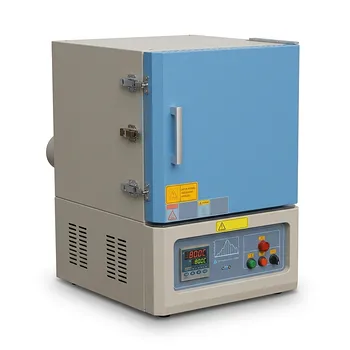
1800C Bench Top Muffle Furnace 18 Liters with Kanthal Super 1900 Heating Elements for High Purity Ceramic Sintering and Material Research
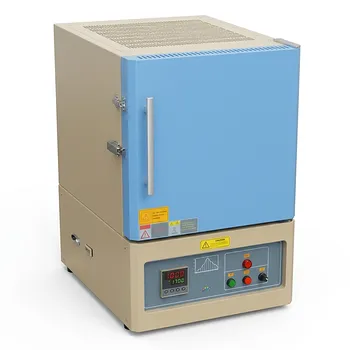
Large Bench Top 1700C High Temperature Muffle Furnace with 19L Chamber for Advanced Material Sintering and Annealing
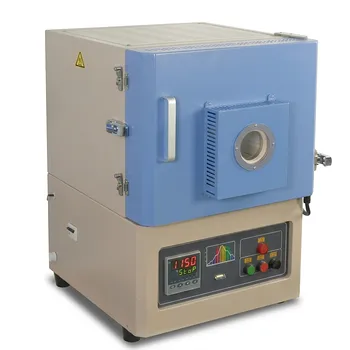
High Temperature Benchtop Muffle Furnace with Quartz Observation Window for Thermal Imaging and Material Analysis
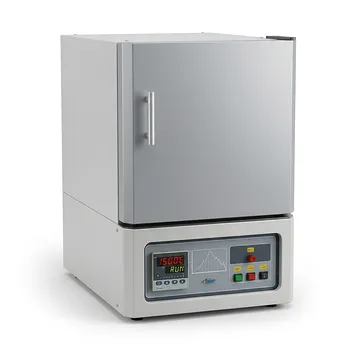
High Temperature 1500C Benchtop Muffle Furnace 3.6L Alumina Fiber Chamber Programmable Controller Sintering Annealing Carbonization Thermal Processing System

Compact Vertical Split Quartz Tube Furnace with Stainless Steel Vacuum Flanges for Rapid Thermal Quenching and Controlled Atmosphere Material Processing

Three Zone Tube Furnace with 11 Inch or 15 Inch Quartz Tube and Hinged Flanges for Vacuum Atmosphere Heat Treatment

Vertical 1700C Vacuum and Atmosphere Tube Furnace with 80mm Alumina Tube
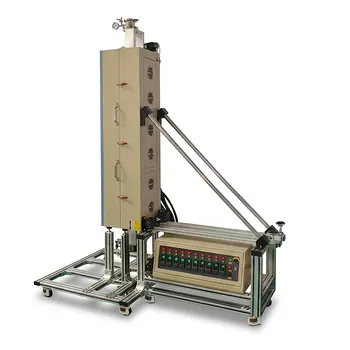
1200°C 10-Zone Split Tube Furnace with Horizontal and Vertical Mounting for Multi-Zone Thermal Gradients and Large Diameter Material Processing

Compact High Temperature 1600C Tube Furnace with 50mm Alumina Tube and Vacuum Flanges for Material Sintering
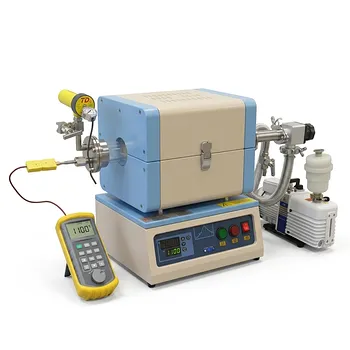
Compact Split Tube Furnace with Insertable Temperature Calibrator and Integrated Vacuum System

High Temperature 1700C Six Zone Split Tube Furnace with Alumina Tube and Water Cooled Flanges

1200°C 5 Inch Vertical Quartz Tube Furnace with Stainless Steel Vacuum Flanges
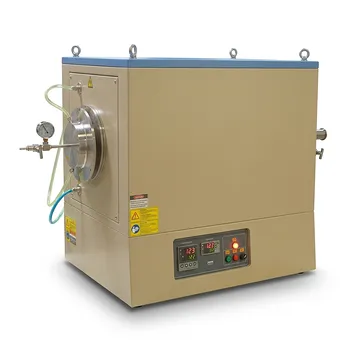
1100°C Large Diameter Quartz Tube Furnace with 24 Inch Heating Zone and Water Cooled Flanges

1100C Tube Furnace with Vacuum Flange and Programmable Temperature Controller for Material Science and Industrial Heat Treatment
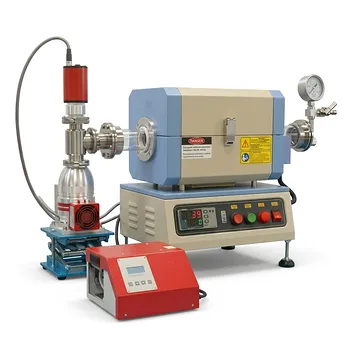
High Vacuum Compact Tube Furnace 1200C with Integrated Turbo Pump System and 8 Inch Heating Zone
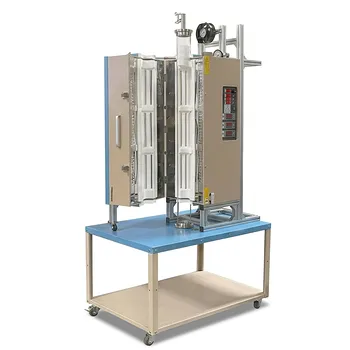
1200C Three Zone Split Vertical Tube Furnace 4 Inch Quartz Tube Stainless Steel Vacuum Flanges
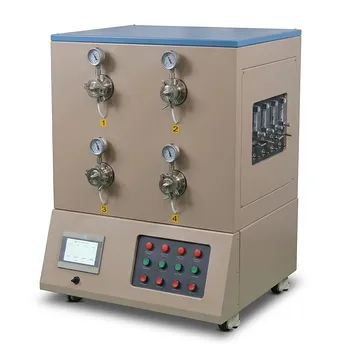
High Throughput 1200C Four Channel Tube Furnace with 3 Inch Quartz Tubes for Multi Zone Annealing and Material Research
