How does a high-purity argon gas delivery system contribute to CVD synthesis of ReO3-Cu2Te? Enhance Catalyst Purity
Updated 3 months ago
High-purity argon gas delivery is the foundational pillar for synthesizing $\text{ReO}_3$-$\text{Cu}_2\text{Te}$ composite catalysts via Chemical Vapor Deposition (CVD). By serving as both a protective purge agent and a precise transport medium, it ensures the chemical integrity of the copper foam substrate and enables the uniform, quantitative doping of rhenium trioxide into the copper telluride lattice.
Core Takeaway: A high-purity argon system provides the inert environment and controlled flow necessary to prevent substrate oxidation and achieve the precise precursor delivery required for high-performance $\text{ReO}_3$-$\text{Cu}_2\text{Te}$ catalysts.
Maintaining Atmospheric Integrity
Protection Against Uncontrolled Oxidation
The primary function of the argon system during the initial phase of CVD is to purge the reaction chamber of residual oxygen and moisture. This is critical because the copper foam substrate is highly susceptible to uncontrolled oxidation at high temperatures, which would compromise the catalyst's structural integrity.
Creation of an Inert Environment
By excluding atmospheric contaminants, the argon gas ensures that the chemical reactions are limited strictly to the intended precursors. This inert atmosphere is essential for maintaining the correct stoichiometry and crystalline quality of the heterostructures being grown.
Prevention of Point Defects
Using argon of "high-purity" industrial grade is vital to minimize the introduction of trace impurities. Even minute amounts of oxygen can lead to unintended point defects or the formation of unwanted oxide phases, which can degrade the catalytic performance of the final composite.
Precision Precursor Transport
Quantitative Vapor Delivery
During the reaction phase, argon acts as a carrier gas that moves vaporized precursors from the heating zone to the deposition zone. This movement is not merely a push; it is a quantitative transport mechanism that ensures the correct amount of material reaches the substrate.
Regulation via Mass Flow Controllers (MFCs)
The argon flow is typically regulated by Mass Flow Controllers, often set at specific rates like 100 sccm. This precise regulation allows for stable delivery, which is essential for achieving uniform $\text{ReO}_3$ doping throughout the $\text{Cu}_2\text{Te}$ lattice.
Influence on Growth Kinetics
The flow rate of the argon gas directly influences the diffusion rate of precursors on the substrate surface. By adjusting this flow, researchers can control the domain size and coverage of the catalyst film, effectively tuning the physical structure of the $\text{ReO}_3$-$\text{Cu}_2\text{Te}$ composite.
Understanding the Trade-offs
Purity vs. Operational Cost
While "high-purity" argon is essential, the cost of gas and delivery systems increases significantly with every "nine" of purity. However, in CVD processes involving sensitive transition metal oxides like $\text{ReO}_3$, using lower-grade gas often results in irreversible catalyst poisoning or poor batch-to-batch reproducibility.
Flow Rate Imbalances
There is a delicate balance in setting the argon flow rate. A flow that is too slow may fail to transport precursors efficiently, leading to non-uniform doping; conversely, a flow that is too fast can reduce the residence time of vapors near the substrate, preventing the precursors from properly adhering or reacting.
Pressure Management
While argon helps maintain system pressure, fluctuations in the delivery system can cause pressure instability. Unstable pressure directly affects the partial pressures of the precursors, which can lead to variations in the phase purity of the $\text{Cu}_2\text{Te}$ component.
How to Apply This to Your Project
When optimizing your CVD setup for $\text{ReO}_3$-$\text{Cu}_2\text{Te}$ synthesis, consider these recommendations based on your primary objectives:
- If your primary focus is Phase Purity: Ensure your argon delivery system includes a high-capacity purifier to remove trace $O_2$ and $H_2O$ before the gas enters the furnace.
- If your primary focus is Uniform Doping: Invest in high-precision Mass Flow Controllers (MFCs) and perform a calibration series to determine the optimal flow rate for your specific chamber geometry.
- If your primary focus is Scalability: Implement a multi-stage purging protocol to drastically reduce the volume of argon required to reach the necessary inert state without sacrificing substrate protection.
The precise control of the argon delivery system is not just a utility, but a critical variable that dictates the architectural success of the $\text{ReO}_3$-$\text{Cu}_2\text{Te}$ catalyst.
Summary Table:
| Key Role | Specific Function | Impact on ReO3-Cu2Te Synthesis |
|---|---|---|
| Atmospheric Protection | Purges O2 and moisture | Prevents substrate oxidation; ensures crystalline quality |
| Carrier Medium | Quantitative vapor transport | Achieves uniform ReO3 doping into the Cu2Te lattice |
| Flow Regulation | Controls growth kinetics | Tunes domain size, coverage, and catalyst structure |
| Purity Control | Minimizes trace impurities | Prevents catalyst poisoning and unintended point defects |
| Pressure Stability | Maintains partial pressures | Ensures phase purity of the copper telluride component |
Master Precision Synthesis with THERMUNITS
Elevate your material science research with high-performance thermal solutions from THERMUNITS. As a leading manufacturer of high-temperature laboratory equipment, we provide the advanced CVD/PECVD systems, Atmosphere Furnaces, and Tube Furnaces required to achieve the rigorous atmospheric integrity described in this guide.
From precise Mass Flow Controllers to high-purity gas delivery interfaces, our equipment is engineered for industrial R&D and academic excellence. Whether you are developing $ReO_3$-$Cu_2Te$ catalysts or exploring new transition metal oxides, THERMUNITS offers a comprehensive range of solutions including Muffle, Vacuum, Rotary, and Hot Press furnaces, as well as Vacuum Induction Melting (VIM) technology.
Ready to optimize your heat treatment results? Contact our experts today and let us build the perfect thermal processing solution for your laboratory.
References
- Aruna Vijayan, N. Sandhyarani. Efficient and sustainable hydrogen evolution reaction: enhanced photoelectrochemical performance of ReO<sub>3</sub>-incorporated Cu<sub>2</sub>Te catalysts. DOI: 10.1039/d4ya00023d
Mentioned Products
- Radio Frequency Plasma Enhanced Chemical Vapor Deposition RF PECVD System for Laboratory and Industrial Thin Film Growth
- Versatile Chemical Vapor Deposition Tube Furnace System for Advanced Material Research and Industrial Coating Processes
- Chemical Vapor Deposition CVD System Slide PECVD Tube Furnace with Liquid Gasifier PECVD Machine
- Cylindrical Resonator MPCVD Machine System for Microwave Plasma Chemical Vapor Deposition and Lab Diamond Growth
- 915MHz MPCVD Diamond Machine Microwave Plasma Chemical Vapor Deposition System Reactor
People Also Ask
- What are the advantages of PECVD systems for nano flame retardant films? Protect Heat-Sensitive Polymers with Precision
- How does PECVD differ from conventional thermal CVD? Key Advantages of Low-Temperature Deposition for R&D
- What is the role of CVD/PECVD systems in the research of optoelectronic materials and functional coatings? Expert Guide
- What are the benefits of using PECVD for optical and photonic coatings? Achieve High-Precision Thin-Film Deposition
- How do RF frequency and power settings influence the characteristics of a PECVD process? Master Quality & Efficiency

Tech Team · ThermUnits
Last updated on Jun 03, 2026
Related Products
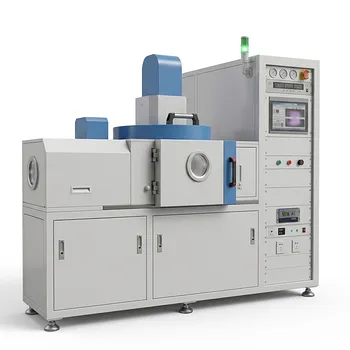
Radio Frequency Plasma Enhanced Chemical Vapor Deposition RF PECVD System for Laboratory and Industrial Thin Film Growth
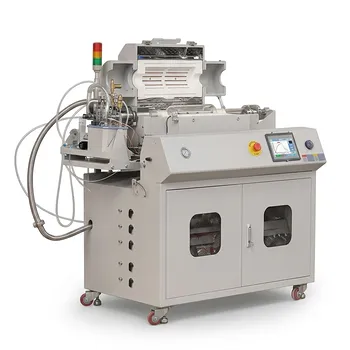
Versatile Chemical Vapor Deposition Tube Furnace System for Advanced Material Research and Industrial Coating Processes
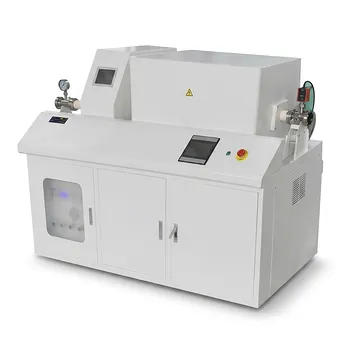
Chemical Vapor Deposition CVD System Slide PECVD Tube Furnace with Liquid Gasifier PECVD Machine
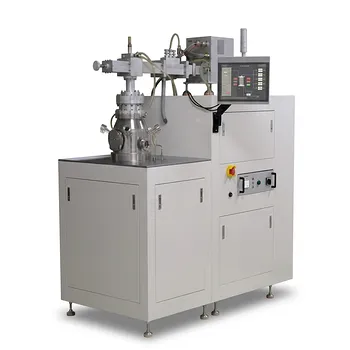
Cylindrical Resonator MPCVD Machine System for Microwave Plasma Chemical Vapor Deposition and Lab Diamond Growth
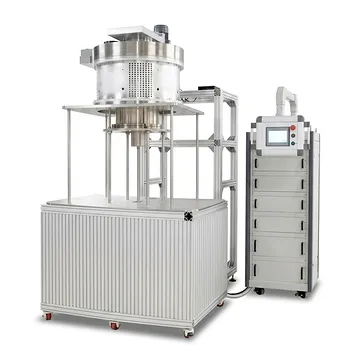
915MHz MPCVD Diamond Machine Microwave Plasma Chemical Vapor Deposition System Reactor
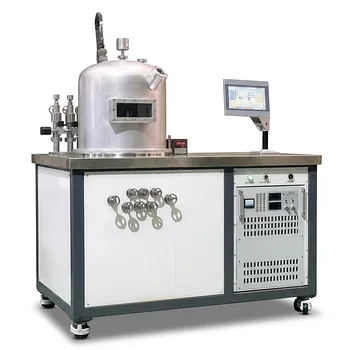
HFCVD Machine System for Nano Diamond Coating on Drawing Dies and Industrial Tools
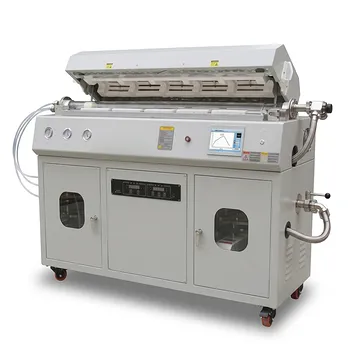
Multi Heating Zones CVD Tube Furnace System for Precision Chemical Vapor Deposition and Advanced Material Synthesis
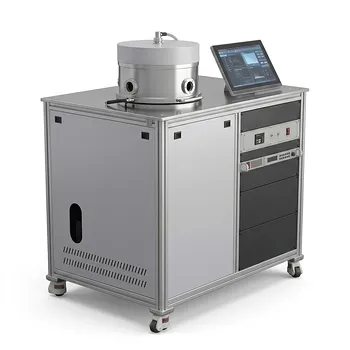
Inclined Rotary Plasma Enhanced Chemical Vapor Deposition PECVD System for Thin Film Deposition and Nanomaterial Synthesis
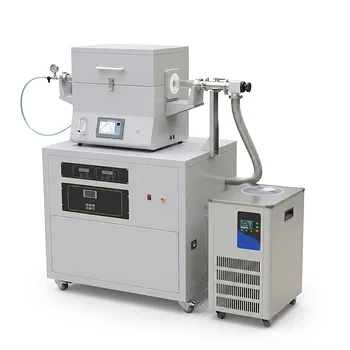
Split Chamber CVD Tube Furnace with Vacuum Station Chemical Vapor Deposition System Machine
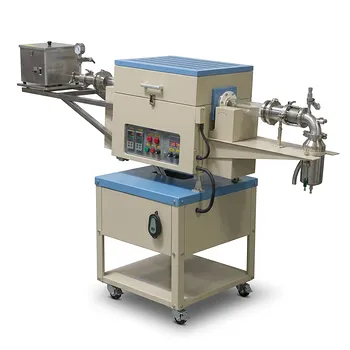
Two Zone Rotary CVD Furnace with Automatic Feeding and Receiving System for Powder Processing
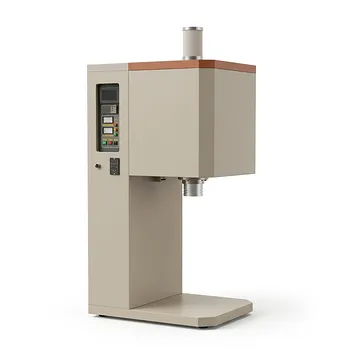
Vertical Openable Tube Furnace 0-1700c High Temperature Laboratory System for CVD and Vacuum Heat Treatment
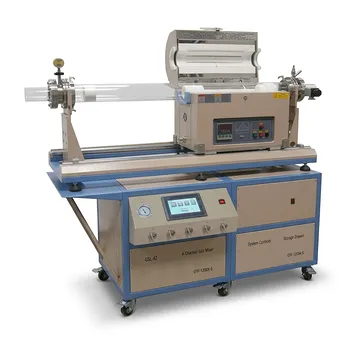
Dual Tube 100mm 80mm CVD Sliding Furnace with 4 Channel Gas Mixing and Vacuum System

High Temperature 1700C Tube Furnace with High Vacuum Turbomolecular Pump System and Multi Channel Mass Flow Controller Gas Mixer
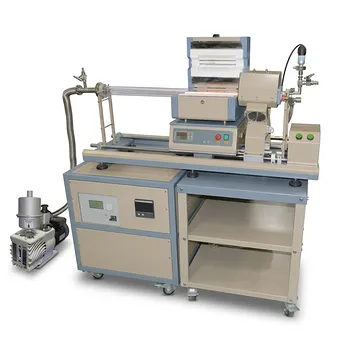
1200C Max Compact Auto-Sliding PECVD Furnace with 2 Inch Tube and Vacuum Pump
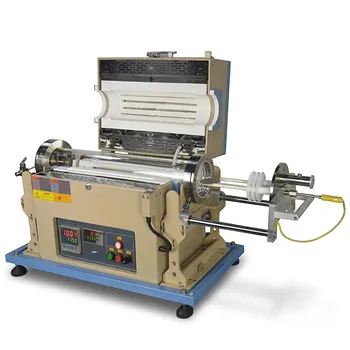
1200°C High Temperature 4 Inch Tube Furnace with Sliding Flange for CVD Systems
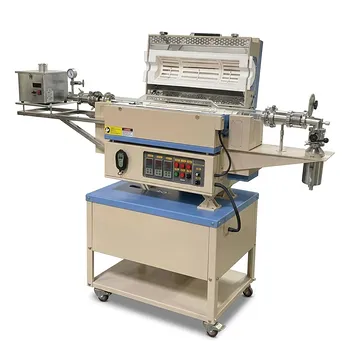
5 Inch Rotary Tube Furnace with Automatic Feeding and Receiving System 1200C Three Zone CVD Powder Processing
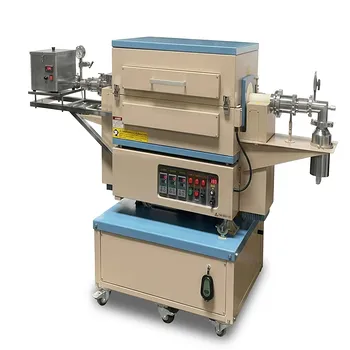
1500C 3-Zone Rotary Tube Furnace 60mm with Automatic Powder Feeding and Receiving System for Continuous Material Synthesis

5 Inch Three Zone Rotary Tube Furnace with Integrated Gas Delivery System and 1200C Capability for Advanced Material CVD Processing
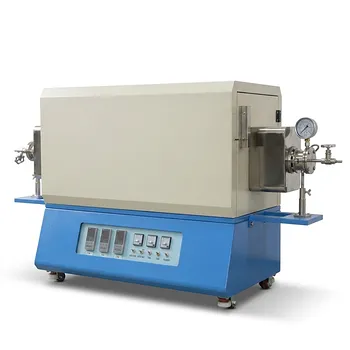
Three Temperature Zone High Temperature Vacuum Tube Furnace for CVD and Material Sintering