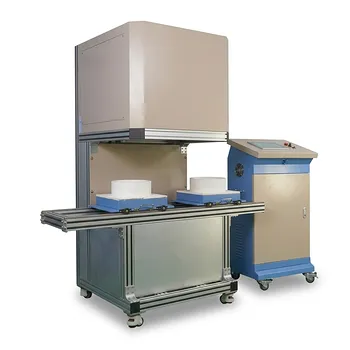
How does a high-temperature atmosphere furnace facilitate V2O5/carbon fiber (V-CF) interlayers? Boost Battery Performance
Updated 3 months ago
A high-temperature atmosphere furnace provides the precise thermal and chemical environment necessary to synthesize the conductive carbon skeleton and stabilize the $V_2O_5$ active phase. This equipment facilitates the carbonization of fiber precursors at approximately 900°C to 1000°C under nitrogen protection, eliminating non-carbon elements to create a highly conductive network. Simultaneously, the furnace provides the controlled thermal energy and oxygen sources required to drive the phase transition of vanadium components into crystalline vanadium pentoxide ($V_2O_5$).
The core takeaway is that the high-temperature atmosphere furnace acts as a dual-purpose reactor: it first establishes a conductive carbon fiber foundation through inert-gas carbonization and subsequently enables the oxidative crystallization of $V_2O_5$ to ensure high-performance electronic and ionic transport.
Constructing the Conductive Carbon Backbone
High-Temperature Carbonization
The furnace facilitates the carbonization of pre-oxidized polyacrylonitrile (PAN) or other precursors at temperatures reaching 900°C to 1000°C. This high-thermal energy is essential for the elimination of non-carbon elements, which transforms the raw fiber into a carbonized state.
Structural Rearrangement for Conductivity
Within the stable thermal field of the furnace, the organic components undergo complete thermal decomposition. This results in the rearrangement of carbon structures, creating a high-aspect-ratio carbon fiber skeleton with superior electrical conductivity.
Inert Atmospheric Protection
The furnace utilizes a strictly controlled inert gas environment, such as high-purity nitrogen ($N_2$) or argon (Ar), to prevent the oxidation of the fibers. By maintaining an oxygen-free environment during this phase, the furnace ensures the chemical stability and integrity of the carbon substrate.
Developing the Functional $V_2O_5$ Phase
Phase Transition and Crystallization
The furnace drives the phase transition of vanadium components from an amorphous state to a crystalline state. By maintaining specific temperatures during a "soaking period," the furnace stabilizes mixed phases into functional $V_2O_5$.
Controlled Oxidation of Vanadium
Post-deposition heat treatment within the furnace provides a sufficient oxygen source to drive the oxidation of metal vanadium components. This process is critical for imparting the specific physicochemical properties required for electrochemical applications, such as lithium-sulfur batteries.
Enhancement of Material Characteristics
The controlled thermal environment significantly improves the Raman characteristic peaks and photoluminescence intensity of the films. This indicates a high degree of crystallinity and structural order, which is vital for the efficiency of the interlayer.
Ensuring Consistency and Performance
Thermal Field Uniformity
The temperature uniformity within the furnace is a decisive factor in the consistency of the carbonization degree. A uniform thermal field ensures that the entire V-CF interlayer exhibits the same mechanical strength and ablation performance.
Superior Seal Integrity
High-temperature tube furnaces, in particular, offer superior sealing performance to maintain strictly controlled gas environments. This prevents atmospheric leaks that could lead to premature fiber degradation or incorrect vanadium oxidation states.
Surface Pretreatment
The furnace can also be used at lower temperatures (e.g., 450°C) to remove organic sizing agents from the carbon fiber surface. This creates a clean substrate that is necessary for the uniform attachment of $V_2O_5$ or other catalyst precursors.
Understanding the Trade-offs
Temperature vs. Fiber Integrity
While higher temperatures (up to 1500°C) can enhance conductivity and induce the growth of secondary structures like SiC nanofibers, excessive heat can sometimes lead to fiber brittleness. Balancing the temperature is critical to maintaining the mechanical flexibility of the interlayer.
Atmosphere Switching Complexities
Facilitating both the carbonization (inert) and the $V_2O_5$ crystallization (oxidative) requires precise control over gas transitions. If oxygen is introduced too early or at too high a temperature, the carbon fiber skeleton may undergo combustion, destroying the conductive network.
How to Apply This to Your Project
When utilizing a high-temperature atmosphere furnace for V-CF interlayer production, consider your primary performance metric:
- If your primary focus is Maximum Electronic Conductivity: Prioritize the carbonization stage at 900°C - 1000°C under a strict, high-purity nitrogen flow to ensure a pure carbon skeleton.
- If your primary focus is $V_2O_5$ Phase Purity: Focus on the post-deposition soaking period and oxygen flow rates to ensure complete transition from amorphous to crystalline vanadium pentoxide.
- If your primary focus is Batch Consistency: Use a furnace with a verified high-uniformity thermal field and a tube-based design to minimize atmospheric contamination.
By masterfully controlling the intersection of temperature and atmosphere, the furnace transforms raw precursors into a high-performance, multifunctional interlayer.
Summary Table:
| Process Phase | Temperature Range | Atmosphere | Primary Objective |
|---|---|---|---|
| Carbonization | 900°C – 1000°C | Inert ($N_2$, Ar) | Conductive Carbon Skeleton |
| Crystallization | Soaking Temp | Controlled $O_2$ | $V_2O_5$ Phase Stabilization |
| Pretreatment | ~450°C | Oxidative/Air | Sizing Agent Removal |
| Adv. Synthesis | Up to 1500°C | Inert | SiC Nanofiber Growth |
Elevate Your Material Research with THERMUNITS Precision
Achieving the perfect balance between carbon conductivity and $V_2O_5$ phase purity requires world-class thermal control. THERMUNITS is a leading manufacturer of high-temperature laboratory equipment specifically designed for material science and industrial R&D.
Whether you are synthesizing interlayers for lithium-sulfur batteries or developing advanced composites, our comprehensive range of thermal solutions—including Atmosphere, Vacuum, Tube, and CVD/PECVD furnaces—ensures the atmosphere integrity and thermal uniformity your project demands.
Our specialized equipment for your lab includes:
- Atmosphere & Tube Furnaces: Perfect for precise gas control and high-purity carbonization.
- CVD/PECVD Systems: Designed for advanced thin-film deposition and functionalization.
- Muffle & Hot Press Furnaces: For versatile heat treatment and material densification.
- Specialized Systems: Including Vacuum Induction Melting (VIM), Rotary Kilns, and Dental Furnaces.
Don't let inconsistent thermal fields compromise your research results. Contact THERMUNITS today to discuss your specific heat treatment requirements and discover how our precision engineering can accelerate your next innovation.
References
- Jiashuo Shao, Zongtao Zhang. Flexible CNT-Interpenetrating Hierarchically Porous Sulfurized Polyacrylonitrile (CIHP-SPAN) Electrodes for High-Rate Lithium-Sulfur (Li-S) Batteries. DOI: 10.3390/nano14131155
Mentioned Products
- High Temperature 1200C Split Tube Furnace for CVD Research and Vacuum Atmosphere Heat Treatment
- 1650C High Temperature Atmosphere Controlled Box Furnace with 65L Chamber for Advanced Material Sintering and Industrial Heat Treatment
- Vertical Openable Tube Furnace 0-1700c High Temperature Laboratory System for CVD and Vacuum Heat Treatment
- 1750°C High Temperature Benchtop Vacuum Atmosphere Tube Furnace with Kanthal Super 1800 Heating Elements and 60mm Alumina Processing Tube
- 1200C Hydrogen Atmosphere Box Furnace with 5 Heated Sides and 64L Chamber
People Also Ask
- What is the primary function of a high-temperature split tube furnace in nitrogen metastable particle research? Expert Guide
- What core functions does a high-temperature vacuum tube furnace provide? Optimize np-CuSn Sintering & Joint Integrity
- Why is a Tube Furnace typically utilized for CVD? Achieve Precision in Graphene and 2D Material Synthesis
- What role does a high-temperature tube atmosphere furnace play in the carbonization of 3D-printed precursors? Expert Guide
- What role does a high-temperature tube atmosphere furnace play in the solid-state synthesis of CaGa4O7:Mn2+ phosphor?

Tech Team · ThermUnits
Last updated on Jun 03, 2026
Related Products
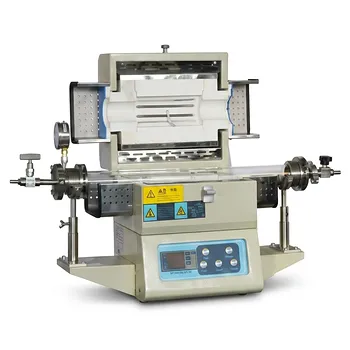
High Temperature 1200C Split Tube Furnace for CVD Research and Vacuum Atmosphere Heat Treatment
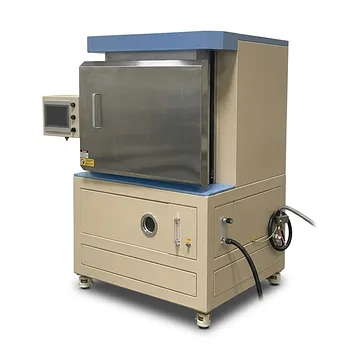
1650C High Temperature Atmosphere Controlled Box Furnace with 65L Chamber for Advanced Material Sintering and Industrial Heat Treatment
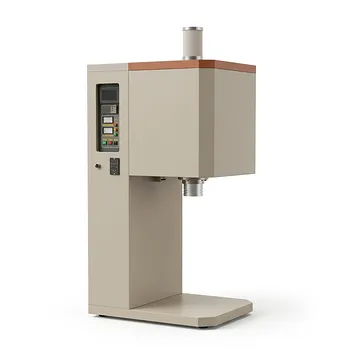
Vertical Openable Tube Furnace 0-1700c High Temperature Laboratory System for CVD and Vacuum Heat Treatment

1750°C High Temperature Benchtop Vacuum Atmosphere Tube Furnace with Kanthal Super 1800 Heating Elements and 60mm Alumina Processing Tube
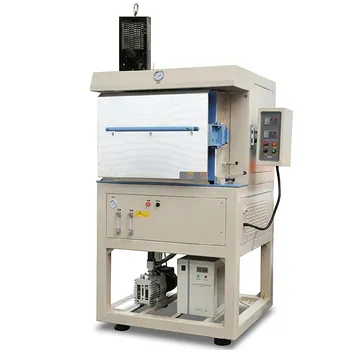
1200C Hydrogen Atmosphere Box Furnace with 5 Heated Sides and 64L Chamber
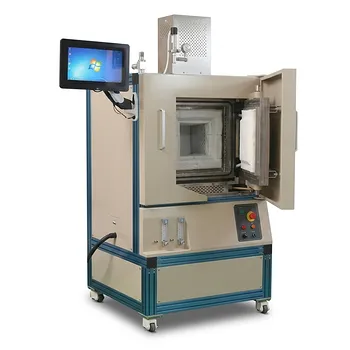
High Temperature Oxygen and Inert Atmosphere Controlled Furnace 8 Liter 1700C Sintering System for Advanced Materials RD
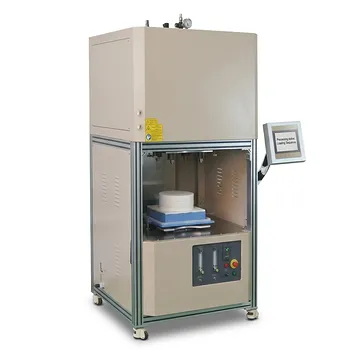
High Temperature Vertical Atmosphere Controlled Furnace with Automatic Bottom Loading and 1700°C Capacity for Advanced Material Research
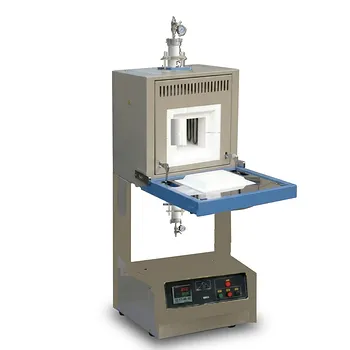
High Temperature Vertical Hybrid Furnace with Alumina Tube and SiC Heating for SOFC Coin Cell Testing and Atmosphere Processing
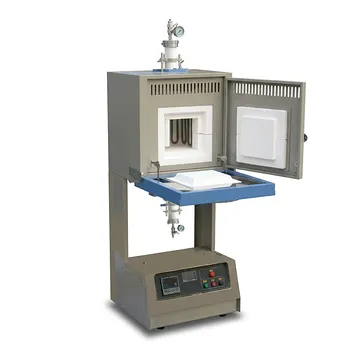
Vertical Hybrid High Temperature Furnace 1500C Alumina Tube SOFC Fuel Cell Testing Laboratory Heat Treatment Research Equipment
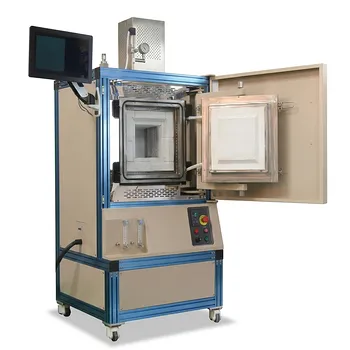
High Temperature Hydrogen Atmosphere Box Furnace 1650C Max Reducing Environment Material Synthesis System 8x8x8 Chamber

High Temperature 1500C Benchtop Muffle Furnace 3.6L Alumina Fiber Chamber Programmable Controller Sintering Annealing Carbonization Thermal Processing System
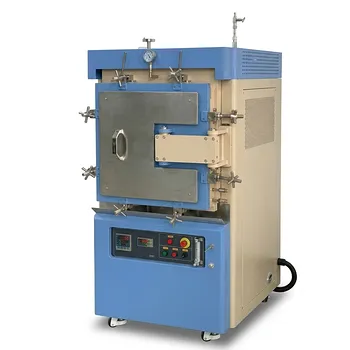
High Temperature Economic Hydrogen Gas Box Furnace 1600C Atmosphere Controlled Thermal Processing System 65L Capacity
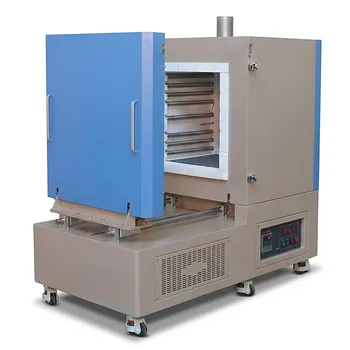
1200C Five Side Heating Muffle Furnace with Sliding Door 125L Volume High Temperature Heat Treatment System for Large Scale Sintering and Annealing
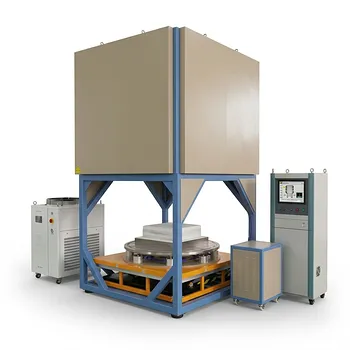
Bottom Loaded Inert Gas Atmosphere Box Furnace 1700C 1300C 216L Large Capacity Industrial Thermal Processing System
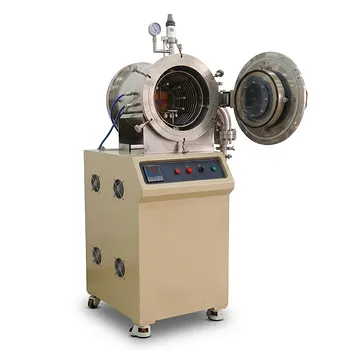
High Temperature Cold Wall High Vacuum Chamber Furnace 1400C for Advanced Material Processing
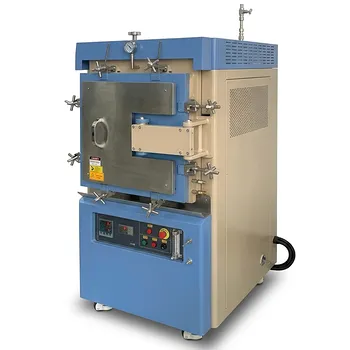
Atmosphere Controlled Muffle Furnace 1700C Maximum Temperature 80L High Capacity Vacuum Inert Gas Box Furnace
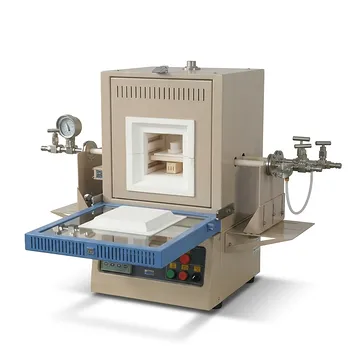
1700C Compact Hybrid Furnace with Dual Layer Box Sintering and Controlled Atmosphere Alumina Tubes
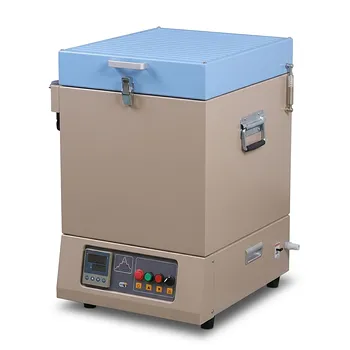
High Temperature Vertical Crucible Furnace with 22L Heating Chamber and 1200C Maximum Temperature

Vertical 1700C Vacuum and Atmosphere Tube Furnace with 80mm Alumina Tube