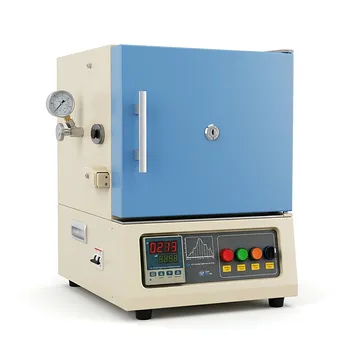
How does a high-temperature tube atmosphere furnace facilitate the ceramization of ALSZ? Maximize SiCN Ceramic Yields.
Updated 3 months ago
High-temperature tube atmosphere furnaces provide the controlled environment necessary to convert Acrylate-grafted Liquid Silazane (ALSZ) into high-performance SiCN ceramics. This transformation is achieved by heating the precursor above 800 °C while maintaining a high-purity argon atmosphere to prevent oxidation. This precise thermal and chemical control facilitates crucial molecular reactions—specifically dehydrogenation and polycondensation—resulting in ceramic yields of 71% to 75%.
The high-temperature tube atmosphere furnace serves as a sealed chemical reactor that drives the polymer-to-ceramic transition while protecting the material from environmental degradation. By isolating the specimen and precisely managing the thermal ramp, the furnace ensures the creation of a dense, crack-free SiCN structure.
The Role of Atmosphere Control in Chemical Transformation
Maintaining an Inert Environment
The sealed tube structure is primary to the success of the process, as it allows for the introduction of high-purity argon. This inert gas displaces oxygen and moisture, which would otherwise cause the organic precursors to oxidize prematurely or form undesirable side products.
Driving Dehydrogenation and Polycondensation
At temperatures exceeding 800 °C, the furnace provides the energy required for dehydrogenation and polycondensation. These chemical processes are responsible for stripping away hydrogen and cross-linking the molecular chains, turning the liquid silazane into a solid SiCN (Silicon Carbonitride) ceramic.
Prevention of Material Contamination
By isolating the ALSZ within a controlled tube, the furnace prevents contact with external contaminants found in ambient air. This cleanliness is vital for maintaining the high purity of the ceramic phase and ensuring the final material meets industrial performance standards.
Thermal Precision and Structural Integrity
Managing the Heating Profile
The ability to program a precise heating profile is a critical feature of the tube furnace. Unlike standard ovens, these furnaces can follow specific "ramps" and "soaks" that allow the ALSZ to release gases slowly, which is essential for achieving high yields.
Achieving High Ceramic Yields
Consistent temperature control allows for a ceramic yield between 71% and 75%. Without this precision, the material may experience excessive mass loss, reducing the efficiency of the production process and the density of the final component.
Preventing Cracking and Deformation
Rapid or uneven heating can cause internal stresses that lead to specimen cracking or deformation. The high temperature uniformity within the furnace tube ensures that the material transitions from a polymer to a ceramic state at a steady, synchronized rate across the entire sample.
Understanding the Trade-offs
Equipment Throughput and Scale
While tube furnaces offer unmatched precision, their batch size is limited by the diameter and length of the furnace tube. This makes them ideal for high-precision laboratory work or small-component manufacturing, but less efficient for mass-scale industrial production.
Thermal Shock and Material Fatigue
The ceramic or quartz tubes used in these furnaces are susceptible to thermal shock if heated or cooled too rapidly. Operators must balance the need for efficient cycle times against the risk of damaging the expensive furnace tube or the specimen inside.
Gas Consumption Costs
Maintaining a continuous flow of high-purity argon throughout the entire heating and cooling cycle can be cost-intensive. If the furnace seals are not perfectly maintained, gas consumption increases, and the risk of specimen oxidation rises.
How to Apply These Principles to Your Process
Implementation Recommendations
Selecting and operating a furnace for ALSZ ceramization requires matching the equipment capabilities to your specific structural goals.
- If your primary focus is maximizing ceramic yield: Utilize a slow heating ramp (e.g., 2-5°C/min) to allow for complete polycondensation without excessive volatile loss.
- If your primary focus is preventing structural cracks: Prioritize a furnace with high thermal uniformity and ensure the specimen is placed in the "sweet spot" (the center) of the heating zone.
- If your primary focus is material purity: Use a dual-stage purging process with high-purity argon to ensure all oxygen is removed from the tube before temperatures reach 400°C.
Through the careful orchestration of inert atmosphere and precise thermal energy, the tube furnace transforms liquid precursors into advanced, high-yielding SiCN ceramics.
Summary Table:
| Feature | Function/Benefit | Impact on ALSZ/SiCN |
|---|---|---|
| Inert Argon Atmosphere | Displaces oxygen & moisture | Prevents oxidation; ensures pure SiCN formation |
| High Thermal (>800°C) | Drives chemical reactions | Facilitates dehydrogenation & polycondensation |
| Precise Ramp/Soak | Controlled gas release | Increases ceramic yield (71-75%) & density |
| Thermal Uniformity | Steady state transition | Prevents cracking, warping, or deformation |
Elevate Your Material Research with THERMUNITS
At THERMUNITS, we understand that high-performance SiCN ceramics require uncompromising precision. As a leading manufacturer of high-temperature laboratory equipment for material science and industrial R&D, we provide the advanced thermal solutions needed to achieve high-yield, crack-free results.
Our comprehensive range includes:
- Furnaces: Tube, Atmosphere, Vacuum, Muffle, Rotary, Hot Press, and Dental.
- Advanced Systems: CVD/PECVD, Electric Rotary Kilns, and Vacuum Induction Melting (VIM).
- Support: High-quality Thermal Elements and lab heat treatment accessories.
Whether you are optimizing ALSZ ceramization or developing next-generation composites, THERMUNITS delivers the thermal uniformity and atmosphere control your research demands.
Ready to optimize your heat treatment process? Contact our experts today!
References
- Keke Pei, Mingjie Liu. Catalytic Thermocuring and Synergistic Photothermocuring of Single-Component Acrylate-Grafted Liquid Oligosilazanes. DOI: 10.1021/acsomega.4c02018
Mentioned Products
- 1750°C High Temperature Benchtop Vacuum Atmosphere Tube Furnace with Kanthal Super 1800 Heating Elements and 60mm Alumina Processing Tube
- 1700C High Temperature Alumina Tube Furnace with 18 Inch Heated Zone and Vacuum Sealing Flanges
- Compact High Temperature 1600C Tube Furnace with 50mm Alumina Tube and Vacuum Flanges for Material Sintering
- High Temperature 1700C Vertical Tube Furnace for Powder Spherification and Material Sintering
- High Temperature 1700C Three Zone Tube Furnace with Alumina Tube 50mm 60mm 80mm OD for Material Research and Industrial Heat Treatment
People Also Ask
- What core functions does a high-temperature vacuum tube furnace provide? Optimize np-CuSn Sintering & Joint Integrity
- What is the role of a high-temperature tube furnace in the calcination process of ZnO/In2O3 nanocomposites?
- What role does a high-temperature tube furnace play in the sulfidation heat treatment of CoS@C/MXene nanocomposites? Guide
- Why is a high-temperature tube furnace required for CuAlO2 heat treatment? Master Phase Transformation Today
- What role does a high-temperature tube furnace play in executing nitrogen absorption kinetic experiments? Expert Insights

Tech Team · ThermUnits
Last updated on Jun 03, 2026
Related Products

1750°C High Temperature Benchtop Vacuum Atmosphere Tube Furnace with Kanthal Super 1800 Heating Elements and 60mm Alumina Processing Tube
1700C High Temperature Alumina Tube Furnace with 18 Inch Heated Zone and Vacuum Sealing Flanges

Compact High Temperature 1600C Tube Furnace with 50mm Alumina Tube and Vacuum Flanges for Material Sintering

High Temperature 1700C Vertical Tube Furnace for Powder Spherification and Material Sintering
High Temperature 1700C Three Zone Tube Furnace with Alumina Tube 50mm 60mm 80mm OD for Material Research and Industrial Heat Treatment

Vertical 1700C Vacuum and Atmosphere Tube Furnace with 80mm Alumina Tube
High Temperature Three Zone Tube Furnace 1700C with Alumina Tube and Water Cooled Flanges

High Temperature 1700C Six Zone Split Tube Furnace with Alumina Tube and Water Cooled Flanges
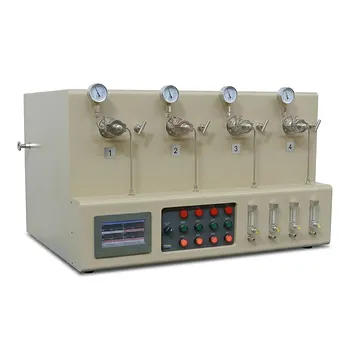
High Temperature 1700C 4 Channel Tube Furnace 1 Inch Alumina Tube for Hi-Throughput Annealing
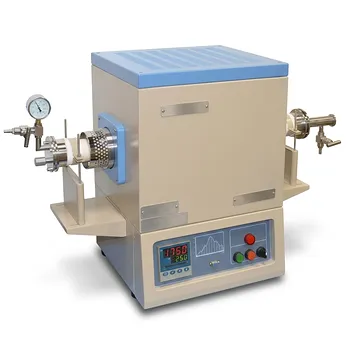
High Temperature Compact Vacuum Tube Furnace 1750C Max 60mm OD Alumina Tube
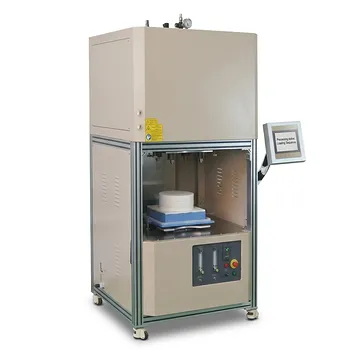
High Temperature Vertical Atmosphere Controlled Furnace with Automatic Bottom Loading and 1700°C Capacity for Advanced Material Research
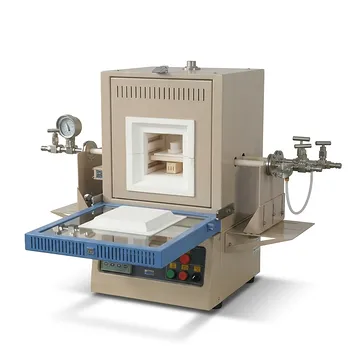
1700C Compact Hybrid Furnace with Dual Layer Box Sintering and Controlled Atmosphere Alumina Tubes
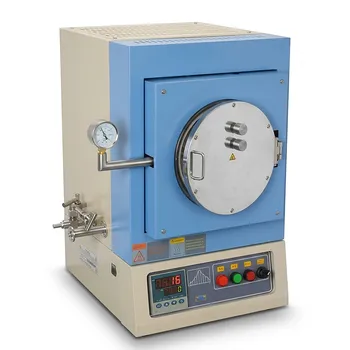
1100°C High Temperature Quartz Chamber Furnace 8 Inch OD with 7.6 Liter Capacity and Vacuum Atmosphere Capability

1800C High Temperature Compact Vacuum Tube Furnace with 60mm OD Alumina Tube and Kanthal MoSi2 Heating Elements
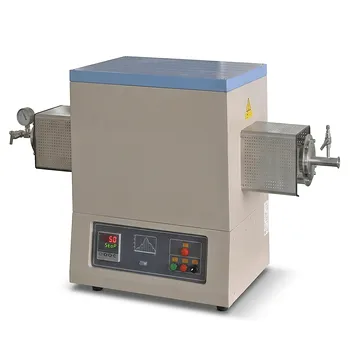
High Temperature 1700C Tube Furnace with 4 Inch OD Alumina Tube and Vacuum Sealing Flanges

High Temperature 1700C Benchtop Tube Furnace with 5 Inch Heating Zone High Purity Alumina Tube and Vacuum Sealing Flanges
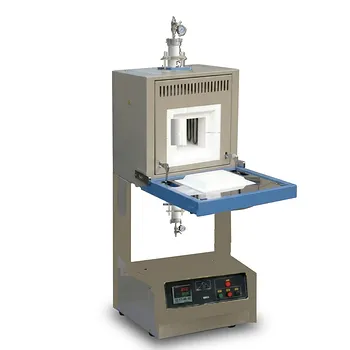
High Temperature Vertical Hybrid Furnace with Alumina Tube and SiC Heating for SOFC Coin Cell Testing and Atmosphere Processing

High Temperature 1700C Tube Furnace with High Vacuum Turbomolecular Pump System and Multi Channel Mass Flow Controller Gas Mixer
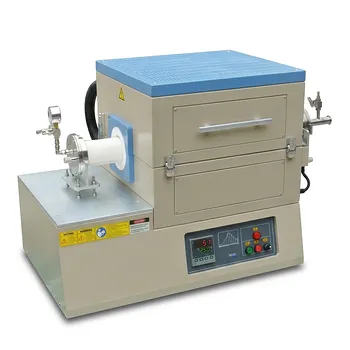
High Temperature 1700C Split Tube Furnace with Vacuum Flanges Valves and 60mm Alumina Tube