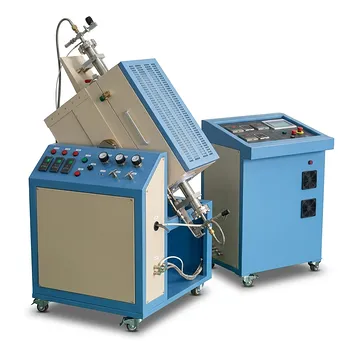
How a high-temp tube furnace transforms MoWNi precursors into alloys? Optimize annealing and phase-purity.
Updated 5 months ago
A high-temperature tube furnace serves as the critical reaction chamber for the chemical reduction and structural synthesis of MoWNi alloys. It facilitates this transformation by providing a precise 600°C thermal environment coupled with a hydrogen/argon (H₂/Ar) atmosphere. This combination triggers the complete reduction of metal oxides within the precursor, allowing nickel (Ni), molybdenum (Mo), and tungsten (W) atoms to rearrange and solidify into stable ternary alloy particles with a face-centered cubic (FCC) structure.
The tube furnace acts as a controlled catalytic environment that simultaneously eliminates impurities through chemical reduction and provides the thermal energy necessary for atomic migration, ensuring the formation of a phase-pure ternary alloy.
The Role of Controlled Atmosphere in Chemical Reduction
Facilitating Oxide-to-Metal Transformation
The primary function of the furnace in this context is to provide a platform for chemical reduction. MoWNi precursors often exist as metal oxides or hydroxides, which must lose their oxygen atoms to become metallic.
The hydrogen/argon mixed atmosphere within the tube furnace is essential for this. Hydrogen acts as the reducing agent that strips away oxygen, while argon maintains an inert environment to prevent unwanted side reactions or re-oxidation.
Maintaining High-Purity Environments
A tube furnace is uniquely designed to isolate the material from the external environment. This oxygen-free condition ensures that as the metal atoms are freed from their precursor bonds, they do not react with atmospheric contaminants.
By strictly controlling the flow of gases, the furnace ensures that the reduction process is "complete." This is vital for achieving the correct stoichiometry in the final MoWNi alloy.
Precision Thermal Control and Atomic Rearrangement
Enabling Solid-State Diffusion
At 600 degrees Celsius, the furnace provides sufficient kinetic energy for Ni, Mo, and W atoms to move. This process, known as solid-state diffusion, is what allows the individual elements to find their place in a new lattice.
Without the precise temperature maintenance of the furnace, the atoms might remain segregated. The "constant temperature control" ensures that the energy input is uniform across the entire precursor sample.
Forming the Face-Centered Cubic Structure
The ultimate goal of the annealing process is the creation of a stable ternary alloy. The furnace’s ability to hold a specific temperature allows the atoms to settle into an FCC (face-centered cubic) structure.
This specific atomic arrangement determines the mechanical and chemical properties of the resulting alloy. The furnace’s programmed environment ensures that this structure solidifies uniformly throughout the material.
Understanding the Trade-offs and Constraints
Balancing Temperature and Grain Growth
While high temperatures are necessary for diffusion, excessive heat can lead to unwanted grain growth. If the furnace exceeds the optimal 600°C threshold significantly, the alloy particles may coarsen, potentially reducing the material's surface area or performance.
Atmosphere Sensitivity and Leaks
The success of the MoWNi transformation is highly dependent on the integrity of the tube seals. Even minor leaks of oxygen into the H₂/Ar stream can stall the reduction process or lead to the formation of mixed-phase oxides rather than a pure ternary alloy.
Thermal Lag in Large Samples
In a tube furnace, the temperature is measured at the heating elements or a specific thermocouple point. For larger precursor loads, there may be a thermal lag, meaning the core of the material reaches the 600°C target later than the surface, necessitating carefully calculated "holding times."
How to Apply This to Your Project
If you are utilizing a high-temperature tube furnace for precursor-to-alloy transformations, your strategy should shift based on your specific material goals:
- If your primary focus is phase purity: Prioritize the precision of the gas mixing system and ensure the H₂/Ar ratio is optimized for the specific oxygen content of your MoWNi precursor.
- If your primary focus is structural uniformity: Utilize the furnace’s programmable controllers to implement slow heating rates, which prevents internal stresses and promotes a more homogeneous FCC lattice.
- If your primary focus is grain size control: Monitor the "holding time" at 600°C strictly, as excessive time at high heat can lead to particle agglomeration.
By masterfully controlling the interplay between thermal energy and atmospheric chemistry, the tube furnace transforms a simple precursor into a sophisticated, high-performance ternary alloy.
Summary Table:
| Feature | Role in Annealing | Resulting Benefit |
|---|---|---|
| 600°C Thermal Control | Enables solid-state diffusion | Uniform atomic rearrangement & FCC structure |
| H₂/Ar Atmosphere | Acts as a reducing agent | Complete oxide-to-metal transformation |
| Sealed Tube Design | Isolates from oxygen/contaminants | High-purity, phase-pure ternary alloys |
| Programmable Rates | Manages heating/holding cycles | Controlled grain growth & structural uniformity |
Elevate Your Material Research with THERMUNITS Precision
Are you looking to achieve perfect phase purity in your MoWNi alloy synthesis? THERMUNITS is a leading manufacturer specializing in high-performance thermal processing solutions for material science and industrial R&D.
Our advanced Atmosphere Tube Furnaces, Vacuum Furnaces, and CVD/PECVD systems are engineered to provide the precise temperature uniformity and gas control required for complex chemical reductions and annealing processes. Whether you need Rotary Kilns, Vacuum Induction Melting (VIM) furnaces, or specialized Dental and Hot Press equipment, we deliver the reliability your lab demands.
Why partner with THERMUNITS?
- Precision Control: Maintain exact stoichiometry with high-accuracy thermal environments.
- Versatility: Solutions for Muffle, Atmosphere, Tube, and Vacuum applications.
- Expertise: Supporting industrial heat treatment and advanced R&D across the globe.
Ready to optimize your heat treatment results? Contact our technical team today to find the ideal furnace for your specific research goals!
References
- Yongxin Zhao, Pengcheng Dai. Ternary MoWNi Alloy as a Bifunctional Catalyst for Alkaline Hydrogen Oxidation and Evolution Reactions. DOI: 10.3390/catal15010015
Mentioned Products
- High Temperature Tube Furnace 1500C with Sliding Flanges and 50mm OD for Rapid Thermal Processing Fast Heating and Cooling
- High Temperature 1700C Tube Furnace with High Vacuum Turbomolecular Pump System and Multi Channel Mass Flow Controller Gas Mixer
- High Temperature 1700C Benchtop Tube Furnace with 5 Inch Heating Zone High Purity Alumina Tube and Vacuum Sealing Flanges
- 1750°C High Temperature Benchtop Vacuum Atmosphere Tube Furnace with Kanthal Super 1800 Heating Elements and 60mm Alumina Processing Tube
- Compact High Temperature 1600C Tube Furnace with 50mm Alumina Tube and Vacuum Flanges for Material Sintering
People Also Ask
- How are high-temperature tube furnaces utilized to repair etching damage? Precision Lattice Restoration Solutions
- What core conditions does a high-temperature tube furnace provide for rGO aerogels? Mastering Precision Synthesis.
- What role does a high-temperature tube furnace play in CVD synthesis of silicon nanowires? Master VLS Growth Precision.
- How does precision tube furnace control influence CoFe nanoparticle formation? Master Your Bimetallic Synthesis.
- What role does a high-temperature tube furnace play in the sulfidation heat treatment of CoS@C/MXene nanocomposites? Guide

Tech Team · ThermUnits
Last updated on Apr 14, 2026
Related Products

High Temperature Tube Furnace 1500C with Sliding Flanges and 50mm OD for Rapid Thermal Processing Fast Heating and Cooling

High Temperature 1700C Tube Furnace with High Vacuum Turbomolecular Pump System and Multi Channel Mass Flow Controller Gas Mixer

High Temperature 1700C Benchtop Tube Furnace with 5 Inch Heating Zone High Purity Alumina Tube and Vacuum Sealing Flanges

1750°C High Temperature Benchtop Vacuum Atmosphere Tube Furnace with Kanthal Super 1800 Heating Elements and 60mm Alumina Processing Tube

Compact High Temperature 1600C Tube Furnace with 50mm Alumina Tube and Vacuum Flanges for Material Sintering
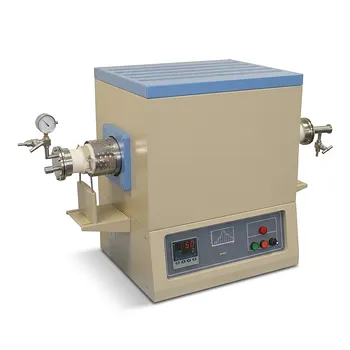
1700C High Temperature Alumina Tube Furnace with 18 Inch Heated Zone and Vacuum Sealing Flanges

1800C High Temperature Compact Vacuum Tube Furnace with 60mm OD Alumina Tube and Kanthal MoSi2 Heating Elements
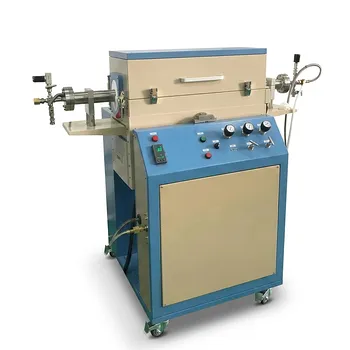
High Temperature Rocking Tube Furnace 1700°C Alumina Processing Tube with Precision Oscillation for Material Synthesis
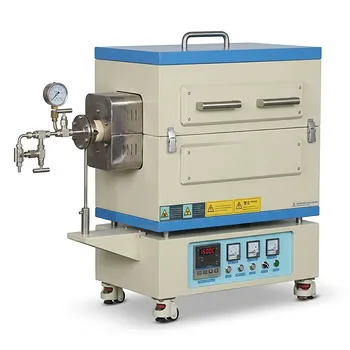
High Temperature Split Tube Furnace 1500C for Material Research Vacuum and Atmosphere Thermal Processing

High Temperature 1700C Vertical Tube Furnace for Powder Spherification and Material Sintering
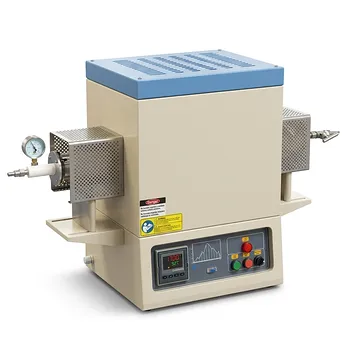
High Temperature Three Zone Tube Furnace 1700C with Alumina Tube and Water Cooled Flanges

High Temperature 1700C Six Zone Split Tube Furnace with Alumina Tube and Water Cooled Flanges
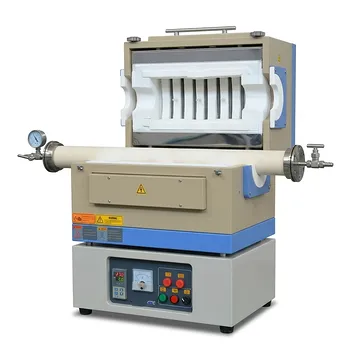
High Temperature 1600C Split Tube Furnace Vacuum Flanges Valves Optional 60mm 80mm Alumina Tube

High Temperature Automated 5 Inch Tube Furnace for Autonomous Material Research and Advanced Laboratory R&D

1100C Tube Furnace with Vacuum Flange and Programmable Temperature Controller for Material Science and Industrial Heat Treatment
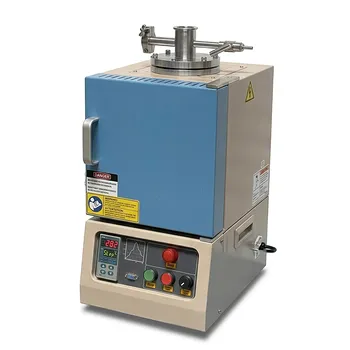
High Temperature Hybrid Muffle and Tube Furnace with Vacuum Capability and PID Control
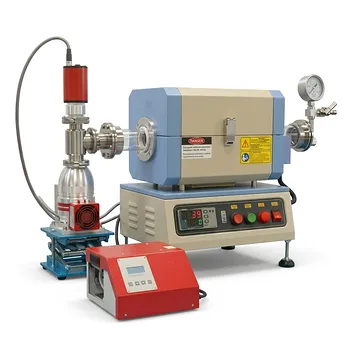
High Vacuum Compact Tube Furnace 1200C with Integrated Turbo Pump System and 8 Inch Heating Zone

1700C Hydrogen Gas Tube Furnace with 60mm Alumina Process Tube and Integrated Hydrogen Safety Detector
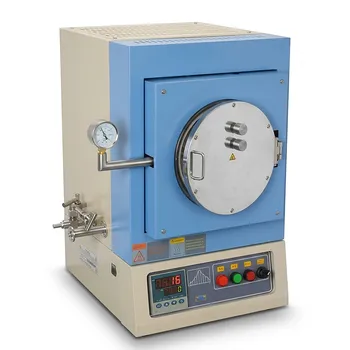
1100°C High Temperature Quartz Chamber Furnace 8 Inch OD with 7.6 Liter Capacity and Vacuum Atmosphere Capability