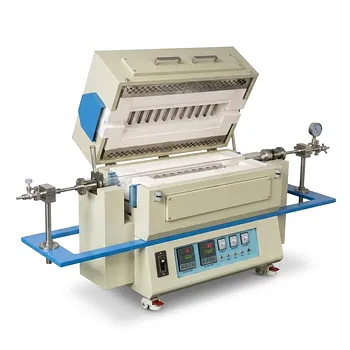
How does a high-temperature tube furnace facilitate the bulk treatment of polymer-coated UO2? Ensure phase purity.
Updated 3 months ago
A high-temperature tube furnace facilitates bulk thermal treatment by providing a stable, oxygen-free microenvironment necessary for the sequential decomposition and carbothermic reduction of polymer-coated precursors. By heating samples (such as those in alumina crucibles) to temperatures as high as 1673 K under a regulated argon flow, the furnace drives the thermal decomposition of polymers like PMMA into carbon, which subsequently reacts with uranium dioxide to enable precise phase evolution.
The core value of a high-temperature tube furnace lies in its ability to synchronize precise thermal ramps with atmospheric control, ensuring that organic components transform into productive carbon frameworks rather than burning off as waste or causing unintended oxidation.
Providing a Controlled Reaction Microenvironment
Maintaining Atmospheric Purity
The furnace utilizes a sealed, high-temperature resistant tube to isolate the sample from the ambient environment. By introducing a regulated argon flow rate, the system flushes out oxygen and moisture, preventing the uranium from reaching undesirable hexavalent states.
Establishing Thermal Uniformity
For bulk or large-volume heat treatments, maintaining a uniform temperature field is critical to ensure every part of the sample reacts at the same rate. This consistency prevents local variations in the material’s crystal phase structure or surface morphology, which are common in less controlled heating methods.
Precision Gas Integration
Beyond simple inert protection, the tube furnace allows for the introduction of specific reactive gases, such as Ar/H2 mixtures. This capability is vital for controlling chemical potential, allowing researchers to target specific oxidation states like pure pentavalent uranates or tetravalent oxides.
Managing Sequential Chemical Transformations
Polymer Pyrolysis and Chain Breaking
In the initial stages of treatment, the furnace induces molecular chain breaking and recombination within the polymer coating (often referred to as the Polymer Derived Ceramics or PDC method). This pyrolysis transforms the cured polymer matrix into a reactive carbon framework or a ceramic phase like SiOC.
Driving Carbothermic Reduction
As temperatures reach levels like 1673 K, the furnace facilitates the carbothermic reduction reaction between the uranium dioxide and the carbon derived from the polymer. This process is essential for converting $UO_2$ precursors into $UO_2/C$ nanocomposites or subsequent uranium carbide phases.
Regulating Phase Evolution
The ability to program specific holding periods and soaking times allows for the verification of material phase evolution. This precise control ensures that the transition from an amorphous state to a crystalline phase—such as the formation of specific stoichiometric uranium oxides—is complete and repeatable.
Understanding Technical Constraints and Trade-offs
Throughput vs. Uniformity
While tube furnaces provide superior atmospheric control, their geometry often limits the volume of material treated compared to box furnaces. Increasing the volume of the alumina crucibles can sometimes lead to internal thermal gradients, where the center of the bulk sample lags behind the furnace setpoint.
Crucible Material Compatibility
At temperatures exceeding 1600 K, the interaction between the sample and the container becomes a risk. While alumina crucibles are standard, certain carbothermic reactions can lead to slight vapor-phase interactions that may degrade the tube or contaminate high-purity samples over long-term cycles.
Gas Flow Dynamics
A flow rate that is too high can lead to "thermal stripping," where the gas cools the sample surface, while a flow rate that is too low may allow reaction byproducts to linger. Finding the balance is necessary to prevent these byproducts from inhibiting the complete reduction of the uranium dioxide.
Optimizing Your Thermal Treatment Strategy
How to Apply This to Your Project
- If your primary focus is achieving precise stoichiometry: Utilize a dual-stage heating profile that includes a low-temperature soak for complete polymer pyrolysis followed by a high-temperature reduction phase.
- If your primary focus is maximizing material purity: Ensure the use of high-purity argon and a quartz or alumina tube with superior sealing performance to prevent even trace oxygen ingress.
- If your primary focus is controlling grain size: Implement rapid heating rates followed by precisely timed soaking periods to induce crystallization without allowing for excessive grain growth.
By mastering the interplay between thermal stability and atmospheric regulation, you can ensure the repeatable synthesis and phase-pure transformation of complex nuclear material precursors.
Summary Table:
| Key Feature | Functional Mechanism | Benefit for Uranium Dioxide Treatment |
|---|---|---|
| Atmospheric Purity | Regulated Argon flow & sealed tubes | Prevents unintended oxidation; maintains stable oxygen-free environment. |
| Thermal Uniformity | Precise temperature field control | Ensures consistent phase evolution and morphology across bulk volumes. |
| Sequential Heating | Programmed ramps & soaking times | Facilitates distinct stages of polymer pyrolysis and carbothermic reduction. |
| Gas Integration | Support for Ar/H2 reactive mixtures | Allows precise targeting of specific stoichiometric oxidation states. |
Optimize Your Material Research with THERMUNITS
Are you looking to achieve precise phase evolution and superior material purity in your R&D projects? THERMUNITS is a leading manufacturer of high-temperature laboratory equipment for material science and industrial R&D. We specialize in providing high-performance thermal processing solutions designed to meet the rigorous demands of nuclear material synthesis and advanced ceramics.
Our comprehensive product range includes:
- Tube Furnaces (Single/Multi-zone) for precise atmosphere and gas control.
- Vacuum, Atmosphere, and Muffle Furnaces for diverse heat treatments.
- CVD/PECVD Systems and Rotary Kilns for advanced coating and bulk processing.
- Hot Press & Vacuum Induction Melting (VIM) Furnaces for specialized metallurgical needs.
Whether you are performing carbothermic reduction or complex polymer pyrolysis, our equipment ensures the thermal stability and atmospheric regulation your work requires.
Ready to elevate your lab's capabilities? Contact us today to find the perfect furnace solution for your application!
References
- Michelle Greenough, Jason R. Jeffries. Formation of uranium oxy-carbide and uranium carbide via conversion of polymer covered uranium dioxide by laser-based thermal processing. DOI: 10.1016/j.jnucmat.2024.154946
Mentioned Products
- High Temperature Tube Furnace 1500C with Sliding Flanges and 50mm OD for Rapid Thermal Processing Fast Heating and Cooling
- Vertical Hybrid High Temperature Furnace 1500C Alumina Tube SOFC Fuel Cell Testing Laboratory Heat Treatment Research Equipment
- High Temperature 1700C Vertical Tube Furnace for Powder Spherification and Material Sintering
- 1800C High Temperature Compact Vacuum Tube Furnace with 60mm OD Alumina Tube and Kanthal MoSi2 Heating Elements
- High Temperature 1700C Tube Furnace with High Vacuum Turbomolecular Pump System and Multi Channel Mass Flow Controller Gas Mixer
People Also Ask
- How are high-temperature tube furnaces utilized to repair etching damage? Precision Lattice Restoration Solutions
- What core conditions does a high-temperature tube furnace provide for rGO aerogels? Mastering Precision Synthesis.
- What role does a high-temperature tube furnace play in CVD synthesis of silicon nanowires? Master VLS Growth Precision.
- How does precision tube furnace control influence CoFe nanoparticle formation? Master Your Bimetallic Synthesis.
- What role does a high-temperature tube furnace play in the sulfidation heat treatment of CoS@C/MXene nanocomposites? Guide

Tech Team · ThermUnits
Last updated on Jun 03, 2026
Related Products
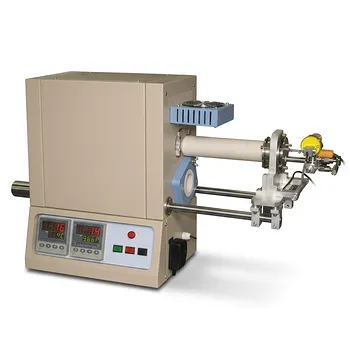
High Temperature Tube Furnace 1500C with Sliding Flanges and 50mm OD for Rapid Thermal Processing Fast Heating and Cooling
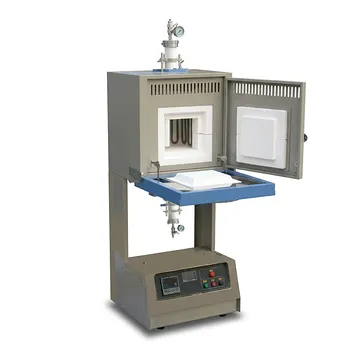
Vertical Hybrid High Temperature Furnace 1500C Alumina Tube SOFC Fuel Cell Testing Laboratory Heat Treatment Research Equipment

High Temperature 1700C Vertical Tube Furnace for Powder Spherification and Material Sintering

1800C High Temperature Compact Vacuum Tube Furnace with 60mm OD Alumina Tube and Kanthal MoSi2 Heating Elements

High Temperature 1700C Tube Furnace with High Vacuum Turbomolecular Pump System and Multi Channel Mass Flow Controller Gas Mixer
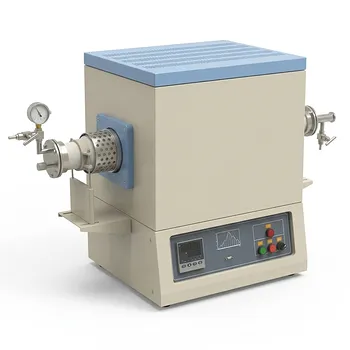
1750°C High Temperature Benchtop Vacuum Atmosphere Tube Furnace with Kanthal Super 1800 Heating Elements and 60mm Alumina Processing Tube
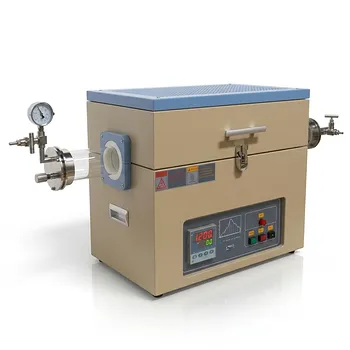
High Temperature 1200C Split Tube Furnace with Optional Quartz Tube Sizes and Vacuum Sealing Flanges for Material Science Research
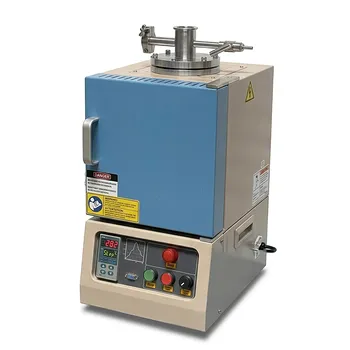
High Temperature Hybrid Muffle and Tube Furnace with Vacuum Capability and PID Control

High Temperature 1700C Benchtop Tube Furnace with 5 Inch Heating Zone High Purity Alumina Tube and Vacuum Sealing Flanges

Compact High Temperature 1600C Tube Furnace with 50mm Alumina Tube and Vacuum Flanges for Material Sintering
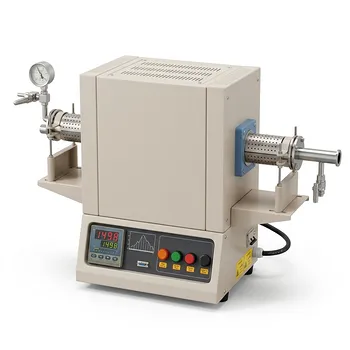
1500C High Temperature Compact Tube Furnace 2 Inch OD with Vacuum Flanges and Complete Accessories
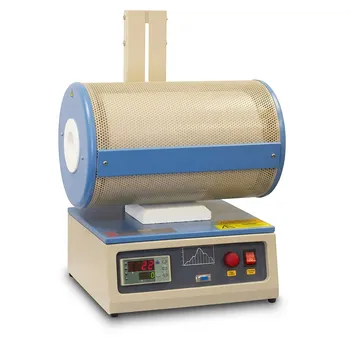
Multi Position Tube Furnace 1100C for Laboratory Material Research and Advanced Industrial Thermal Processing
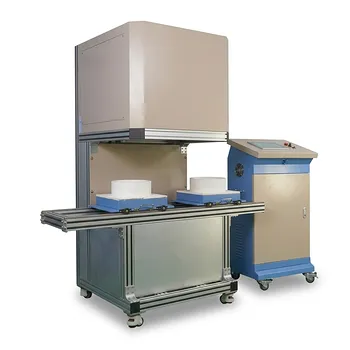
High Temperature Bottom Loading Vertical Furnace 1700C Dual Stage Sample Processing System 18L Large Capacity Thermal Treatment Equipment
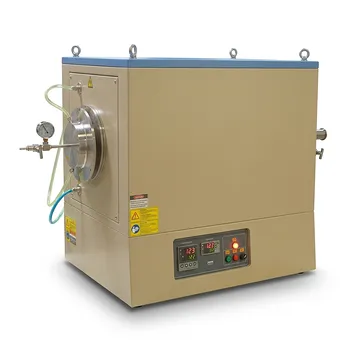
1100°C Large Diameter Quartz Tube Furnace with 24 Inch Heating Zone and Water Cooled Flanges

1100C Tube Furnace with Vacuum Flange and Programmable Temperature Controller for Material Science and Industrial Heat Treatment

High Temperature Automated 5 Inch Tube Furnace for Autonomous Material Research and Advanced Laboratory R&D
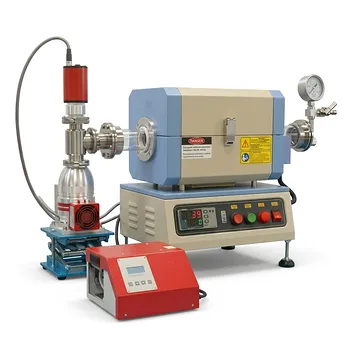
High Vacuum Compact Tube Furnace 1200C with Integrated Turbo Pump System and 8 Inch Heating Zone
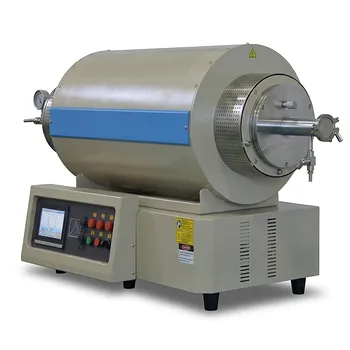
1200C Max Three Zone Tube Furnace 6 Inch OD Max with Tube and Flange
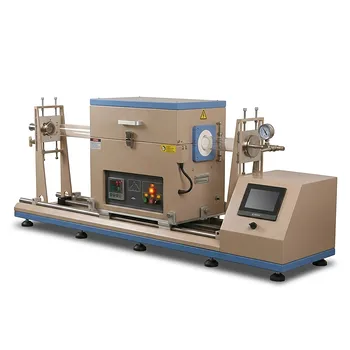
1200C Sliding Tube Furnace for Rapid Thermal Processing and CVD Graphene Growth with 100mm OD Capacity