How does a high vacuum tube furnace contribute to the primary carbonization process of biomass waste? Expert Insights
Updated 3 months ago
The high vacuum tube furnace is the fundamental engine for transforming raw biomass into stable carbon structures. It provides a precise, oxygen-free environment that facilitates the pyrolysis of organic matter at controlled temperatures, typically starting around 550°C. This equipment ensures the consistent removal of volatile components while preserving the carbon skeleton and initiating the formation of essential preliminary pore structures.
Core Takeaway: A high vacuum tube furnace enables the production of high-quality bio-carbon by isolating biomass from oxygen and applying exact thermal profiles. This controlled environment is the primary factor in determining the density, porosity, and fixed carbon content of the resulting material.
The Role of Precision Thermal Control
Facilitating Stable Pyrolysis
The tube furnace provides a stable heating rate, often regulated at specific intervals like 10°C per minute. This steady increase allows organic components within the biomass to break down predictably rather than combusting.
Managing Volatile Removal
Precise temperature control at stages such as 550°C to 800°C facilitates the thorough removal of organic volatiles. This enrichment process increases the fixed carbon content, turning raw waste into a high-efficiency carbon carrier.
Achieving Chemical Dehydration
Specific programmed temperature increases allow for the staged dehydration and degassing of materials like lignin and cellulose. This gradual process prevents the structural collapse of the biomass, ensuring the integrity of the final product.
Atmosphere and Vacuum Management
Creating an Anaerobic Environment
A high vacuum or the introduction of inert gases (such as Nitrogen or Argon) excludes oxygen from the reaction chamber. This prevents the oxidation and loss of carbon materials, which would otherwise turn to ash at high temperatures.
Facilitating Specific Chemical Reactions
The furnace can be equipped with gas control systems to introduce reactive flows like carbon dioxide or fixed-bed exhaust gases. These atmospheres are critical during the pre-carbonization stage to begin the conversion of biomass into hard carbon structures.
Inducing Structural Reorganization
At higher temperatures, such as 1100°C, the controlled environment induces the reorganization of carbon atoms. This is essential for creating disordered hard carbon structures, which are vital for specialized applications like sodium-ion energy storage.
Structural Development and Porosity
Developing Preliminary Pore Channels
The controlled heat treatment facilitates the formation of a carbonized mass with initial pore structures. These channels serve as the foundation for the subsequent activation processes required to make high-surface-area activated carbon.
Ensuring Thermal Stability
By subjecting biomass to rigorous thermal profiles, the tube furnace produces a carbon skeleton with high thermal stability. This ensures the resulting biochar or activated carbon can perform reliably in industrial or chemical environments.
Standardizing Biochar Production
The use of a horizontal tube furnace allows for a standardized carbonization method. This consistency is necessary for kinetic studies and ensuring that different batches of biomass waste yield uniform carbon samples.
Understanding the Trade-offs
Equipment Throughput Limitations
Tube furnaces are generally designed for batch processing rather than continuous flow. This makes them ideal for precision laboratory work or high-value small-scale production but less efficient for processing massive volumes of waste.
Energy and Cooling Demands
Maintaining a high vacuum and high processing temperatures requires significant energy input. Additionally, the cooling phase must be managed carefully to avoid thermal shock to the furnace tube, which can prolong the total processing time.
Material Constraints
The choice of tube material (such as quartz or alumina) limits the maximum temperature and the types of chemical activating agents that can be used. Certain aggressive agents may degrade the furnace tube over time if not properly managed.
Applying This to Your Project
Making the Right Choice for Your Goal
To achieve the best results in biomass carbonization, align your furnace settings with your specific material objectives.
- If your primary focus is maximizing pore development: Use a stable heating rate (e.g., 10 K/min) and integrate activating agents during the primary carbonization phase.
- If your primary focus is producing hard carbon for batteries: Prioritize high-temperature annealing at 1100°C under strict Argon protection to induce structural reorganization.
- If your primary focus is consistent biochar for research: Utilize a horizontal tube furnace with a constant nitrogen flow to ensure a standardized, anaerobic pyrolysis environment.
By mastering the thermal and atmospheric variables of the tube furnace, you can precisely engineer the physical and chemical properties of biomass-derived carbon.
Summary Table:
| Feature | Function/Parameter | Key Benefit/Outcome |
|---|---|---|
| Thermal Control | 10°C/min ramp rate | Prevents combustion; ensures stable, predictable pyrolysis |
| Atmosphere | High Vacuum / Inert Gas | Prevents oxidation; preserves carbon skeleton and mass |
| Temp Range | 550°C to 1100°C | Removes organic volatiles and induces structural reorganization |
| Output Quality | Pore Development | Creates high fixed carbon content and thermal stability |
Elevate Your Material Research with THERMUNITS Precision
Are you looking to optimize your biomass carbonization or develop advanced hard carbon structures for energy storage? THERMUNITS is your premier partner in high-temperature laboratory equipment for material science and industrial R&D.
We offer a comprehensive range of thermal processing solutions designed for precision and durability, including:
- Specialized Furnaces: Muffle, Vacuum, Atmosphere, Tube, Rotary, and Hot Press Furnaces.
- Advanced Systems: CVD/PECVD systems, Vacuum Induction Melting (VIM) furnaces, and Electric Rotary Kilns.
- Laboratory Essentials: Dental Furnaces, high-quality Thermal Elements, and bespoke heat treatment equipment.
Our equipment provides the exact thermal profiles and oxygen-free environments necessary to transform raw waste into high-value carbon materials. Contact our technical experts today to discuss your project requirements and discover how our solutions can enhance your lab's efficiency and results!
References
- Asel Duisenbek, А. B. Tuganbaev. PRODUCTION OF HIGH-PERFORMANCE SUPERCAPACITOR ELECTRODES BASED ON GRAPHENE-LIKE CARBON OBTAINED FROM TEA WASTE. DOI: 10.55452/1998-6688-2024-21-4-186-195
Mentioned Products
- 1800C High Temperature Compact Vacuum Tube Furnace with 60mm OD Alumina Tube and Kanthal MoSi2 Heating Elements
- 1750°C High Temperature Benchtop Vacuum Atmosphere Tube Furnace with Kanthal Super 1800 Heating Elements and 60mm Alumina Processing Tube
- High Vacuum Compact Tube Furnace 1200C with Integrated Turbo Pump System and 8 Inch Heating Zone
- High Temperature 1700C Tube Furnace with High Vacuum Turbomolecular Pump System and Multi Channel Mass Flow Controller Gas Mixer
- 1200C High Temperature 5 Inch Split Vacuum Tube Furnace with 12 Inch Heating Zone and Separated PID Controller
People Also Ask
- What core functions does a high-temperature vacuum tube furnace provide? Optimize np-CuSn Sintering & Joint Integrity
- What is the primary function of a high-temperature tube furnace in Cu1-N-C synthesis? Precision Thermal Control.
- What impact does the heating rate of a tube furnace have on biochar microstructure? Optimize Your Material R&D.
- Role of Tube Furnace in KNNLST Ceramic Synthesis: Achieve High Phase Purity and Thermal Uniformity
- What is the role of a high-temperature tube furnace in the preparation of S-C3N4? Master Precision Material Synthesis

Tech Team · ThermUnits
Last updated on Jun 02, 2026
Related Products

1800C High Temperature Compact Vacuum Tube Furnace with 60mm OD Alumina Tube and Kanthal MoSi2 Heating Elements

1750°C High Temperature Benchtop Vacuum Atmosphere Tube Furnace with Kanthal Super 1800 Heating Elements and 60mm Alumina Processing Tube

High Vacuum Compact Tube Furnace 1200C with Integrated Turbo Pump System and 8 Inch Heating Zone

High Temperature 1700C Tube Furnace with High Vacuum Turbomolecular Pump System and Multi Channel Mass Flow Controller Gas Mixer
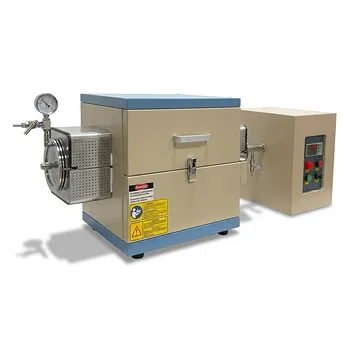
1200C High Temperature 5 Inch Split Vacuum Tube Furnace with 12 Inch Heating Zone and Separated PID Controller
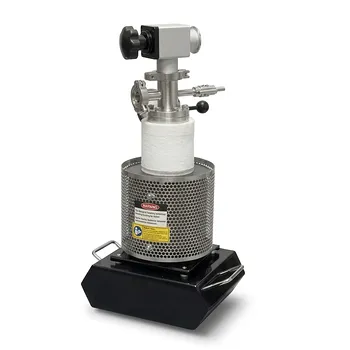
High Temperature 1100C Compact Top Loading Vertical Vacuum Tube Furnace for High Vacuum Noble Metal Melting and Material Research
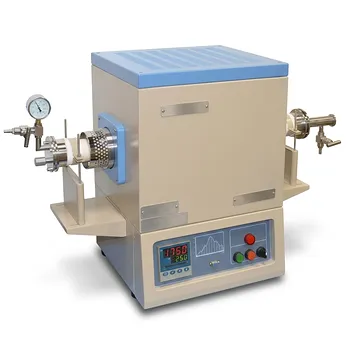
High Temperature Compact Vacuum Tube Furnace 1750C Max 60mm OD Alumina Tube
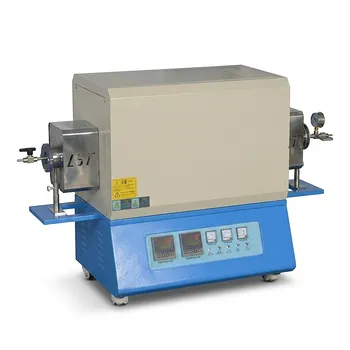
High Temperature Dual Zone Vacuum Tube Furnace for Material Research and CVD Processing

Compact High Temperature 1600C Tube Furnace with 50mm Alumina Tube and Vacuum Flanges for Material Sintering

High Temperature 1700C Benchtop Tube Furnace with 5 Inch Heating Zone High Purity Alumina Tube and Vacuum Sealing Flanges

High Temperature Automated 5 Inch Tube Furnace for Autonomous Material Research and Advanced Laboratory R&D

1100C Tube Furnace with Vacuum Flange and Programmable Temperature Controller for Material Science and Industrial Heat Treatment
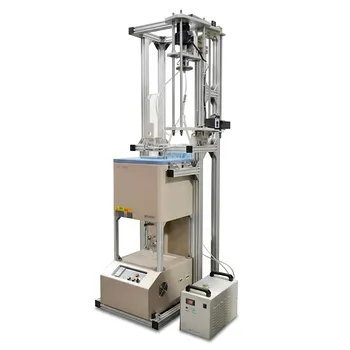
500C Vacuum Vertical Tube Furnace 84mm OD Sample Rotation Lifting System

High Temperature 1700C Vertical Tube Furnace for Powder Spherification and Material Sintering

1100°C High Temperature Quartz Chamber Furnace 8 Inch OD with 7.6 Liter Capacity and Vacuum Atmosphere Capability
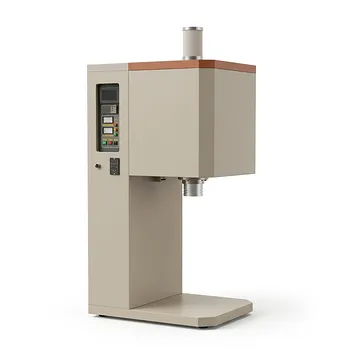
Vertical Openable Tube Furnace 0-1700c High Temperature Laboratory System for CVD and Vacuum Heat Treatment
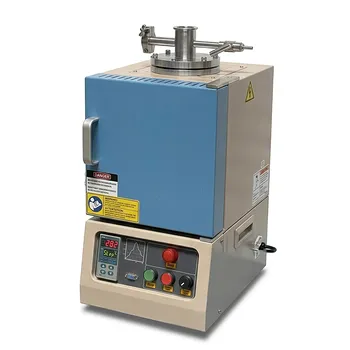
High Temperature Hybrid Muffle and Tube Furnace with Vacuum Capability and PID Control

High Temperature 1700C Six Zone Split Tube Furnace with Alumina Tube and Water Cooled Flanges
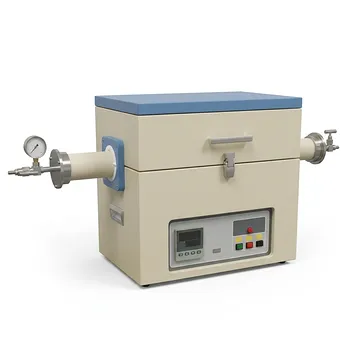
1250C Split Tube Furnace with 3 Inch Mullite Tube and Vacuum Sealing Flanges for Precision Thermal Processing
