How does a laboratory tube furnace demonstrate the protective value of coatings? Test Durability for Silicon Production
Updated 3 months ago
The laboratory tube furnace acts as a controlled simulation chamber to evaluate coating durability under extreme industrial conditions. By replicating the 1450 °C vacuum or argon environments found in single crystal silicon production, the furnace exposes coated substrates to aggressive silicon vapor. This process allows researchers to empirically verify if a coating—such as a Ni-Al composite—can successfully prevent vapor from eroding the underlying carbon fiber substrate.
A laboratory tube furnace validates coating performance by replicating the thermal and chemical stresses of silicon growth, specifically testing a coating's ability to act as a physical barrier against vapor erosion. This simulation is essential for identifying materials that can extend the operational lifespan of expensive carbon-fiber thermal components in high-heat environments.
Replicating the Industrial Micro-Environment
Achieving Extreme Temperature Stability
To accurately simulate the production of single crystal silicon, the furnace must maintain a stable 1450 °C environment. This high temperature is necessary to generate the specific silicon vapor pressures that cause material degradation in industrial settings.
Controlled Atmospheric Conditions
The tube furnace allows for the precise management of the internal atmosphere, typically using vacuum or argon gas. This control is vital because it ensures that any observed corrosion is caused specifically by silicon vapor rather than atmospheric oxygen or other contaminants.
Precise Thermal Gradients
The system can establish stable heating gradients, which are critical for observing how coatings behave as they transition from room temperature to extreme heat. This helps researchers identify the exact point at which a coating might fail or undergo a phase transformation.
Mechanisms of the Silicon Vapor Erosion Test
Simulating Long-Duration Exposure
Tests are conducted over extended periods, such as 5-hour cycles, to observe time-dependent degradation. This duration is sufficient to demonstrate whether a coating provides a consistent barrier or if it begins to fail under prolonged thermal stress.
Verifying the Physical Barrier
The primary goal is to determine if the coating, such as a Ni-Al composite, can effectively block contact between the vapor and the internal substrate. By analyzing the sample after the test, researchers can see if the carbon fiber substrate remains intact or shows signs of silicon penetration.
Observing Material Evolution
Beyond simple erosion, the furnace environment allows for the study of element diffusion and oxide film growth. These observations help engineers understand how the chemical composition of the coating changes over time when exposed to highly corrosive vapors.
Understanding the Trade-offs and Limitations
Simulation vs. Real-World Dynamics
While a tube furnace excels at controlling variables, it is a static environment that may not fully capture the mechanical stresses or gas flow dynamics of a full-scale industrial furnace. Results should be viewed as a baseline for material capability rather than a perfect mirror of production-line performance.
Material Specificity and Scaling
A coating that performs exceptionally well in a laboratory-scale tube furnace may face application challenges when scaled to larger components. Differences in thermal expansion between the coating and the substrate can become more pronounced on larger surfaces, potentially leading to cracking that a small-scale test might miss.
Limitations of Temperature Extremes
Standard tube furnaces often peak around 1000 °C to 1500 °C. If a specialized industrial process requires temperatures exceeding these limits, the lab simulation may fail to trigger the specific phase changes or failure points relevant to that higher-heat application.
How to Apply These Findings to Your Project
When utilizing tube furnace testing to validate protective coatings, your approach should vary based on your specific engineering requirements.
- If your primary focus is substrate longevity: Prioritize long-duration erosion tests at the maximum expected service temperature to ensure the physical barrier remains impermeable.
- If your primary focus is chemical purity: Use the furnace to analyze element diffusion patterns to ensure the coating does not outgas or contaminate the silicon melt.
- If your primary focus is cost-efficiency: Use the lab furnace as a high-throughput screening tool to discard failing coating compositions before investing in expensive full-scale trials.
The laboratory tube furnace remains the definitive tool for bridging the gap between theoretical material science and reliable industrial application in high-temperature silicon processing.
Summary Table:
| Test Parameter | Simulation Detail | Research Objective |
|---|---|---|
| Temperature | Stable 1450 °C | Replicate industrial silicon growth environments |
| Atmosphere | Vacuum or Argon Gas | Prevent oxidation and isolate vapor corrosion effects |
| Exposure Time | 5-hour cycles | Observe long-term degradation and barrier failure |
| Substrate Focus | Carbon-fiber components | Evaluate erosion protection and physical integrity |
| Material Study | Element diffusion | Analyze chemical evolution and oxide film growth |
Advance Your Material R&D with THERMUNITS
Ensure the longevity and purity of your thermal components with precision-engineered solutions. THERMUNITS is a leading manufacturer of high-temperature laboratory equipment for material science and industrial R&D.
We offer a comprehensive range of thermal processing solutions tailored to your specific needs, including:
- Tube, Vacuum, and Atmosphere Furnaces for precise corrosion and erosion simulations.
- Muffle, Rotary, and Hot Press Furnaces for versatile material processing.
- CVD/PECVD Systems and Vacuum Induction Melting (VIM) Furnaces for advanced synthesis.
- Dental Furnaces, Electric Rotary Kilns, and Thermal Elements for specialized heat treatments.
Whether you are testing Ni-Al composites or developing next-generation coatings, our equipment provides the stability and control required for accurate, repeatable results. Contact our expert team today to find the perfect heat treatment solution for your laboratory.
References
- Zuxing Qi, An Yan. Antioxidant Behavior of Carbon/Carbon Composites with Hot Dip Plating and Electroplating for Single-Crystal Furnaces. DOI: 10.3390/ma17235798
Mentioned Products
- 1650C Recirculating Steam Corrosion and Thermal Shock Testing Furnace with Integrated Water Vapor Generator and Automated Sample Delivery
- Vertical Crucible Furnace 1000C High Temperature Laboratory Equipment 4.7 Inch Diameter Chamber SS316 Anti Corrosive Enclosure
- High Temperature 1200C Split Tube Furnace with Hinged Vacuum Flanges and 4 Inch Quartz Tube for Laboratory Research
- High Temperature Automated 5 Inch Tube Furnace for Autonomous Material Research and Advanced Laboratory R&D
- High Temperature Vertical Hybrid Furnace with Alumina Tube and SiC Heating for SOFC Coin Cell Testing and Atmosphere Processing
People Also Ask
- What is the objective of a 100-hour thermal exposure test at 1000 °C on IN625/TiC? Evaluate Microstructural Stability
- What are the process advantages of using ultrafast high-temperature shock equipment? Revolutionize Anode Recycling.
- What function does a ceramic sample boat perform during the reforming of plastic powders? Optimize Thermal Conversion
- What role does a sessile drop furnace play in biochar-slag studies? Essential for Green Steelmaking.
- What key conditions do large quartz tube corrosion test furnaces provide for hot corrosion evaluations at 900 °C?

Tech Team · ThermUnits
Last updated on Jun 03, 2026
Related Products
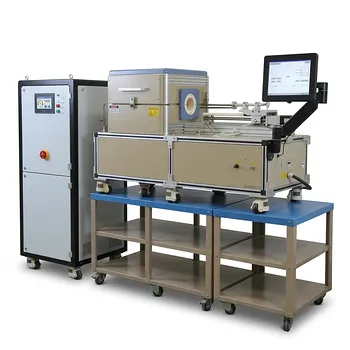
1650C Recirculating Steam Corrosion and Thermal Shock Testing Furnace with Integrated Water Vapor Generator and Automated Sample Delivery
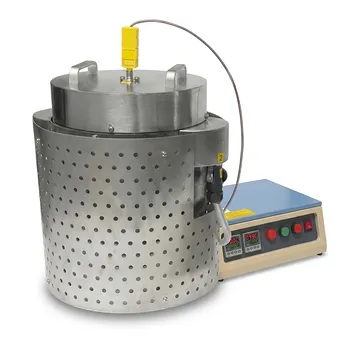
Vertical Crucible Furnace 1000C High Temperature Laboratory Equipment 4.7 Inch Diameter Chamber SS316 Anti Corrosive Enclosure
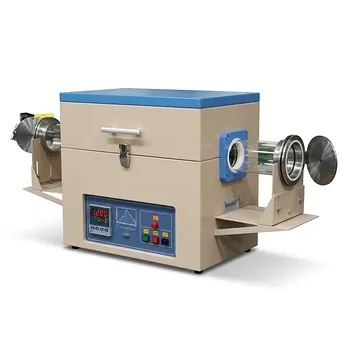
High Temperature 1200C Split Tube Furnace with Hinged Vacuum Flanges and 4 Inch Quartz Tube for Laboratory Research

High Temperature Automated 5 Inch Tube Furnace for Autonomous Material Research and Advanced Laboratory R&D
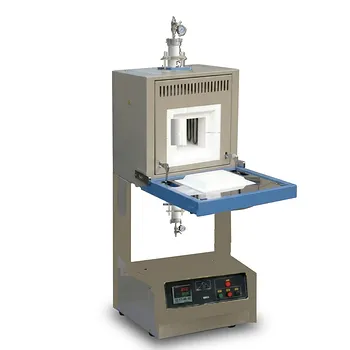
High Temperature Vertical Hybrid Furnace with Alumina Tube and SiC Heating for SOFC Coin Cell Testing and Atmosphere Processing
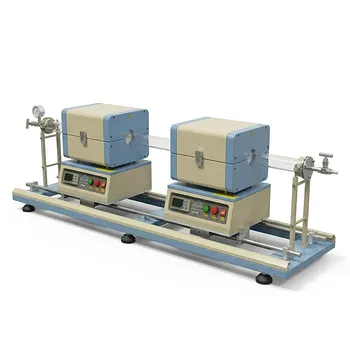
1200C Max Dual Sliding Tube Furnace with 50 mm Tube Flanges for CVD
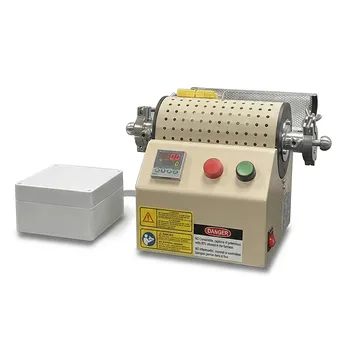
1000C Mini Tube Furnace with 20mm Quartz Tube and Vacuum Flanges for Material Science Research and Controlled Atmosphere Small Sample Processing

1800C High Temperature Compact Vacuum Tube Furnace with 60mm OD Alumina Tube and Kanthal MoSi2 Heating Elements
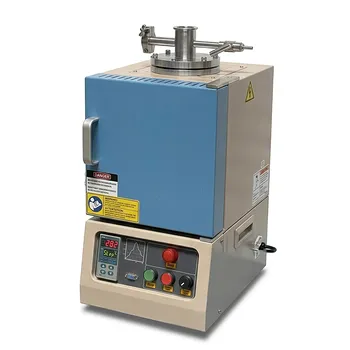
High Temperature Hybrid Muffle and Tube Furnace with Vacuum Capability and PID Control
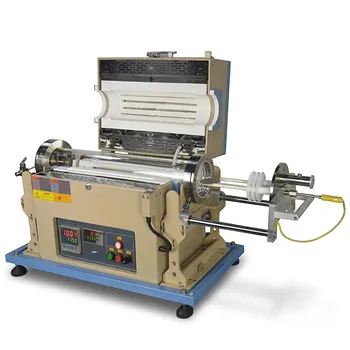
1200°C High Temperature 4 Inch Tube Furnace with Sliding Flange for CVD Systems

High Temperature 1700C Tube Furnace with 4 Inch OD Alumina Tube and Vacuum Sealing Flanges
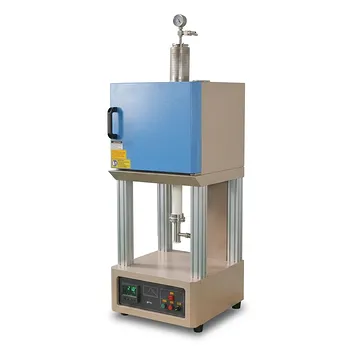
Hybrid High Temperature Tube and Box Furnace 1700C with 2 Inch Alumina Tube for Material Research
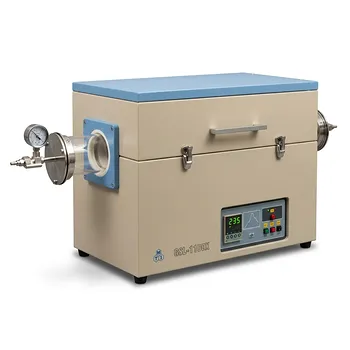
Single Zone Tube Furnace 5 Inch Quartz Tube 36 Inch Heating Zone Vacuum Flanges
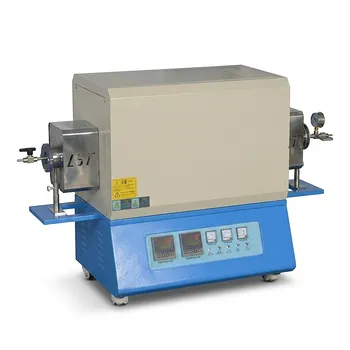
High Temperature Dual Zone Vacuum Tube Furnace for Material Research and CVD Processing
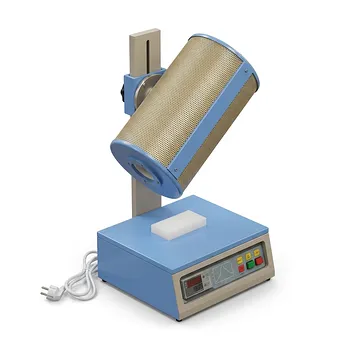
1100°C Vertical Laboratory Furnace for DIY Tubular Reactors with PID Temperature Controller
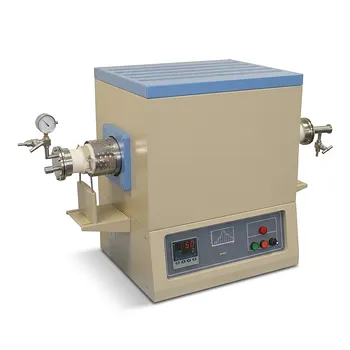
1700C High Temperature Alumina Tube Furnace with 18 Inch Heated Zone and Vacuum Sealing Flanges
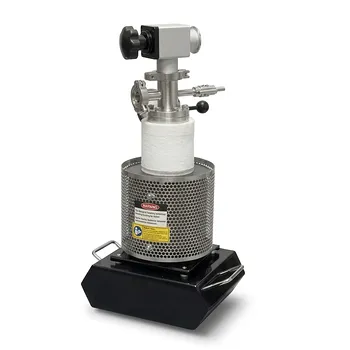
High Temperature 1100C Compact Top Loading Vertical Vacuum Tube Furnace for High Vacuum Noble Metal Melting and Material Research

High Temperature 1700C Vertical Tube Furnace for Powder Spherification and Material Sintering
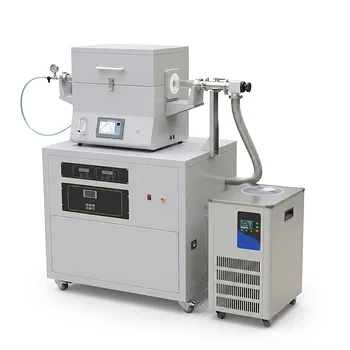
Split Chamber CVD Tube Furnace with Vacuum Station Chemical Vapor Deposition System Machine
