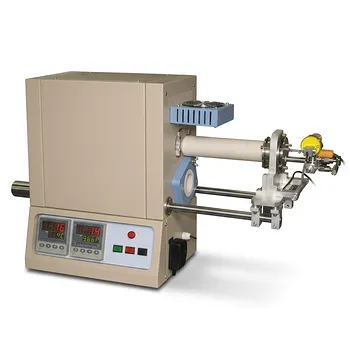
How does a laboratory tube furnace support the VLS growth mechanism? Master Precision TMD Nanoribbon Synthesis
Updated 3 months ago
A laboratory tube furnace acts as the thermodynamic engine for VLS growth by precisely controlling the phase transition of catalyst seeds. By maintaining temperatures above the liquefaction point of pre-deposited alloys—often involving materials like molybdenum, nickel, and sodium—the furnace transforms solid seeds into liquid droplets. These droplets then act as selective "sinks" for vaporized precursors, leading to the supersaturation and precipitation of high-quality, single-crystal Transition Metal Dichalcogenide (TMD) nanoribbons.
Core Takeaway: The tube furnace enables VLS growth by orchestrating three critical states: the evaporation of solid precursors, the maintenance of liquid alloy catalyst droplets, and the controlled precipitation of solid crystals from those droplets via stable chemical potential gradients.
The Thermodynamics of Catalyst Formation
Evaporating Mixed Precursors
In the initial stages, the furnace provides a high-temperature environment (typically around 730 °C) to evaporate precursor powders like MoO2, Ni, and NaBr. This precise thermal control ensures that the vapor-phase components condense uniformly on the substrate to form alloy seeds with specific stoichiometry, such as Na-Mo-Ni-O.
Reaching the Liquefaction Point
The furnace must maintain an environment above the liquefaction temperature of these pre-deposited alloy seeds. This energy input transforms the solid seeds into liquid alloy droplets, which are essential for the "Liquid" phase of the Vapor-Liquid-Solid mechanism.
Managing the Vapor Phase and Absorption
Upstream Precursor Vaporization
Multi-zone tube furnaces allow for vapor doping by placing precursors like sulfur or selenium powder in the cooler upstream section. As the carrier gas flows, it transports the thermally evaporated selenium or sulfur vapor toward the liquid catalyst droplets located in the furnace center.
Achieving Supersaturation
The liquid alloy droplets at the furnace center absorb atoms from the vapor phase. The furnace’s ability to regulate internal pressure and gas flow rates ensures the droplets reach a state of supersaturation, where they can no longer hold the dissolved precursor atoms.
Controlling the Growth Interface
Edge Precipitation and Morphology
Once supersaturated, single-layer TMD crystals begin to precipitate from the droplet edges. The furnace provides the necessary physicochemical conditions for these crystals to extend into nanoribbons rather than bulk flakes.
Thermal Uniformity for Long-Range Growth
The axial temperature gradient generated by the furnace’s heating elements is critical for maintaining a stable chemical potential. This stability enables the continuous growth of single-crystal nanoribbons with uniform widths over long distances by preventing fluctuations in the growth rate.
Understanding the Trade-offs
Temperature Sensitivity
If the temperature is too low, the alloy seeds will not liquefy, preventing the VLS mechanism entirely and resulting in standard Vapor-Solid growth. Conversely, excessive heat can lead to the thermal reorganization of the substrate or the evaporation of the catalyst itself.
Gradient vs. Uniformity
While a stable thermal field is required for uniform ribbons, a non-uniform conversion can sometimes occur if the temperature gradient is not perfectly managed. This can lead to unwanted morphologies, such as the formation of nanodonuts instead of straight nanoribbons.
How to Apply This to Your Project
To successfully synthesize TMD nanoribbons using a tube furnace, consider your specific material requirements:
- If your primary focus is uniform ribbon width: Prioritize a furnace with high axial thermal uniformity to maintain a consistent chemical potential gradient across the substrate.
- If your primary focus is complex quaternary TMDs: Utilize a multi-zone configuration to precisely control the evaporation rates of different precursors like sulfur and selenium.
- If your primary focus is seed stoichiometry: Use a high-precision furnace to control the initial evaporation of mixed powders at specific temperatures, such as 730 °C, to ensure the foundation of your growth is chemically sound.
Mastering the thermal environment within the tube furnace is the definitive factor in transitioning from random crystal flakes to structured, high-performance nanoribbons.
Summary Table:
| VLS Stage | Furnace Function | Impact on Nanoribbon Growth |
|---|---|---|
| Precursor Evaporation | Precise heating (e.g., 730°C) | Ensures stoichiometric alloy seed formation |
| Seed Liquefaction | Sustained thermal energy | Maintains liquid droplets for vapor absorption |
| Vapor Management | Multi-zone gas flow control | Achieves supersaturation of the catalyst |
| Precipitation | Axial thermal uniformity | Enables continuous, long-range crystal growth |
Elevate your material science research with THERMUNITS, a leading manufacturer of high-temperature laboratory equipment. Our advanced Tube Furnaces and CVD/PECVD systems provide the precise axial thermal uniformity and multi-zone control essential for the VLS growth of high-quality TMD nanoribbons. Whether you require Muffle, Vacuum, Atmosphere, or specialized Rotary and Hot Press furnaces, we empower industrial R&D with unmatched reliability and precision. Contact our experts today to find the perfect thermal processing solution for your laboratory!
References
- Xufan Li, Avetik R. Harutyunyan. Width-dependent continuous growth of atomically thin quantum nanoribbons from nanoalloy seeds in chalcogen vapor. DOI: 10.1038/s41467-024-54413-9
Mentioned Products
- Multi Position Tube Furnace 1100C for Laboratory Material Research and Advanced Industrial Thermal Processing
- Ten Zone Multi Orientation Laboratory Tube Furnace for 1200C High Temperature Gradient Thermal Processing
- High Temperature 1200C Split Tube Furnace with Hinged Vacuum Flanges and 4 Inch Quartz Tube for Laboratory Research
- 1100°C Vertical Laboratory Furnace for DIY Tubular Reactors with PID Temperature Controller
- High Temperature Automated 5 Inch Tube Furnace for Autonomous Material Research and Advanced Laboratory R&D
People Also Ask
- Why use a tube furnace for oxygen annealing LaCrO3/LaMnO3? Optimize Phase Transition & Magnetic Performance.
- What key role does a laboratory high-temperature tube furnace play in the production of carbon nanofibers? Guide
- How is a laboratory high-temperature tube furnace utilized to research the products of aluminothermic reduction? Advanced Metallurgical Solutions
- What is the role of a laboratory tube furnace in the carbonization process of porous carbon foam (PCF)? Master 3D Synthesis
- What role does a laboratory tube furnace play in the pyrolysis and carbonization of biomass? Optimize Thermal Research.

Tech Team · ThermUnits
Last updated on Jun 03, 2026
Related Products
Multi Position Tube Furnace 1100C for Laboratory Material Research and Advanced Industrial Thermal Processing
Ten Zone Multi Orientation Laboratory Tube Furnace for 1200C High Temperature Gradient Thermal Processing
High Temperature 1200C Split Tube Furnace with Hinged Vacuum Flanges and 4 Inch Quartz Tube for Laboratory Research
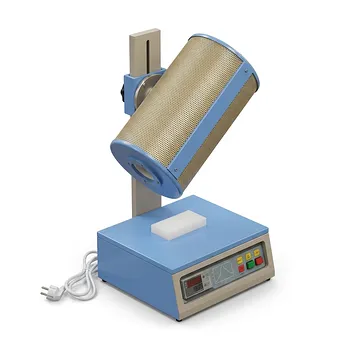
1100°C Vertical Laboratory Furnace for DIY Tubular Reactors with PID Temperature Controller

High Temperature Automated 5 Inch Tube Furnace for Autonomous Material Research and Advanced Laboratory R&D
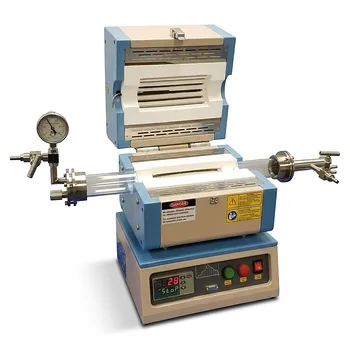
Compact Split Tube Furnace with Integrated Vacuum System and Precision Temperature Calibrator

1800C High Temperature Compact Vacuum Tube Furnace with 60mm OD Alumina Tube and Kanthal MoSi2 Heating Elements
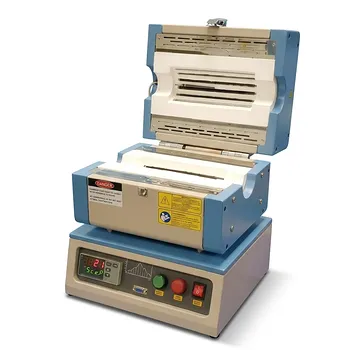
1250C Compact Split Tube Furnace with 8 Inch Heating Zone and Programmable Controller
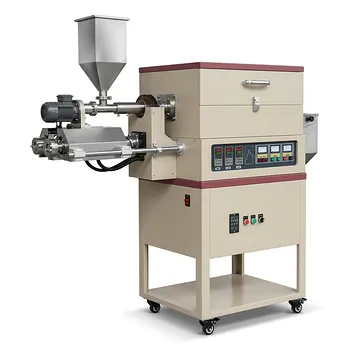
Laboratory Tilting Rotary Tubular Furnaces for Material Science and Industrial Heat Treatment
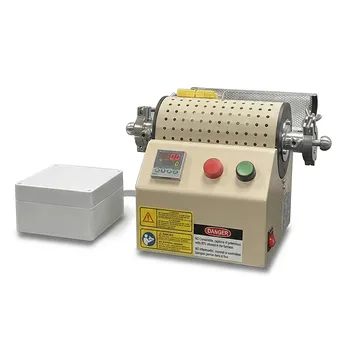
1000C Mini Tube Furnace with 20mm Quartz Tube and Vacuum Flanges for Material Science Research and Controlled Atmosphere Small Sample Processing
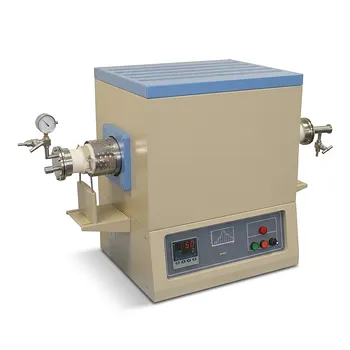
1700C High Temperature Alumina Tube Furnace with 18 Inch Heated Zone and Vacuum Sealing Flanges
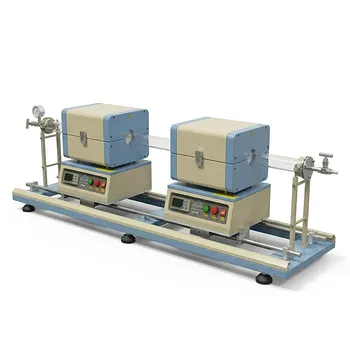
1200C Max Dual Sliding Tube Furnace with 50 mm Tube Flanges for CVD
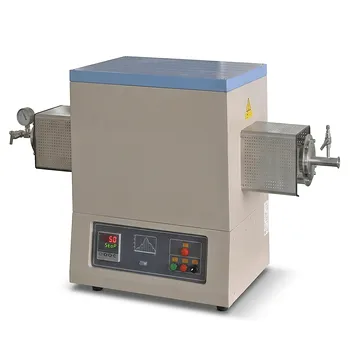
High Temperature 1700C Tube Furnace with 4 Inch OD Alumina Tube and Vacuum Sealing Flanges
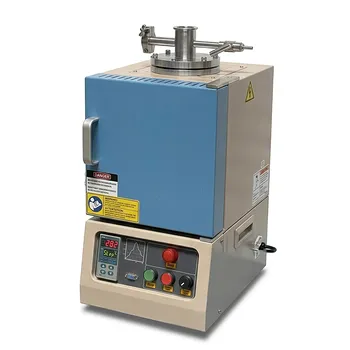
High Temperature Hybrid Muffle and Tube Furnace with Vacuum Capability and PID Control
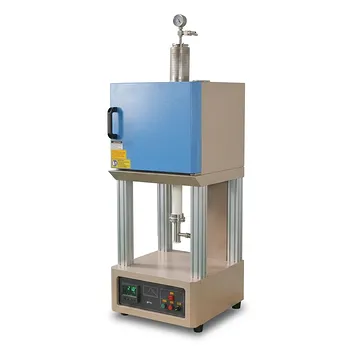
Hybrid High Temperature Tube and Box Furnace 1700C with 2 Inch Alumina Tube for Material Research
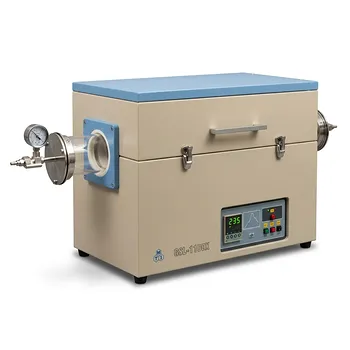
Single Zone Tube Furnace 5 Inch Quartz Tube 36 Inch Heating Zone Vacuum Flanges

High Temperature 1700C Vertical Tube Furnace for Powder Spherification and Material Sintering
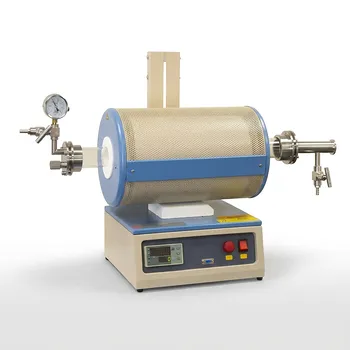
1100C Tube Furnace with Vacuum Flange and Programmable Temperature Controller for Material Science and Industrial Heat Treatment

High Temperature 1700C Tube Furnace with High Vacuum Turbomolecular Pump System and Multi Channel Mass Flow Controller Gas Mixer