How does a tube furnace facilitate the growth environment required for γ-CuI thin films? Expert PVT Process Insights.
Updated 3 months ago
Establishing a precise thermal gradient is the primary way a tube furnace enables the Physical Vapor Transport (PVT) process for $\gamma$-CuI thin films. By maintaining a high-temperature evaporation zone (typically 500 °C) and a cooler downstream growth zone (typically 360 °C), the furnace creates the necessary supersaturation gradient to drive vapor-phase materials toward the substrate for ordered crystallization.
The tube furnace serves as the engine of the PVT process by transforming solid source material into a controlled vapor stream and precisely managing the thermal energy required for high-quality crystalline deposition.
The Architecture of Vapor Transport
Establishing Dual-Zone Thermal Control
The tube furnace is engineered to maintain two distinct temperature environments within a single quartz or alumina tube. The source zone is kept at a high temperature to facilitate the sublimation or evaporation of the $\gamma$-CuI raw material.
Simultaneously, the growth zone is maintained at a significantly lower temperature. This temperature differential is the fundamental driver of the entire deposition process.
Creating the Supersaturation Gradient
As the $\gamma$-CuI vapor moves from the hot source zone toward the cooler substrate, it reaches a state of supersaturation. This means the vapor pressure exceeds the equilibrium vapor pressure at the lower temperature.
This gradient forces the vapor to condense out of the gas phase. The furnace's ability to stabilize this gradient ensures that the transition from vapor to solid occurs in a predictable, controlled manner.
Mechanisms of Thin Film Growth
Directional Vapor Transport
In a horizontal tube furnace, the movement of vapor is often assisted by carrier gas flows (such as Nitrogen or Argon). These gases physically push the evaporated molecules toward the substrate while maintaining a clean, controlled atmosphere.
The furnace's internal environment protects the high-purity materials from external contaminants. This isolation is critical for ensuring the stoichiometry and purity of the resulting $\gamma$-CuI film.
Atomic Rearrangement and Crystallization
The stable thermal field provided by the furnace allows for atomic rearrangement once the molecules land on the substrate. This thermal energy helps atoms find their lowest-energy lattice positions, which is essential for forming a highly crystalline structure.
Without the precise heat provided by the growth zone, the film might become amorphous or develop high levels of internal stress. The furnace effectively "tunes" the kinetic energy of the atoms to optimize the film's optical and electrical properties.
Understanding the Trade-offs
Gradient Sensitivity
If the temperature difference between the zones is too narrow, the deposition rate will be unacceptably slow. Conversely, a gradient that is too steep can lead to uncontrolled nucleation, resulting in poor film uniformity or the formation of unwanted nanostructures rather than a smooth thin film.
Atmospheric Contamination Risks
While the tube furnace provides a sealed environment, any leaks or impurities in the carrier gas can lead to oxidation or doping errors. For materials like $\gamma$-CuI, even minor deviations in the thermal field or gas purity can significantly degrade hole mobility and transparency.
Applying Furnace Control to Your Research
To achieve the best results with $\gamma$-CuI or similar thin films, your operational strategy should align with your specific material requirements.
- If your primary focus is Phase Purity: Maintain a strict 500 °C / 360 °C split to ensure the $\gamma$-phase of CuI is favored during the crystallization process.
- If your primary focus is Grain Size Optimization: Use a slower cooling rate post-deposition within the furnace to facilitate thermal annealing and eliminate deposition stresses.
- If your primary focus is Film Uniformity: Fine-tune the carrier gas flow rate in conjunction with the furnace's temperature zones to ensure a steady, laminar flow of vapor across the substrate.
The precision of a tube furnace’s thermal zones ultimately determines the transition from a simple chemical source to a high-performance functional thin film.
Summary Table:
| Parameter | Evaporation (Source) Zone | Growth (Substrate) Zone |
|---|---|---|
| Typical Temperature | ~500 °C | ~360 °C |
| Primary Mechanism | Material Sublimation/Evaporation | Vapor Condensation/Crystallization |
| Thermodynamic Driver | High Thermal Energy Input | Supersaturation Gradient |
| Atmospheric Control | Inert Carrier Gas (Ar/N2) | Protected High-Purity Environment |
Elevate Your Material Research with THERMUNITS Precision
At THERMUNITS, we understand that achieving the perfect thin film requires uncompromising thermal stability. As a leading manufacturer of high-temperature laboratory equipment, we provide the cutting-edge tools necessary for advanced material science and industrial R&D.
Our comprehensive range of solutions includes:
- Tube & Rotary Furnaces for precise PVT and chemical vapor transport.
- CVD/PECVD Systems for high-performance thin film deposition.
- Vacuum, Atmosphere, and Hot Press Furnaces for versatile heat treatment.
- Specialized Equipment: From Dental Furnaces to Vacuum Induction Melting (VIM) systems.
Whether you are optimizing hole mobility in $\gamma$-CuI or developing next-generation semiconductors, our equipment delivers the exact thermal gradients and atmospheric purity your process demands.
Contact us today to discover how our thermal processing expertise can accelerate your research breakthroughs!
References
- Chong Wu, Pucun Bai. Domain epitaxial matching of γ-CuI film grown on Al2O3(001) substrate via physical vapor transport. DOI: 10.1063/5.0231188
Mentioned Products
- 1200C Tube Furnace with Internal Magnetic Sample Sliding for Direct Vaporizing Deposition and Rapid Thermal Processing
- High Temperature 1700C Six Zone Split Tube Furnace with Alumina Tube and Water Cooled Flanges
- Vertical 1700C Vacuum and Atmosphere Tube Furnace with 80mm Alumina Tube
- High Temperature 1100C Compact Top Loading Vertical Vacuum Tube Furnace for High Vacuum Noble Metal Melting and Material Research
- Compact Vertical Split Quartz Tube Furnace with Stainless Steel Vacuum Flanges for Rapid Thermal Quenching and Controlled Atmosphere Material Processing
People Also Ask
- What role does a SiC-coated graphite susceptor play in H2Se selenization? Boost RTP Thermal Uniformity & Film Purity.
- What are the functional advantages of an RTP system for surface deposition? Enhance Heterojunction Interface Integrity
- How are K-type Thermocouples configured and what are their functions in thermal monitoring? Enhance Your R&D Precision
- How does a K-type thermocouple contribute to temperature monitoring within a tube furnace reactor? Expert Insights
- What role does a Rapid Thermal Processing (RTP) furnace play in Selenium recovery? Efficient Material Separation.

Tech Team · ThermUnits
Last updated on Jun 03, 2026
Related Products
1200C Tube Furnace with Internal Magnetic Sample Sliding for Direct Vaporizing Deposition and Rapid Thermal Processing
High Temperature 1700C Six Zone Split Tube Furnace with Alumina Tube and Water Cooled Flanges

Vertical 1700C Vacuum and Atmosphere Tube Furnace with 80mm Alumina Tube
High Temperature 1100C Compact Top Loading Vertical Vacuum Tube Furnace for High Vacuum Noble Metal Melting and Material Research
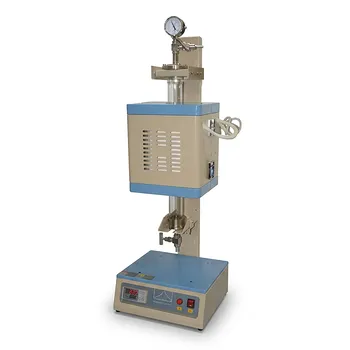
Compact Vertical Split Quartz Tube Furnace with Stainless Steel Vacuum Flanges for Rapid Thermal Quenching and Controlled Atmosphere Material Processing
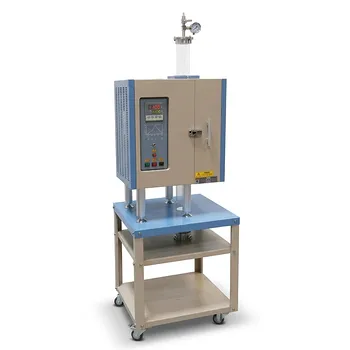
1100°C Split Vertical Tube Furnace with 80mm Quartz Tube and Stainless Steel Vacuum Flanges

High Temperature 1700C Vertical Tube Furnace for Powder Spherification and Material Sintering
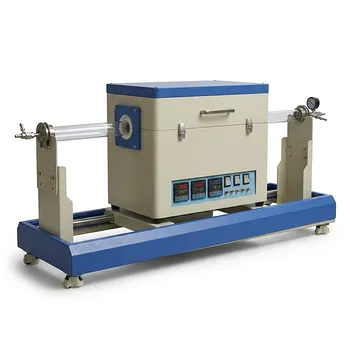
Double Temperature Zone Double Cover Tube Furnace for High Temperature CVD and Vacuum Annealing
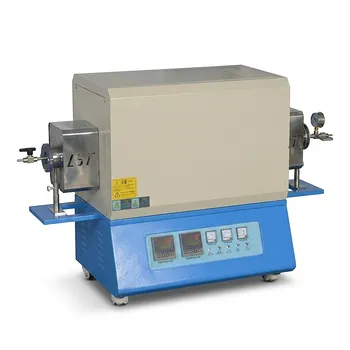
High Temperature Dual Zone Vacuum Tube Furnace for Material Research and CVD Processing
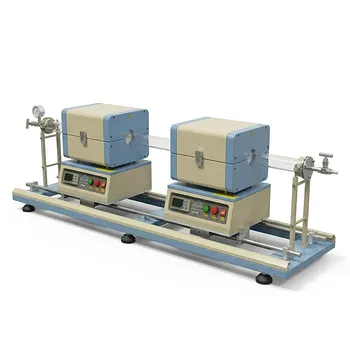
1200C Max Dual Sliding Tube Furnace with 50 mm Tube Flanges for CVD

1200°C 5 Inch Vertical Quartz Tube Furnace with Stainless Steel Vacuum Flanges
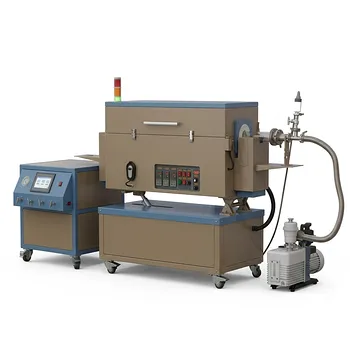
5 Inch Three Zone Rotary Tube Furnace with Integrated Gas Delivery System and 1200C Capability for Advanced Material CVD Processing

1800C High Temperature Compact Vacuum Tube Furnace with 60mm OD Alumina Tube and Kanthal MoSi2 Heating Elements
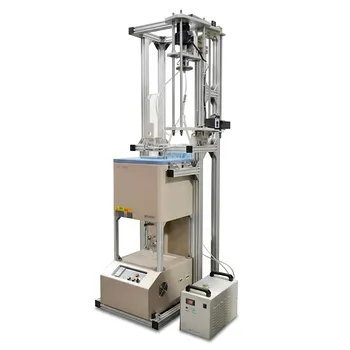
500C Vacuum Vertical Tube Furnace 84mm OD Sample Rotation Lifting System
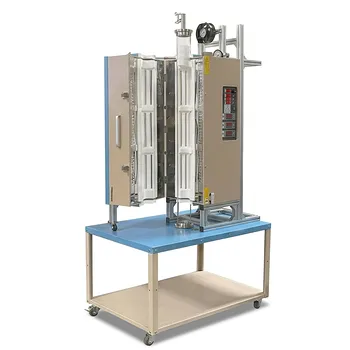
1200C Three Zone Split Vertical Tube Furnace 4 Inch Quartz Tube Stainless Steel Vacuum Flanges

High Temperature Automated 5 Inch Tube Furnace for Autonomous Material Research and Advanced Laboratory R&D

High Temperature 1700C Tube Furnace with High Vacuum Turbomolecular Pump System and Multi Channel Mass Flow Controller Gas Mixer
Automated 1200 C Tube Furnace for AI Material Research with 6 Inch OD and Sliding Flange
1200C Dual Sliding Tube Furnace with Dual Tubes and Flanges for PECVD Processes