How does a vacuum tube furnace achieve material densification during the final sintering stage of fused silica glass?
Updated 3 months ago
A vacuum tube furnace achieves material densification by facilitating the viscous flow of silica nanoparticles while simultaneously removing trapped gases. At temperatures typically ranging from 1050°C to 1300°C, the silica network becomes sufficiently mobile to fuse together, eliminating internal micropores and transforming an opaque powder compact into a fully dense, transparent, and amorphous glass.
Core Takeaway: Densification is the result of a dual-action process: high thermal energy triggers viscous flow to merge particles, while a high-vacuum environment (10⁻⁵ to 10⁻⁶ bar) ensures that residual gases are evacuated before pores close, preventing bubble formation and ensuring optical clarity.
The Mechanism of Viscous Flow Sintering
Transitioning to an Amorphous State
Unlike crystalline materials that densify through grain boundary movement, fused silica relies on viscous flow. As the furnace reaches the sintering temperature, the silica nanoparticles reach a state where they can flow like a highly viscous liquid, allowing them to merge into a single, continuous amorphous network.
Elimination of Micropores
During this flow, the surface tension of the silica particles drives them to fill the voids between them. This process gradually shrinks and eventually eliminates micropores, turning a porous "green body" or "brown body" into a solid mass with high mechanical integrity.
Achieving Optical Transmittance
The primary goal of densification is to reach a fully dense state where no light-scattering voids remain. By successfully fusing the particles into a uniform matrix, the furnace enables the material to transition from an opaque, white appearance to the high optical transparency required for advanced glass applications.
The Critical Role of the Vacuum Environment
Prevention of Trapped Gas Bubbles
In a standard atmosphere, air can become trapped within the collapsing pores of the silica framework as it densifies. The high-vacuum environment (often reaching 10⁻⁵ to 10⁻⁶ bar) removes these gases, ensuring that the final glass matrix is bubble-free and possesses superior optical properties.
Facilitating Gas Discharge
The vacuum condition is essential for removing residual gases that may remain from the earlier pyrolysis or debinding stages. By maintaining a low-pressure environment, the furnace allows these gaseous products to be discharged easily, preventing them from creating internal pressure that could lead to structural defects.
Chemical Stability and Purity
Operating under vacuum prevents the silica from reacting with atmospheric nitrogen or oxygen in ways that might introduce impurities. This results in a final product with high chemical stability and a dense physical structure that is resistant to environmental degradation.
Understanding the Trade-offs and Constraints
Thermal Stress and Cracking
If the heating program is too aggressive, the rapid transition and gas release can cause the sample to crack or warp. A slow, controlled heating curve is necessary to allow gases to escape gently and to ensure the silica framework doesn't undergo uneven thermal expansion.
Vacuum Limits and Energy Consumption
Maintaining a high-vacuum environment at temperatures exceeding 1000°C requires specialized equipment and significant energy. If the vacuum seal is compromised or the pumps are insufficient, the material may suffer from "haze" or microscopic inclusions that ruin its optical transmittance.
Temperature Boundaries
While higher temperatures accelerate viscous flow, exceeding the ideal sintering range (often cited around 1050°C to 1250°C) can lead to unwanted deformation or crystallization (devitirification). Precise temperature control is mandatory to maintain the amorphous state of the fused silica.
How to Apply This to Your Project
To ensure successful densification of fused silica in a tube furnace, consider these recommendations based on your specific requirements:
- If your primary focus is Maximum Optical Clarity: Prioritize achieving a high-vacuum state (at least 10⁻⁵ bar) before reaching the 1050°C threshold to ensure all interstitial gases are removed.
- If your primary focus is Structural Integrity of Large Parts: Utilize a slow heating ramp (e.g., <5 K/min) to prevent thermal gradients from cracking the silica framework during the viscous flow transition.
- If your primary focus is Chemical Purity: Ensure the tube furnace is thoroughly cleaned and degassed prior to the final sintering stage to avoid contaminating the silica during its high-temperature phase.
The synergy between controlled thermal energy and a deep vacuum environment is the only way to transform porous silica into a high-performance, transparent glass.
Summary Table:
| Process Component | Mechanism | Key Benefit |
|---|---|---|
| Thermal Energy | Viscous Flow (1050°C - 1300°C) | Merges nanoparticles into a solid amorphous network |
| High Vacuum | Gas Evacuation (10⁻⁵ to 10⁻⁶ bar) | Removes trapped gases to prevent bubbles and haze |
| Surface Tension | Pore Elimination | Closes micropores to achieve full densification |
| Control System | Precise Heating Ramps | Prevents thermal stress, cracking, and devitrification |
Elevate Your Material Research with THERMUNITS
Achieving perfect densification in fused silica requires absolute precision in temperature and vacuum control. THERMUNITS is a leading manufacturer of high-performance laboratory heat treatment equipment specifically designed for material science and industrial R&D.
Our extensive range of thermal solutions includes:
- Advanced Furnaces: Vacuum, Tube, Muffle, Atmosphere, Rotary, and Hot Press Furnaces.
- Specialized Systems: CVD/PECVD systems, Dental Furnaces, and Vacuum Induction Melting (VIM) furnaces.
- Industrial Kilns: Electric rotary kilns and high-quality thermal elements.
Whether you are scaling up industrial production or conducting delicate laboratory experiments, THERMUNITS provides the reliability and expertise you need. Contact our technical team today to find the ideal furnace solution for your specific heat treatment requirements!
References
- Ziyong Li, Xiewen Wen. One-photon three-dimensional printed fused silica glass with sub-micron features. DOI: 10.1038/s41467-024-46929-x
Mentioned Products
- High Vacuum Compact Tube Furnace 1200C with Integrated Turbo Pump System and 8 Inch Heating Zone
- 1800C High Temperature Compact Vacuum Tube Furnace with 60mm OD Alumina Tube and Kanthal MoSi2 Heating Elements
- 500C Vacuum Vertical Tube Furnace 84mm OD Sample Rotation Lifting System
- 1200C High Temperature 5 Inch Split Vacuum Tube Furnace with 12 Inch Heating Zone and Separated PID Controller
- 1750°C High Temperature Benchtop Vacuum Atmosphere Tube Furnace with Kanthal Super 1800 Heating Elements and 60mm Alumina Processing Tube
People Also Ask
- What core functions does a high-temperature vacuum tube furnace provide? Optimize np-CuSn Sintering & Joint Integrity
- What is the primary function of a high vacuum tube furnace in the in-situ grain growth experiments of silicon steel?
- Why is a high-vacuum tube furnace required for the pyrolysis phase of BCMoMn electrocatalysts? Key for Catalyst Precision
- What are the functions of a tube furnace in PCC annealing? Optimize Carbonization & Porosity
- What is the Role of Vacuum Tube Furnaces in Ti1-xAlxN Research? Master Age Hardening & Stability

Tech Team · ThermUnits
Last updated on Jun 02, 2026
Related Products
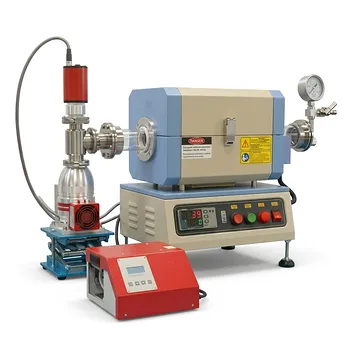
High Vacuum Compact Tube Furnace 1200C with Integrated Turbo Pump System and 8 Inch Heating Zone

1800C High Temperature Compact Vacuum Tube Furnace with 60mm OD Alumina Tube and Kanthal MoSi2 Heating Elements
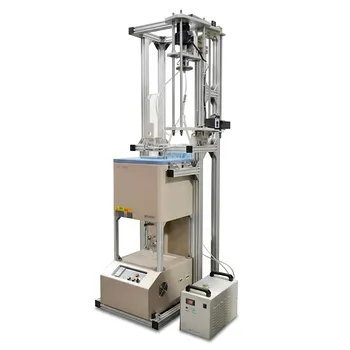
500C Vacuum Vertical Tube Furnace 84mm OD Sample Rotation Lifting System
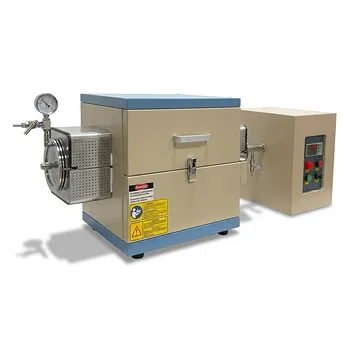
1200C High Temperature 5 Inch Split Vacuum Tube Furnace with 12 Inch Heating Zone and Separated PID Controller

1750°C High Temperature Benchtop Vacuum Atmosphere Tube Furnace with Kanthal Super 1800 Heating Elements and 60mm Alumina Processing Tube
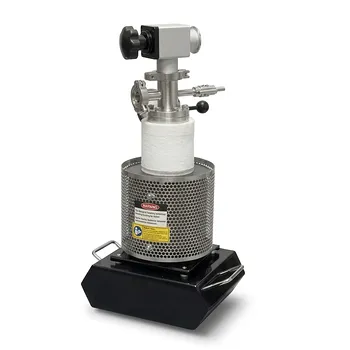
High Temperature 1100C Compact Top Loading Vertical Vacuum Tube Furnace for High Vacuum Noble Metal Melting and Material Research
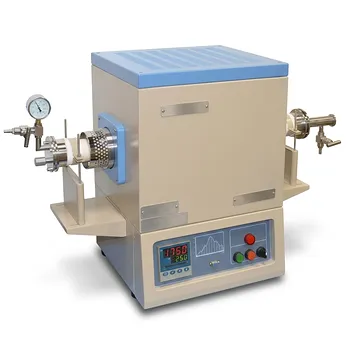
High Temperature Compact Vacuum Tube Furnace 1750C Max 60mm OD Alumina Tube
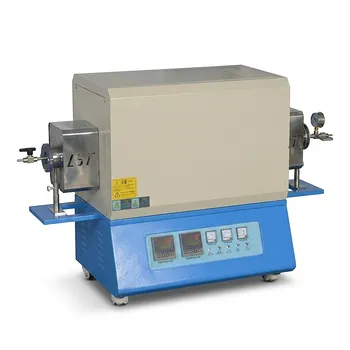
High Temperature Dual Zone Vacuum Tube Furnace for Material Research and CVD Processing

Vertical 1700C Vacuum and Atmosphere Tube Furnace with 80mm Alumina Tube

High Temperature 1700C Tube Furnace with High Vacuum Turbomolecular Pump System and Multi Channel Mass Flow Controller Gas Mixer
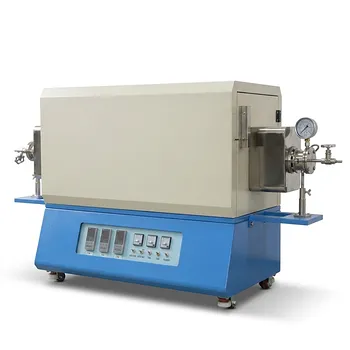
Three Temperature Zone High Temperature Vacuum Tube Furnace for CVD and Material Sintering

1100C Tube Furnace with Vacuum Flange and Programmable Temperature Controller for Material Science and Industrial Heat Treatment

Compact Vertical Split Quartz Tube Furnace with Stainless Steel Vacuum Flanges for Rapid Thermal Quenching and Controlled Atmosphere Material Processing
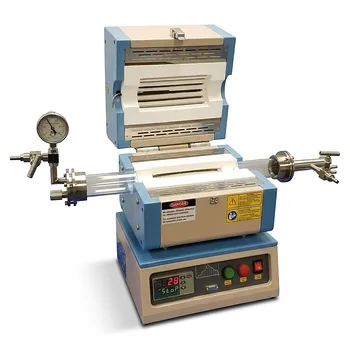
Compact Split Tube Furnace with Integrated Vacuum System and Precision Temperature Calibrator
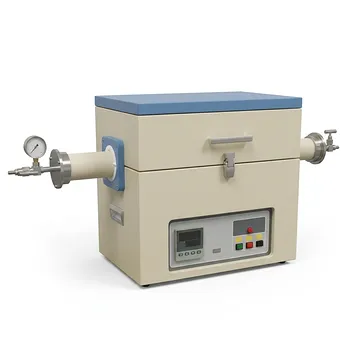
1250C Split Tube Furnace with 3 Inch Mullite Tube and Vacuum Sealing Flanges for Precision Thermal Processing
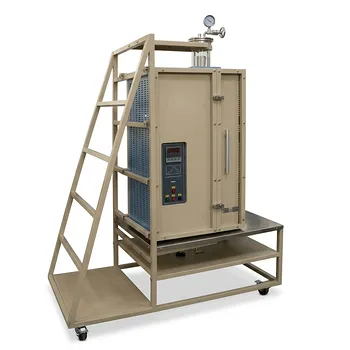
Split Vertical Tube Furnace with 1200C Quartz Tube and Stainless Steel Vacuum Flanges for Rapid Thermal Processing
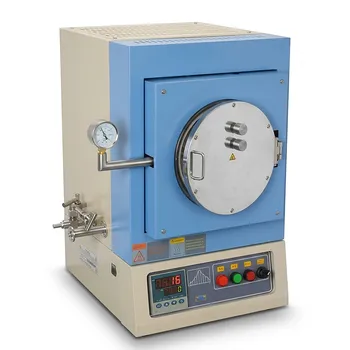
1100°C High Temperature Quartz Chamber Furnace 8 Inch OD with 7.6 Liter Capacity and Vacuum Atmosphere Capability

Compact High Temperature 1600C Tube Furnace with 50mm Alumina Tube and Vacuum Flanges for Material Sintering
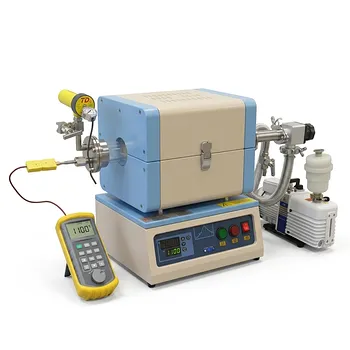
Compact Split Tube Furnace with Insertable Temperature Calibrator and Integrated Vacuum System
