How does heating rate control affect PrFeO3 photocathodes? Optimize Structural Integrity & Phase Purity
Updated 3 months ago
Heating rate control is the fundamental determinant of structural integrity and phase purity in photocathode synthesis. In the annealing of $PrFeO_3$ photocathodes, a precise, slow heating rate—typically around 3.8 °C/min—ensures the steady decomposition and volatilization of organic surfactants like Triton X-100. This controlled thermal ramp prevents film cracking and the formation of oversized pores, ultimately inducing a high-quality crystalline phase with a continuous worm-like microporous structure.
Core Takeaway: For $PrFeO_3$ photocathodes, the heating rate acts as a regulator for gas evolution and phase transformation. Precise control transforms a fragile sol-gel film into a stable, high-surface-area crystalline structure by preventing the mechanical failures associated with rapid thermal expansion and gas discharge.
The Role of Controlled Volatilization and Decomposition
Managing Gas Evolution from Organic Templates
Sol-gel films often contain polymeric surfactants and organic templates that must be removed to create porosity. If the heating rate is too high, these organics decompose and volatilize rapidly, leading to a build-up of internal pressure.
A controlled rate, such as 3.8 °C/min, allows these gases to escape steadily through the film's surface. This prevents the "explosive" gas evolution that typically causes micro-cracks or the collapse of the delicate inorganic framework.
Preserving Structural Integrity and Connectivity
The gradual removal of organic components ensures that the remaining inorganic skeleton has time to stabilize. This process is critical for maintaining a 3DOM (Three-Dimensionally Ordered Macroporous) structure or a continuous worm-like network.
Without this precision, local temperature spikes can cause the framework to collapse. A slow ramp-rate safeguards the structural integrity, ensuring the material retains the high specific surface area required for efficient photo-electrochemical reactions.
Phase Formation and Crystallinity
Developing the Worm-like Microporous Structure
At an annealing temperature of 600 °C, the $PrFeO_3$ phase begins to crystallize into its final form. The heating rate dictates the kinetics of this transition, allowing for an orderly arrangement of atoms.
This specific thermal path facilitates the creation of worm-like microporous structures. This morphology is highly desirable for photocathodes as it provides a large active surface area while maintaining a continuous path for charge carrier transport.
Minimizing Stress and Defects
Slow heating helps in the release of residual stresses that often develop during the initial film deposition or sputtering process. By providing a stable thermal field, the furnace allows for more uniform grain growth and a reduction in grain boundary density.
This reduction in defects is essential for photocathodes, as grain boundaries often act as recombination centers for electrons and holes. A controlled thermal environment maximizes the exposure of active sites and improves the material's catalytic performance.
Understanding the Trade-offs
Throughput vs. Material Quality
The most significant trade-off in utilizing slow heating rates is the extended processing time. While rapid heating increases manufacturing throughput, it almost universally results in inferior film quality, higher defect densities, and structural instability in $PrFeO_3$ systems.
Precision vs. Equipment Complexity
Achieving a consistent, slow ramp-rate requires a programmable temperature control system and a stable thermal field. High-temperature tube furnaces provide this precision, but they require careful calibration and maintenance compared to simpler, non-programmable ovens.
Pore Size Distribution vs. Crystallinity
While slower rates generally lead to better crystallinity, an excessively slow rate may lead to unintended grain growth or aggregation. If the temperature stays in a specific range for too long, nanoparticles may aggregate, potentially reducing the density of active sites despite high crystalline purity.
How to Apply This to Your Project
When optimizing the annealing process for $PrFeO_3$ or similar perovskite-type photocathodes, your heating rate strategy should align with your specific material objectives.
- If your primary focus is maximizing surface area: Utilize the lowest feasible heating rate (1–2 °C/min) to ensure that templates like PMMA or P123 decompose without collapsing the porous architecture.
- If your primary focus is crystalline phase purity: Stick to a moderate, programmable rate of approximately 3.8 °C/min to allow for steady phase reconfiguration and the elimination of residual stresses at 600 °C.
- If your primary focus is carrier transport efficiency: Focus on a stable thermal field that promotes metal grain growth and reduces grain boundary density to minimize recombination effects.
The mastery of the thermal ramp is the bridge between a raw precursor and a high-performance, stable $PrFeO_3$ photocathode.
Summary Table:
| Feature | Controlled Heating (e.g., 3.8 °C/min) | Rapid Heating (High Rate) |
|---|---|---|
| Organic Removal | Steady volatilization; prevents film cracking | Explosive gas evolution; causes micro-cracks |
| Morphology | Stable worm-like microporous structure | Structural collapse of the inorganic framework |
| Crystallinity | High phase purity with orderly atomic arrangement | High defect density and grain boundary recombination |
| Surface Area | High specific surface area for PEC reactions | Reduced active sites due to structural damage |
| Mechanical Stress | Uniform stress release and grain growth | Internal pressure build-up and structural failure |
Elevate Your Material Research with THERMUNITS Precision
Achieving the perfect thermal ramp is critical for high-performance photocathode synthesis. THERMUNITS is a leading manufacturer of high-temperature laboratory equipment specifically designed for material science and industrial R&D. We offer a comprehensive range of thermal processing solutions, including Tube Furnaces, Muffle Furnaces, Vacuum and Atmosphere Furnaces, CVD/PECVD systems, and Hot Press furnaces to ensure your $PrFeO_3$ and perovskite-type materials achieve maximum crystalline purity and structural integrity.
Don't let imprecise heating rates compromise your research. Our programmable systems provide the stable thermal fields necessary for advanced heat treatment. Contact THERMUNITS today to find the ideal furnace for your laboratory!
References
- Bradley G. Lewis, Salvador Eslava. Ca‐Doped PrFeO<sub>3</sub> Photocathodes with Enhanced Photoelectrochemical Activity. DOI: 10.1002/solr.202400308
Mentioned Products
- High Temperature Tube Furnace 1500C with Sliding Flanges and 50mm OD for Rapid Thermal Processing Fast Heating and Cooling
- High Temperature 1700C Tube Furnace with High Vacuum Turbomolecular Pump System and Multi Channel Mass Flow Controller Gas Mixer
- 1750°C High Temperature Benchtop Vacuum Atmosphere Tube Furnace with Kanthal Super 1800 Heating Elements and 60mm Alumina Processing Tube
- High Temperature 1700C Benchtop Tube Furnace with 5 Inch Heating Zone High Purity Alumina Tube and Vacuum Sealing Flanges
- 1700C High Temperature Alumina Tube Furnace with 18 Inch Heated Zone and Vacuum Sealing Flanges
People Also Ask
- How are high-temperature tube furnaces utilized to repair etching damage? Precision Lattice Restoration Solutions
- What role does a high-temperature tube furnace play in CVD synthesis of silicon nanowires? Master VLS Growth Precision.
- What core conditions does a high-temperature tube furnace provide for rGO aerogels? Mastering Precision Synthesis.
- What role does a high-temperature tube furnace play in the sulfidation heat treatment of CoS@C/MXene nanocomposites? Guide
- How does precision tube furnace control influence CoFe nanoparticle formation? Master Your Bimetallic Synthesis.

Tech Team · ThermUnits
Last updated on Jun 02, 2026
Related Products

High Temperature Tube Furnace 1500C with Sliding Flanges and 50mm OD for Rapid Thermal Processing Fast Heating and Cooling

High Temperature 1700C Tube Furnace with High Vacuum Turbomolecular Pump System and Multi Channel Mass Flow Controller Gas Mixer

1750°C High Temperature Benchtop Vacuum Atmosphere Tube Furnace with Kanthal Super 1800 Heating Elements and 60mm Alumina Processing Tube

High Temperature 1700C Benchtop Tube Furnace with 5 Inch Heating Zone High Purity Alumina Tube and Vacuum Sealing Flanges
1700C High Temperature Alumina Tube Furnace with 18 Inch Heated Zone and Vacuum Sealing Flanges
High Temperature Split Tube Furnace 1500C for Material Research Vacuum and Atmosphere Thermal Processing

Compact High Temperature 1600C Tube Furnace with 50mm Alumina Tube and Vacuum Flanges for Material Sintering

1800C High Temperature Compact Vacuum Tube Furnace with 60mm OD Alumina Tube and Kanthal MoSi2 Heating Elements
High Temperature Rocking Tube Furnace 1700°C Alumina Processing Tube with Precision Oscillation for Material Synthesis
High Temperature Three Zone Tube Furnace 1700C with Alumina Tube and Water Cooled Flanges

High Temperature 1700C Vertical Tube Furnace for Powder Spherification and Material Sintering
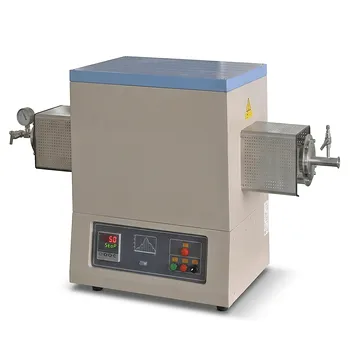
High Temperature 1700C Tube Furnace with 4 Inch OD Alumina Tube and Vacuum Sealing Flanges
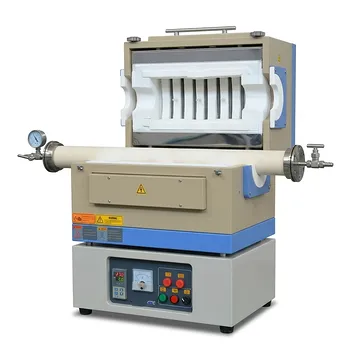
High Temperature 1600C Split Tube Furnace Vacuum Flanges Valves Optional 60mm 80mm Alumina Tube

High Temperature Automated 5 Inch Tube Furnace for Autonomous Material Research and Advanced Laboratory R&D
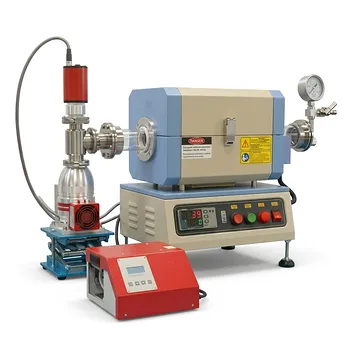
High Vacuum Compact Tube Furnace 1200C with Integrated Turbo Pump System and 8 Inch Heating Zone
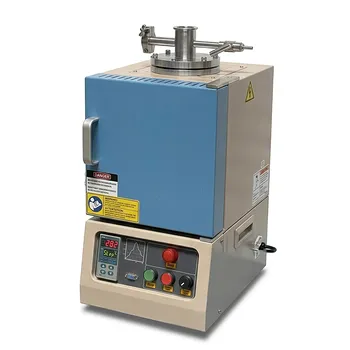
High Temperature Hybrid Muffle and Tube Furnace with Vacuum Capability and PID Control
1100°C High Temperature Quartz Chamber Furnace 8 Inch OD with 7.6 Liter Capacity and Vacuum Atmosphere Capability

1100C Tube Furnace with Vacuum Flange and Programmable Temperature Controller for Material Science and Industrial Heat Treatment
1100C High Pressure Rocking Tube Furnace with 2 Inch Super Alloy Processing Tube for Material Synthesis
