How does the precision temp control of a tube furnace affect Cu2Se-CuGaSe2 composites? Master Your Phase Evolution
Updated 3 months ago
Precision temperature control in a laboratory tube furnace dictates the phase evolution of $\text{Cu}_2\text{Se-CuGaSe}_2$ composites by enabling a multi-stage reaction pathway that isolates specific chemical transitions. By executing programmable heating profiles, the furnace maintains the stability of intermediate compounds at lower temperatures before facilitating the deep atomic diffusion required for a final, hierarchical microstructure.
Core Takeaway: High-precision thermal control allows for the separation of nucleation and growth phases, specifically preventing the premature decomposition of $\text{CuSe}_2$ at 310°C to ensure phase boundary coherence before achieving full atomic diffusion at 600°C.
Orchestrating Staged Solid-State Reactions
Precision control allows researchers to manipulate the solid-state reaction pathway, ensuring that reactants transform into desired phases without producing unwanted impurities.
Stability of Intermediate Precursors
A primary insulation phase at 310°C is critical for initiating reactions while preventing the decomposition of $\text{CuSe}_2$.
This specific temperature dwell utilizes the structural template effect, which provides a foundation for the materials to grow with high phase boundary coherence.
High-Temperature Atomic Diffusion
Once the template is established, the furnace elevates to a constant phase of 600°C to drive the kinetic process of atomic diffusion.
This high-temperature stage ensures that components from various phases fully interpenetrate, resulting in a hierarchical microstructure with multi-scale features.
The Impact of Thermal Stability on Morphology
The stability of the thermal field within the tube furnace directly influences the physical structure and uniformity of the composite.
Preserving Structural Integrity
Precise control over the heating rate prevents internal stresses that could lead to structural collapse or the loss of morphological integrity.
Consistent heating, often as slow as 2°C to 5°C per minute, provides sufficient time for atoms to migrate to their equilibrium positions without disrupting the material's skeleton.
Regulation of Nucleation and Growth
Precision systems allow for the strict execution of multi-stage heating programs, which govern the kinetics of transformation between different states of matter.
By regulating the dwell time at lower calcination points, researchers can quantitatively control the diffusion of molecules into the lattice, ensuring steady phase growth.
Understanding the Trade-offs
While precision control is essential, it requires a careful balance between processing time and material quality.
Thermal Lag vs. Precise Control
Rapid heating rates can save time but often lead to unstable thermal fields where local temperatures deviate from the programmed setpoint.
These deviations can trigger premature decomposition of sensitive intermediates or leave behind residual impurities that disrupt the fine-layered morphology of the composite.
Complexity of Multi-Stage Programming
Higher precision requires more complex programming of the thermal processing curve.
If the transition between the 310°C template phase and the 600°C diffusion phase is not managed correctly, the nucleation kinetics may be disrupted, leading to inconsistent crystal domain sizes.
How to Apply Typical Thermal Strategies
To achieve the best results with $\text{Cu}_2\text{Se-CuGaSe}_2$ or similar complex composites, tailor your furnace settings to your specific structural goal.
- If your primary focus is phase boundary coherence: Prioritize a stable, low-temperature insulation stage (e.g., 310°C) to protect sensitive intermediate precursors like $\text{CuSe}_2$.
- If your primary focus is a hierarchical, interpenetrating structure: Ensure a sufficiently long dwell time at peak temperatures (e.g., 600°C) to allow for complete solid-state atomic diffusion.
- If your primary focus is preventing structural defects: Utilize a slow heating rate (2°C - 5°C/min) to minimize thermal stress and allow for uniform material transformation.
Mastering the programmable thermal profile of a tube furnace transforms it from a simple heater into a precision tool for engineering complex material phases.
Summary Table:
| Thermal Process Phase | Temperature Range | Functional Impact on Composites |
|---|---|---|
| Intermediate Stability | ~310°C | Prevents $CuSe_2$ decomposition; establishes structural templates. |
| High-Temp Diffusion | ~600°C | Drives atomic diffusion for hierarchical, interpenetrating microstructures. |
| Heating Rate Control | 2°C - 5°C/min | Minimizes internal thermal stress; preserves morphological integrity. |
| Dwell Time Regulation | Variable | Governs nucleation kinetics and crystal domain size consistency. |
Unlock Precision in Your Material Research with THERMUNITS
Achieving the perfect hierarchical microstructure requires more than just heat—it requires unrivaled thermal stability and programmable accuracy. THERMUNITS is a leading manufacturer of high-temperature laboratory equipment dedicated to supporting material science and industrial R&D.
Whether you are synthesizing complex Cu2Se-CuGaSe2 composites or conducting advanced semiconductor research, our comprehensive range of thermal solutions—including Precision Tube Furnaces, Muffle, Vacuum, Atmosphere, Rotary, and CVD/PECVD systems—delivers the exact control your phase evolution studies demand.
Ready to elevate your lab's heat treatment capabilities? Contact THERMUNITS Today to Consult with Our Engineers and find the ideal furnace for your specific R&D requirements.
References
- Zhixiong Yin, Pierre F. P. Poudeu. Native Defects Hybridization and Electronic Transport in Cu<sub>2</sub>Se‐CuGaSe<sub>2</sub> Hierarchical Composites. DOI: 10.1002/adfm.202408063
Mentioned Products
- Multi Position Tube Furnace 1100C for Laboratory Material Research and Advanced Industrial Thermal Processing
- Ten Zone Multi Orientation Laboratory Tube Furnace for 1200C High Temperature Gradient Thermal Processing
- High Temperature 1200C Split Tube Furnace with Hinged Vacuum Flanges and 4 Inch Quartz Tube for Laboratory Research
- 1100°C Vertical Laboratory Furnace for DIY Tubular Reactors with PID Temperature Controller
- High Temperature Automated 5 Inch Tube Furnace for Autonomous Material Research and Advanced Laboratory R&D
People Also Ask
- Why use a tube furnace for oxygen annealing LaCrO3/LaMnO3? Optimize Phase Transition & Magnetic Performance.
- What key role does a laboratory high-temperature tube furnace play in the production of carbon nanofibers? Guide
- How is a laboratory high-temperature tube furnace utilized to research the products of aluminothermic reduction? Advanced Metallurgical Solutions
- What is the role of a laboratory tube furnace in the carbonization process of porous carbon foam (PCF)? Master 3D Synthesis
- What role does a laboratory tube furnace play in the pyrolysis and carbonization of biomass? Optimize Thermal Research.

Tech Team · ThermUnits
Last updated on Jun 02, 2026
Related Products
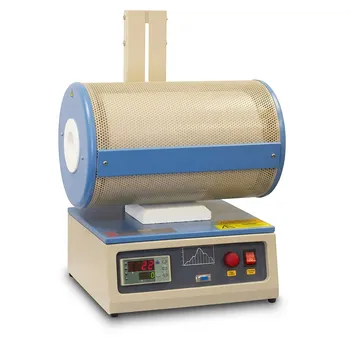
Multi Position Tube Furnace 1100C for Laboratory Material Research and Advanced Industrial Thermal Processing
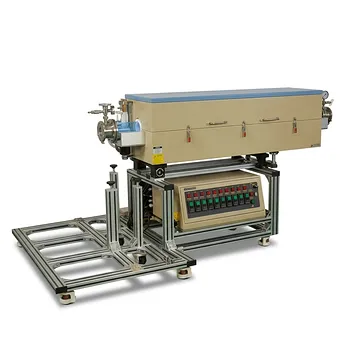
Ten Zone Multi Orientation Laboratory Tube Furnace for 1200C High Temperature Gradient Thermal Processing
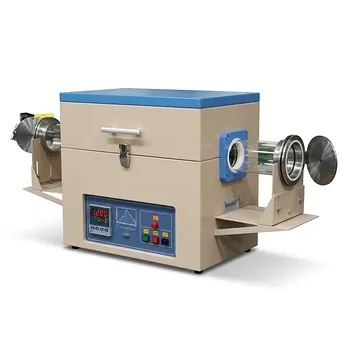
High Temperature 1200C Split Tube Furnace with Hinged Vacuum Flanges and 4 Inch Quartz Tube for Laboratory Research
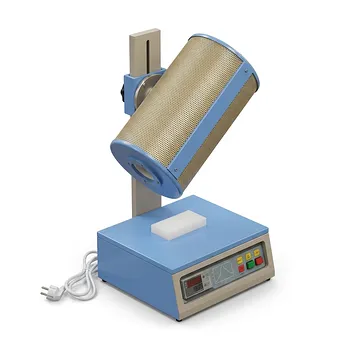
1100°C Vertical Laboratory Furnace for DIY Tubular Reactors with PID Temperature Controller

High Temperature Automated 5 Inch Tube Furnace for Autonomous Material Research and Advanced Laboratory R&D
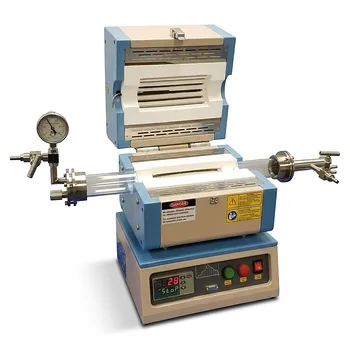
Compact Split Tube Furnace with Integrated Vacuum System and Precision Temperature Calibrator

1800C High Temperature Compact Vacuum Tube Furnace with 60mm OD Alumina Tube and Kanthal MoSi2 Heating Elements
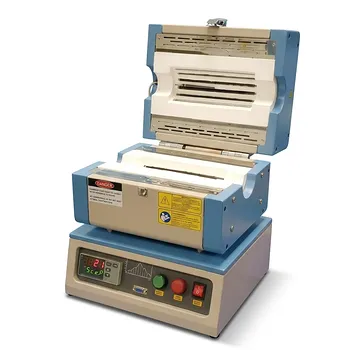
1250C Compact Split Tube Furnace with 8 Inch Heating Zone and Programmable Controller
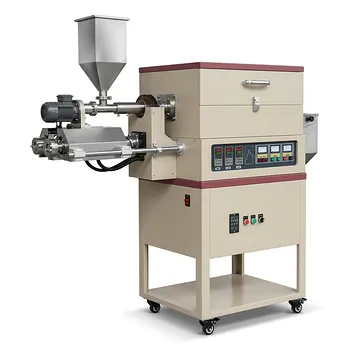
Laboratory Tilting Rotary Tubular Furnaces for Material Science and Industrial Heat Treatment
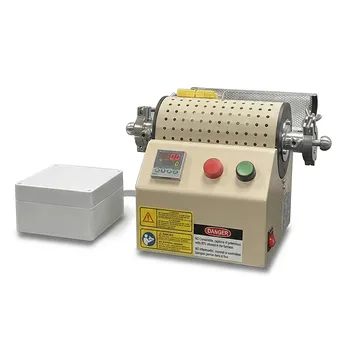
1000C Mini Tube Furnace with 20mm Quartz Tube and Vacuum Flanges for Material Science Research and Controlled Atmosphere Small Sample Processing
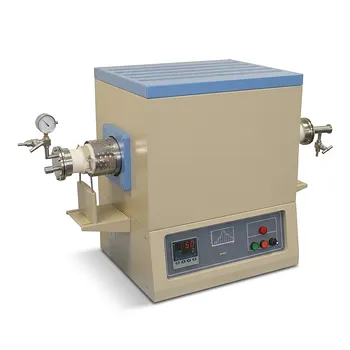
1700C High Temperature Alumina Tube Furnace with 18 Inch Heated Zone and Vacuum Sealing Flanges
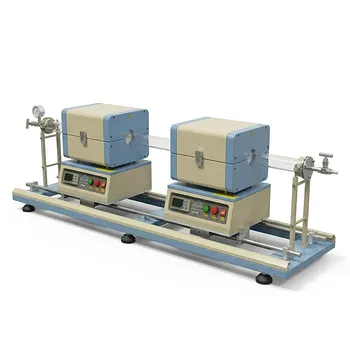
1200C Max Dual Sliding Tube Furnace with 50 mm Tube Flanges for CVD
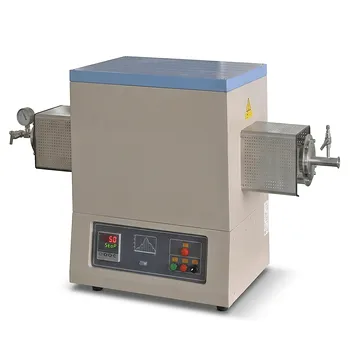
High Temperature 1700C Tube Furnace with 4 Inch OD Alumina Tube and Vacuum Sealing Flanges
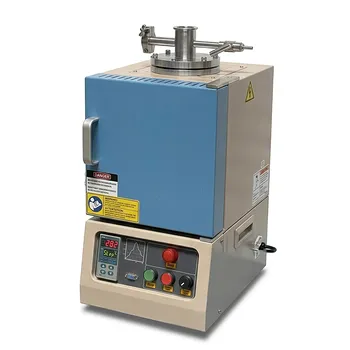
High Temperature Hybrid Muffle and Tube Furnace with Vacuum Capability and PID Control
Hybrid High Temperature Tube and Box Furnace 1700C with 2 Inch Alumina Tube for Material Research
Single Zone Tube Furnace 5 Inch Quartz Tube 36 Inch Heating Zone Vacuum Flanges

High Temperature 1700C Vertical Tube Furnace for Powder Spherification and Material Sintering

1100C Tube Furnace with Vacuum Flange and Programmable Temperature Controller for Material Science and Industrial Heat Treatment

High Temperature 1700C Tube Furnace with High Vacuum Turbomolecular Pump System and Multi Channel Mass Flow Controller Gas Mixer
