How does precursor tank temperature affect Thorium Dioxide film growth? Key to CVD Precision & Stoichiometry
Updated 3 months ago
Precursor tank temperature is the primary regulator of reactant delivery density in a CVD system. By precisely controlling the heat of the storage tank, you fix the saturated vapor pressure of the Thorium(IV) precursor, which directly determines the mass flow rate into the reaction chamber. This thermal stability is the technical foundation required to maintain a consistent growth rate of 9-11 nm/s and ensure the correct chemical stoichiometry of the resulting Thorium Dioxide ($ThO_2$) thin films.
The storage tank temperature acts as the "throttle" for the entire deposition process by anchoring the concentration of reactants in the gas phase. Precise thermal management prevents fluctuations in vapor pressure that would otherwise lead to non-uniform film thickness and compromised material purity.
Regulating Mass Flow via Vapor Pressure
The Relationship Between Heat and Pressure
In CVD systems, the precursor must be converted into a gas phase to be transported to the substrate. The temperature of the storage tank—specifically set to 100°C for isopropoxide derivatives—dictates the saturated vapor pressure of the Thorium(IV) molecules.
Maintaining the 9-11 nm/s Growth Rate
A stable vapor pressure ensures a constant mass flow rate, which is essential for predictable film thickness. If the tank temperature drifts even slightly, the volume of precursor reaching the chamber changes, causing the growth rate to deviate from the optimal 9-11 nm/s range.
Transitioning Between Growth Regimes
Precise tank temperature control allows the system to operate reliably within specific kinetic regimes. By providing a steady supply of reactants, engineers can ensure the process remains in the mass-transport limited regime, where growth is predictable and less sensitive to minor fluctuations in the furnace temperature.
Impact on Film Quality and Stoichiometry
Ensuring Chemical Consistency
Thorium Dioxide requires a precise 1:2 ratio of Thorium to Oxygen to maintain its functional properties. Unstable precursor delivery, caused by poor tank temperature control, can lead to stoichiometric drifts, resulting in films with oxygen vacancies or metallic impurities.
Facilitating Uniform Nucleation
The density of the gas-phase precursor directly influences how atoms nucleate on the substrate surface. High-precision thermal management ensures that the precursor decomposes at a controlled rate, facilitating the formation of highly crystalline, continuous structures rather than isolated islands or amorphous clusters.
Establishing Stable Thermal Gradients
Multi-zone temperature control works in tandem with the tank temperature to create a stable thermal gradient across the furnace. This allows the precursor to sublimate accurately and diffuse through the boundary layer uniformly, which is the fundamental guarantee for high-quality 2D thin-film materials.
Understanding the Trade-offs and Pitfalls
Thermal Degradation vs. Vapor Density
While increasing tank temperature increases vapor pressure and growth speed, it carries the risk of precursor quenching or premature decomposition. If the tank is too hot, the Thorium(IV) derivative may break down inside the storage vessel or delivery lines, clogging the system and introducing contaminants.
The Danger of Cold Spots
Maintaining the tank at 100°C is only effective if the delivery lines are kept at an equal or higher temperature. If any part of the path is cooler than the tank, the precursor will re-condense, leading to "pulsing" delivery rates and catastrophic non-uniformity in the $ThO_2$ film.
Surface-Reaction Limitations
At lower substrate temperatures, the growth process becomes surface-reaction limited, meaning the growth rate increases exponentially with temperature. In this regime, even a perfectly stable precursor flow from the tank cannot compensate for substrate temperature fluctuations, making multi-zone furnace control just as critical as tank stability.
How to Apply This to Your Project
Optimizing Your $ThO_2$ Deposition
To achieve the highest quality Thorium Dioxide thin films, your thermal strategy must align with your specific material requirements and hardware capabilities.
- If your primary focus is thickness precision: You must prioritize the use of a high-precision PID controller on the precursor tank to lock the vapor pressure and maintain a steady 9-11 nm/s growth rate.
- If your primary focus is crystalline purity: You should focus on establishing a multi-zone temperature gradient that ensures the precursor delivery rate from the tank matches the substrate's decomposition kinetics perfectly.
- If your primary focus is large-area uniformity: You must ensure that delivery lines are heated 10-20°C above the tank temperature to prevent condensation and ensure a continuous, un-pulsed mass flow to the substrate.
By mastering the thermal equilibrium of the precursor tank, you gain the "atomic-level" control necessary to produce predictable, high-performance Thorium Dioxide coatings.
Summary Table:
| Parameter | Impact on CVD Process | Key Consideration |
|---|---|---|
| Vapor Pressure | Anchors reactant concentration | Regulates deposition density |
| Growth Rate | Maintains 9-11 nm/s speed | Essential for thickness control |
| Stoichiometry | Ensures 1:2 Thorium to Oxygen ratio | Prevents chemical impurities |
| Line Temperature | Prevents precursor condensation | Must be 10-20°C above tank |
| Thermal Gradient | Facilitates uniform nucleation | Prevents amorphous clustering |
Elevate Your Material Research with THERMUNITS
Achieving the perfect Thorium Dioxide thin film requires more than just a furnace—it requires precise thermal equilibrium. As a leading manufacturer of high-temperature laboratory equipment, THERMUNITS provides the advanced technology needed for rigorous material science and industrial R&D.
Our comprehensive range of thermal solutions includes:
- CVD/PECVD Systems with high-precision precursor management.
- Multi-zone Tube & Atmosphere Furnaces for stable thermal gradients.
- Vacuum, Rotary, and Hot Press Furnaces for diverse heat treatments.
- Specialized Dental Furnaces, VIM systems, and Thermal Elements.
Whether you are focusing on thickness precision or crystalline purity, our equipment is designed to eliminate cold spots and ensure predictable growth rates. Contact our technical experts today to discuss your specific CVD requirements and see how we can bring atomic-level control to your laboratory.
References
- Andreas Lichtenberg, Sanjay Mathur. Molecular Transformations for Direct Synthesis of Thorium Dioxide Films. DOI: 10.1002/zaac.202400126
Mentioned Products
- Radio Frequency Plasma Enhanced Chemical Vapor Deposition RF PECVD System for Laboratory and Industrial Thin Film Growth
- Inclined Rotary Plasma Enhanced Chemical Vapor Deposition PECVD System for Thin Film Deposition and Nanomaterial Synthesis
- Two Zones CSS Furnace for Rapid Thermal Processing Thin Film Coating 3 Inch Diameter 650C
- 1200C Sliding Internal Crucible Tube Furnace for Controlled Atmosphere Thin Film Deposition and Material Sublimation Research
- High Temperature 800C Rapid Thermal Processing Furnace with Rotating Sample Holder for Close Spaced Sublimation and Thin Film Solar Cell Research
People Also Ask
- What are the advantages of PECVD systems for nano flame retardant films? Protect Heat-Sensitive Polymers with Precision
- How does PECVD differ from conventional thermal CVD? Key Advantages of Low-Temperature Deposition for R&D
- What is the role of CVD/PECVD systems in the research of optoelectronic materials and functional coatings? Expert Guide
- What are the benefits of using PECVD for optical and photonic coatings? Achieve High-Precision Thin-Film Deposition
- How do RF frequency and power settings influence the characteristics of a PECVD process? Master Quality & Efficiency

Tech Team · ThermUnits
Last updated on Jun 03, 2026
Related Products
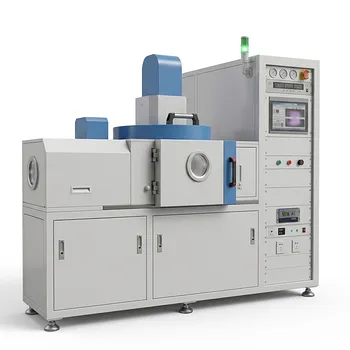
Radio Frequency Plasma Enhanced Chemical Vapor Deposition RF PECVD System for Laboratory and Industrial Thin Film Growth
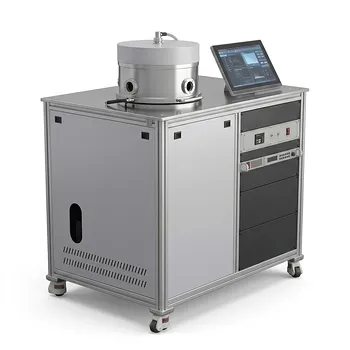
Inclined Rotary Plasma Enhanced Chemical Vapor Deposition PECVD System for Thin Film Deposition and Nanomaterial Synthesis
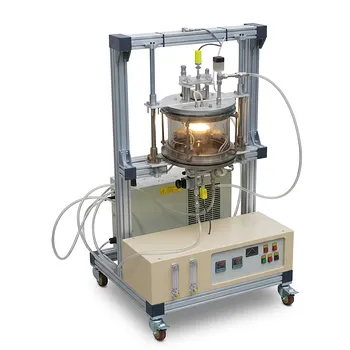
Two Zones CSS Furnace for Rapid Thermal Processing Thin Film Coating 3 Inch Diameter 650C
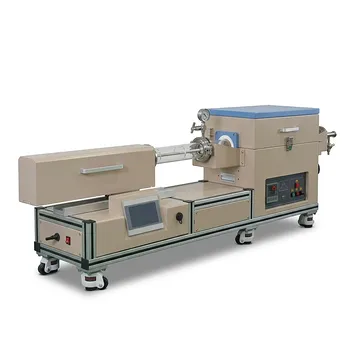
1200C Sliding Internal Crucible Tube Furnace for Controlled Atmosphere Thin Film Deposition and Material Sublimation Research
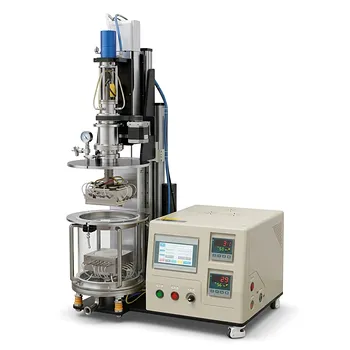
High Temperature 800C Rapid Thermal Processing Furnace with Rotating Sample Holder for Close Spaced Sublimation and Thin Film Solar Cell Research
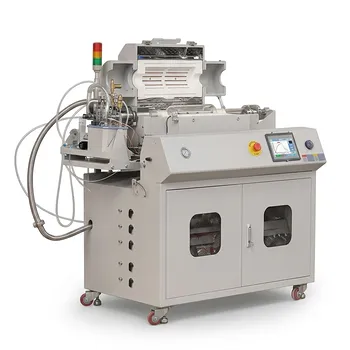
Versatile Chemical Vapor Deposition Tube Furnace System for Advanced Material Research and Industrial Coating Processes
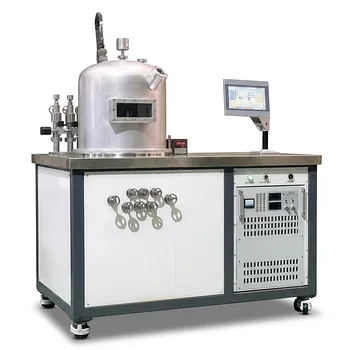
HFCVD Machine System for Nano Diamond Coating on Drawing Dies and Industrial Tools
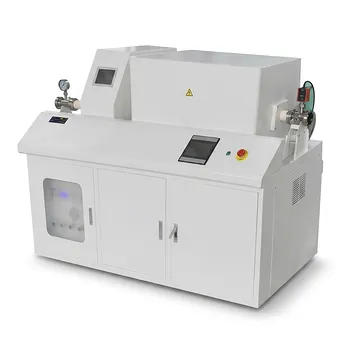
Chemical Vapor Deposition CVD System Slide PECVD Tube Furnace with Liquid Gasifier PECVD Machine
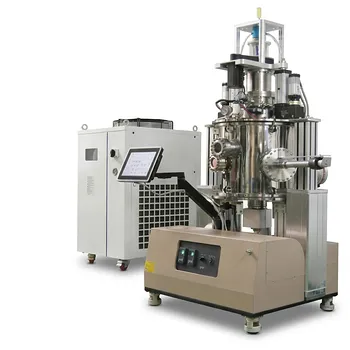
950C Rapid Thermal Processing Furnace for 12 Inch Wafer CSS Coating with Rotating Substrate Holder
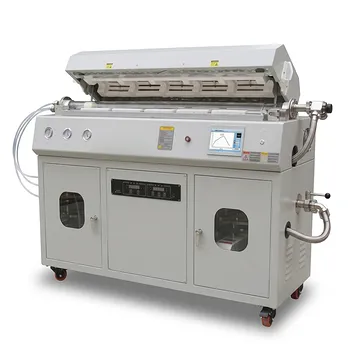
Multi Heating Zones CVD Tube Furnace System for Precision Chemical Vapor Deposition and Advanced Material Synthesis
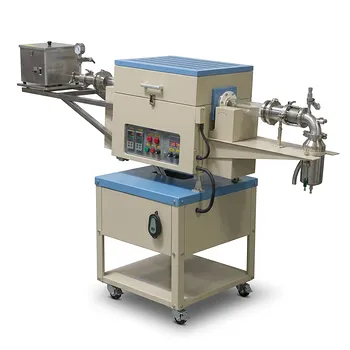
Two Zone Rotary CVD Furnace with Automatic Feeding and Receiving System for Powder Processing
915MHz MPCVD Diamond Machine Microwave Plasma Chemical Vapor Deposition System Reactor
Three Zone Rotary Tube Furnace with Automatic Powder Feeding for Large Scale CVD Coating 1100C
High Temperature 1200C Automatic Sliding Dual Zone Tube Furnace for 2D Transition Metal Dichalcogenides Growth and Material Sublimation Research
Cylindrical Resonator MPCVD Machine System for Microwave Plasma Chemical Vapor Deposition and Lab Diamond Growth
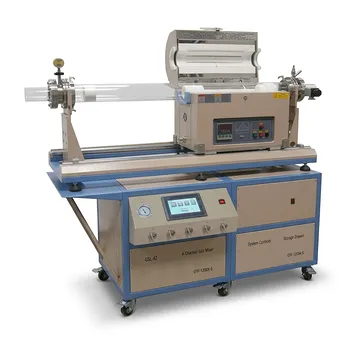
Dual Tube 100mm 80mm CVD Sliding Furnace with 4 Channel Gas Mixing and Vacuum System
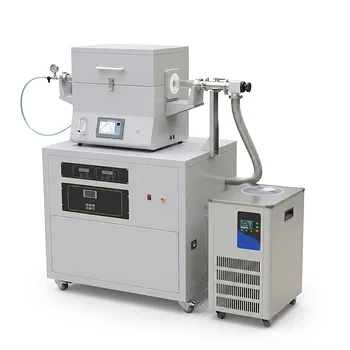
Split Chamber CVD Tube Furnace with Vacuum Station Chemical Vapor Deposition System Machine
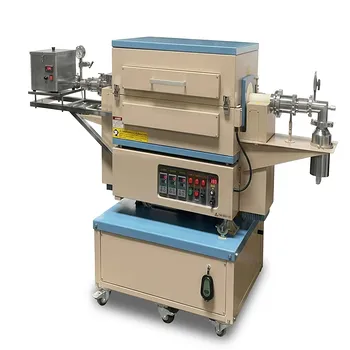
1500C 3-Zone Rotary Tube Furnace 60mm with Automatic Powder Feeding and Receiving System for Continuous Material Synthesis
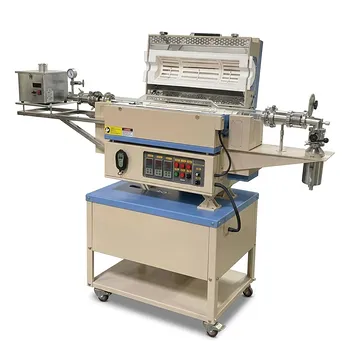
5 Inch Rotary Tube Furnace with Automatic Feeding and Receiving System 1200C Three Zone CVD Powder Processing