How does tube furnace temperature precision affect axial coordination in secondary pyrolysis? Mastering Atomic Synthesis
Updated 3 months ago
Temperature control precision in a laboratory tube furnace is the decisive factor in regulating ligand decomposition and atomic anchoring. During secondary pyrolysis (200–600 °C), precision ensures that specific atoms, such as sulfur, form stable bridges between metal clusters and active sites without triggering the thermal degradation of the surrounding framework. High-precision management is required to prevent temperatures from exceeding critical thresholds, such as 400 °C, where coordination bonds break and metal clusters aggregate.
Core Takeaway: Precision temperature control dictates the transition from bulk precursors to sophisticated atomic structures. It allows for the selective breaking of ligand bonds to create unsaturated coordination sites while providing the thermal stability necessary to prevent irreversible structural collapse or metallic clustering.
The Role of Thermal Precision in Molecular Engineering
Defining the Window for Axial Bonding
In the critical range of secondary pyrolysis (200–600 °C), even minor temperature deviations can alter the chemical identity of a catalyst. For instance, at exactly 300 °C, sulfur atoms can optimally form bridges to create Fe-S1-N4 structures, which are vital for specific catalytic functions. If the furnace cannot maintain this exact setpoint, the intended axial coordination may never materialize or may be replaced by less effective configurations.
Controlling Ligand Decomposition
Precise thermal management regulates how organic ligands detach from a metal center. This process is essential for transforming a fully saturated state, such as a four-coordinate Phen-Pt-Cl2, into more reactive, unsaturated coordination states like Phen-Pt-Cl. Without high precision, the energy input may be too low to initiate decomposition or too high, leading to the complete loss of the active metal site.
Preventing Atomic Aggregation
Thermal stability is the primary defense against the severe aggregation of metal clusters. When temperatures exceed a specific threshold—often as low as 400 °C in certain systems—the kinetic energy becomes sufficient to break coordination bonds. This leads to the sintering of individual atoms into inactive bulk particles, effectively destroying the "single-atom" or "axial" characteristics of the material.
The Impact of Heating Rates on Structural Integrity
Managing Devolatilization and Stress
Beyond the final temperature, the heating rate (e.g., 2°C to 10°C per minute) determines how smoothly gases are released from the precursor. A precision programmed system ensures orderly devolatilization of components like lignin or cellulose. This prevents "thermal shock" or internal pressure spikes that cause micropore collapse, ensuring the final structure retains a high specific surface area.
Facilitating Controlled Atom Migration
Slow, precise heating provides the necessary time for atoms to migrate and catalyze new structures, such as carbon nanotubes (CNTs). In systems using cobalt or iron, a steady ramp rate allows these atoms to move into position and interact with the carbon source effectively. If the heating is too rapid or erratic, the atoms may be "trapped" in a disordered state, resulting in a disorganized morphology.
Eliminating Intermediate Impurities
Precise control ensures that the material spends exactly the right amount of time at specific reaction intervals. This is critical for completing transformations, such as the shift from sub-carbides to ternary layered MAX phases. Unstable thermal fields create localized "hot spots" or "cold spots," which leave behind residual intermediate impurities that disrupt the typical fine-layered morphology of the final product.
Understanding the Trade-offs and Pitfalls
The Risk of Thermal Lag
In many laboratory settings, there is a discrepancy between the furnace's sensor reading and the actual temperature of the sample inside the tube. Thermal lag can cause the sample to miss a narrow reaction window entirely. Relying on the furnace display without calibrating for the specific atmosphere (e.g., flowing argon) can lead to inconsistent results across different batches.
The Accuracy vs. Throughput Conflict
While rapid heating increases throughput, it often sacrifices the uniformity of the thermal field. In precise coordination chemistry, the "fastest" route to a temperature often results in a non-uniform decomposition of ligands. This creates a heterogeneous catalyst where some sites are correctly coordinated (axial), while others are either under-reacted or over-sintered.
How to Optimize Your Pyrolysis Protocol
Effective secondary pyrolysis requires a balance between thermodynamic targets and kinetic control. Use the following guidelines to match your furnace settings to your structural goals:
- If your primary focus is axial coordination (e.g., Fe-S-N): Prioritize absolute temperature accuracy within ±1°C near the 300–400 °C range to ensure sulfur bridging without site aggregation.
- If your primary focus is maintaining 2D morphology: Utilize the slowest possible heating rate (e.g., 2°C/min) to prevent structural collapse caused by rapid gas evolution.
- If your primary focus is creating unsaturated active sites: Use a programmed, multi-stage isothermal hold to trigger ligand decomposition while preventing the transition to bulk metal.
- If your primary focus is single-atom stability: Ensure a continuous flow of high-purity protective gas (like Argon) to maintain an oxygen-deficient environment, preventing unwanted oxidation during high-heat phases.
Mastering temperature precision transforms a furnace from a simple heat source into a surgical tool for atomic-level synthesis.
Summary Table:
| Factor | High-Precision Impact | Low-Precision Risk |
|---|---|---|
| Ligand Decomposition | Selective bond breaking; creates unsaturated sites. | Incomplete reaction or total loss of active sites. |
| Atomic Aggregation | Maintains single-atom structures; prevents sintering. | Metal clustering/aggregation above 400°C. |
| Structural Integrity | Orderly devolatilization; maintains micropores. | Thermal shock; structural or micropore collapse. |
| Impurity Control | Eliminates intermediate phases; pure MAX phases. | Localized 'hot spots' creating residual impurities. |
Achieve Atomic-Level Precision with THERMUNITS
Unlock the full potential of your material science research with THERMUNITS, a leading manufacturer of high-temperature laboratory equipment for industrial R&D. Precise thermal management is the difference between a failed batch and a breakthrough in axial coordination.
Our comprehensive range of thermal processing solutions includes:
- Advanced Furnaces: Tube, Muffle, Vacuum, Atmosphere, Rotary, and Hot Press furnaces.
- Specialized Systems: CVD/PECVD systems, Vacuum Induction Melting (VIM), and Dental Furnaces.
- High-End Components: Electric rotary kilns and premium Thermal Elements.
Whether you are focusing on single-atom stability or complex ligand engineering, THERMUNITS provides the stability and control accuracy your lab demands. Contact our technical team today to discuss how our equipment can enhance your heat treatment protocols!
References
- Yameng Xie, Qin Kuang. Axially Coordinated Gold Nanoclusters Tailoring Fe–N–C Nanozymes for Enhanced Oxidase‐Like Specificity and Activity. DOI: 10.1002/advs.202306911
Mentioned Products
- Multi Position Tube Furnace 1100C for Laboratory Material Research and Advanced Industrial Thermal Processing
- Ten Zone Multi Orientation Laboratory Tube Furnace for 1200C High Temperature Gradient Thermal Processing
- High Temperature 1200C Split Tube Furnace with Hinged Vacuum Flanges and 4 Inch Quartz Tube for Laboratory Research
- 1100°C Vertical Laboratory Furnace for DIY Tubular Reactors with PID Temperature Controller
- High Temperature Automated 5 Inch Tube Furnace for Autonomous Material Research and Advanced Laboratory R&D
People Also Ask
- Why use a tube furnace for oxygen annealing LaCrO3/LaMnO3? Optimize Phase Transition & Magnetic Performance.
- What key role does a laboratory high-temperature tube furnace play in the production of carbon nanofibers? Guide
- How is a laboratory high-temperature tube furnace utilized to research the products of aluminothermic reduction? Advanced Metallurgical Solutions
- What is the role of a laboratory tube furnace in the carbonization process of porous carbon foam (PCF)? Master 3D Synthesis
- What role does a laboratory tube furnace play in the pyrolysis and carbonization of biomass? Optimize Thermal Research.

Tech Team · ThermUnits
Last updated on Jun 03, 2026
Related Products
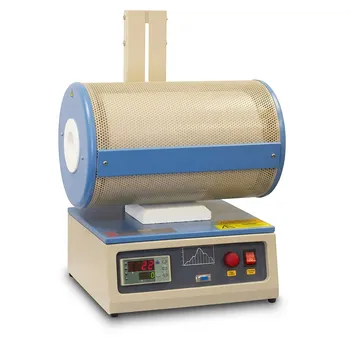
Multi Position Tube Furnace 1100C for Laboratory Material Research and Advanced Industrial Thermal Processing
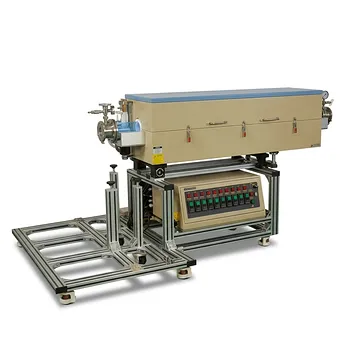
Ten Zone Multi Orientation Laboratory Tube Furnace for 1200C High Temperature Gradient Thermal Processing
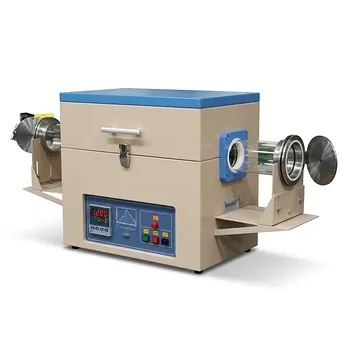
High Temperature 1200C Split Tube Furnace with Hinged Vacuum Flanges and 4 Inch Quartz Tube for Laboratory Research
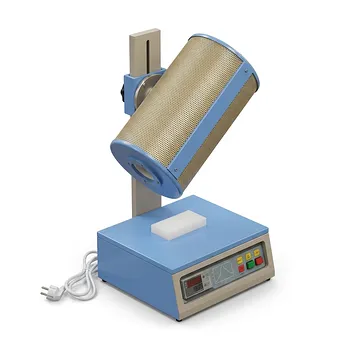
1100°C Vertical Laboratory Furnace for DIY Tubular Reactors with PID Temperature Controller

High Temperature Automated 5 Inch Tube Furnace for Autonomous Material Research and Advanced Laboratory R&D
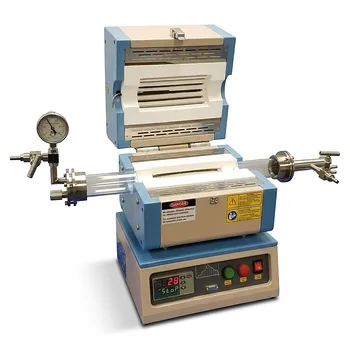
Compact Split Tube Furnace with Integrated Vacuum System and Precision Temperature Calibrator

1800C High Temperature Compact Vacuum Tube Furnace with 60mm OD Alumina Tube and Kanthal MoSi2 Heating Elements
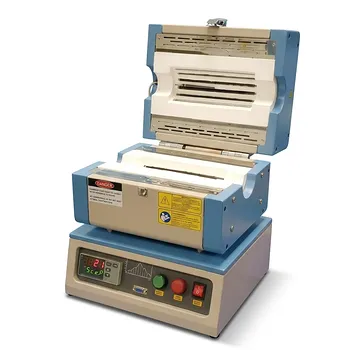
1250C Compact Split Tube Furnace with 8 Inch Heating Zone and Programmable Controller
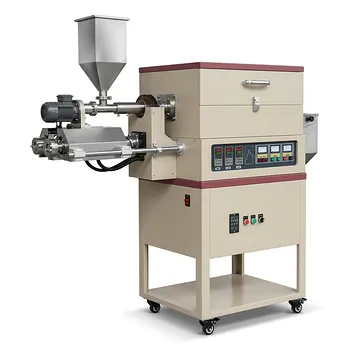
Laboratory Tilting Rotary Tubular Furnaces for Material Science and Industrial Heat Treatment
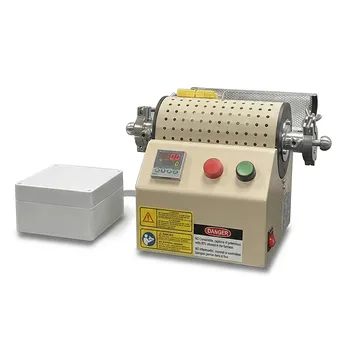
1000C Mini Tube Furnace with 20mm Quartz Tube and Vacuum Flanges for Material Science Research and Controlled Atmosphere Small Sample Processing
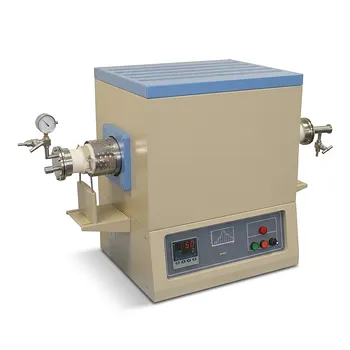
1700C High Temperature Alumina Tube Furnace with 18 Inch Heated Zone and Vacuum Sealing Flanges
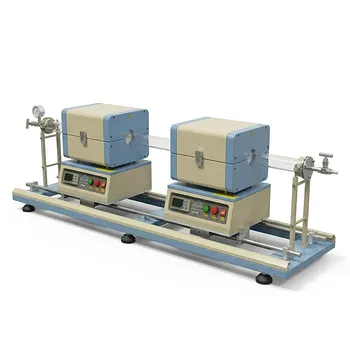
1200C Max Dual Sliding Tube Furnace with 50 mm Tube Flanges for CVD
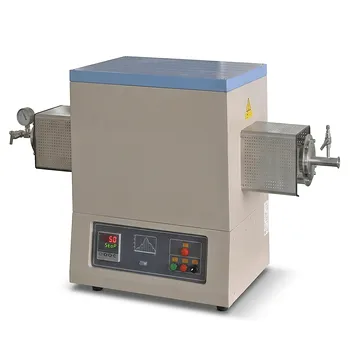
High Temperature 1700C Tube Furnace with 4 Inch OD Alumina Tube and Vacuum Sealing Flanges
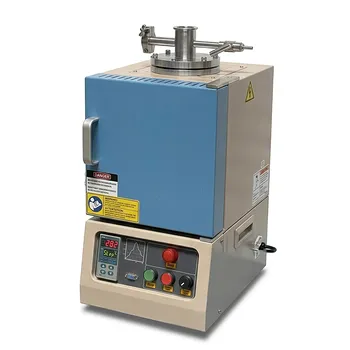
High Temperature Hybrid Muffle and Tube Furnace with Vacuum Capability and PID Control
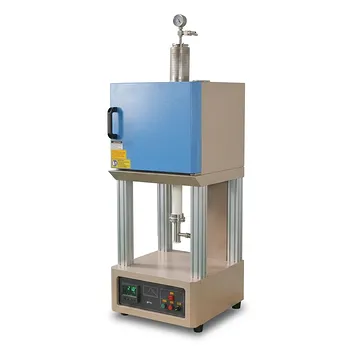
Hybrid High Temperature Tube and Box Furnace 1700C with 2 Inch Alumina Tube for Material Research
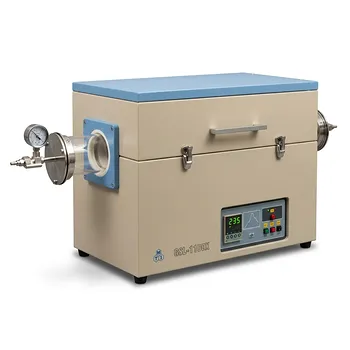
Single Zone Tube Furnace 5 Inch Quartz Tube 36 Inch Heating Zone Vacuum Flanges

High Temperature 1700C Vertical Tube Furnace for Powder Spherification and Material Sintering

1100C Tube Furnace with Vacuum Flange and Programmable Temperature Controller for Material Science and Industrial Heat Treatment

High Temperature 1700C Tube Furnace with High Vacuum Turbomolecular Pump System and Multi Channel Mass Flow Controller Gas Mixer
