How does the temperature control precision of a laboratory tube furnace affect Bi2S3 nanobelt quality? Expert Guide
Updated 5 months ago
Temperature control precision is the defining factor in achieving phase purity and structural integrity during Bismuth Sulfide ($Bi_2S_3$) synthesis. In a laboratory tube furnace, precise control ensures the reaction consistently reaches the 500°C threshold required to fully convert precursors into the orthorhombic phase while preventing the formation of unwanted impurities or structural defects.
Core Takeaway: High-precision temperature regulation allows researchers to overcome specific thermodynamic barriers and balance nucleation rates against growth kinetics. This results in $Bi_2S_3$ nanobelts with uniform morphology, high crystallinity, and a complete absence of residual oxides.
Overcoming Thermodynamic Barriers for Phase Purity
Achieving the 500°C Critical Threshold
The synthesis of $Bi_2S_3$ from Bismuth Oxide ($Bi_2O_3$) is highly sensitive to thermal energy levels. While reactions occur at lower temperatures like 150°C or 300°C, the orthorhombic phase of $Bi_2S_3$ only reaches full conversion at 500°C.
Eliminating Impurity Phases
Precision programmed heating ensures that the furnace does not undershoot the target, which would leave unreacted $Bi_2O_3$ in the sample. Stable maintenance of high temperatures is essential to ensure the sulfidation reaction is driven to completion, resulting in high-quality nanobelts free from intermediate or impurity phases.
Protecting Against Re-oxidation
Temperature precision must work in tandem with a controlled inert atmosphere to prevent side reactions. Fluctuations in heat can interfere with the chemical environment, potentially causing the resulting nanobelts to re-oxidize if the thermal-chemical balance is disrupted.
Regulating Nucleation and Growth Kinetics
Balancing Nucleation vs. Growth Rates
The morphology of a nanobelt is determined by how quickly crystals nucleate compared to how fast they grow. Precise temperature curves allow operators to adjust this balance, ensuring that the supersaturation levels in the growth zone favor the formation of elongated belt structures rather than irregular particles.
Preventing Particle Agglomeration
Stable temperature maintenance prevents the "coarsening" of nanostructures. Significant temperature fluctuations can lead to particle agglomeration, where individual nanobelts fuse together or thicken, losing the high surface area and specific dimensions required for advanced applications.
Controlling Dimensions via Temperature Gradients
The temperature gradient within the tube furnace acts as the primary driving force for material transport. A precisely controlled lower gradient reduces the transport rate and nucleation density, which typically favors the growth of thinner, more uniform nanostructures with smoother surfaces.
Understanding the Trade-offs and Challenges
Thermal Lag and Precise Measurement
Even with a high-precision furnace, there is often a difference between the temperature measured by the thermocouple and the actual temperature of the precursor. Users must account for thermal lag, as rapid heating rates can lead to temperature "overshoot," which may cause the nanobelts to shrink, aggregate, or increase in thickness.
Gradient Complexity in Multi-Zone Furnaces
While gradients drive the growth of nanobelts, they are notoriously difficult to map accurately. A gradient that is too steep (e.g., exceeding 170 K) can accelerate mass transport too aggressively, leading to thicker crystals and distinct step textures that may be undesirable for certain electronic or catalytic uses.
Energy Consumption vs. Precision
Maintaining extremely tight temperature tolerances (within ±1°C) at high temperatures requires sophisticated PID control and higher energy input. For large-scale synthesis, the cost of this precision must be weighed against the required crystalline quality of the final product.
How to Apply This to Your Synthesis Goals
Recommendations for Research and Production
- If your primary focus is Phase Purity: Prioritize a furnace with high-stability PID control to maintain a steady 500°C for the duration of the sulfidation process.
- If your primary focus is Dimensional Control (Thinness): Utilize a multi-zone furnace to establish a low, stable temperature gradient, which slows transport and favors thin nanobelt formation.
- If your primary focus is Preventing Defects: Implement a slow heating rate (5-10°C/min) to allow the material to transition through thermodynamic stages without inducing thermal stress or aggregation.
Precision in thermal processing is not merely a setting, but the fundamental governor of the chemical and structural identity of $Bi_2S_3$ nanobelts.
Summary Table:
| Key Synthesis Factor | Impact on Bi2S3 Nanobelts | Benefit of High-Precision Control |
|---|---|---|
| 500°C Threshold | Phase transition to Orthorhombic | Ensures zero residual oxides or impurities |
| Nucleation Rate | Morphology & dimension control | Uniform nanobelt structure and shape |
| Thermal Stability | Prevents coarsening/fusion | Maintains high surface area and prevents agglomeration |
| Thermal Gradient | Mass transport & thickness | Precise control leads to thinner, smoother nanostructures |
| Heating Rate | Manages thermodynamic stress | Prevents thermal overshoot and crystal defects |
Elevate Your Material Research with THERMUNITS Precision
In the world of nanomaterial synthesis, a single degree of temperature fluctuation can mean the difference between high-purity Bi2S3 nanobelts and failed samples. THERMUNITS is a leading manufacturer of high-performance laboratory heat treatment equipment, specifically engineered for the rigorous demands of material science and industrial R&D.
Our comprehensive range of solutions includes:
- Advanced Tube & CVD/PECVD Systems: Perfect for precise dimensional and phase control in nanostructure growth.
- Vacuum & Atmosphere Furnaces: Ensuring pure chemical environments for oxygen-sensitive materials.
- Muffle, Rotary, & Hot Press Furnaces: Reliable thermal processing for diverse R&D applications.
- Specialized Equipment: Including Vacuum Induction Melting (VIM), Dental Furnaces, and high-quality Thermal Elements.
Don't let thermal instability compromise your scientific breakthroughs. Partner with THERMUNITS to achieve the ultimate control over your synthesis parameters.
Contact our technical experts today to find the perfect furnace for your lab
References
- Shafqat Ali, M. A. Rafiq. Fast, Sensitive, and Selective Hydrogen Sensing of Silver-Doped Bismuth Sulfide Nanobelts. DOI: 10.1007/s11664-024-11036-6
Mentioned Products
- Multi Position Tube Furnace 1100C for Laboratory Material Research and Advanced Industrial Thermal Processing
- Ten Zone Multi Orientation Laboratory Tube Furnace for 1200C High Temperature Gradient Thermal Processing
- High Temperature 1200C Split Tube Furnace with Hinged Vacuum Flanges and 4 Inch Quartz Tube for Laboratory Research
- 1100°C Vertical Laboratory Furnace for DIY Tubular Reactors with PID Temperature Controller
- High Temperature Automated 5 Inch Tube Furnace for Autonomous Material Research and Advanced Laboratory R&D
People Also Ask
- Why use a tube furnace for oxygen annealing LaCrO3/LaMnO3? Optimize Phase Transition & Magnetic Performance.
- What key role does a laboratory high-temperature tube furnace play in the production of carbon nanofibers? Guide
- How is a laboratory high-temperature tube furnace utilized to research the products of aluminothermic reduction? Advanced Metallurgical Solutions
- What is the role of a laboratory tube furnace in the carbonization process of porous carbon foam (PCF)? Master 3D Synthesis
- What role does a laboratory tube furnace play in the pyrolysis and carbonization of biomass? Optimize Thermal Research.

Tech Team · ThermUnits
Last updated on Apr 14, 2026
Related Products
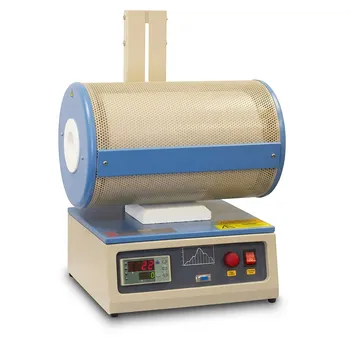
Multi Position Tube Furnace 1100C for Laboratory Material Research and Advanced Industrial Thermal Processing
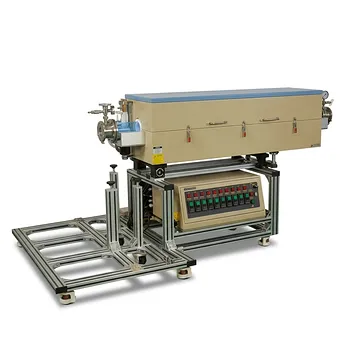
Ten Zone Multi Orientation Laboratory Tube Furnace for 1200C High Temperature Gradient Thermal Processing
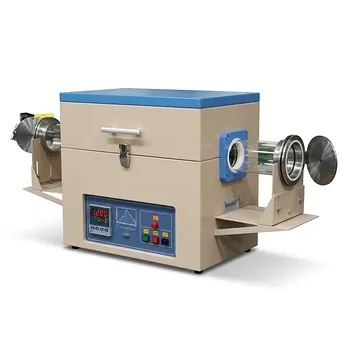
High Temperature 1200C Split Tube Furnace with Hinged Vacuum Flanges and 4 Inch Quartz Tube for Laboratory Research
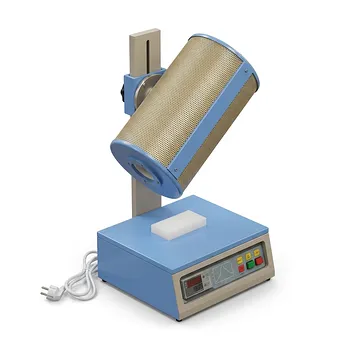
1100°C Vertical Laboratory Furnace for DIY Tubular Reactors with PID Temperature Controller

High Temperature Automated 5 Inch Tube Furnace for Autonomous Material Research and Advanced Laboratory R&D
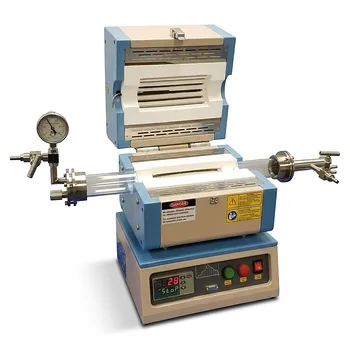
Compact Split Tube Furnace with Integrated Vacuum System and Precision Temperature Calibrator

1800C High Temperature Compact Vacuum Tube Furnace with 60mm OD Alumina Tube and Kanthal MoSi2 Heating Elements
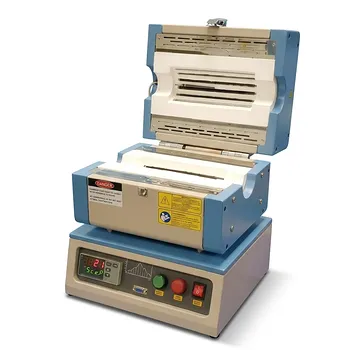
1250C Compact Split Tube Furnace with 8 Inch Heating Zone and Programmable Controller
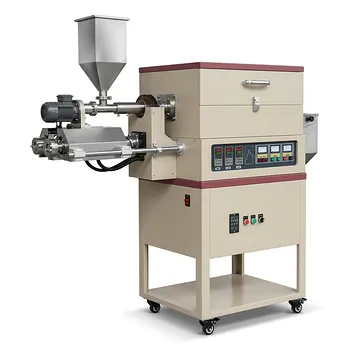
Laboratory Tilting Rotary Tubular Furnaces for Material Science and Industrial Heat Treatment
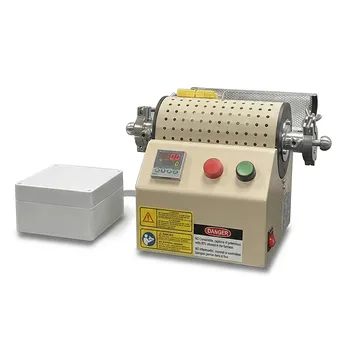
1000C Mini Tube Furnace with 20mm Quartz Tube and Vacuum Flanges for Material Science Research and Controlled Atmosphere Small Sample Processing
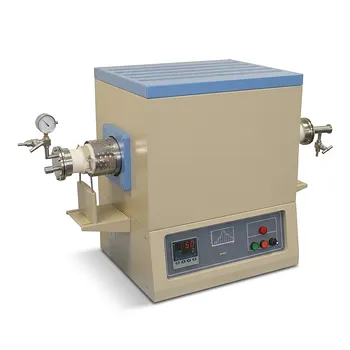
1700C High Temperature Alumina Tube Furnace with 18 Inch Heated Zone and Vacuum Sealing Flanges
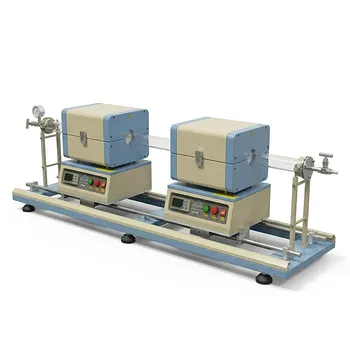
1200C Max Dual Sliding Tube Furnace with 50 mm Tube Flanges for CVD
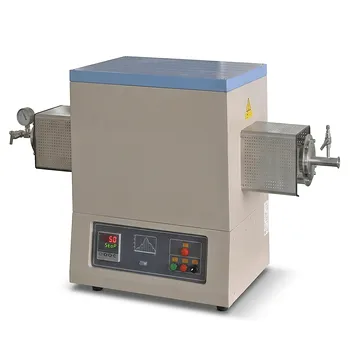
High Temperature 1700C Tube Furnace with 4 Inch OD Alumina Tube and Vacuum Sealing Flanges
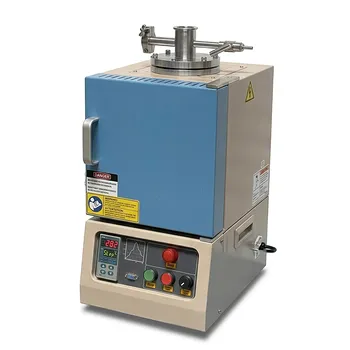
High Temperature Hybrid Muffle and Tube Furnace with Vacuum Capability and PID Control
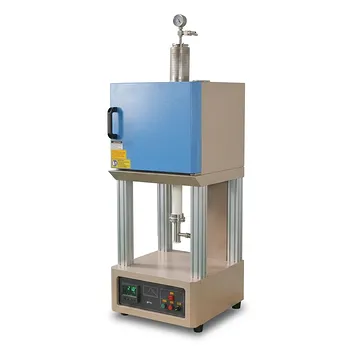
Hybrid High Temperature Tube and Box Furnace 1700C with 2 Inch Alumina Tube for Material Research
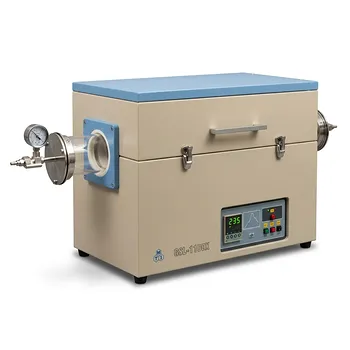
Single Zone Tube Furnace 5 Inch Quartz Tube 36 Inch Heating Zone Vacuum Flanges

High Temperature 1700C Vertical Tube Furnace for Powder Spherification and Material Sintering

1100C Tube Furnace with Vacuum Flange and Programmable Temperature Controller for Material Science and Industrial Heat Treatment

High Temperature 1700C Tube Furnace with High Vacuum Turbomolecular Pump System and Multi Channel Mass Flow Controller Gas Mixer