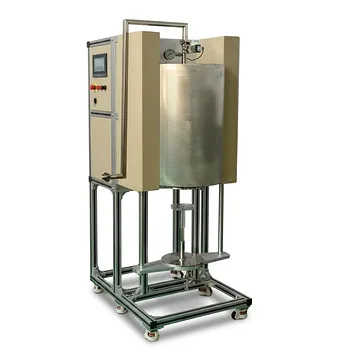
How is a tandem dual-zone furnace system used to study moisture effects on RR1000 superalloys? Precision R&D Methods.
Updated 3 months ago
The tandem dual-zone furnace system serves as a precision environment for isolating the chemical effects of water vapor on high-temperature materials. By integrating a deionized water flash evaporation device and an online hygrometer, this system maintains a strictly controlled relative humidity (RH) between 45% and 55%. This specialized setup enables researchers to observe how moisture interacts with the Cr2O3 (chromia) oxide scales on RR1000 superalloys, specifically tracking the formation of volatile hydroxides that degrade the alloy's protective surface.
Core Takeaway: A tandem dual-zone furnace system is utilized to simulate humid operational environments, allowing for the precise measurement of how moisture accelerates the volatilization of protective oxide scales. This reveals the specific chemical pathways through which water vapor compromises the surface integrity and morphology of RR1000 superalloys.
The Architecture of Moisture-Controlled Oxidation Studies
Integration of Precise Humidity Controls
The tandem system relies on a flash evaporation device to introduce a consistent volume of deionized water into the gas stream. This is coupled with an online hygrometer that provides real-time feedback, ensuring the moisture content remains within the critical 45% to 55% RH range.
Maintaining Chemical Potential and Thermal Stability
By using two distinct zones, the furnace can decouple the heating of the gas from the heating of the sample. This ensures that the moisture-laden atmosphere reaches the RR1000 alloy at the correct temperature, preventing premature condensation or uncontrolled fluctuations in chemical potential.
Simulating Real-World Gas-Phase Reactions
This setup is specifically designed to study gas-phase chemical reactions that occur at the interface of the alloy and the atmosphere. It allows for the direct observation of how water vapor influences the transition of solid oxides into gaseous phases, a process known as volatilization.
Mechanisms of Moisture-Induced Degradation
The Volatilization of Chromia Scales
The primary focus of this system is the stability of Cr2O3 (chromia) scales, which are the main defense against oxidation in RR1000. In the presence of moisture, these scales react to form volatile hydroxides, which effectively "evaporate" the protective layer and leave the underlying metal vulnerable.
Evolution of Surface Morphology
Researchers use the tandem furnace to map the surface morphology evolution of the alloy over time. By controlling the humidity, they can identify the exact point at which the oxide scale becomes non-continuous or loses its protective qualities due to moisture-driven chemical stripping.
Interaction with Thermal Transients
While the dual-zone system manages the atmosphere, the heating rate also plays a critical role in the type of oxide that forms initially. For instance, a controlled rate of 5 °C/min favors a protective NiCr2O4 spinel layer, whereas faster rates (over 100 °C/min) lead to standard Cr2O3, which may react differently to the moisture introduced in the tandem furnace.
Understanding the Trade-offs and Limitations
Complexity of Humidity Maintenance
Maintaining a stable 45%-55% RH at high temperatures is technically demanding and requires constant monitoring. Any fluctuation in the flash evaporation rate can lead to inconsistent data, making the online hygrometer a non-negotiable component for experimental validity.
Simulation vs. Real-World Complexity
While the tandem furnace excels at isolating the effect of moisture, it may simplify the complex gas mixtures found in turbine engines, such as those containing sulfur dioxide. To compensate, researchers often supplement these studies with vertical controlled atmosphere furnaces to simulate Type II hot corrosion environments.
Scale Spallation Risks
A significant challenge in studying these alloys is that moisture-induced volatilization often works in tandem with thermal stress. While the tandem furnace studies chemical stability, it may not fully capture the physical spallation (flaking) of the oxide scale that occurs during the rapid cooling cycles of an actual engine.
Applying These Methods to Your Research
How to Select the Right Experimental Focus
Depending on your specific goals for RR1000 alloy testing, different furnace configurations and parameters should be prioritized.
- If your primary focus is moisture-driven chemical degradation: Utilize the tandem dual-zone setup with the flash evaporation device to maintain 45%-55% RH and monitor hydroxide formation.
- If your primary focus is optimizing the initial protective scale: Focus on the heating rate within a standard tube furnace, aiming for 5 °C/min to promote the formation of a continuous NiCr2O4 spinel layer.
- If your primary focus is Type II hot corrosion: Use a vertical controlled atmosphere furnace with mass flow controllers to introduce sulfur dioxide in a bottom-to-top flow pattern.
- If your primary focus is thermal fatigue and spallation: Implement a horizontal furnace with programmable temperature cycling to simulate the periodic heating and cooling of operational flight cycles.
By precisely controlling the moisture and thermal transients within a tandem dual-zone system, you can effectively predict the long-term durability of RR1000 superalloys in humid high-temperature environments.
Summary Table:
| Feature | Specification | Research Impact |
|---|---|---|
| Humidity Control | 45% - 55% RH | Precise simulation of engine-like moisture levels |
| Injection Method | Flash Evaporation | Maintains consistent gas-phase chemical potential |
| System Design | Tandem Dual-Zone | Prevents condensation & allows decoupling of heat |
| Target Analysis | Cr2O3 Volatilization | Tracks the formation of volatile hydroxides |
| Surface Mapping | Morphology Evolution | Identifies loss of protective oxide scale integrity |
Elevate Your Material Science Research with THERMUNITS
As a leading manufacturer of high-temperature laboratory equipment, THERMUNITS provides the precision thermal solutions required for advanced metallurgical research. Our range of Tube, Vacuum, Atmosphere, and Muffle furnaces, along with specialized CVD/PECVD systems and Electric Rotary Kilns, are designed to meet the rigorous demands of industrial R&D.
Whether you are studying the oxidation of superalloys or developing next-generation materials, our equipment ensures stable chemical environments and exact temperature control. Contact our expert team today to find the ideal thermal processing solution for your laboratory.
References
- Simon Gray, M.P. Taylor. Comparison of Performance of NiCr2O4 and Cr2O3 Formed on the Ni-Based Superalloy RR1000 Under Corrosive Conditions. DOI: 10.1007/s11085-024-10256-9
Mentioned Products
- 1200C Dual Temperature Zone Slidable Tube Furnace for 2D Material Growth and TCVD Synthesis
- Dual Zone Quartz Tube Furnace with 80mm Diameter 1200C Max Temperature 3 Channel Gas Mixer and Vacuum Pump System
- Double Zone Fast Heating Tube Furnace High Temperature Vacuum Atmosphere System
- Double Temperature Zone Double Cover Tube Furnace for High Temperature CVD and Vacuum Annealing
- High Temperature 1200C Automatic Sliding Dual Zone Tube Furnace for 2D Transition Metal Dichalcogenides Growth and Material Sublimation Research
People Also Ask
- How is a dual-temperature zone tube furnace configured for MXene-based metal phosphides? Expert Synthesis Guide
- What is the function of a dual-zone tube furnace in CVD for 2D perovskites? Optimize Precision & Film Uniformity
- What are the technical advantages of a dual-zone tube furnace for phosphidation? Optimize Cobalt Nanowall Synthesis.
- What is the function of a high-precision dual-zone tube furnace in MAPbI3 deposition? Expert Perovskite Synthesis.
- Why is a double-temperature zone tube furnace utilized for the preparation of monolayer MoS2? Precision CVD Explained

Tech Team · ThermUnits
Last updated on Jun 02, 2026
Related Products
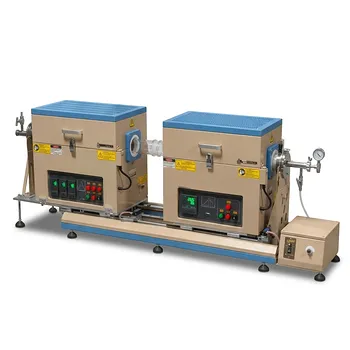
1200C Dual Temperature Zone Slidable Tube Furnace for 2D Material Growth and TCVD Synthesis
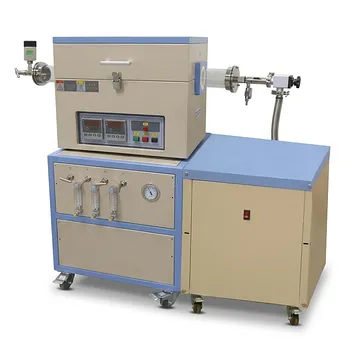
Dual Zone Quartz Tube Furnace with 80mm Diameter 1200C Max Temperature 3 Channel Gas Mixer and Vacuum Pump System
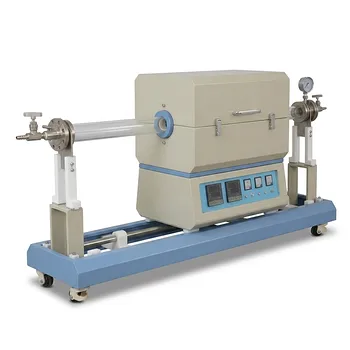
Double Zone Fast Heating Tube Furnace High Temperature Vacuum Atmosphere System
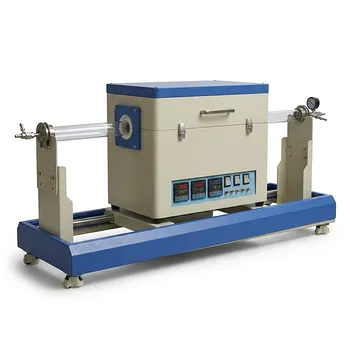
Double Temperature Zone Double Cover Tube Furnace for High Temperature CVD and Vacuum Annealing
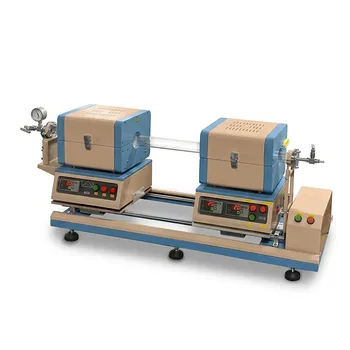
High Temperature 1200C Automatic Sliding Dual Zone Tube Furnace for 2D Transition Metal Dichalcogenides Growth and Material Sublimation Research
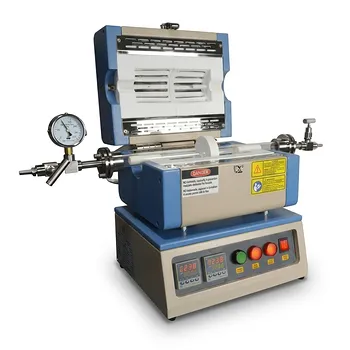
Dual Heating Zone 1200C Compact Split Tube Furnace with Optional 1" - 2" Tube and Vacuum Flanges
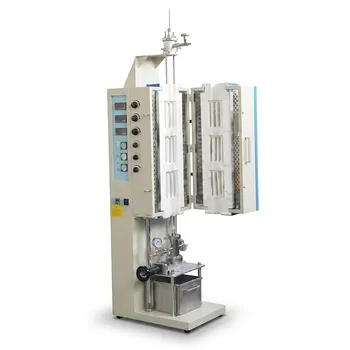
High Temperature Dual Zone Tube Furnace for Material Science Research and Professional Thermal Processing
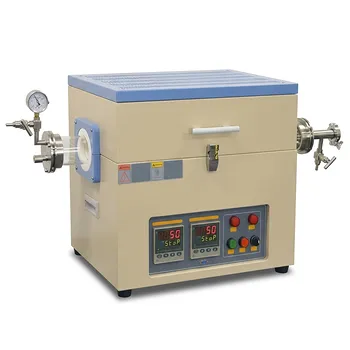
1200C Dual Zone Split Tube Furnace with Fused Quartz Tube and Vacuum Flanges Available in 60mm 80mm and 100mm Diameters
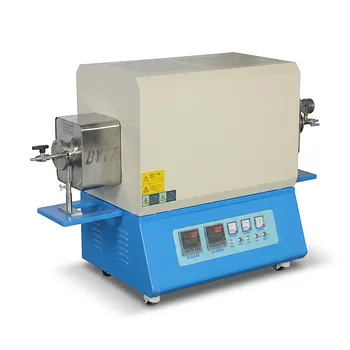
High Temperature Dual Zone Split Tube Furnace for Advanced Atmosphere Sintering and Vacuum CVD Applications
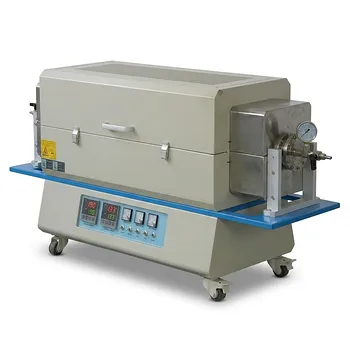
High Temperature Elongated Dual Zone Tube Furnace for Material Research and Industrial Heat Treatment
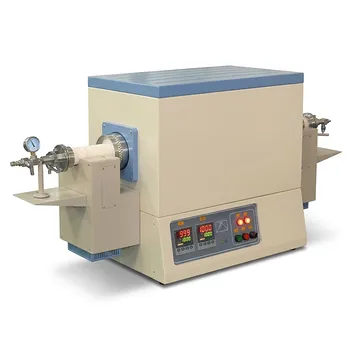
High Temperature 1700C Dual Zone Rotary Tube Furnace with 60mm Alumina Tube and Precision Rotation Control
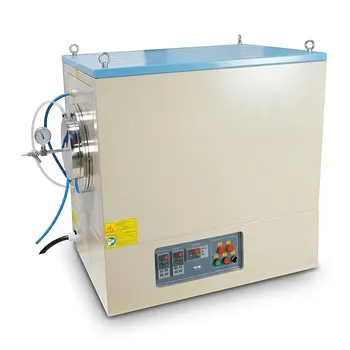
Dual Zone Tube Furnace 1100C with 11 Inch Quartz Tube and Vacuum Flanges for 8 Inch Wafer Processing
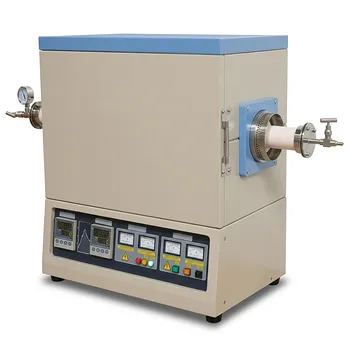
High Temperature 1700C Dual Zone Tube Furnace for Material Science and Industrial Chemical Vapor Deposition Research
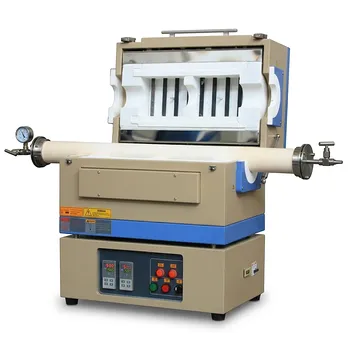
1500C Two Zone Split Tube Furnace with Vacuum Flange and 80mm Alumina Tube
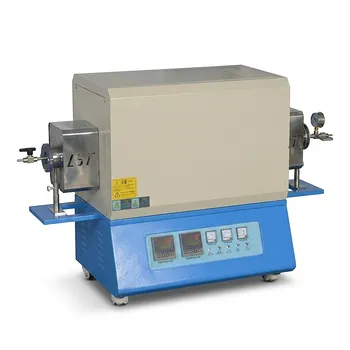
High Temperature Dual Zone Vacuum Tube Furnace for Material Research and CVD Processing
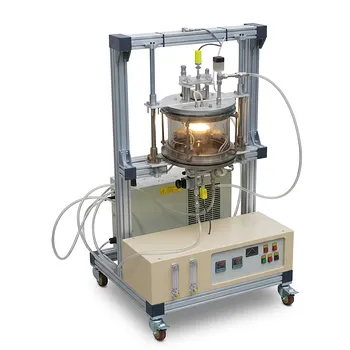
Two Zones CSS Furnace for Rapid Thermal Processing Thin Film Coating 3 Inch Diameter 650C
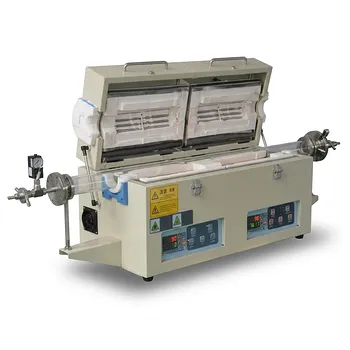
Elongated Two Temperature Zone Pipe Furnace for Industrial Heat Treatment and Material Science Research
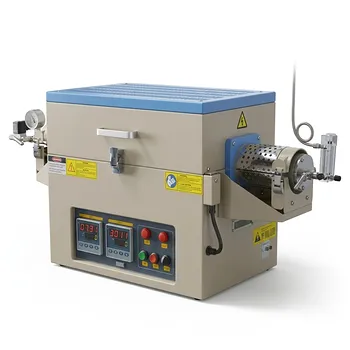
1100C Dual Zone Hydrogen Gas Tube Furnace with Quartz Tube and Integrated H2 Leak Detection System
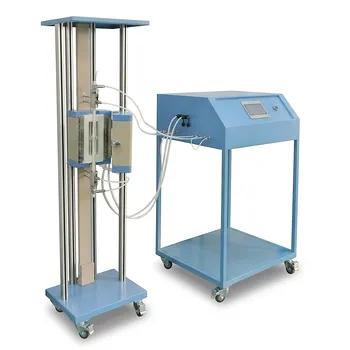
High Temperature Vertical Tube Furnace for Small Solid Oxide Fuel Cell Testing with Four Channel Gas Control