Why is the Si/SiO2 substrate face-down in Fe1+yTe CVD growth? The Secret to Precise 2D Nanosheet Synthesis
Updated 5 months ago
Placing the Si/SiO2 substrate with the polished side facing downward creates a confined micro-reaction space that optimizes growth conditions. This specific orientation restricts the escape of precursor vapors, significantly increasing local supersaturation at the substrate surface. By controlling the environment in this manner, researchers can reliably trigger the nucleation of ultra-thin, thickness-controlled $Fe_{1+y}Te$ nanosheets that would otherwise be difficult to synthesize in an open-flow system.
Core Takeaway: The "face-down" configuration transforms the substrate into a physical barrier that traps reaction gases, ensuring the high vapor concentration necessary for the precise nucleation and horizontal growth of 2D $Fe_{1+y}Te$ crystals.
The Role of the Micro-Reaction Space
Creating a Physical Vapor Trap
In a typical CVD setup, carrier gases move precursors quickly across the tube, often leading to low local concentrations. By flipping the substrate, you create a confined micro-environment between the precursor boat and the polished surface.
Limiting Gas Diffusion
This arrangement acts as a physical baffle that limits the diffusion of reaction gases away from the growth site. Instead of being swept away by the furnace's primary flow, the $Fe$ and $Te$ vapors are held in close proximity to the SiO2 surface.
Enhancing Local Supersaturation
As the precursors evaporate, they accumulate in this restricted space, leading to increased local supersaturation. This high concentration is the thermodynamic "engine" required to initiate the formation of crystal nuclei on the substrate.
Achieving Precision in 2D Growth
Controlled Nucleation Rates
High supersaturation within the micro-space allows for a more uniform nucleation process. This is critical for $Fe_{1+y}Te$, where the goal is to start growth at multiple points simultaneously to form a coherent layer.
Thickness and Morphology Control
The restricted volume helps regulate the growth kinetics, favoring the formation of ultra-thin 2D nanosheets over bulkier 3D crystals. By limiting the amount of precursor available in the immediate vicinity, the system naturally leans toward producing thickness-controlled layers.
Minimizing Contamination and Turbulence
The face-down orientation also protects the polished growth surface from falling debris or large particles within the CVD tube. This results in a cleaner surface morphology and fewer structural defects in the final nanosheet.
Understanding the Trade-offs
The Risk of Precursor Depletion
While the confined space increases concentration, it also risks rapid depletion of the local precursor supply. If the growth run is too long, the restricted volume may run out of material, leading to incomplete or non-uniform flakes.
Spatial Non-uniformity
Because the micro-reaction space depends on the physical gap between the boat and substrate, slight misalignments can cause variations. If the substrate is not perfectly level, one side may receive more vapor than the other, resulting in a gradient of thickness.
Sensitivity to Temperature Gradients
Confined spaces can trap heat differently than the open tube environment. This can create local temperature fluctuations that affect the stoichiometry ($1+y$) of the $Fe_{1+y}Te$, potentially altering its superconducting or magnetic properties.
How to Apply This to Your Growth Process
Recommendations for Experimental Design
When setting up your CVD furnace, consider your primary objective for the $Fe_{1+y}Te$ samples:
- If your primary focus is achieving the thinnest possible nanosheets: Use the face-down configuration with a very small gap to maximize supersaturation and promote 2D lateral growth.
- If your primary focus is large-scale film uniformity across multiple centimeters: Consider a face-up approach with higher precursor loads to ensure the entire substrate is exposed to a consistent vapor flux.
- If your primary focus is precise stoichiometry (controlling "y"): Ensure the substrate is placed at the exact thermal center of the furnace to prevent temperature-induced variations within the confined space.
By mastering the geometry of the growth environment, you can move beyond simple deposition to true atomic-scale engineering of $Fe_{1+y}Te$ crystals.
Summary Table:
| Feature | Face-Down Configuration Benefit | Impact on Fe1+yTe Growth |
|---|---|---|
| Local Supersaturation | High (traps precursor vapors) | Enhances nucleation of thin crystals |
| Growth Kinetics | Restricted volume | Favors 2D nanosheets over 3D bulk |
| Surface Protection | Shields from falling debris | Reduces defects and contamination |
| Gas Diffusion | Limits escape of reaction gases | Ensures stable, controlled vapor flux |
Elevate Your 2D Material Research with THERMUNITS
Precision in $Fe_{1+y}Te$ synthesis requires more than just technique; it requires superior thermal control. THERMUNITS is a leading manufacturer of high-temperature laboratory equipment, providing the advanced CVD/PECVD systems, Tube furnaces, and Atmosphere furnaces essential for cutting-edge material science and industrial R&D.
Our comprehensive range of thermal processing solutions—including Vacuum furnaces, Hot Press furnaces, and Electric Rotary Kilns—is designed to help researchers achieve the exact stoichiometry and morphology needed for next-generation superconductors and magnetic materials.
Ready to optimize your heat treatment process?
- Contact our experts today to find the perfect furnace for your lab.
- Explore our full catalog of CVD systems, Muffle furnaces, and Thermal Elements.
- Partner with THERMUNITS for reliable, high-performance R&D solutions.
References
- Lu Lv, Yanfeng Gao. High Quality Fe<sub>1+y</sub>Te Synthesized by Chemical Vapor Deposition with Conspicuous Vortex Flow. DOI: 10.1002/adfm.202401748
Mentioned Products
- Radio Frequency Plasma Enhanced Chemical Vapor Deposition RF PECVD System for Laboratory and Industrial Thin Film Growth
- Versatile Chemical Vapor Deposition Tube Furnace System for Advanced Material Research and Industrial Coating Processes
- Cylindrical Resonator MPCVD Machine System for Microwave Plasma Chemical Vapor Deposition and Lab Diamond Growth
- Chemical Vapor Deposition CVD System Slide PECVD Tube Furnace with Liquid Gasifier PECVD Machine
- 915MHz MPCVD Diamond Machine Microwave Plasma Chemical Vapor Deposition System Reactor
People Also Ask
- What are the advantages of PECVD systems for nano flame retardant films? Protect Heat-Sensitive Polymers with Precision
- How does PECVD differ from conventional thermal CVD? Key Advantages of Low-Temperature Deposition for R&D
- What is the role of CVD/PECVD systems in the research of optoelectronic materials and functional coatings? Expert Guide
- What are the benefits of using PECVD for optical and photonic coatings? Achieve High-Precision Thin-Film Deposition
- How do RF frequency and power settings influence the characteristics of a PECVD process? Master Quality & Efficiency

Tech Team · ThermUnits
Last updated on Apr 14, 2026
Related Products
Radio Frequency Plasma Enhanced Chemical Vapor Deposition RF PECVD System for Laboratory and Industrial Thin Film Growth
Versatile Chemical Vapor Deposition Tube Furnace System for Advanced Material Research and Industrial Coating Processes
Cylindrical Resonator MPCVD Machine System for Microwave Plasma Chemical Vapor Deposition and Lab Diamond Growth
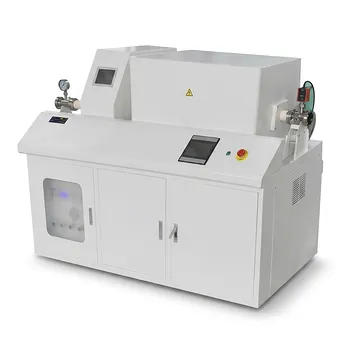
Chemical Vapor Deposition CVD System Slide PECVD Tube Furnace with Liquid Gasifier PECVD Machine
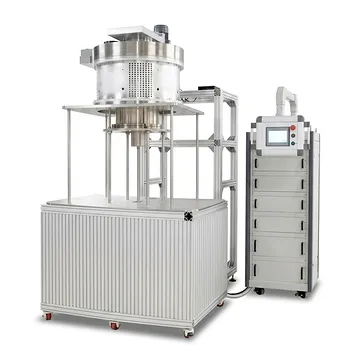
915MHz MPCVD Diamond Machine Microwave Plasma Chemical Vapor Deposition System Reactor
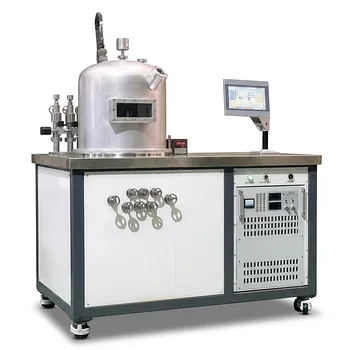
HFCVD Machine System for Nano Diamond Coating on Drawing Dies and Industrial Tools
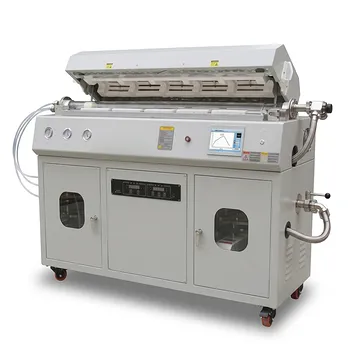
Multi Heating Zones CVD Tube Furnace System for Precision Chemical Vapor Deposition and Advanced Material Synthesis
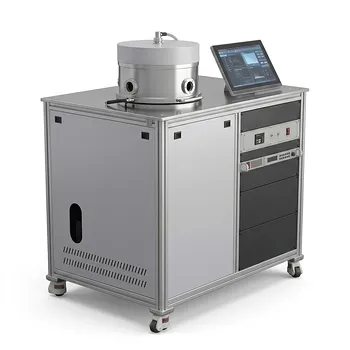
Inclined Rotary Plasma Enhanced Chemical Vapor Deposition PECVD System for Thin Film Deposition and Nanomaterial Synthesis
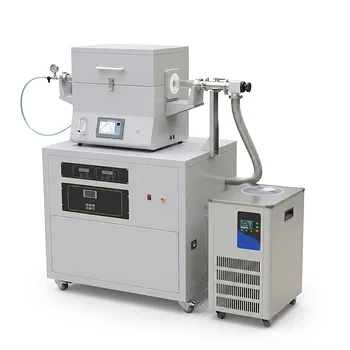
Split Chamber CVD Tube Furnace with Vacuum Station Chemical Vapor Deposition System Machine
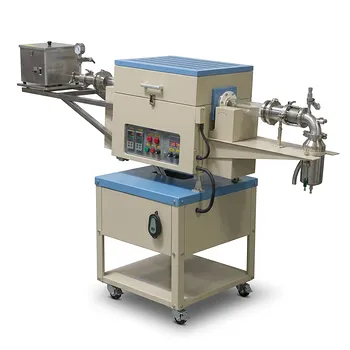
Two Zone Rotary CVD Furnace with Automatic Feeding and Receiving System for Powder Processing
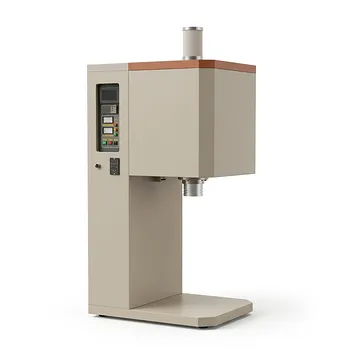
Vertical Openable Tube Furnace 0-1700c High Temperature Laboratory System for CVD and Vacuum Heat Treatment

High Temperature 1700C Tube Furnace with High Vacuum Turbomolecular Pump System and Multi Channel Mass Flow Controller Gas Mixer
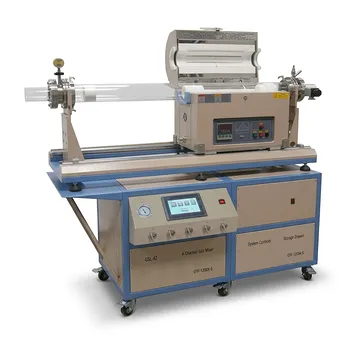
Dual Tube 100mm 80mm CVD Sliding Furnace with 4 Channel Gas Mixing and Vacuum System
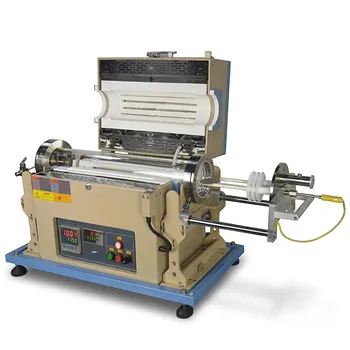
1200°C High Temperature 4 Inch Tube Furnace with Sliding Flange for CVD Systems
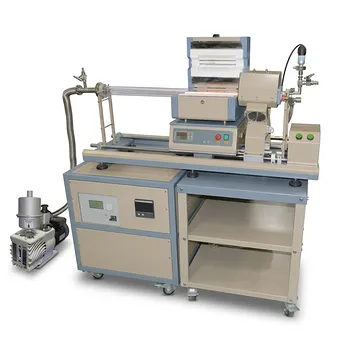
1200C Max Compact Auto-Sliding PECVD Furnace with 2 Inch Tube and Vacuum Pump
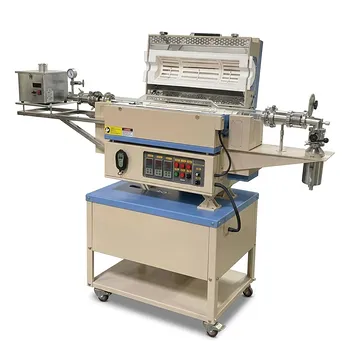
5 Inch Rotary Tube Furnace with Automatic Feeding and Receiving System 1200C Three Zone CVD Powder Processing
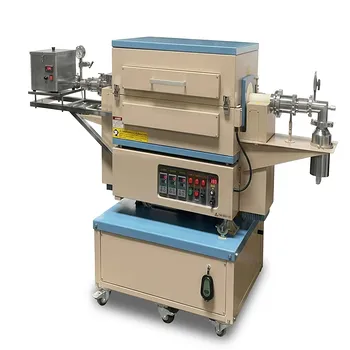
1500C 3-Zone Rotary Tube Furnace 60mm with Automatic Powder Feeding and Receiving System for Continuous Material Synthesis
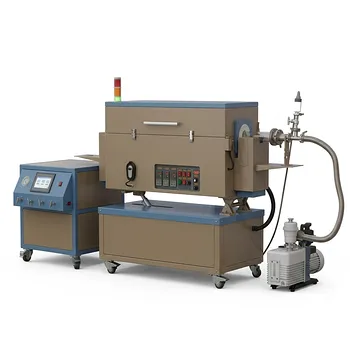
5 Inch Three Zone Rotary Tube Furnace with Integrated Gas Delivery System and 1200C Capability for Advanced Material CVD Processing
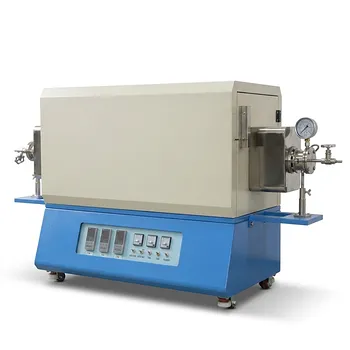
Three Temperature Zone High Temperature Vacuum Tube Furnace for CVD and Material Sintering