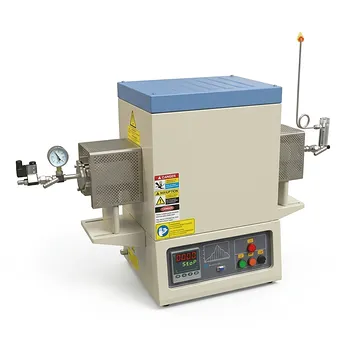
What are the advantages of using a high-temperature tube furnace for synthesizing complex oxides like CaTbCoO4 and Ca2TbCo2O6?
Updated 3 months ago
High-temperature tube furnaces are the preferred tool for synthesizing complex oxides because they provide a stable, uniform thermal environment and precise atmospheric control necessary for achieving phase purity. For specific materials like CaTbCoO4 and Ca2TbCo2O6, these furnaces facilitate the long-term annealing required to reach thermodynamic equilibrium and ensure correct structural ordering.
The core advantage of a high-temperature tube furnace lies in its ability to maintain a precise isothermal zone and controlled atmosphere over extended periods. This stability is the critical factor in transitioning raw precursors into highly ordered, consistent crystalline phases.
Achieving Thermodynamic Equilibrium and Phase Purity
Precise Thermal Uniformity
High-temperature tube furnaces provide a uniform heating zone that eliminates thermal gradients across the sample. This consistency ensures that the entire volume of the material experiences the same temperature, which is vital for the phase consistency of complex oxides.
Extended Annealing Durations
Synthesizing complex structures like the La2CuO4-type CaTbCoO4 requires long-term annealing, often exceeding 18 to 24 hours. The furnace's ability to maintain a stable environment at temperatures up to 1200°C allows these materials to reach their lowest energy state, or thermodynamic equilibrium.
Reliable Solid-Phase Reactions
The furnace facilitates solid-state reactions by providing the energy needed for ions to migrate through the lattice. This process is essential for converting mixed raw materials—such as Al2O3, CaO, and FeO—into their target complex oxide phases within specific holding times.
Promoting Crystal Growth and Lattice Development
Controlled Heating and Cooling Rates
Advanced control systems allow researchers to set specific heating rates, such as 300°C/h, to prevent thermal shock and manage phase transitions. This precision ensures that the lattice development is complete and that rare earth activators are distributed uniformly throughout the structure.
Grain Growth and Densification
High-temperature soaking promotes grain growth and the elimination of internal stresses within the ceramic. This results in high-density, high-purity materials that serve as the necessary foundation for advanced applications like pulsed laser deposition.
Structural Ordering
At temperatures near 1100°C, the furnace induces the structural ordering of atoms within the oxide framework. This ordering is crucial for stabilizing specific sites, such as Co-N clusters or spinel structures, which directly influence the material's electrical and catalytic properties.
Atmospheric Control and Chemical Synthesis
Atmosphere-Specific Reactions
Tube furnaces allow for synthesis under controlled air or inert atmospheres like Argon. This versatility is critical for managing the oxidation states of metal ions, such as the reduction and re-oxidation of cobalt into CoOx during ligand carbonization.
Gas-Solid Interaction Environments
The enclosed nature of the tube creates an ideal environment for gas-solid reactions. This is used to form uniform shells on catalysts, such as creating a Na2WO4 shell on a perovskite surface to produce high-performance core-shell structures.
Creating Functional Defect Levels
The stable isothermal environment is the physical basis for creating specific defect energy levels or trap centers. These defects are essential for materials requiring multimodal luminescence, including long afterglow and thermoluminescence.
Understanding the Trade-offs
Temperature Limits and Material Loss
While these furnaces are powerful, reaching extreme temperatures can lead to the reduction of volatile components, such as nitrogen content in doped carbons. Researchers must balance the need for high-temperature ordering with the potential loss of specific functional elements.
Energy and Time Intensive Operations
Achieving thermodynamic equilibrium often requires extended soaking times, which increases energy consumption and slows down the production cycle. This makes the process highly effective for research and high-quality ceramic targets, but potentially costly for mass-market manufacturing.
Equipment Sensitivity
High-precision control systems and heating elements can be sensitive to corrosive gases released during the decomposition of certain precursors. Protecting the tube and elements requires careful selection of crucibles and gas flow management.
Applying These Advantages to Your Synthesis
How to Apply This to Your Project
- If your primary focus is Phase Purity: Utilize long-term annealing (18+ hours) at the maximum stable temperature to ensure the sample reaches a state of thermodynamic equilibrium.
- If your primary focus is Catalytic Performance: Prioritize precise atmospheric control and gas flow to optimize the formation of surface active sites and core-shell structures.
- If your primary focus is Optical Properties: Maintain a highly stable isothermal environment to ensure the uniform distribution of activators and the creation of consistent defect energy levels.
- If your primary focus is Material Density: Focus on high-temperature sintering to promote grain growth and eliminate internal stresses for high-purity ceramic targets.
Selecting a high-temperature tube furnace ensures that your complex oxide synthesis is governed by precision and reproducibility rather than thermal uncertainty.
Summary Table:
| Feature | Synthesis Advantage | Research Outcome |
|---|---|---|
| Uniform Isothermal Zone | Eliminates thermal gradients | Consistent phase purity across samples |
| Precise Atmosphere Control | Manages oxidation states (Air/Argon) | Optimized catalytic & electrical properties |
| Extended Annealing | Long-term stability at 1100°C-1200°C | Achievement of thermodynamic equilibrium |
| Controlled Cooling | Managed phase transitions | Uniform distribution of rare earth activators |
| Sealed Environment | Facilitates gas-solid interactions | Formation of high-performance core-shell structures |
Elevate Your Material Research with THERMUNITS
Precision is the foundation of breakthrough material science. As a leading manufacturer of high-temperature laboratory equipment, THERMUNITS provides the advanced thermal solutions necessary for synthesizing complex oxides and high-purity ceramics.
Our comprehensive range includes Tube, Muffle, Vacuum, and Atmosphere Furnaces, as well as specialized CVD/PECVD systems, Rotary Kilns, and Vacuum Induction Melting (VIM) furnaces. Whether you are focused on structural ordering, crystal growth, or catalytic performance, our equipment ensures the stability and reproducibility your R&D demands.
Ready to optimize your heat treatment process?
Contact our expert team today to find the perfect furnace for your laboratory or industrial R&D application.
References
- O. Zaremba, R. Gladyshevskii. The Ca–Tb–Co–O system: phase diagram and crystal structures. DOI: 10.30970/cma17.0442
Mentioned Products
- High Temperature Tube Furnace 1500C with Sliding Flanges and 50mm OD for Rapid Thermal Processing Fast Heating and Cooling
- High Temperature 1700C Tube Furnace with High Vacuum Turbomolecular Pump System and Multi Channel Mass Flow Controller Gas Mixer
- 1750°C High Temperature Benchtop Vacuum Atmosphere Tube Furnace with Kanthal Super 1800 Heating Elements and 60mm Alumina Processing Tube
- High Temperature 1700C Benchtop Tube Furnace with 5 Inch Heating Zone High Purity Alumina Tube and Vacuum Sealing Flanges
- 1700C High Temperature Alumina Tube Furnace with 18 Inch Heated Zone and Vacuum Sealing Flanges
People Also Ask
- How are high-temperature tube furnaces utilized to repair etching damage? Precision Lattice Restoration Solutions
- What core conditions does a high-temperature tube furnace provide for rGO aerogels? Mastering Precision Synthesis.
- What role does a high-temperature tube furnace play in CVD synthesis of silicon nanowires? Master VLS Growth Precision.
- How does precision tube furnace control influence CoFe nanoparticle formation? Master Your Bimetallic Synthesis.
- What role does a high-temperature tube furnace play in the sulfidation heat treatment of CoS@C/MXene nanocomposites? Guide

Tech Team · ThermUnits
Last updated on Jun 03, 2026
Related Products

High Temperature Tube Furnace 1500C with Sliding Flanges and 50mm OD for Rapid Thermal Processing Fast Heating and Cooling

High Temperature 1700C Tube Furnace with High Vacuum Turbomolecular Pump System and Multi Channel Mass Flow Controller Gas Mixer

1750°C High Temperature Benchtop Vacuum Atmosphere Tube Furnace with Kanthal Super 1800 Heating Elements and 60mm Alumina Processing Tube

High Temperature 1700C Benchtop Tube Furnace with 5 Inch Heating Zone High Purity Alumina Tube and Vacuum Sealing Flanges

1700C High Temperature Alumina Tube Furnace with 18 Inch Heated Zone and Vacuum Sealing Flanges
High Temperature Split Tube Furnace 1500C for Material Research Vacuum and Atmosphere Thermal Processing

Compact High Temperature 1600C Tube Furnace with 50mm Alumina Tube and Vacuum Flanges for Material Sintering

1800C High Temperature Compact Vacuum Tube Furnace with 60mm OD Alumina Tube and Kanthal MoSi2 Heating Elements
High Temperature Rocking Tube Furnace 1700°C Alumina Processing Tube with Precision Oscillation for Material Synthesis
High Temperature Three Zone Tube Furnace 1700C with Alumina Tube and Water Cooled Flanges

High Temperature 1700C Vertical Tube Furnace for Powder Spherification and Material Sintering

High Temperature 1700C Tube Furnace with 4 Inch OD Alumina Tube and Vacuum Sealing Flanges
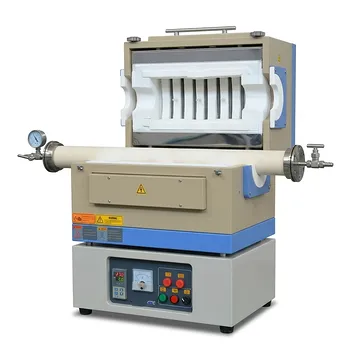
High Temperature 1600C Split Tube Furnace Vacuum Flanges Valves Optional 60mm 80mm Alumina Tube

High Temperature Automated 5 Inch Tube Furnace for Autonomous Material Research and Advanced Laboratory R&D
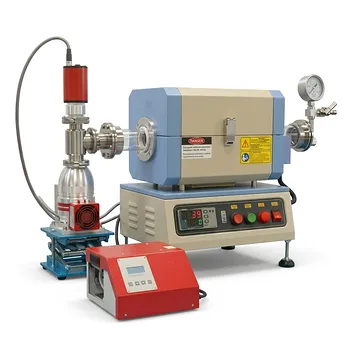
High Vacuum Compact Tube Furnace 1200C with Integrated Turbo Pump System and 8 Inch Heating Zone
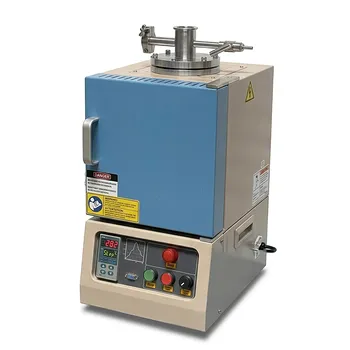
High Temperature Hybrid Muffle and Tube Furnace with Vacuum Capability and PID Control

1100°C High Temperature Quartz Chamber Furnace 8 Inch OD with 7.6 Liter Capacity and Vacuum Atmosphere Capability

1100C Tube Furnace with Vacuum Flange and Programmable Temperature Controller for Material Science and Industrial Heat Treatment
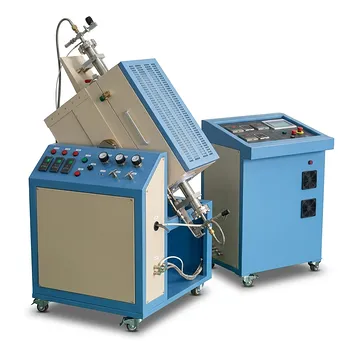
1100C High Pressure Rocking Tube Furnace with 2 Inch Super Alloy Processing Tube for Material Synthesis