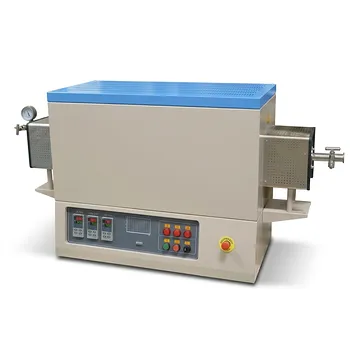
What are the advantages of a 3-zone vs single-zone tube furnace for Ga2O3 synthesis? Enhanced Precision Control
Updated 3 months ago
Precision temperature control is the defining advantage. A three-zone tube furnace allows researchers to independently manage distinct thermal stages—such as catalyst annealing and axial nanowire growth—providing a level of morphological control and thermal uniformity that a single-zone furnace cannot match.
The primary benefit of a three-zone configuration for $Ga_2O_3$ synthesis is the ability to decouple the heating profiles of the precursor, the catalyst, and the growth zone. This independence optimizes the coordination between catalyst alloying and nanowire crystallization, resulting in superior regularity and structural integrity.
Synchronizing Multi-Stage Thermal Processes
Decoupling Annealing and Growth Stages
In the synthesis of Gallium Oxide ($Ga_2O_3$) nanowires, different stages of the process require vastly different temperatures. A three-zone furnace allows for an independent annealing temperature (e.g., 400°C) to prepare the catalyst, followed by a separate growth temperature (e.g., 700°C to 860°C).
Optimizing Catalyst Alloying
The regularity of nanowire morphology depends heavily on how the catalyst interacts with the substrate. By independently controlling heating rates and soaking times across different zones, the furnace ensures that the catalyst alloys correctly before the growth phase begins.
Precise Control of Reaction Kinetics
The ability to set specific temperatures in each zone allows for the fine-tuning of precursor evaporation and transport. This ensures that the concentration of reactants reaching the substrate is consistent, preventing the erratic growth often seen in single-zone systems.
Achieving Thermal Uniformity and Stability
Expanding the Isothermal Zone
Single-zone furnaces often suffer from a narrow "sweet spot" where the temperature is actually at the set point. Three-zone furnaces use the outer heating elements to compensate for heat dissipation at the tube ends, creating a significantly longer and more stable isothermal zone.
Eliminating Diffusion Deviations
Uniform thermal fields are critical for ensuring that all nanowires across a large substrate experience the identical thermal history. This eliminates deviations in growth rates and ensures that the resulting material has consistent crystallinity and grain size.
Preheating Reactant Gases
The first zone of the furnace can be used to preheat carrier and reaction gases before they reach the growth site. This prevents cold spots from forming on the substrate, which is vital for maintaining high-purity $Ga_2O_3$ structures.
Understanding the Trade-offs
Increased System Complexity
The primary disadvantage of a three-zone furnace is the complexity of calibration. Operators must carefully synchronize three separate PID controllers to prevent thermal "overshoot" or interference between adjacent zones.
Higher Operational Costs
These units generally consume more power and have a higher initial capital cost than single-zone alternatives. For simple, small-scale experiments where a narrow constant-temperature zone is sufficient, the extra investment may not be justified.
Thermal Lag and Stabilization Time
Because the furnace is managing three distinct heat sources, it may take longer to reach a stable equilibrium. Changes made to one zone can inadvertently affect the temperature of the neighboring zone, requiring a more sophisticated understanding of thermal gradients.
How to Apply This to Your Project
Choosing the Right Tool for Your Goal
To determine if a three-zone furnace is necessary for your $Ga_2O_3$ synthesis, consider your primary objective and the scale of your material production.
- If your primary focus is high-yield uniformity: A three-zone furnace is essential to maintain a wide isothermal zone and ensure consistent nanowire morphology across large substrates.
- If your primary focus is complex multi-stage doping: Utilize the independent zones to create precise temperature gradients that regulate doping ratios and reaction kinetics more effectively.
- If your primary focus is rapid, low-cost screening: A single-zone furnace may be sufficient for small-sample testing where the thermal gradient at the tube ends does not interfere with the results.
Selecting a three-zone configuration transforms the furnace from a simple heat source into a precision instrument for controlling the delicate architecture of Gallium Oxide nanowires.
Summary Table:
| Feature | Single-Zone Tube Furnace | Three-Zone Tube Furnace |
|---|---|---|
| Temperature Control | Unified heating profile | Independent multi-zone management |
| Isothermal Zone | Narrow; prone to end-loss | Expanded, stable, and uniform |
| Thermal Stages | Single-stage heating only | Decoupled annealing & growth zones |
| Reaction Kinetics | Lower precision for precursors | High control over evaporation & transport |
| Best For | Rapid, low-cost screening | High-purity R&D and uniform production |
Elevate Your Research with THERMUNITS Precision Technology
Achieving the perfect morphology in Gallium Oxide (Ga2O3) nanowires requires the highest level of thermal stability. THERMUNITS is a leading manufacturer of high-temperature laboratory equipment, providing advanced solutions for material science and industrial R&D.
Our comprehensive range includes Tube (Single & Multi-zone), Vacuum, Atmosphere, and Rotary furnaces, as well as specialized CVD/PECVD systems and Vacuum Induction Melting (VIM) furnaces. We empower researchers to master complex thermal gradients and ensure consistent, high-yield results.
Ready to optimize your heat treatment process? Contact THERMUNITS today for a tailored solution
References
- Tổng hợp dây nano Ga2O3/GaAs(100) bằng phương pháp hơi lỏng rắn sử dụng xúc tác hạt nano Ag. DOI: 10.57001/huih5804.2024.091
Mentioned Products
- 5 Inch Three Zone Rotary Tube Furnace with Integrated Gas Delivery System and 1200C Capability for Advanced Material CVD Processing
- 24 Inch Three Zone Split Tube Furnace with Optional Quartz Tube and Vacuum Flange System for High Temperature Material Synthesis
- Three Zone Quartz Tube Furnace with 3 Channel Gas Mixer Vacuum Pump and Anti Corrosive Vacuum Gauge
- Three Zone Hydrogen Gas Tube Furnace with 82mm Superalloy Tube and Dual Hydrogen Detectors 1200C High Temperature Material Processing System
- 1200C Max Three Zone Tube Furnace 6 Inch OD Max with Tube and Flange
People Also Ask
- What is the primary function of a three-zone tube furnace in the synthesis process of corn-derived carbon nanotubes?
- Why Use a Three-Zone vs. Single-Zone Furnace for Fe-Ni-Cu Diffusion? Key Benefits for Lab Accuracy
- What role does an industrial-grade three-zone tube furnace play in VOx@VACNT synthesis? Precision Phase-State Control
- What advantages does a three-zone tube furnace offer for nanoparticle synthesis? Unlock Superior Thermal Precision.
- What is the core function of an industrial-grade three-zone tube furnace in MgCO3 layer formation?

Tech Team · ThermUnits
Last updated on Jun 02, 2026
Related Products

5 Inch Three Zone Rotary Tube Furnace with Integrated Gas Delivery System and 1200C Capability for Advanced Material CVD Processing
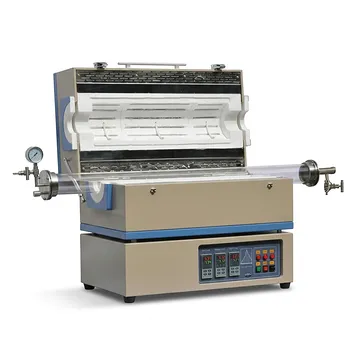
24 Inch Three Zone Split Tube Furnace with Optional Quartz Tube and Vacuum Flange System for High Temperature Material Synthesis
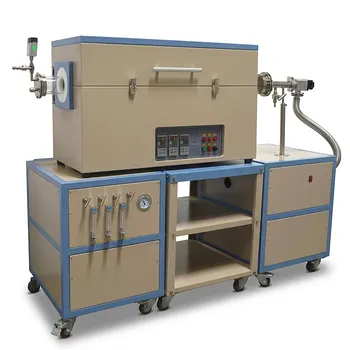
Three Zone Quartz Tube Furnace with 3 Channel Gas Mixer Vacuum Pump and Anti Corrosive Vacuum Gauge
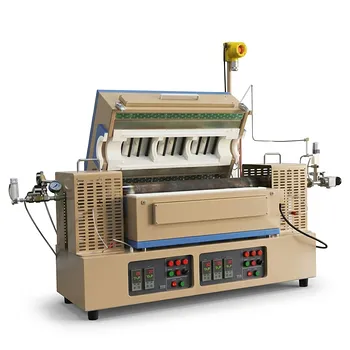
Three Zone Hydrogen Gas Tube Furnace with 82mm Superalloy Tube and Dual Hydrogen Detectors 1200C High Temperature Material Processing System
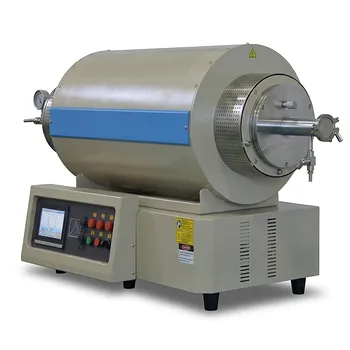
1200C Max Three Zone Tube Furnace 6 Inch OD Max with Tube and Flange
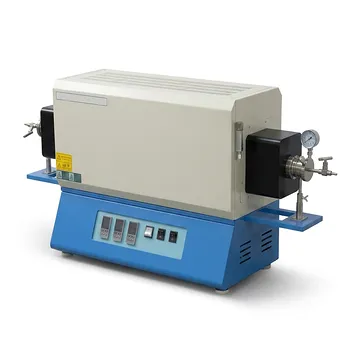
High Temperature Three Temperature Zone Tube Furnace for Advanced Material Science Sintering and Chemical Vapor Deposition Applications
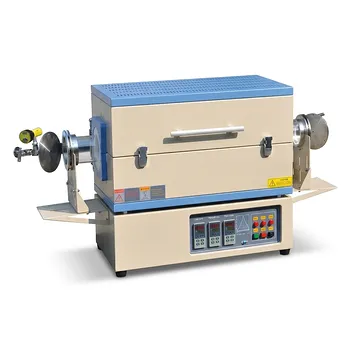
Three Zone Tube Furnace with 24 Inch Heating Length and Hinged Flange Quartz Tube System
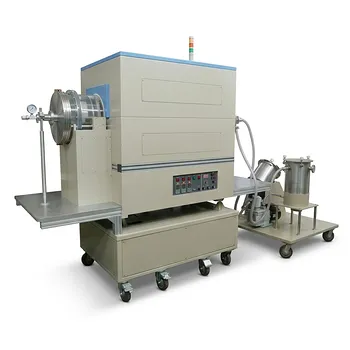
Three Zone Rotary Tube Furnace with Automatic Powder Feeding for Large Scale CVD Coating 1100C
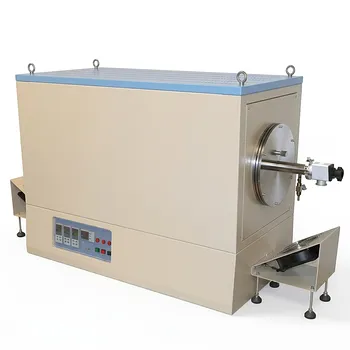
1100°C Three Zone Tube Furnace with 8.5 to 11 Inch OD Quartz Tube and Vacuum Flanges for Large Wafer Processing
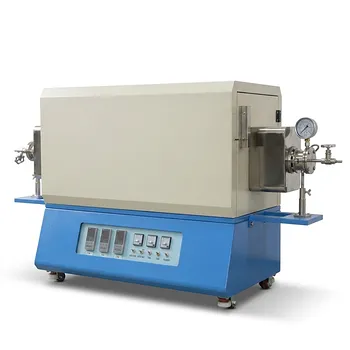
Three Temperature Zone High Temperature Vacuum Tube Furnace for CVD and Material Sintering
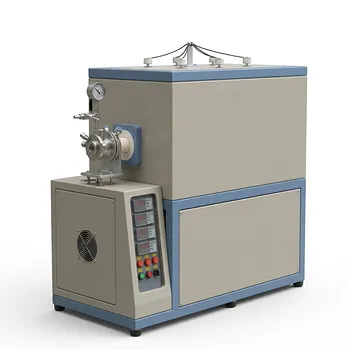
High Temperature 1700C Three Zone Tube Furnace with Alumina Tube 50mm 60mm 80mm OD for Material Research and Industrial Heat Treatment
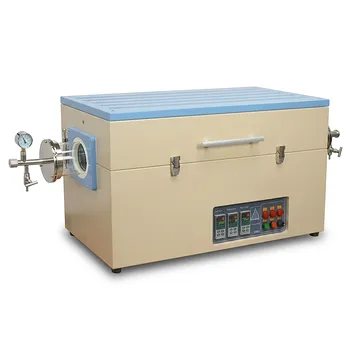
Three Zone Split Tube Furnace 36 Inch Heating Length High Temperature 1200C Material Research Furnace with Vacuum Flanges
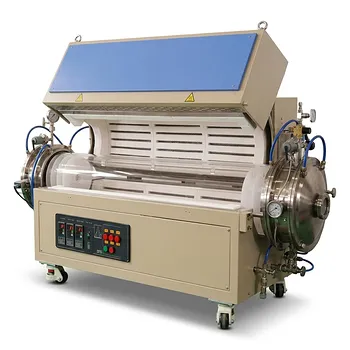
High Temperature Three Zone Split Tube Furnace 1200C Max 35.4 Inch Heating Length 8 Inch ID Tube
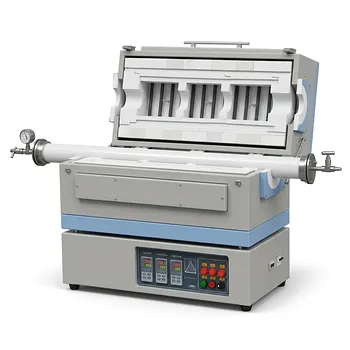
High Temperature 1500C Three Zone Split Tube Furnace with 80mm Alumina Tube and Vacuum Flange
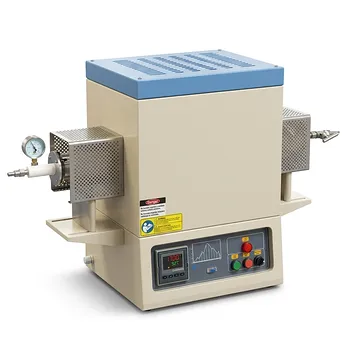
High Temperature Three Zone Tube Furnace 1700C with Alumina Tube and Water Cooled Flanges
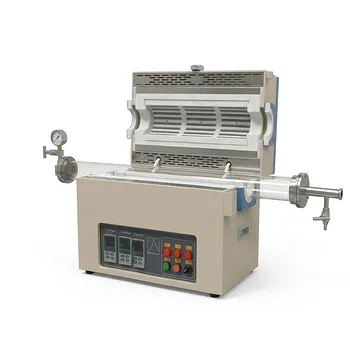
1200°C Three Zone Split Tube Furnace with 18 Inch Heating Length and Vacuum Flanges
Three Zone Heating Split Vertical Tube Furnace 1700 High Temperature Vacuum Atmosphere Thermal Process System

Three Zone Tube Furnace with 11 Inch or 15 Inch Quartz Tube and Hinged Flanges for Vacuum Atmosphere Heat Treatment
1600C Three Zone Split Tube Furnace with Alumina Tube and Vacuum Flange