Functions of tube furnaces in Bi SACs regulation? Precise Thermal Control for Atomic Architecture
Updated 3 months ago
The high-temperature tube atmosphere furnace serves as the primary instrument for atomic-level architecture in Bismuth Single-Atom Catalysts (Bi SACs). By providing a strictly controlled thermal range of 300°C to 900°C and a high-purity Argon (Ar) environment, the furnace dictates whether bismuth atoms coordinate with oxygen or nitrogen. This structural tuning is the decisive factor in determining if the final catalyst produces formic acid or carbon monoxide.
Core Takeaway: The tube furnace functions as a precision reactor that uses specific temperature gradients and inert gas protection to engineer the chemical bonding environment of bismuth atoms. This process transforms a precursor into a functional catalyst by selectively creating Bi-O or Bi-N active sites.
Precision Thermal Control of Coordination Spheres
Regulating Bi-O vs. Bi-N Coordination
The furnace provides the specific thermal energy required to break and form chemical bonds around the bismuth center. At lower temperatures within the 300°C to 900°C range, the environment favors the formation of bismuth-oxygen (Bi-O) coordination.
As the temperature increases, the furnace induces a transition, promoting the development of nitrogen (N) coordination environments. This systematic regulation allows researchers to "switch" the local atomic structure of the metal site by simply adjusting the furnace setpoint.
Facilitating Thermal Polycondensation
The tube furnace enables thermal polycondensation, a process where supramolecular precursors are heated to target temperatures (such as 600°C). This reaction is essential for firmly anchoring metal ions into the carbon-nitrogen lattice of the support.
By maintaining a precise heating rate (e.g., 5 °C/min), the furnace ensures that the precursor decomposes and rearranges in a controlled manner. This results in a stable, high-purity single-atom dispersion rather than unwanted metal clusters.
Atmosphere Management and Structural Integrity
Prevention of Active Site Oxidation
The rigorous sealing performance of the tube furnace is critical for maintaining an oxygen-free environment. Under the protection of inert gases like Argon (Ar), the furnace prevents the oxidation of active bismuth sites and carbon supports at high temperatures.
Without this strict atmosphere control, the bismuth atoms would likely form bulk oxides, destroying the "single-atom" nature of the catalyst. The furnace ensures that the chemical energy is spent on bonding with the substrate rather than reacting with ambient oxygen.
Carbonization and Support Synthesis
The furnace performs the dual role of carbonization and doping, converting organic precursors into conductive carbon-nitrogen (NC) or carbon nitride (PCN) supports. This creates the structural foundation necessary for high-loading single-atom catalysts.
The controlled environment also facilitates interface engineering, allowing for the diffusion and migration of atoms. This strengthens the physical connections within the catalyst support, enhancing electrical conductivity and chemical stability.
Understanding the Trade-offs
Temperature vs. Stability
While higher temperatures are necessary to form Bi-N bonds, excessive heat can lead to metal atom migration and aggregation. If the temperature exceeds the stability threshold of the support, the single atoms may coalesce into nanoparticles, significantly reducing the catalyst's mass activity.
Atmosphere Purity and Sealing Risks
The success of the synthesis is entirely dependent on the integrity of the furnace seals. Even minor oxygen leaks can lead to the formation of bismuth oxides or the premature combustion of the carbon lattice. Furthermore, the choice of inert gas (Argon vs. Nitrogen) can sometimes influence the final morphology of the nitrogen species in the substrate.
How to Apply This to Your Project
Achieving Specific Catalytic Goals
The configuration of your tube furnace should be dictated by the specific electrochemical reaction you intend to facilitate. The coordination environment directly determines the pathway the catalyst will take.
- If your primary focus is Formic Acid production: Operate the furnace at the lower end of the effective temperature range to promote a Bi-O coordination environment.
- If your primary focus is Carbon Monoxide (CO) production: Utilize higher annealing temperatures (approaching 900°C) to induce the formation of Bi-N coordination sites.
- If your primary focus is High Electrical Conductivity: Ensure a strict oxygen-free Ar flow and higher carbonization temperatures to maximize the graphitization of the carbon support.
By masterfully controlling the thermal energy and chemical atmosphere within the tube furnace, you can precisely engineer the atomic identity of bismuth catalysts to meet specific industrial needs.
Summary Table:
| Core Function | Technical Mechanism | Strategic Catalytic Benefit |
|---|---|---|
| Thermal Regulation | 300°C–900°C precise gradients | Switches coordination between Bi-O (Formic Acid) and Bi-N (CO) |
| Atmosphere Management | High-purity Argon (Ar) & rigorous sealing | Prevents oxidation; ensures single-atom dispersion over clusters |
| Thermal Polycondensation | Controlled heating rates (e.g., 5°C/min) | Anchors bismuth ions into carbon-nitrogen lattices for stability |
| Interface Engineering | Carbonization and doping control | Maximizes electrical conductivity and structural foundation |
Optimize Your Catalyst Synthesis with THERMUNITS
Precision is the difference between single-atom success and bulk-oxide failure. THERMUNITS is a leading manufacturer of high-temperature laboratory equipment specifically designed for material science and industrial R&D. We empower your research with specialized thermal solutions, including Atmosphere, Tube, Vacuum, and CVD/PECVD furnaces, ensuring the rigorous sealing and thermal stability required for Bi SACs architecture.
Whether your project involves Muffle, Rotary, or Hot Press furnaces, or requires advanced Vacuum Induction Melting (VIM) technology, our equipment delivers the exact thermal gradients and atmosphere purity your laboratory needs.
Ready to achieve superior heat treatment for your materials?
Contact our technical team today to find your solution!
References
- Saswati Santra, Ian D. Sharp. Tuning Carbon Dioxide Reduction Reaction Selectivity of Bi Single‐Atom Electrocatalysts with Controlled Coordination Environments. DOI: 10.1002/cssc.202301452
Mentioned Products
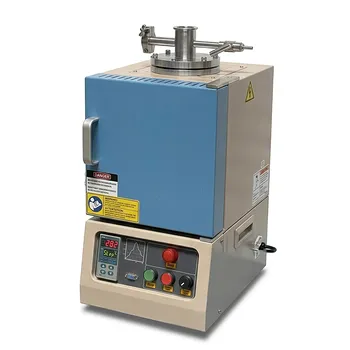
- 1750°C High Temperature Benchtop Vacuum Atmosphere Tube Furnace with Kanthal Super 1800 Heating Elements and 60mm Alumina Processing Tube
- 1700C High Temperature Alumina Tube Furnace with 18 Inch Heated Zone and Vacuum Sealing Flanges
- High Temperature 1200C Split Tube Furnace for CVD Research and Vacuum Atmosphere Heat Treatment
- High Temperature Vertical Atmosphere Controlled Furnace with Automatic Bottom Loading and 1700°C Capacity for Advanced Material Research
- Vertical 1700C Vacuum and Atmosphere Tube Furnace with 80mm Alumina Tube
People Also Ask
- What core functions does a high-temperature vacuum tube furnace provide? Optimize np-CuSn Sintering & Joint Integrity
- What is the role of a high-temperature tube furnace in the calcination process of ZnO/In2O3 nanocomposites?
- What role does a high-temperature tube furnace play in the sulfidation heat treatment of CoS@C/MXene nanocomposites? Guide
- Why is a high-temperature tube furnace required for CuAlO2 heat treatment? Master Phase Transformation Today
- What role does a high-temperature tube furnace play in executing nitrogen absorption kinetic experiments? Expert Insights

Tech Team · ThermUnits
Last updated on Jun 03, 2026
Related Products

1750°C High Temperature Benchtop Vacuum Atmosphere Tube Furnace with Kanthal Super 1800 Heating Elements and 60mm Alumina Processing Tube
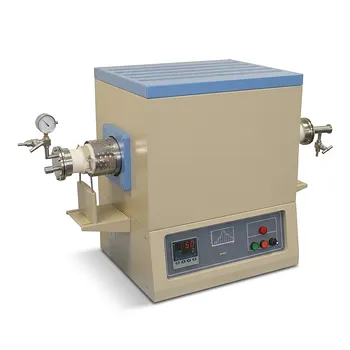
1700C High Temperature Alumina Tube Furnace with 18 Inch Heated Zone and Vacuum Sealing Flanges
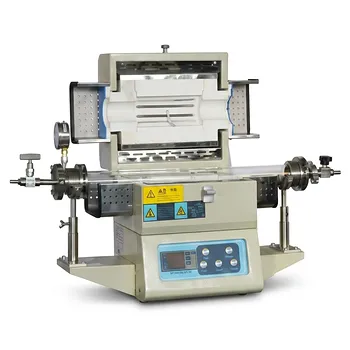
High Temperature 1200C Split Tube Furnace for CVD Research and Vacuum Atmosphere Heat Treatment
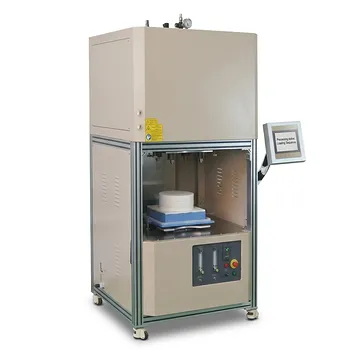
High Temperature Vertical Atmosphere Controlled Furnace with Automatic Bottom Loading and 1700°C Capacity for Advanced Material Research

Vertical 1700C Vacuum and Atmosphere Tube Furnace with 80mm Alumina Tube
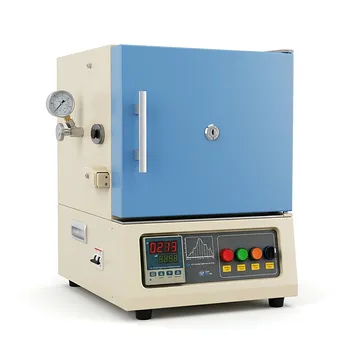
1200C Hybrid Muffle and Tube Furnace for Material Research with Dual Atmosphere Control Quartz Tubes
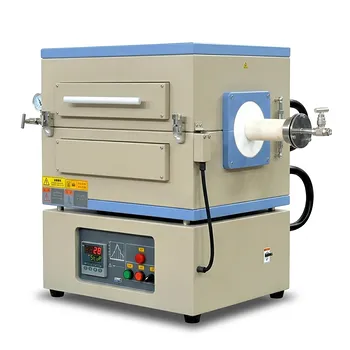
1500°C Split Tube Furnace with Alumina Tube and Vacuum Sealing Flanges for Material Research
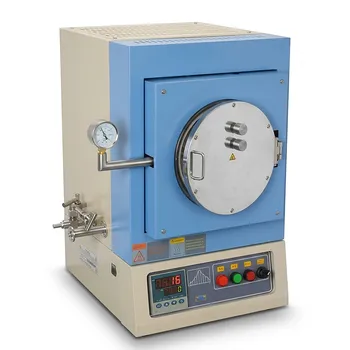
1100°C High Temperature Quartz Chamber Furnace 8 Inch OD with 7.6 Liter Capacity and Vacuum Atmosphere Capability
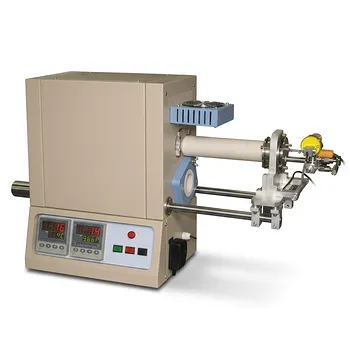
High Temperature Tube Furnace 1500C with Sliding Flanges and 50mm OD for Rapid Thermal Processing Fast Heating and Cooling

High Temperature 1700C Tube Furnace with High Vacuum Turbomolecular Pump System and Multi Channel Mass Flow Controller Gas Mixer

Compact High Temperature 1600C Tube Furnace with 50mm Alumina Tube and Vacuum Flanges for Material Sintering

High Temperature 1700C Vertical Tube Furnace for Powder Spherification and Material Sintering

High Temperature 1700C Benchtop Tube Furnace with 5 Inch Heating Zone High Purity Alumina Tube and Vacuum Sealing Flanges
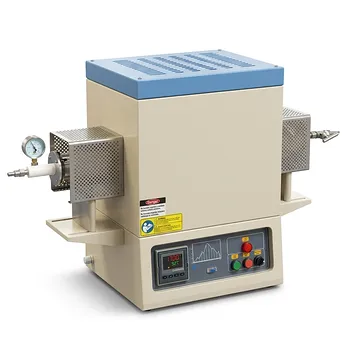
High Temperature Three Zone Tube Furnace 1700C with Alumina Tube and Water Cooled Flanges

High Temperature 1700C Six Zone Split Tube Furnace with Alumina Tube and Water Cooled Flanges

1800C High Temperature Compact Vacuum Tube Furnace with 60mm OD Alumina Tube and Kanthal MoSi2 Heating Elements

High Temperature Automated 5 Inch Tube Furnace for Autonomous Material Research and Advanced Laboratory R&D
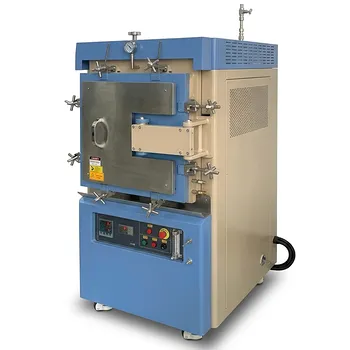
Atmosphere Controlled Muffle Furnace 1700C Maximum Temperature 80L High Capacity Vacuum Inert Gas Box Furnace
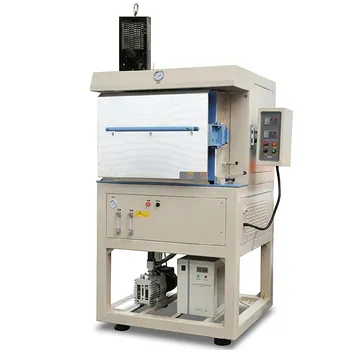
1200C Hydrogen Atmosphere Box Furnace with 5 Heated Sides and 64L Chamber