What are the core functions of a tube furnace in VACNT growth? Optimize CVD for High-Quality Carbon Nanotubes
Updated 3 months ago
The industrial-grade tube furnace serves as the foundational reactor for the synthesis of Vertically Aligned Carbon Nanotubes (VACNTs).
It provides the highly stable, high-temperature environment—typically around 700 °C—and the precise gas delivery systems required for Chemical Vapor Deposition (CVD). By strictly controlling the thermal decomposition of carbon sources and the atmospheric composition, the furnace facilitates both the initial catalyst nucleation and the subsequent directional vertical growth of the nanotubes.
The core function of the tube furnace is to provide a synchronized thermal and atmospheric field that transforms a precursor gas into a solid, ordered nanostructure. It acts as both a precision heater and a chemical reactor, ensuring the structural integrity and vertical orientation of the carbon nanotubes.
Providing the Thermal Foundation for Reaction
Maintaining Stable High-Temperature Zones
The primary role of the furnace is to provide a constant thermal field, often between 700 °C and 973 K, as required for the CVD process. This stable heat is the energy source necessary for the thermal decomposition of carbon-containing gases like acetylene (C2H2).
Controlling Heating and Cooling Rates
Precise control over the heating rate (e.g., 6 °C/min) and holding times is critical for the structural "self-repair" of nanotubes. This regulation prevents the formation of amorphous carbon and ensures the nanotubes achieve high structural quality and electrical conductivity.
Facilitating Uniform Heating in Large Volumes
Industrial-grade furnaces are designed with large heating volumes to transition from microscopic experiments to batch production. This ensures that substrates, which may be tens of centimeters long, experience uniform thermal conditions across their entire surface.
Managing the Chemical Environment
Regulating Multi-Gas Flow Ratios
The furnace integrated with mass flow controllers manages the precise injection of gases such as Argon (Ar), Hydrogen (H2), and Acetylene (C2H2). The ratios of these gases determine the growth rate, yield, and morphology of the VACNTs by balancing the reducing environment with the carbon source concentration.
Establishing a Reducing Atmosphere
Before growth begins, the furnace facilitates the nucleation of the catalyst layer under a reducing atmosphere (often containing H2). This process prepares the catalyst nanoparticles on the substrate, allowing them to serve as active sites for carbon deposition.
Ensuring Oxygen-Free Sealing
High-performance sealing is essential to maintain an oxygen-free environment within the reaction tube. This prevents the oxidation of the carbon structures and the substrate, ensuring that the resulting nanotubes maintain their chemical stability and intended mechanical properties.
Influencing Growth Morphology and Alignment
Guiding Directional Vertical Growth
By providing a stable thermal environment and managing laminar gas flow, the furnace ensures that carbon atoms deposit uniformly onto the catalyst particles. This specific alignment of forces and temperatures causes the nanotubes to push against each other, forcing them to grow vertically off the substrate.
Cracking and Crystallization Sites
The furnace provides the thermodynamic conditions required for the Boudouard reaction or the disproportionation of carbon monoxide into solid carbon. This allows carbon atoms to diffuse into catalyst particles and precipitate as ordered, multi-walled or single-walled structures.
Support for Long-Dimension Substrates
Horizontal tube furnace layouts are particularly advantageous for the placement of long substrates. This orientation helps maintain stable gas flow patterns across the substrate, which is a prerequisite for growing ultra-long and uniformly aligned nanotubes.
Understanding the Trade-offs and Pitfalls
Temperature Uniformity vs. Throughput
As furnace size increases for industrial batch production, maintaining thermal uniformity becomes more challenging. Temperature gradients at the edges of the heating zone can lead to variations in nanotube height and density across a single batch.
Contamination and Oxygen Leaks
Even minor leaks in the furnace seals can introduce oxygen, which poison the catalyst or etch the carbon nanotubes during growth. Maintaining a high vacuum or high-purity inert atmosphere is energy-intensive but non-negotiable for high-quality VACNTs.
Catalyst Deactivation
Excessive temperatures or prolonged exposure to the carbon source can lead to catalyst sintering or encapsulation by amorphous carbon. The furnace must be capable of rapid transitions or precise cooling to stop the growth process before the catalyst loses its activity.
How to Apply This to Your Project
Recommendations for Equipment Selection
- If your primary focus is Research and Development: Prioritize a furnace with high temperature precision and the ability to handle multiple gas inputs (Ar, H2, C2H2) to experiment with different growth kinetics.
- If your primary focus is Batch Production: Invest in a furnace with a large uniform heating zone and high-capacity vacuum systems (10⁻³ mbar) to ensure consistency across large substrate areas.
- If your primary focus is Material Purity: Select a furnace with superior sealing performance and quartz reaction tubes to minimize potential metallic contamination and oxygen infiltration.
The industrial-grade tube furnace remains the indispensable tool for turning gaseous precursors into the highly ordered, vertically aligned carbon architectures essential for modern nanotechnology applications.
Summary Table:
| Core Function | Key Mechanism | Impact on VACNT Quality |
|---|---|---|
| Thermal Foundation | Stable 700°C & precise ramp rates | Ensures uniform catalyst nucleation & structural integrity |
| Gas Management | Multi-gas (Ar, H2, C2H2) flow ratios | Controls growth rates, density, and morphology |
| Atmosphere Control | High-performance vacuum & sealing | Prevents oxygen poisoning and nanotube oxidation |
| Flow Dynamics | Laminar gas flow across substrates | Drives directional vertical alignment and batch consistency |
Elevate Your Nanotechnology Research with THERMUNITS
Precise thermal control is the backbone of successful VACNT synthesis. As a leading manufacturer of high-temperature laboratory equipment, THERMUNITS provides state-of-the-art Tube furnaces, CVD/PECVD systems, and Vacuum Atmosphere furnaces designed specifically for the rigorous demands of material science and industrial R&D.
Whether you are focusing on microscopic catalyst experiments or large-scale batch production, our equipment ensures superior temperature uniformity and atmospheric purity.
Ready to optimize your carbon nanotube growth?
Contact our technical team today to discuss custom thermal solutions for your laboratory.
References
- Matías Picuntureo, Samuel A. Hevia. The Synthesis of Sponge-like V2O5/CNT Hybrid Nanostructures Using Vertically Aligned CNTs as Templates. DOI: 10.3390/nano14020211
Mentioned Products
- High Temperature 1700C Vertical Split Tube Furnace for Material Quenching and Single Crystal Growth
- 1100C Tube Furnace with Vacuum Flange and Programmable Temperature Controller for Material Science and Industrial Heat Treatment
- Dual Tube 100mm 80mm CVD Sliding Furnace with 4 Channel Gas Mixing and Vacuum System
- High Temperature Dual Zone Vacuum Tube Furnace for Material Research and CVD Processing
- High Temperature 1100C Compact Top Loading Vertical Vacuum Tube Furnace for High Vacuum Noble Metal Melting and Material Research
People Also Ask
- What is the primary function of a high-temperature split tube furnace in nitrogen metastable particle research? Expert Guide
- What role does a high-temperature vertical tube furnace play in simulating high-carbon ferromanganese slag formation?
- Why integrate a vertical split tube furnace with hydraulic loading for HSECC? Essential for In-Situ Fire Simulation.
- What functions does a vertical high-temperature tube furnace perform? Master Industrial Sintering & R&D Simulation
- What is the role of a split vertical tube furnace during flash sintering of 8YSZ and 20SDC? Master Ultra-Fast R&D

Tech Team · ThermUnits
Last updated on Jun 03, 2026
Related Products
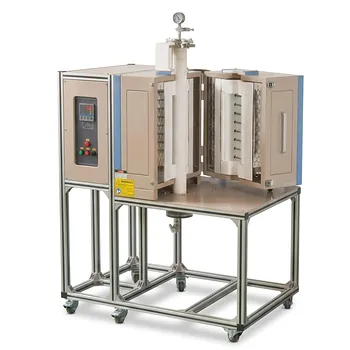
High Temperature 1700C Vertical Split Tube Furnace for Material Quenching and Single Crystal Growth
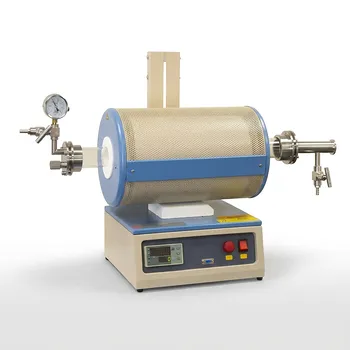
1100C Tube Furnace with Vacuum Flange and Programmable Temperature Controller for Material Science and Industrial Heat Treatment
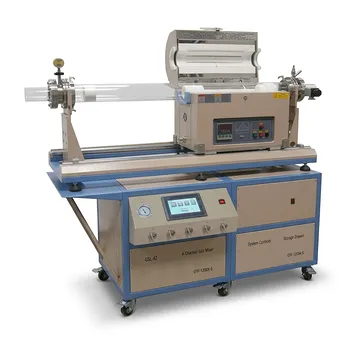
Dual Tube 100mm 80mm CVD Sliding Furnace with 4 Channel Gas Mixing and Vacuum System
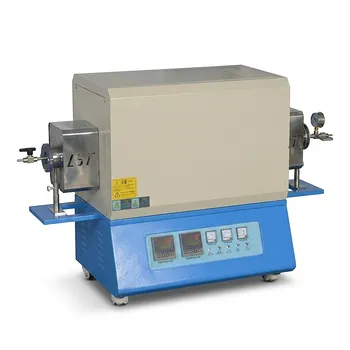
High Temperature Dual Zone Vacuum Tube Furnace for Material Research and CVD Processing
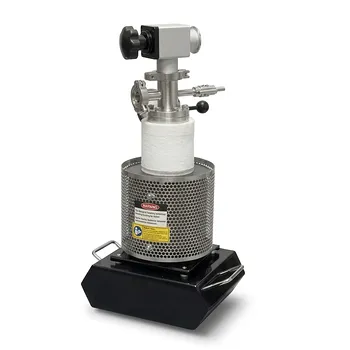
High Temperature 1100C Compact Top Loading Vertical Vacuum Tube Furnace for High Vacuum Noble Metal Melting and Material Research
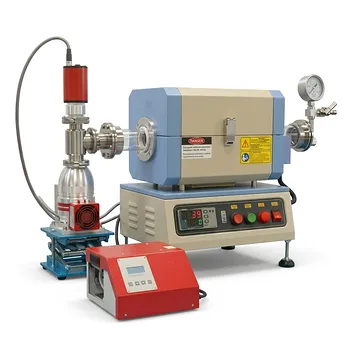
High Vacuum Compact Tube Furnace 1200C with Integrated Turbo Pump System and 8 Inch Heating Zone

High Temperature 1700C Vertical Tube Furnace for Powder Spherification and Material Sintering

Compact Vertical Split Quartz Tube Furnace with Stainless Steel Vacuum Flanges for Rapid Thermal Quenching and Controlled Atmosphere Material Processing
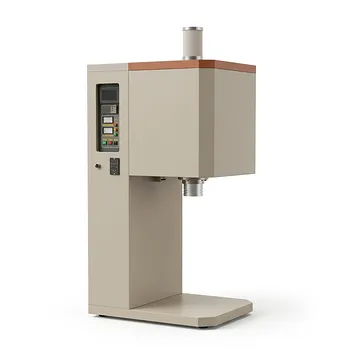
Vertical Openable Tube Furnace 0-1700c High Temperature Laboratory System for CVD and Vacuum Heat Treatment

Vertical 1700C Vacuum and Atmosphere Tube Furnace with 80mm Alumina Tube

High Temperature Automated 5 Inch Tube Furnace for Autonomous Material Research and Advanced Laboratory R&D
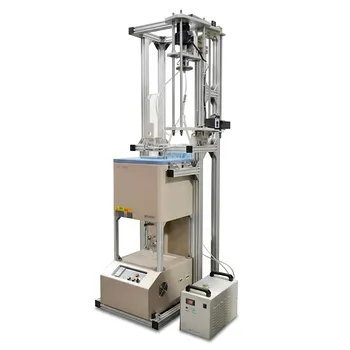
500C Vacuum Vertical Tube Furnace 84mm OD Sample Rotation Lifting System
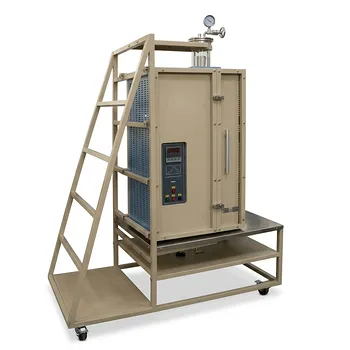
Split Vertical Tube Furnace with 1200C Quartz Tube and Stainless Steel Vacuum Flanges for Rapid Thermal Processing
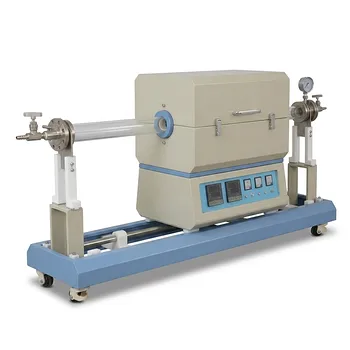
Double Zone Fast Heating Tube Furnace High Temperature Vacuum Atmosphere System
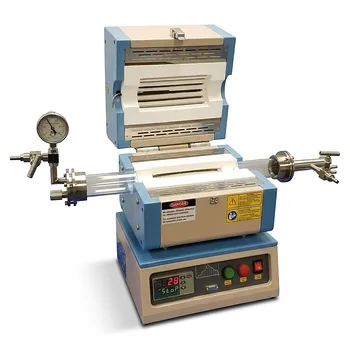
Compact Split Tube Furnace with Integrated Vacuum System and Precision Temperature Calibrator
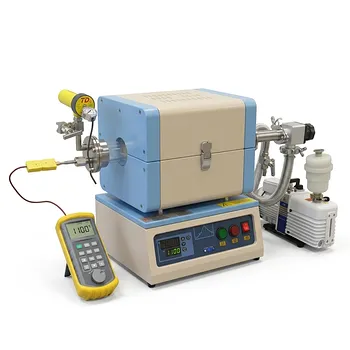
Compact Split Tube Furnace with Insertable Temperature Calibrator and Integrated Vacuum System
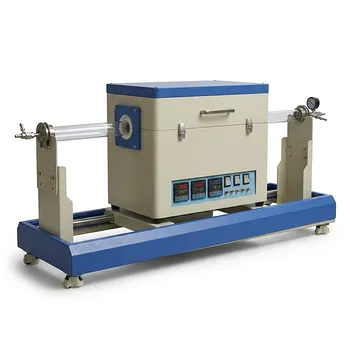
Double Temperature Zone Double Cover Tube Furnace for High Temperature CVD and Vacuum Annealing

1800C High Temperature Compact Vacuum Tube Furnace with 60mm OD Alumina Tube and Kanthal MoSi2 Heating Elements
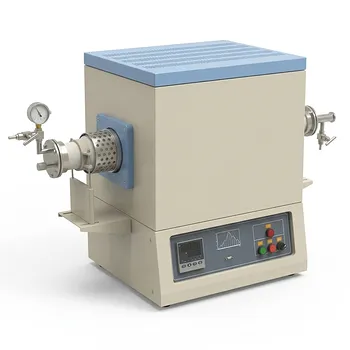
1750°C High Temperature Benchtop Vacuum Atmosphere Tube Furnace with Kanthal Super 1800 Heating Elements and 60mm Alumina Processing Tube
