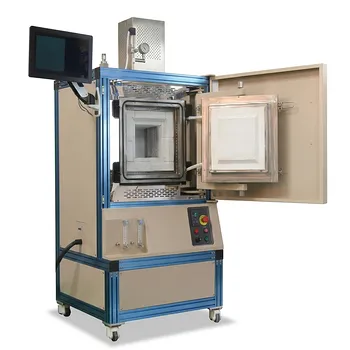
What are the economic benefits of using a tube furnace with integrated atmosphere control? Save Energy & Boost Yield
Updated 3 months ago
Integrated tube furnace technology revolutionizes thermal processing by merging multiple stages into a single, continuous cycle. By eliminating the need for a secondary reheating phase (above 1,000°C) and subsequent water quenching, these systems significantly slash energy consumption and operational costs. The primary economic advantage stems from a shorter production cycle and the reduction of material waste through enhanced process stability and atmospheric control.
Core Takeaway: Transitioning to an integrated tube furnace eliminates the logistical and energy overhead of multi-step solution treatments. This consolidation maximizes throughput and minimizes material loss by providing a controlled environment that ensures precise microstructural outcomes.
The Efficiency of Process Consolidation
Eliminating the Reheating Cycle
Traditional solution treatments require reheating materials to temperatures exceeding 1,000°C after initial processing. An integrated tube furnace allows for sintering, nitriding, and microstructural optimization to occur in a single thermal cycle. This direct progression removes the massive energy demand required to bring cold materials back to extreme temperatures.
Shortening the Production Timeline
By combining multiple thermal steps, the overall production cycle is drastically compressed. Reducing the time each component spends in the furnace increases total facility throughput without expanding the physical footprint of the operation. This temporal efficiency translates directly into lower labor costs per unit and faster time-to-market.
Mitigation of Water Quenching Risks
Traditional processes often rely on water quenching, which introduces thermal shock and the risk of structural deformation or cracking. Integrated cooling control allows for a managed temperature decline, improving the production stability of large-sized components. Reducing the scrap rate of these high-value parts provides a significant boost to the bottom line.
Operational Cost Reduction Through Precision
Superior Atmospheric Integrity
The sealed environment of a tube furnace prevents contamination from oxygen and moisture, which often plagues traditional open-air or box furnace treatments. By maintaining high vacuum or inert gas environments (Argon/Nitrogen), manufacturers avoid the cost of reworking or discarding oxidized materials. This precision ensures that functional characteristics are met on the first pass.
Precise Control of Gas Dynamics
Tube furnaces utilize their elongated reaction space to establish stable temperature gradients and dynamic gas flow environments. This allows for the precise management of residence time and flow direction for reaction gases. Such control is vital for high-value applications, such as inhibiting the coarsening of nanoparticles to ensure a narrow size distribution.
Preservation of High-Value Precursors
In specialized applications like catalyst production, precise temperature and atmosphere control prevent the over-sintering of active metal particles. By preserving active sites and ensuring high dispersion of metallic components, manufacturers maximize the efficiency of expensive materials like Platinum. This precision reduces the volume of raw materials required to achieve specific performance benchmarks.
Understanding the Trade-offs
Initial Capital Expenditure
The primary hurdle for many operations is the higher initial investment required for integrated tube furnaces compared to standard box furnaces or quenching tanks. These systems require sophisticated gas handling manifolds, vacuum pumps, and advanced programmable controllers. However, this CAPEX is typically recovered through lower OPEX and higher yields over the equipment's lifecycle.
Maintenance and Sealing Complexity
Maintaining the integrity of the vacuum seals and the furnace tube itself requires specialized training and regular schedules. Unlike traditional kilns, a minor leak in a tube furnace can compromise the entire batch by allowing oxygen ingress. Operators must weigh the increased maintenance rigor against the benefits of atmospheric purity.
Scaling Constraints
While tube furnaces offer unparalleled precision, their physical volume is naturally limited by the dimensions of the ceramic or quartz tube. For massive industrial batches of low-margin parts, the throughput of a large-scale traditional solution treatment facility might still offer better economies of scale. Tube furnaces are best suited for high-precision, high-value components where quality is paramount.
How to Apply This to Your Project
Making the Right Choice for Your Goal
- If your primary focus is reducing energy overhead: Prioritize an integrated furnace that combines sintering and optimization into one cycle to eliminate reheating.
- If your primary focus is producing large-scale structural components: Focus on systems with programmable cooling control to replace risky water quenching steps and reduce scrap rates.
- If your primary focus is nanomaterial or catalyst synthesis: Invest in a horizontal tube furnace with advanced atmosphere transformation to prevent particle coarsening and ensure high dispersion.
- If your primary focus is high-purity chemical reduction: Utilize a system that supports high-vacuum or reducing gas mixtures (like 5% Hydrogen) to prevent re-oxidation of the final product.
By integrating atmosphere and cooling controls, you transform a simple heating element into a precision instrument that protects material integrity while drastically lowering operational waste.
Summary Table:
| Feature | Traditional Solution Treatment | Integrated Tube Furnace | Economic Impact |
|---|---|---|---|
| Energy Use | Requires multi-stage reheating (>1,000°C) | Single, continuous thermal cycle | Significant Energy Savings |
| Process Time | Multiple steps with cooling/reheating | Consolidated processing stages | Higher Throughput |
| Cooling Method | High-risk water quenching | Managed, programmable cooling | Lower Scrap/Waste Rates |
| Atmosphere | Risk of oxidation/contamination | Sealed vacuum or inert gas | Reduced Rework Costs |
| Material Quality | Potential for coarse microstructures | Precise particle/phase control | Higher Value End-Products |
Maximize Your Thermal Processing Efficiency with THERMUNITS
Are you looking to reduce operational overhead and improve material consistency? THERMUNITS is a leading manufacturer of high-temperature laboratory equipment specifically designed for material science and industrial R&D. We offer a comprehensive suite of thermal solutions, including Tube, Vacuum, Atmosphere, Muffle, Rotary, and Hot Press furnaces, as well as advanced CVD/PECVD systems, Dental Furnaces, and Vacuum Induction Melting (VIM) furnaces.
By choosing our integrated technology, you can eliminate redundant heating cycles and safeguard your high-value materials from oxidation. Contact our technical team today to find the perfect thermal processing solution tailored to your specific research or production goals. Let us help you achieve superior precision and economic performance.
References
- Weipeng Zhang, Zhengwu Peng. Achieving Homogeneous Microstructure and Superior Properties in High-N Austenitic Stainless Steel via a Novel Atmosphere-Switching Method. DOI: 10.3390/met14070795
Mentioned Products
- 1200°C Atmosphere Controlled Automatic Bottom Loading Furnace with 6 Inch Quartz Tube
- Compact Vertical Split Quartz Tube Furnace with Stainless Steel Vacuum Flanges for Rapid Thermal Quenching and Controlled Atmosphere Material Processing
- Compact Hybrid Muffle and Tube Furnace for 1000C Controlled Atmosphere Laboratory Material Sintering
- Three Temperature Zone Rotating Tube Furnace for Material Sintering and Controlled Atmospheric Heat Treatment
- High Temperature Tilting Rotary Tubular Furnace for Continuous Powder Thermal Processing and Controlled Atmosphere Sintering
People Also Ask
- Why is a tube furnace required for FGM-PhG structural color ceramics? Key to Carbon Preservation & Vibrant Color
- Why is an atmosphere-controlled tube furnace required for the pre-sulfidation of NiMo/gamma-Al2O3 catalysts?
- Why is an atmosphere-controlled tube furnace required for 800 °C CNF annealing? Essential for Oxidative Protection.
- Why is an atmosphere-controlled tube furnace required for [email protected]/C preparation? Key for Purity & Structure
- Why is an atmosphere-controlled tube furnace required for single-atom sensor calcination? Ensure Atomic Dispersion.

Tech Team · ThermUnits
Last updated on Jun 03, 2026
Related Products
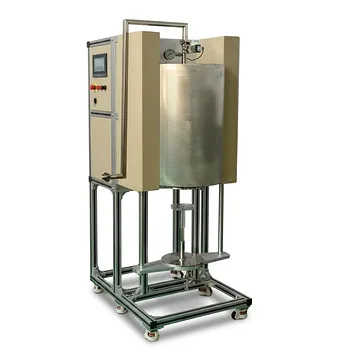
1200°C Atmosphere Controlled Automatic Bottom Loading Furnace with 6 Inch Quartz Tube
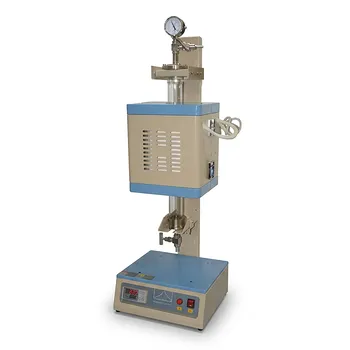
Compact Vertical Split Quartz Tube Furnace with Stainless Steel Vacuum Flanges for Rapid Thermal Quenching and Controlled Atmosphere Material Processing
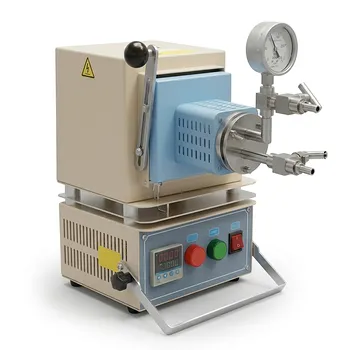
Compact Hybrid Muffle and Tube Furnace for 1000C Controlled Atmosphere Laboratory Material Sintering
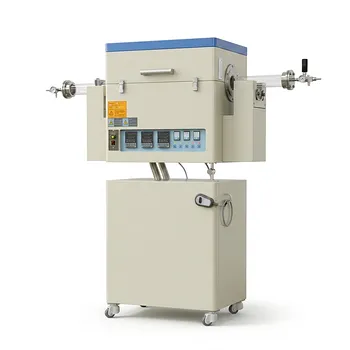
Three Temperature Zone Rotating Tube Furnace for Material Sintering and Controlled Atmospheric Heat Treatment
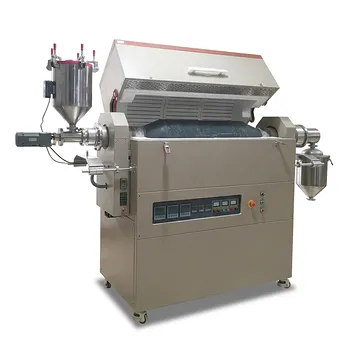
High Temperature Tilting Rotary Tubular Furnace for Continuous Powder Thermal Processing and Controlled Atmosphere Sintering
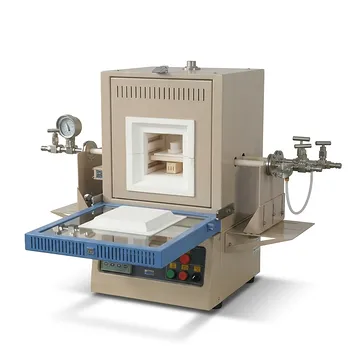
1700C Compact Hybrid Furnace with Dual Layer Box Sintering and Controlled Atmosphere Alumina Tubes
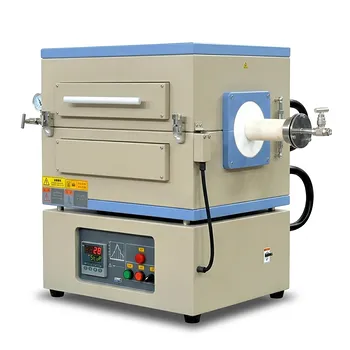
1500°C Split Tube Furnace with Alumina Tube and Vacuum Sealing Flanges for Material Research

1700C High Temperature Alumina Tube Furnace with 18 Inch Heated Zone and Vacuum Sealing Flanges
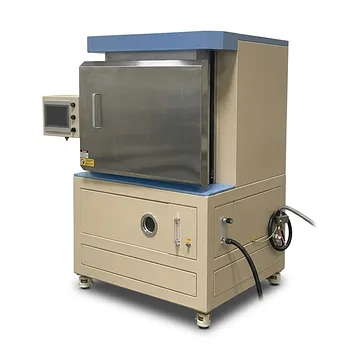
1650C High Temperature Atmosphere Controlled Box Furnace with 65L Chamber for Advanced Material Sintering and Industrial Heat Treatment

Vertical 1700C Vacuum and Atmosphere Tube Furnace with 80mm Alumina Tube
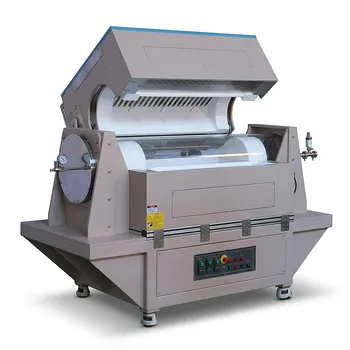
Three Zone Tube Furnace with 11 Inch or 15 Inch Quartz Tube and Hinged Flanges for Vacuum Atmosphere Heat Treatment
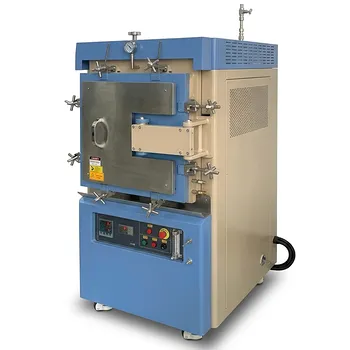
Atmosphere Controlled Muffle Furnace 1700C Maximum Temperature 80L High Capacity Vacuum Inert Gas Box Furnace
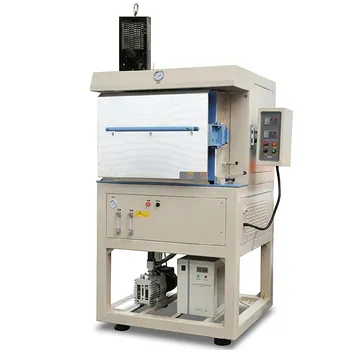
1200C Hydrogen Atmosphere Box Furnace with 5 Heated Sides and 64L Chamber
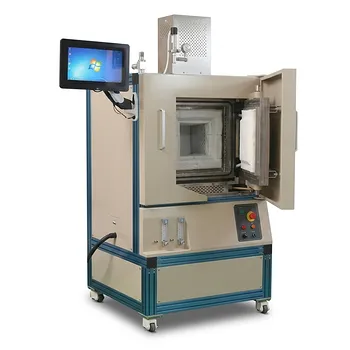
High Temperature Oxygen and Inert Atmosphere Controlled Furnace 8 Liter 1700C Sintering System for Advanced Materials RD
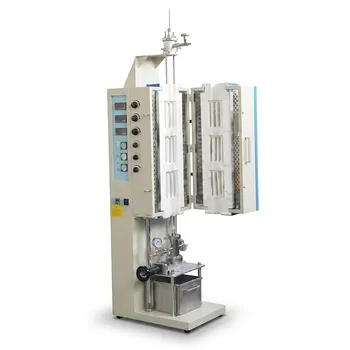
High Temperature Dual Zone Tube Furnace for Material Science Research and Professional Thermal Processing

High Temperature 1700C Tube Furnace with High Vacuum Turbomolecular Pump System and Multi Channel Mass Flow Controller Gas Mixer
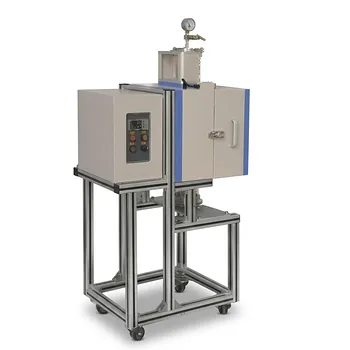
1200°C 5 Inch Vertical Quartz Tube Furnace with Stainless Steel Vacuum Flanges
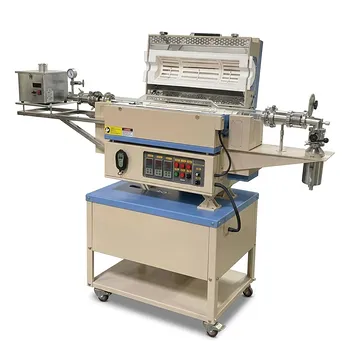
5 Inch Rotary Tube Furnace with Automatic Feeding and Receiving System 1200C Three Zone CVD Powder Processing
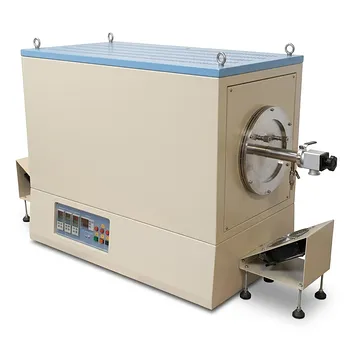
Four Zone Tube Furnace 1100C with 600mm Large Diameter Quartz Tube and Vacuum Flanges