What are the primary functions of high-purity argon (Ar) in 2D alpha-Ga2Se3 deposition? Enhance Your Material Quality
Updated 3 months ago
High-purity argon (Ar) functions as both a stable delivery vehicle and a chemical shield in the vapor deposition of two-dimensional (2D) $\alpha$-Ga$_2$Se$_3$. Its primary roles are to transport sublimated precursor vapors to the deposition substrate at a controlled rate and to exclude oxygen and moisture from the reaction chamber. This dual functionality ensures that the synthesized crystals maintain high structural integrity and are free from high-temperature oxidation.
Core Takeaway: Argon serves as a critical process regulator that balances the physical delivery of reactants with the chemical isolation of the growth environment. By controlling the flow and purity of this inert gas, researchers can precisely dictate the nucleation density and final quality of the 2D $\alpha$-Ga$_2$Se$_3$ crystals.
Precision Transport and Kinetic Control
Stable Delivery of Sublimated Precursors
Argon acts as the physical medium that carries gaseous species from the high-temperature sublimation zone to the cooler deposition area. It ensures that the vaporized gallium and selenium precursors reach the substrate in a consistent, predictable flux.
Regulation of Nucleation and Growth Rate
By precisely adjusting the argon flow rate, practitioners can control the concentration distribution of reactants near the substrate surface. This control directly influences the nucleation density and the lateral growth rate, which are vital for achieving large-scale, highly oriented 2D frameworks.
Facilitating Byproduct Removal
As the reaction proceeds, argon helps sweep away any volatile byproducts or unreacted species from the deposition zone. This continuous purging prevents the accumulation of contaminants that could interfere with the crystallization process or degrade the material’s electronic properties.
Maintaining a Controlled Reaction Environment
Exclusion of Atmospheric Contaminants
High-purity argon is used to purge the system of oxygen and moisture before and during the heating process. Creating this oxygen-free environment is essential to prevent the unwanted oxidation of precursors and the resulting $\alpha$-Ga$_2$Se$_3$ crystals at elevated temperatures.
Establishing Pressure Equilibrium
Argon is utilized to maintain atmospheric pressure balance within the reaction furnace. This stability prevents the disordered diffusion of gas-phase components, ensuring that the growth of the 2D island structures remains uniform across the substrate.
Thermal Stability and Inertness
Because argon is chemically inert, it does not react with the gallium or selenium precursors even at the extreme temperatures required for vapor deposition. This allows it to function as a "passive" carrier that provides the necessary driving force for transport without altering the underlying chemical synthesis.
Understanding the Trade-offs
The Risk of Kinetic Overdrive
While high flow rates improve precursor delivery, they can also cause gas-phase turbulence. Excessive argon flow may reduce the residence time of the precursors over the substrate, leading to poor crystal coverage or suppressed growth.
Limitations of Purity Levels
Using argon with insufficient purity can introduce trace oxygen or water vapor directly into the heart of the reaction. Even parts-per-million levels of contamination can lead to the formation of gallium oxides or selenium-oxygen compounds, compromising the 2D crystal structure.
Balancing Flow and Thermal Gradients
The flow of room-temperature argon can alter the thermal profile of the furnace. A delicate balance must be struck: the gas must be fast enough to transport reactants but slow enough to avoid cooling the substrate prematurely, which would stall the chemical vapor deposition (CVD) process.
How to Apply This to Your Project
Making the Right Choice for Your Goal
To optimize your vapor deposition process, tailor your argon management strategy to your specific material requirements.
- If your primary focus is Maximum Crystal Size: Use a lower, stabilized flow rate to decrease nucleation density and allow individual $\alpha$-Ga$_2$Se$_3$ domains to grow larger without interference.
- If your primary focus is High Throughput and Coverage: Increase the argon flow rate to ensure a dense saturation of precursors across the entire substrate, promoting rapid film coalescence.
- If your primary focus is Phase Purity: Prioritize ultra-high-purity (99.999% or higher) argon and implement a rigorous pre-growth purge cycle to eliminate all traces of oxygen.
By viewing argon as a dynamic tool rather than a simple background gas, you can achieve the precise control necessary for high-quality 2D material synthesis.
Summary Table:
| Function | Role in Deposition | Key Benefit |
|---|---|---|
| Precursor Transport | Delivers vaporized Ga/Se to the substrate | Uniform reactant distribution and flux control |
| Chemical Shielding | Excludes oxygen and moisture from the chamber | Prevents oxidation and ensures high phase purity |
| Kinetic Regulation | Adjusts flow rate and nucleation density | Precise control over crystal size and growth rate |
| System Purging | Sweeps away volatile byproducts | Maintains material integrity and electronic properties |
Elevate Your Material Research with THERMUNITS
Precision is the foundation of successful 2D material synthesis. THERMUNITS is a leading manufacturer of high-temperature laboratory equipment, providing the advanced thermal solutions required for cutting-edge material science and industrial R&D.
Our comprehensive range of equipment includes:
- CVD/PECVD Systems & Tube Furnaces for precise vapor deposition.
- Vacuum, Atmosphere, and Muffle Furnaces for diverse heat treatments.
- Vacuum Induction Melting (VIM) & Hot Press Furnaces for advanced metallurgy.
- Dental Furnaces and custom thermal elements.
Whether you are optimizing argon flow for $\alpha$-Ga$_2$Se$_3$ or developing new high-performance alloys, our equipment ensures the stable environment and kinetic control your project demands.
Ready to optimize your lab’s efficiency? Contact our technical experts today to find the perfect thermal processing solution for your research goals!
References
- Nan Zhou, Tianyou Zhai. Precise Synthesis and Broadband Photoresponse of Two‐Dimensional Intrinsic Vacancy Semiconductor. DOI: 10.1002/sstr.202400062
Mentioned Products
- Radio Frequency Plasma Enhanced Chemical Vapor Deposition RF PECVD System for Laboratory and Industrial Thin Film Growth
- Versatile Chemical Vapor Deposition Tube Furnace System for Advanced Material Research and Industrial Coating Processes
- Chemical Vapor Deposition CVD System Slide PECVD Tube Furnace with Liquid Gasifier PECVD Machine
- Cylindrical Resonator MPCVD Machine System for Microwave Plasma Chemical Vapor Deposition and Lab Diamond Growth
- 915MHz MPCVD Diamond Machine Microwave Plasma Chemical Vapor Deposition System Reactor
People Also Ask
- What are the advantages of PECVD systems for nano flame retardant films? Protect Heat-Sensitive Polymers with Precision
- How does PECVD differ from conventional thermal CVD? Key Advantages of Low-Temperature Deposition for R&D
- What is the role of CVD/PECVD systems in the research of optoelectronic materials and functional coatings? Expert Guide
- What are the benefits of using PECVD for optical and photonic coatings? Achieve High-Precision Thin-Film Deposition
- How do RF frequency and power settings influence the characteristics of a PECVD process? Master Quality & Efficiency

Tech Team · ThermUnits
Last updated on Jun 03, 2026
Related Products
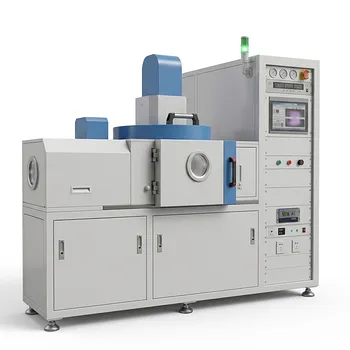
Radio Frequency Plasma Enhanced Chemical Vapor Deposition RF PECVD System for Laboratory and Industrial Thin Film Growth
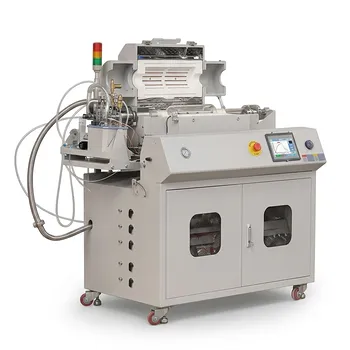
Versatile Chemical Vapor Deposition Tube Furnace System for Advanced Material Research and Industrial Coating Processes
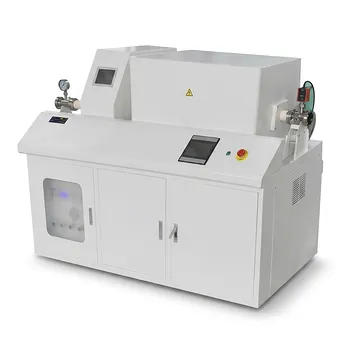
Chemical Vapor Deposition CVD System Slide PECVD Tube Furnace with Liquid Gasifier PECVD Machine
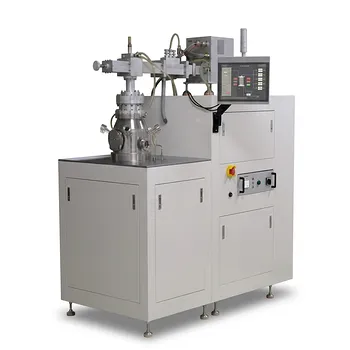
Cylindrical Resonator MPCVD Machine System for Microwave Plasma Chemical Vapor Deposition and Lab Diamond Growth
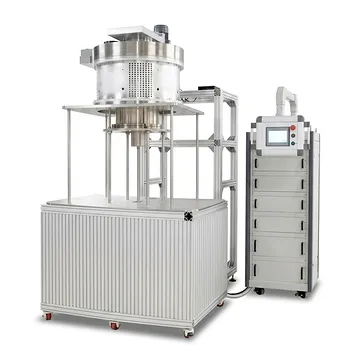
915MHz MPCVD Diamond Machine Microwave Plasma Chemical Vapor Deposition System Reactor
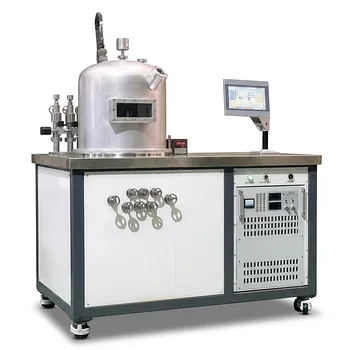
HFCVD Machine System for Nano Diamond Coating on Drawing Dies and Industrial Tools
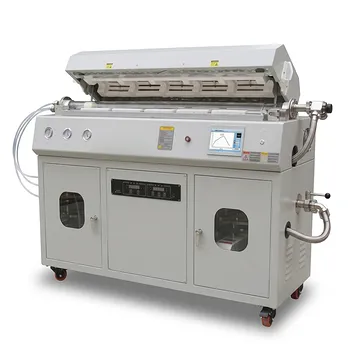
Multi Heating Zones CVD Tube Furnace System for Precision Chemical Vapor Deposition and Advanced Material Synthesis
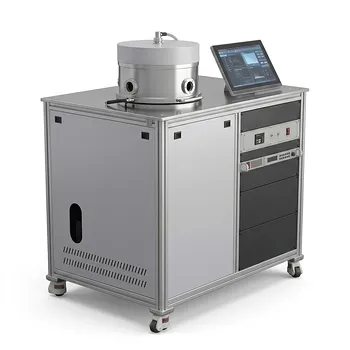
Inclined Rotary Plasma Enhanced Chemical Vapor Deposition PECVD System for Thin Film Deposition and Nanomaterial Synthesis
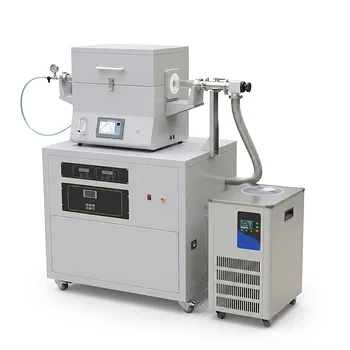
Split Chamber CVD Tube Furnace with Vacuum Station Chemical Vapor Deposition System Machine
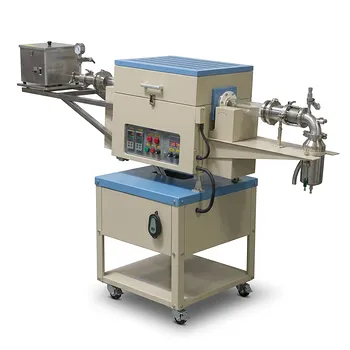
Two Zone Rotary CVD Furnace with Automatic Feeding and Receiving System for Powder Processing
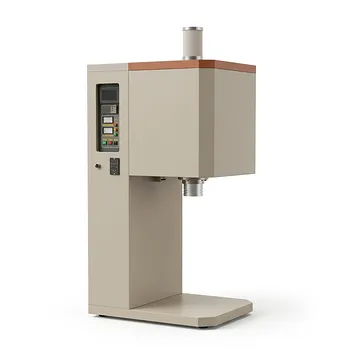
Vertical Openable Tube Furnace 0-1700c High Temperature Laboratory System for CVD and Vacuum Heat Treatment
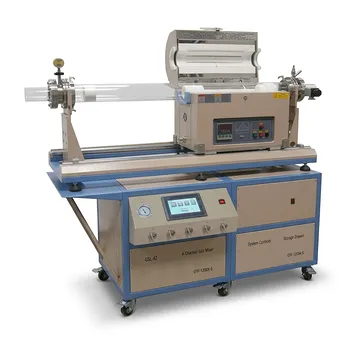
Dual Tube 100mm 80mm CVD Sliding Furnace with 4 Channel Gas Mixing and Vacuum System

High Temperature 1700C Tube Furnace with High Vacuum Turbomolecular Pump System and Multi Channel Mass Flow Controller Gas Mixer
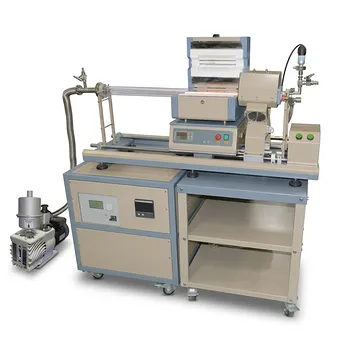
1200C Max Compact Auto-Sliding PECVD Furnace with 2 Inch Tube and Vacuum Pump
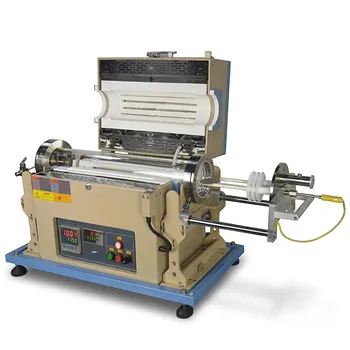
1200°C High Temperature 4 Inch Tube Furnace with Sliding Flange for CVD Systems
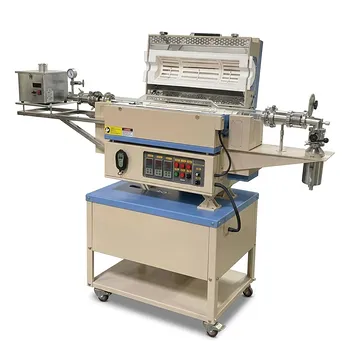
5 Inch Rotary Tube Furnace with Automatic Feeding and Receiving System 1200C Three Zone CVD Powder Processing
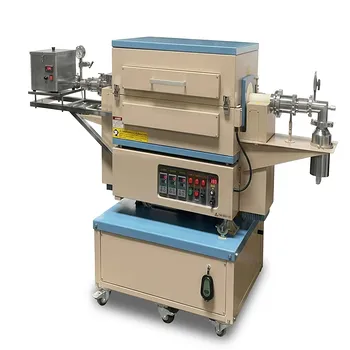
1500C 3-Zone Rotary Tube Furnace 60mm with Automatic Powder Feeding and Receiving System for Continuous Material Synthesis
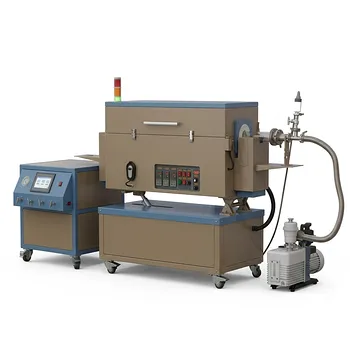
5 Inch Three Zone Rotary Tube Furnace with Integrated Gas Delivery System and 1200C Capability for Advanced Material CVD Processing
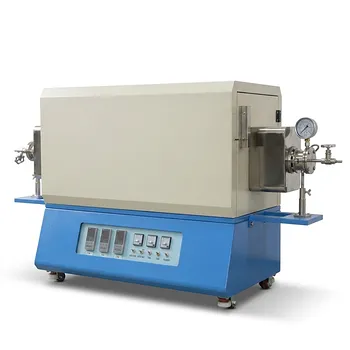
Three Temperature Zone High Temperature Vacuum Tube Furnace for CVD and Material Sintering