What are the standard hardware components of a CCP reactor used in PECVD? Key Elements for High-Quality Thin Films
Updated 5 months ago
The fundamental architecture of a parallel-plate capacitively coupled plasma (CCP) reactor consists of two parallel electrodes housed within a vacuum-sealed chamber. To achieve Plasma-Enhanced Chemical Vapor Deposition (PECVD), the system integrates an RF power source, an impedance matching network, a precise gas delivery system, and a temperature-controlled substrate holder. These components work in unison to transform precursor gases into a reactive plasma, allowing for thin-film deposition at significantly lower temperatures than thermal CVD.
Core Takeaway: A standard CCP reactor for PECVD is a balanced ecosystem where vacuum integrity, RF power management, and uniform gas distribution converge to enable high-quality thin-film growth at low thermal budgets.
The Vacuum Environment and Chamber Integrity
Achieving Base and Process Pressure
The reactor must be housed in a vacuum chamber capable of reaching a base pressure of $10^{-6}$ Torr. This ultra-low base pressure is critical to ensure that atmospheric contaminants (like oxygen or water vapor) do not interfere with the film's purity.
The Role of the Pumping System
While the base pressure is low, the actual process pressure typically ranges between 0.1 and 10 Torr. The vacuum pumping system must be robust enough to maintain this steady-state pressure while precursor gases are continuously injected and exhausted.
The RF Power and Impedance Matching System
The 13.56 MHz Standard
A standard CCP reactor utilizes an RF power supply typically operating at 13.56 MHz. This frequency is used to strike and sustain the plasma between the two electrodes by oscillating electrons while leaving heavier ions relatively stationary.
The Impedance Matching Network
Because plasma is a dynamic and non-linear load, an impedance matching network is placed between the power supply and the electrode. This network ensures maximum power transfer to the plasma and protects the RF generator by minimizing reflected power.
The Electrode Assembly and Gas Dynamics
The Upper Electrode and Showerhead
The upper electrode is often designed as a showerhead, featuring a perforated plate that distributes precursor gases—such as Silane ($SiH_4$) or TEOS—evenly across the chamber. This design is essential for achieving high thickness uniformity across the entire substrate.
The Lower Electrode and Substrate Chuck
The lower electrode serves as the heated substrate chuck, which holds the wafer in place during deposition. Precise temperature control of this chuck is vital, as it provides the thermal energy necessary for surface reactions and determines the final film properties.
Understanding the Trade-offs
Ion Bombardment vs. Film Quality
While ion bombardment in a CCP reactor helps densify the film, excessive energy can cause lattice damage or "pinhole" defects in sensitive substrates. Finding the "process window" between high-quality deposition and substrate damage is a constant challenge for engineers.
Uniformity vs. Deposition Rate
Increasing the gas flow or RF power can speed up the deposition rate, but it often leads to gas depletion effects or plasma non-uniformity. This can result in films that are thicker at the edges of the wafer than in the center, complicating subsequent manufacturing steps.
Applying This to Your Project
Recommendations for System Implementation
The success of a PECVD process depends heavily on aligning your hardware configuration with your specific material requirements.
- If your primary focus is High Film Purity: Prioritize a high-performance vacuum system and high-purity Mass-Flow Controllers (MFCs) to minimize contamination during the deposition cycle.
- If your primary focus is Uniformity Across Large Areas: Invest in a sophisticated showerhead design and a precision-engineered impedance matching network to maintain a stable plasma sheath.
- If your primary focus is Temperature-Sensitive Substrates: Ensure your system has an advanced heated substrate chuck with rapid thermal response times to prevent overheating during long deposition runs.
By mastering the synergy between RF power, vacuum control, and gas distribution, you can achieve the precise film characteristics required for advanced semiconductor and optical applications.
Summary Table:
| Component | Primary Function | Key Technical Parameter |
|---|---|---|
| Vacuum Chamber | Maintains high purity & process pressure | Base pressure: $10^{-6}$ Torr |
| RF Power Supply | Ionizes gas to strike/sustain plasma | Standard frequency: 13.56 MHz |
| Matching Network | Ensures maximum power transfer | Minimizes reflected RF power |
| Upper Electrode | Distributes precursor gases (Showerhead) | High thickness uniformity |
| Heated Chuck | Holds substrate & provides thermal energy | Precise temperature control |
| MFCs | Regulates gas flow rates (e.g., Silane) | High-purity gas dynamics |
Elevate Your Thin-Film Research with THERMUNITS
Are you looking to optimize your material science R&D or industrial heat treatment processes? THERMUNITS is a leading manufacturer specializing in high-performance thermal processing solutions. We offer a comprehensive range of equipment, including advanced CVD/PECVD systems, Vacuum Induction Melting (VIM) furnaces, Muffle, Tube, and Rotary furnaces, and customized Thermal Elements.
Our equipment is designed to meet the rigorous demands of modern laboratory environments, providing the precision and reliability needed for high-quality thin-film growth and complex material synthesis.
Contact our expert team today to find the perfect thermal processing solution for your specific application and take your research to the next level!
Mentioned Products
- Inclined Rotary Plasma Enhanced Chemical Vapor Deposition PECVD System for Thin Film Deposition and Nanomaterial Synthesis
- Cylindrical Resonator MPCVD Machine System for Microwave Plasma Chemical Vapor Deposition and Lab Diamond Growth
- 915MHz MPCVD Diamond Machine Microwave Plasma Chemical Vapor Deposition System Reactor
- Two Zone Rotary CVD Furnace with Automatic Feeding and Receiving System for Powder Processing
- Chemical Vapor Deposition CVD System Slide PECVD Tube Furnace with Liquid Gasifier PECVD Machine
People Also Ask
- What types of materials can be deposited using PECVD systems? Explore Versatile Thin-Film Coating Solutions
- How does the non-equilibrium nature of plasma facilitate low-temperature deposition in PECVD systems? Pro Tips for R&D
- How is Plasma-Enhanced Chemical Vapor Deposition (PECVD) utilized in the production of photovoltaic solar cells? Study
- How do RF frequency and power settings influence the characteristics of a PECVD process? Master Quality & Efficiency
- What are the advantages of PECVD systems for nano flame retardant films? Protect Heat-Sensitive Polymers with Precision

Tech Team · ThermUnits
Last updated on Apr 14, 2026
Related Products
Inclined Rotary Plasma Enhanced Chemical Vapor Deposition PECVD System for Thin Film Deposition and Nanomaterial Synthesis
Cylindrical Resonator MPCVD Machine System for Microwave Plasma Chemical Vapor Deposition and Lab Diamond Growth
915MHz MPCVD Diamond Machine Microwave Plasma Chemical Vapor Deposition System Reactor
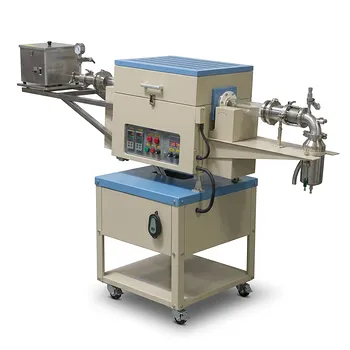
Two Zone Rotary CVD Furnace with Automatic Feeding and Receiving System for Powder Processing
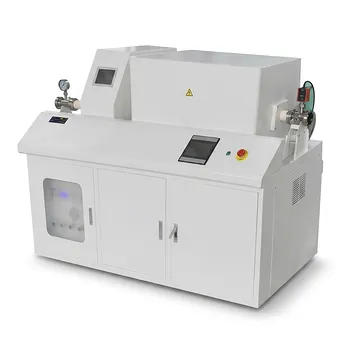
Chemical Vapor Deposition CVD System Slide PECVD Tube Furnace with Liquid Gasifier PECVD Machine
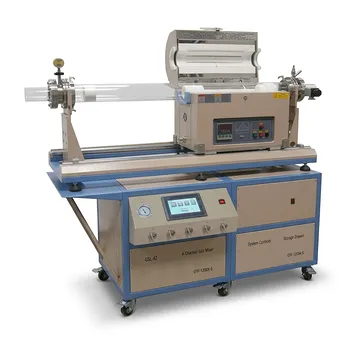
Dual Tube 100mm 80mm CVD Sliding Furnace with 4 Channel Gas Mixing and Vacuum System
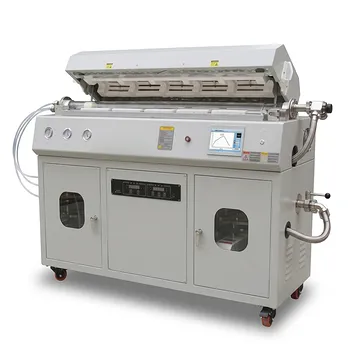
Multi Heating Zones CVD Tube Furnace System for Precision Chemical Vapor Deposition and Advanced Material Synthesis
Compact Spark Plasma Sintering SPS Furnace 1200 C Max 100 MPa Pressure High Speed Sintering System for Material Research
4 Inch Two Zone Rotary CVD Tube Furnace for High Temperature Battery Material Synthesis and Advanced Material Calcination
1200C Max Compact Auto-Sliding PECVD Furnace with 2 Inch Tube and Vacuum Pump
1200C Dual Sliding Tube Furnace with Dual Tubes and Flanges for PECVD Processes
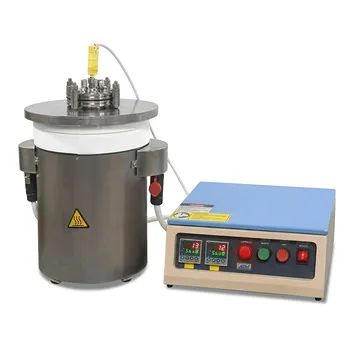
600°C Vertical Crucible Furnace with SS316 Alloy Reactor and 6 Port Vacuum Flange
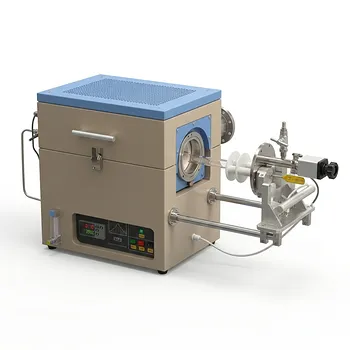
Compact Atmosphere Controlled Rapid Thermal Processing RTP Furnace with 4 Inch ID Quartz Tube 1100C
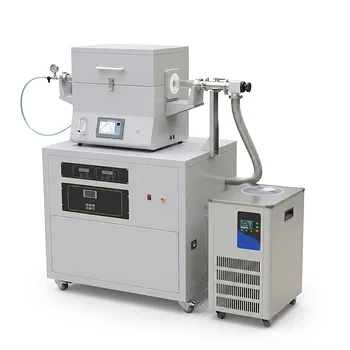
Split Chamber CVD Tube Furnace with Vacuum Station Chemical Vapor Deposition System Machine
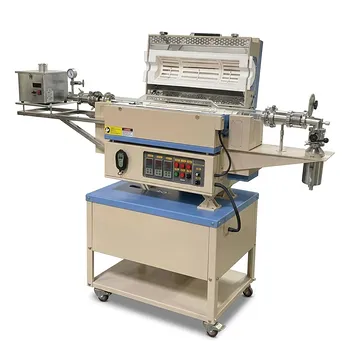
5 Inch Rotary Tube Furnace with Automatic Feeding and Receiving System 1200C Three Zone CVD Powder Processing
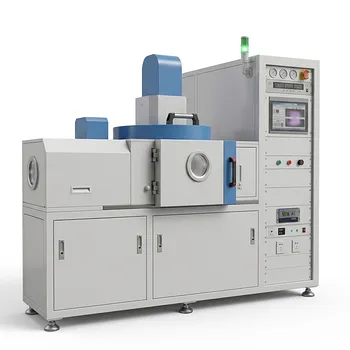
Radio Frequency Plasma Enhanced Chemical Vapor Deposition RF PECVD System for Laboratory and Industrial Thin Film Growth
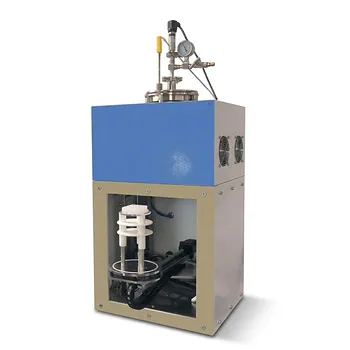
Rapid Thermal Processing Furnace 1100C Atmosphere Controlled Bottom Loading RTP System for Wafer Annealing and Catalysis Research
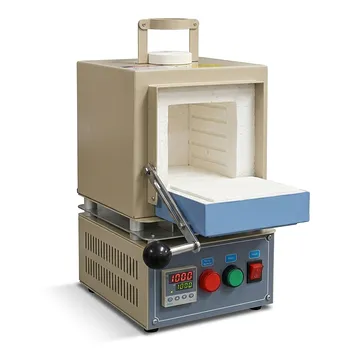
Compact 1000C Muffle Furnace with Programmable Controller and 2 Inch Top Port for Vacuum and Atmosphere Material Research
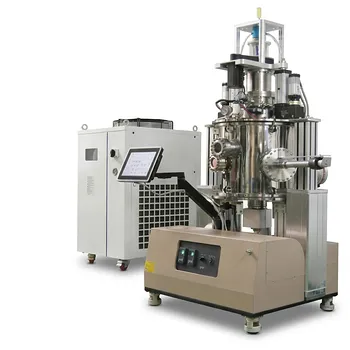
950C Rapid Thermal Processing Furnace for 12 Inch Wafer CSS Coating with Rotating Substrate Holder