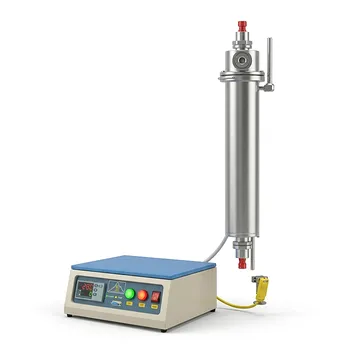
What conditions does a high-precision tube furnace provide for measuring the electrical properties of Li(Nb,Ta)O3? Insights
Updated 3 months ago
High-precision tube furnaces provide a controlled, stable thermal and atmospheric environment essential for characterizing the electrical properties of Li(Nb,Ta)O3. These systems deliver a highly stable temperature field and precise atmospheric control (such as air) during heating cycles typically ranging from 400 °C to 900 °C. By minimizing temperature drift and maintaining strict heating rates, they enable the accurate recording of Arrhenius characteristics and the identification of shifts in conduction mechanisms.
The primary value of a high-precision tube furnace lies in its ability to isolate material behavior from environmental noise. This stability allows researchers to correlate electrical impedance data directly with temperature-dependent physical changes without the interference of thermal fluctuations.
The Critical Role of Thermal Stability in Characterization
Minimizing Temperature Drift
High-precision furnaces are engineered to maintain a highly stable temperature field, which is critical for impedance spectroscopy. Even minor fluctuations in heat can lead to significant errors when measuring sensitive electrical properties in Li(Nb,Ta)O3.
Stable temperatures ensure that the data collected represents the intrinsic conductivity of the material. This reliability is the foundation for calculating activation energies and identifying how charge carriers move through the crystal lattice.
Precise Control of Heating Rates
A standard requirement for these measurements is a consistent heating rate, often set at 1 K/min. This slow, controlled increase allows the material to reach thermal equilibrium at every data point during the 400 °C to 900 °C range.
By maintaining this precision, researchers can accurately map Arrhenius characteristics. This mapping is vital for determining exactly when and why the material transitions between different conduction mechanisms.
Atmospheric and Structural Integrity
Controlled Atmospheric Environments
The electrical properties of oxides like Li(Nb,Ta)O3 are highly sensitive to their surroundings. A tube furnace provides a controlled atmospheric environment, such as air, to ensure that oxygen stoichiometry remains consistent during testing.
Without this control, the material might undergo unintended reduction or oxidation. Such changes would skew impedance results and lead to an incorrect understanding of the material's true performance.
Long-term Stability and Volatilization Monitoring
Specialized furnaces can maintain target temperatures for extended periods, sometimes up to 350 hours at 700 °C or 900 °C. This capability is essential for monitoring performance drift caused by the volatilization of Li2O.
Tracking these changes over time allows for the evaluation of piezoelectric sensors and optoelectronic devices. It provides a realistic view of how these materials will behave in extreme, long-term industrial applications.
Understanding the Trade-offs
Measurement vs. Synthesis Requirements
While a measurement furnace prioritizes stability and precision, it may not be suitable for the initial solid-phase reaction. Sintering often requires higher temperatures, typically around 1000 °C, to achieve chemical homogenization.
Using a measurement furnace for synthesis can lead to uneven sintering if it lacks the specific thermal profile required for powder green bodies. Conversely, using a standard sintering furnace for electrical measurements often results in too much "noise" due to less precise temperature control.
The Risk of Thermal Aging
Extended exposure to high temperatures is necessary for testing, but it carries the risk of permanent material degradation. The very conditions required to measure service life can accelerate the loss of volatile components like lithium.
Researchers must balance the need for long-term data with the potential for stoichiometric shifts. High-precision equipment mitigates this by ensuring that the thermal stress is exactly as intended, with no "overshoot" that could damage the sample.
How to Apply This to Your Project
Recommendations Based on Your Goal
Choosing the right furnace configuration depends on which stage of the Li(Nb,Ta)O3 lifecycle you are analyzing.
- If your primary focus is determining conduction mechanisms: Use a furnace that supports precise 1 K/min heating rates and impedance spectroscopy integration to capture accurate Arrhenius plots.
- If your primary focus is chemical homogenization: Prioritize a high-temperature sintering furnace capable of reaching 1000 °C to ensure stoichiometric fixation before crystal growth.
- If your primary focus is long-term reliability: Select a specialized aging furnace that can maintain a constant temperature for over 300 hours to monitor Li2O volatilization and performance drift.
By utilizing the specific environmental controls of a high-precision tube furnace, you ensure that your electrical measurements are both reproducible and representative of the material's true physical state.
Summary Table:
| Feature | Condition Provided | Benefit to Li(Nb,Ta)O3 Characterization |
|---|---|---|
| Temperature Stability | High-precision thermal field | Minimizes drift to ensure accurate intrinsic conductivity data. |
| Heating Control | Precise 1 K/min rates | Maintains thermal equilibrium for mapping Arrhenius characteristics. |
| Atmosphere Control | Air or inert gas regulation | Ensures consistent oxygen stoichiometry and prevents reduction. |
| Time Stability | Long-term (up to 350+ hours) | Enables monitoring of Li2O volatilization and performance drift. |
Optimize Your Material Research with THERMUNITS
Precise electrical characterization requires equipment that eliminates environmental noise. THERMUNITS is a leading manufacturer of high-temperature laboratory equipment specifically designed for material science and industrial R&D. We provide the stability and control necessary for the most demanding Li(Nb,Ta)O3 studies and beyond.
Our comprehensive range of thermal processing solutions includes:
- Specialized Furnaces: Tube, Muffle, Vacuum, Atmosphere, Rotary, and Hot Press furnaces.
- Advanced Systems: CVD/PECVD systems, Dental Furnaces, and Electric Rotary Kilns.
- Specialty Equipment: Vacuum Induction Melting (VIM) furnaces and high-quality Thermal Elements.
Ready to enhance your lab's precision and efficiency? Our experts are here to help you select the perfect heat treatment solution for your specific research needs.
Contact THERMUNITS Today to Get a Quote
References
- Éva Tichy‐Rács, Yuriy Suhak. Influence of Li‐Stoichiometry on Electrical and Acoustic Properties and Temperature Stability of Li(Nb,Ta)O<sub>3</sub> Solid Solutions up to 900 °C. DOI: 10.1002/pssa.202300962
Mentioned Products
- High Temperature Three Temperature Zone Tube Furnace for Advanced Material Science Sintering and Chemical Vapor Deposition Applications
- Compact High Temperature 1600C Tube Furnace with 50mm Alumina Tube and Vacuum Flanges for Material Sintering
- High Temperature 1700C Vertical Tube Furnace for Powder Spherification and Material Sintering
- High Temperature Automated 5 Inch Tube Furnace for Autonomous Material Research and Advanced Laboratory R&D
- 1750°C High Temperature Benchtop Vacuum Atmosphere Tube Furnace with Kanthal Super 1800 Heating Elements and 60mm Alumina Processing Tube
People Also Ask
- What functions does a 3-zone tube furnace provide for graphene-coated alumina fibers? Expert CVD Heat Treatment Guide
- Why Use a Three-Zone vs. Single-Zone Furnace for Fe-Ni-Cu Diffusion? Key Benefits for Lab Accuracy
- What advantages does a three-zone tube furnace offer for nanoparticle synthesis? Unlock Superior Thermal Precision.
- What role does an industrial-grade three-zone tube furnace play in VOx@VACNT synthesis? Precision Phase-State Control
- What is the primary function of a three-zone tube furnace in the synthesis process of corn-derived carbon nanotubes?

Tech Team · ThermUnits
Last updated on Jun 03, 2026
Related Products
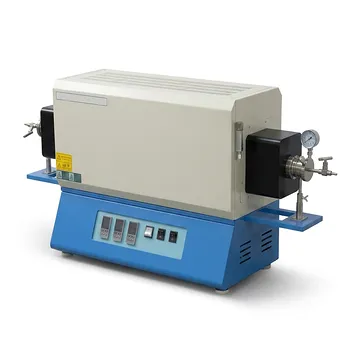
High Temperature Three Temperature Zone Tube Furnace for Advanced Material Science Sintering and Chemical Vapor Deposition Applications

Compact High Temperature 1600C Tube Furnace with 50mm Alumina Tube and Vacuum Flanges for Material Sintering

High Temperature 1700C Vertical Tube Furnace for Powder Spherification and Material Sintering

High Temperature Automated 5 Inch Tube Furnace for Autonomous Material Research and Advanced Laboratory R&D

1750°C High Temperature Benchtop Vacuum Atmosphere Tube Furnace with Kanthal Super 1800 Heating Elements and 60mm Alumina Processing Tube
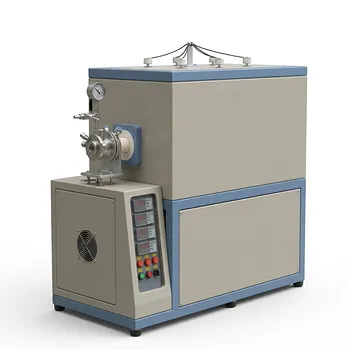
High Temperature 1700C Three Zone Tube Furnace with Alumina Tube 50mm 60mm 80mm OD for Material Research and Industrial Heat Treatment
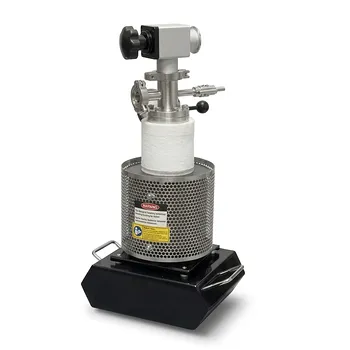
High Temperature 1100C Compact Top Loading Vertical Vacuum Tube Furnace for High Vacuum Noble Metal Melting and Material Research

1800C High Temperature Compact Vacuum Tube Furnace with 60mm OD Alumina Tube and Kanthal MoSi2 Heating Elements
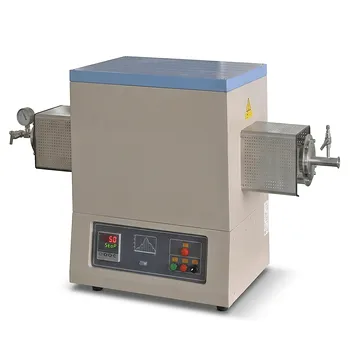
High Temperature 1700C Tube Furnace with 4 Inch OD Alumina Tube and Vacuum Sealing Flanges

High Temperature 1700C Benchtop Tube Furnace with 5 Inch Heating Zone High Purity Alumina Tube and Vacuum Sealing Flanges

1700C High Temperature Alumina Tube Furnace with 18 Inch Heated Zone and Vacuum Sealing Flanges
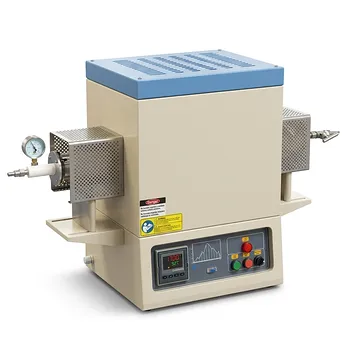
High Temperature Three Zone Tube Furnace 1700C with Alumina Tube and Water Cooled Flanges
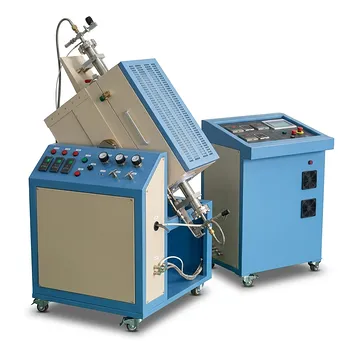
1100C High Pressure Rocking Tube Furnace with 2 Inch Super Alloy Processing Tube for Material Synthesis

Vertical 1700C Vacuum and Atmosphere Tube Furnace with 80mm Alumina Tube
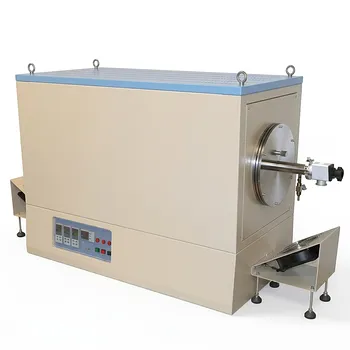
1100°C Three Zone Tube Furnace with 8.5 to 11 Inch OD Quartz Tube and Vacuum Flanges for Large Wafer Processing
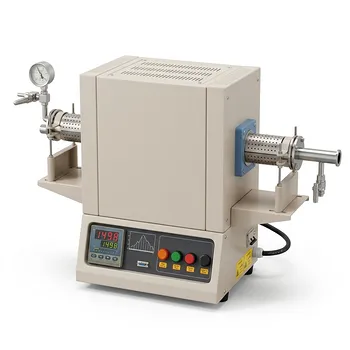
1500C High Temperature Compact Tube Furnace 2 Inch OD with Vacuum Flanges and Complete Accessories
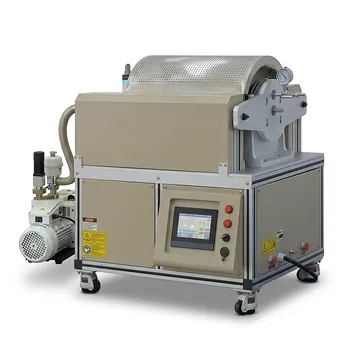
Automated 1200 C Tube Furnace for AI Material Research with 6 Inch OD and Sliding Flange

1100C Tube Furnace with Vacuum Flange and Programmable Temperature Controller for Material Science and Industrial Heat Treatment
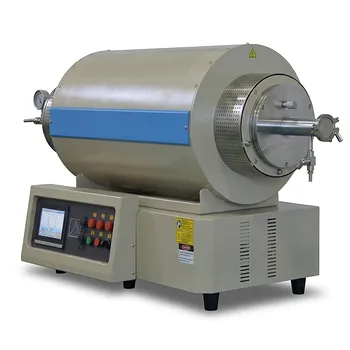
1200C Max Three Zone Tube Furnace 6 Inch OD Max with Tube and Flange