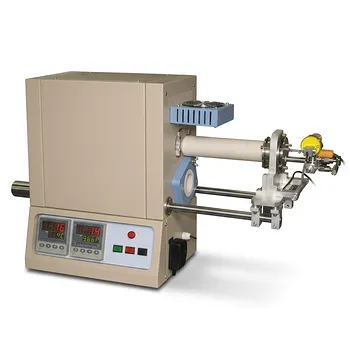
What conditions does a tube furnace provide for FMBP of high-entropy nanomaterials? Precision Synthesis Guide
Updated 3 months ago
For the synthesis of high-entropy nanomaterials, a laboratory tube furnace provides a stable, isothermal reaction zone combined with high-precision atmosphere control. This environment allows precursors to be mechanically transitioned from ambient temperatures to a high-heat zone instantly, ensuring that pyrolysis occurs at a constant, preset temperature while inert gases prevent oxidation and remove gaseous byproducts.
The core utility of a laboratory tube furnace in Fast Moving Bed Pyrolysis (FMBP) is its ability to decouple the heating rate from the furnace's ramp speed. By providing a pre-heated, oxygen-deficient environment, it enables the "flash" thermal decomposition necessary to lock complex atomic structures into stable, high-entropy phases.
Precise Thermal Management in FMBP
Isothermal Reaction Environments
In standard pyrolysis, materials heat up gradually as the furnace ramps, which can lead to phase separation in complex alloys. A tube furnace configured for FMBP maintains a preset constant temperature, allowing the material to react under uniform thermal conditions the moment it enters the zone.
High-Speed Thermal Transition
By utilizing mechanical devices to move precursors quickly into the high-temperature zone, the furnace simulates industrial fast heating. This rapid transition is critical for nanomaterials, as it minimizes the time spent in intermediate temperature regimes where unwanted side reactions often occur.
Accurate Process Simulation
Laboratory-grade furnaces can sustain temperatures reaching 1193 K (920 °C) or higher, providing the energy required for the redistribution of atoms. This allows for the precise carbonization of precursors and the anchoring of metal atoms into specialized frameworks, such as nitrogen-doped carbon.
Atmospheric Integrity and Chemical Control
Inert Protective Environments
The continuous flow of inert gases, typically argon, is essential for protecting sensitive high-entropy nanoparticles from oxidation. This oxygen-deficient environment ensures that the metallic components remain in their desired oxidation state during the high-temperature restructuring process.
Dynamic Removal of Byproducts
The furnace's flow system actively removes gaseous byproducts generated during the decomposition of organic ligands. By preventing the accumulation of these gases, the furnace reduces secondary reactions that could interfere with the purity of the final nanomaterial.
Control of Residence Time
A well-configured tube furnace, particularly in a vertical orientation, helps minimize the residence time of products in the heat zone. This short duration is vital for preventing the aggregation of nanoparticles, ensuring they maintain their high surface area and catalytic activity.
Understanding the Trade-offs
Thermal Gradients and Uniformity
While the furnace provides a stable zone, a significant thermal gradient exists at the entry and exit points of the high-heat region. If the mechanical movement of the precursor is not sufficiently fast or precise, the material may experience non-uniform heating, leading to structural inconsistencies.
Limitations of Gas Flow Dynamics
Relying on a constant gas flow to remove byproducts can sometimes create local concentration fluctuations near the sample surface. If the flow rate is too low, byproducts may linger; if it is too high, it may cause unwanted cooling of the precursor, disrupting the isothermal condition.
Mechanical Integration Challenges
Implementing a "fast moving bed" requires external mechanical synchronization that is not native to standard tube furnaces. The complexity of the feeder system introduces potential failure points, such as air leaks at the entry ports, which can compromise the inert atmosphere.
How to Apply This to Your Project
Making the Right Choice for Your Goal
- If your primary focus is phase purity in high-entropy alloys: Prioritize a furnace with a long isothermal zone to ensure the precursor spends its entire reaction time at the exact target temperature.
- If your primary focus is minimizing nanoparticle size: Use a vertical configuration to leverage gravity and high-speed mechanical insertion, which limits the time available for particle sintering.
- If your primary focus is complex chemical doping (e.g., Fe-N4 sites): Ensure the furnace supports high-precision gas mixing and flow control to maintain the exact stoichiometric environment needed for atom anchoring.
By mastering the transition speed and atmospheric purity of the tube furnace, researchers can reliably produce high-entropy nanomaterials with precise atomic architectures.
Summary Table:
| Key Feature | Role in FMBP Process | Impact on Nanomaterials |
|---|---|---|
| Isothermal Zone | Maintains a preset, constant temperature | Ensures phase purity and structural stability |
| Atmosphere Control | Continuous inert gas flow (e.g., Argon) | Prevents oxidation and maintains oxidation states |
| Rapid Transition | Decouples heating rate from furnace ramp | Enables 'flash' decomposition; avoids side reactions |
| Byproduct Removal | Dynamic flow of gaseous ligands | Increases purity and prevents particle aggregation |
| Thermal Precision | High-energy carbonization up to 1193 K | Facilitates atomic redistribution and anchoring |
Optimize Your Nanomaterial Synthesis with THERMUNITS
Achieving the precise atomic architectures required for high-entropy materials demands world-class thermal precision. THERMUNITS is a leading manufacturer of high-temperature laboratory equipment, providing the advanced solutions necessary for Fast Moving Bed Pyrolysis (FMBP) and industrial R&D.
Our comprehensive range includes:
- Precision Tube & Atmosphere Furnaces for perfect isothermal control.
- CVD/PECVD Systems for advanced chemical vapor deposition.
- Muffle, Vacuum, Rotary, and Hot Press Furnaces for diverse heat treatments.
- Vacuum Induction Melting (VIM) & Dental Furnaces for specialized material science.
Whether you are anchoring Fe-N4 sites or synthesizing complex alloys, THERMUNITS delivers the reliability and atmospheric integrity your project deserves.
Contact Our Engineering Team Today to find the ideal thermal processing solution for your laboratory.
References
- Lingfeng Kuang, Xuezhang Xiao. Recent progress in high‐entropy nanocatalysts. DOI: 10.1002/cmt2.26
Mentioned Products
- Multi Position Tube Furnace 1100C for Laboratory Material Research and Advanced Industrial Thermal Processing
- Ten Zone Multi Orientation Laboratory Tube Furnace for 1200C High Temperature Gradient Thermal Processing
- High Temperature 1200C Split Tube Furnace with Hinged Vacuum Flanges and 4 Inch Quartz Tube for Laboratory Research
- 1100°C Vertical Laboratory Furnace for DIY Tubular Reactors with PID Temperature Controller
- High Temperature Automated 5 Inch Tube Furnace for Autonomous Material Research and Advanced Laboratory R&D
People Also Ask
- Why use a tube furnace for oxygen annealing LaCrO3/LaMnO3? Optimize Phase Transition & Magnetic Performance.
- What key role does a laboratory high-temperature tube furnace play in the production of carbon nanofibers? Guide
- How is a laboratory high-temperature tube furnace utilized to research the products of aluminothermic reduction? Advanced Metallurgical Solutions
- What is the role of a laboratory tube furnace in the carbonization process of porous carbon foam (PCF)? Master 3D Synthesis
- What role does a laboratory tube furnace play in the pyrolysis and carbonization of biomass? Optimize Thermal Research.

Tech Team · ThermUnits
Last updated on Jun 02, 2026
Related Products
Multi Position Tube Furnace 1100C for Laboratory Material Research and Advanced Industrial Thermal Processing
Ten Zone Multi Orientation Laboratory Tube Furnace for 1200C High Temperature Gradient Thermal Processing
High Temperature 1200C Split Tube Furnace with Hinged Vacuum Flanges and 4 Inch Quartz Tube for Laboratory Research
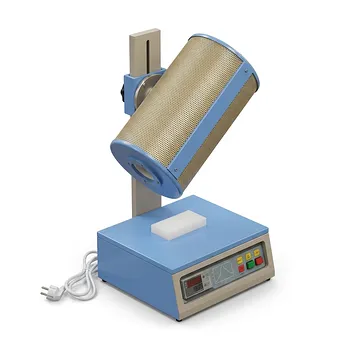
1100°C Vertical Laboratory Furnace for DIY Tubular Reactors with PID Temperature Controller

High Temperature Automated 5 Inch Tube Furnace for Autonomous Material Research and Advanced Laboratory R&D
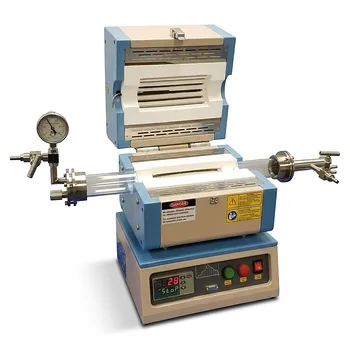
Compact Split Tube Furnace with Integrated Vacuum System and Precision Temperature Calibrator

1800C High Temperature Compact Vacuum Tube Furnace with 60mm OD Alumina Tube and Kanthal MoSi2 Heating Elements
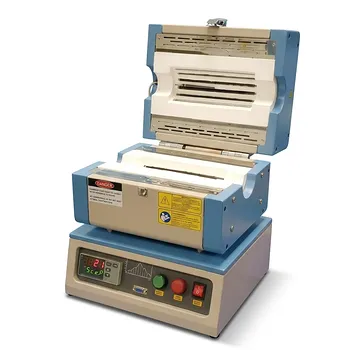
1250C Compact Split Tube Furnace with 8 Inch Heating Zone and Programmable Controller
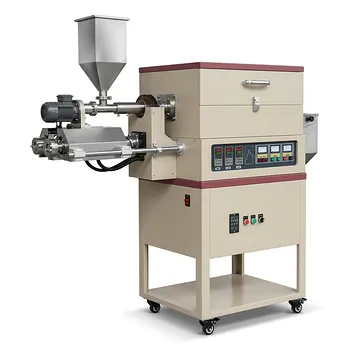
Laboratory Tilting Rotary Tubular Furnaces for Material Science and Industrial Heat Treatment
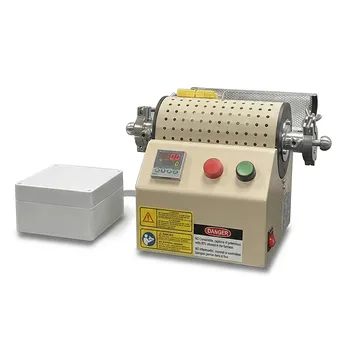
1000C Mini Tube Furnace with 20mm Quartz Tube and Vacuum Flanges for Material Science Research and Controlled Atmosphere Small Sample Processing
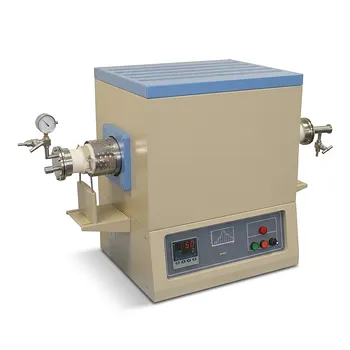
1700C High Temperature Alumina Tube Furnace with 18 Inch Heated Zone and Vacuum Sealing Flanges
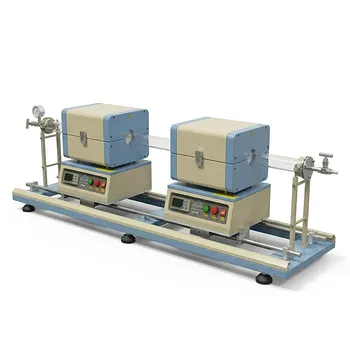
1200C Max Dual Sliding Tube Furnace with 50 mm Tube Flanges for CVD
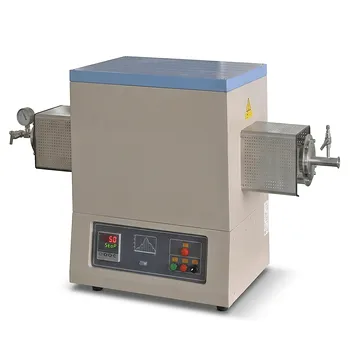
High Temperature 1700C Tube Furnace with 4 Inch OD Alumina Tube and Vacuum Sealing Flanges
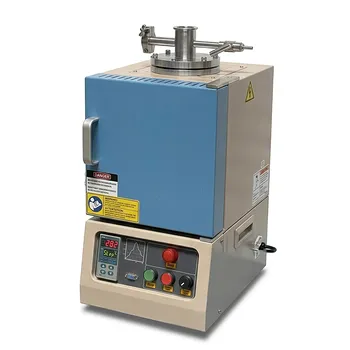
High Temperature Hybrid Muffle and Tube Furnace with Vacuum Capability and PID Control
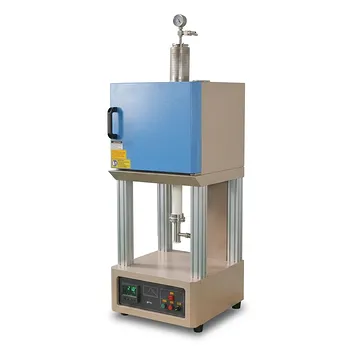
Hybrid High Temperature Tube and Box Furnace 1700C with 2 Inch Alumina Tube for Material Research
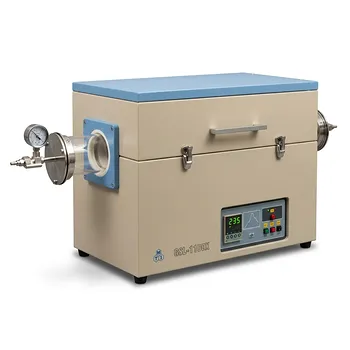
Single Zone Tube Furnace 5 Inch Quartz Tube 36 Inch Heating Zone Vacuum Flanges

High Temperature 1700C Vertical Tube Furnace for Powder Spherification and Material Sintering

1100C Tube Furnace with Vacuum Flange and Programmable Temperature Controller for Material Science and Industrial Heat Treatment

High Temperature 1700C Tube Furnace with High Vacuum Turbomolecular Pump System and Multi Channel Mass Flow Controller Gas Mixer