What role do atmosphere tube furnaces play in Cr/Si coatings? Key to Diffusion and Oxidation Prevention
Updated 3 months ago
High-temperature atmosphere tube furnaces serve as the critical reaction environment where thermal energy and atmospheric chemistry intersect to drive element diffusion. These furnaces provide the precise temperature control and controlled gas environments (such as argon or hydrogen mixtures) required to facilitate the transport of chromium (Cr) and silicon (Si) into a substrate. By isolating the reaction from oxygen and nitrogen, they ensure that coating elements form a dense, protective diffusion layer rather than failing due to premature oxidation or activator depletion.
Core Takeaway: The atmosphere tube furnace acts as a hermetically sealed chemical reactor that enables high-temperature diffusion while simultaneously preventing the oxidation of active powders and the failure of chemical activators.
Providing the Kinetic Energy for Diffusion
Driving Gas-Phase and Liquid-Phase Transport
For both slurry and pack cementation coatings, the furnace provides the thermal energy necessary to initiate the transport of coating elements. In pack cementation, temperatures typically ranging from 900°C to 1000°C trigger the formation of volatile halides that carry Cr and Si to the substrate.
Facilitating Liquid-Phase Reactions
In slurry-based processes, the furnace allows for the melting of specific components, such as silicon, to facilitate liquid-phase reactions. This ensures that the coating components can chemically bond with the substrate, forming integrated silicide layers that are more robust than simple mechanical bonds.
Controlling Diffusion Layer Growth
The precision of the furnace’s temperature control system is vital for maintaining a constant thermal environment over extended periods. This stability is required for the consistent growth of the diffusion zone, ensuring the protective layer reaches the necessary thickness and density to withstand harsh operational environments.
Maintaining Atmospheric Integrity
Preventing Unintended Oxidation and Nitridation
High-purity gas flows, such as argon, are used to exclude oxygen and nitrogen from the furnace chamber. This prevents the disordered oxidation of metal sources like chromium and silicon, which would otherwise form brittle oxides instead of the desired protective silicides or chromides.
Protecting Chemical Activators
In pack cementation, activators are essential for generating the gas-phase species that transport coating elements. The controlled atmosphere of the tube furnace prevents these activators from failing or decomposing prematurely, ensuring a continuous supply of reactant gases throughout the thermal cycle.
Creating Reducing Environments
Many coating processes utilize hydrogen gas mixtures to create a reducing atmosphere. This environment actively strips away existing surface oxides on the substrate, ensuring a "clean" metallic surface that allows Cr and Si atoms to diffuse smoothly into the crystal lattice.
Structural and Phase Optimization
Inducing Phase Transformations
The high-temperature environment drives the atomic rearrangement necessary to convert raw precursor materials into stable crystalline structures. For complex coatings, this might involve the transformation of amorphous layers into highly crystalline intermetallic phases that offer superior hardness and corrosion resistance.
Ensuring Chemical Bonding and Adhesion
By maintaining ultra-high temperatures—sometimes reaching 1480°C for specific high-performance materials—the furnace enables deep chemical bonding. This results in a double-layered or multi-layered protective structure that is firmly anchored to the carrier material.
Promoting Uniform Grain Size
The enclosed, uniform thermal space of a tube furnace minimizes temperature gradients across the treated part. This uniformity is essential for producing coatings with controllable grain sizes and consistent chemical compositions across the entire surface area.
Understanding the Trade-offs
Heating Rates vs. Thermal Stress
While rapid heating can increase throughput, it may induce thermal stress between the substrate and the developing coating. Precise furnace control is required to balance the speed of the process with the mechanical integrity of the finished layer.
Atmosphere Purity vs. Operating Cost
Maintaining a high-vacuum or ultra-high-purity inert flow significantly increases the cost of coating production. Engineers must determine the minimum oxygen partial pressure required to prevent oxidation without over-investing in gas consumption.
Temperature Limits and Material Compatibility
Extended operation at ultra-high temperatures (above 1200°C) can cause wear on the furnace's heating elements and alumina tubes. Selecting the appropriate furnace grade is a balance between the required reaction temperature and the long-term maintenance costs of the equipment.
How to Apply This to Your Project
Recommendations for Coating Success
- If your primary focus is oxidation resistance: Use a furnace capable of maintaining a strict reducing atmosphere (H2/Ar) to ensure the formation of pure silicide or chromide phases.
- If your primary focus is coating thickness: Prioritize a furnace with high thermal stability and a long "hot zone" to allow for extended, uniform diffusion cycles.
- If your primary focus is substrate integrity: Select a furnace with programmable cooling rates to prevent delamination caused by mismatched thermal expansion coefficients between the coating and the base metal.
The high-temperature atmosphere tube furnace is the indispensable tool that transforms raw materials into sophisticated, diffusion-bonded protective barriers through the precise synchronization of heat and chemistry.
Summary Table:
| Role | Mechanism | Key Benefit |
|---|---|---|
| Kinetic Energy | Thermal range (900°C–1480°C) | Drives gas/liquid-phase element diffusion |
| Atmosphere Control | Inert/Reducing gas flow (Ar/H2) | Prevents oxidation and protects activators |
| Phase Optimization | High-precision thermal stability | Ensures uniform grain size and bonding |
| Structural Integrity | Programmable cooling cycles | Reduces thermal stress and prevents peeling |
Upgrade Your Material Research with THERMUNITS
As a leading manufacturer of high-temperature laboratory equipment, THERMUNITS empowers material science and industrial R&D with precision-engineered thermal solutions. From advanced Atmosphere Tube Furnaces for Cr/Si coatings to specialized CVD/PECVD systems, Vacuum Induction Melting (VIM), and Hot Press furnaces, we provide the tools necessary for superior heat treatment.
Our equipment ensures the hermetic integrity and thermal stability required for complex diffusion processes and phase transformations. Contact us today to discuss your specific requirements and discover how our comprehensive range of thermal processing solutions, including Muffle, Vacuum, and Rotary furnaces, can enhance your laboratory's capabilities.
References
- Michael Kerbstadt, Mathias C. Galetz. Novel Chromium–Silicon Slurry Coatings for Hot Corrosion Environments. DOI: 10.1007/s11085-024-10257-8
Mentioned Products
- 1750°C High Temperature Benchtop Vacuum Atmosphere Tube Furnace with Kanthal Super 1800 Heating Elements and 60mm Alumina Processing Tube
- 1700C High Temperature Alumina Tube Furnace with 18 Inch Heated Zone and Vacuum Sealing Flanges
- High Temperature 1200C Split Tube Furnace for CVD Research and Vacuum Atmosphere Heat Treatment
- High Temperature Split Tube Furnace 1500C for Material Research Vacuum and Atmosphere Thermal Processing
- High Temperature Vertical Atmosphere Controlled Furnace with Automatic Bottom Loading and 1700°C Capacity for Advanced Material Research
People Also Ask
- What core functions does a high-temperature vacuum tube furnace provide? Optimize np-CuSn Sintering & Joint Integrity
- What is the role of a high-temperature tube furnace in the calcination process of ZnO/In2O3 nanocomposites?
- What role does a high-temperature tube furnace play in the sulfidation heat treatment of CoS@C/MXene nanocomposites? Guide
- Why is a high-temperature tube furnace required for CuAlO2 heat treatment? Master Phase Transformation Today
- What role does a high-temperature tube furnace play in executing nitrogen absorption kinetic experiments? Expert Insights

Tech Team · ThermUnits
Last updated on Jun 02, 2026
Related Products

1750°C High Temperature Benchtop Vacuum Atmosphere Tube Furnace with Kanthal Super 1800 Heating Elements and 60mm Alumina Processing Tube
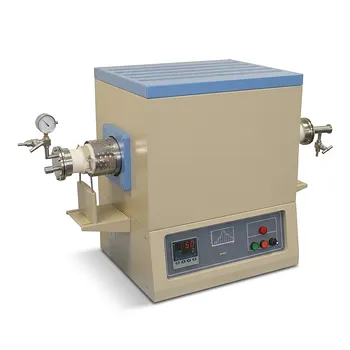
1700C High Temperature Alumina Tube Furnace with 18 Inch Heated Zone and Vacuum Sealing Flanges
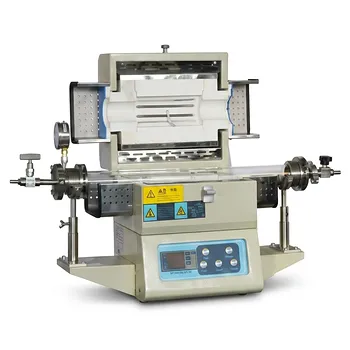
High Temperature 1200C Split Tube Furnace for CVD Research and Vacuum Atmosphere Heat Treatment
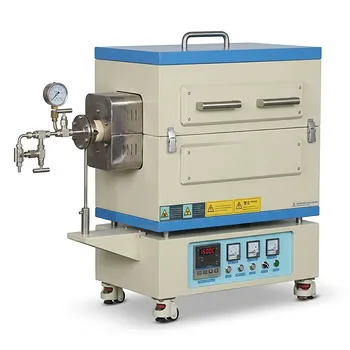
High Temperature Split Tube Furnace 1500C for Material Research Vacuum and Atmosphere Thermal Processing
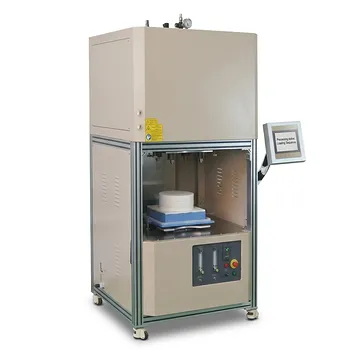
High Temperature Vertical Atmosphere Controlled Furnace with Automatic Bottom Loading and 1700°C Capacity for Advanced Material Research
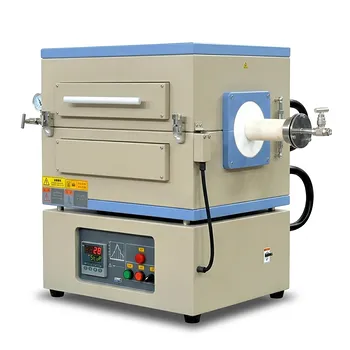
1500°C Split Tube Furnace with Alumina Tube and Vacuum Sealing Flanges for Material Research
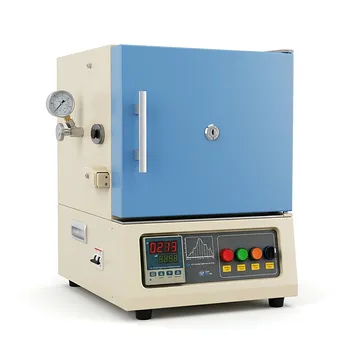
1200C Hybrid Muffle and Tube Furnace for Material Research with Dual Atmosphere Control Quartz Tubes

Vertical 1700C Vacuum and Atmosphere Tube Furnace with 80mm Alumina Tube
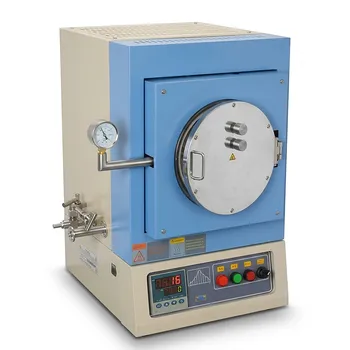
1100°C High Temperature Quartz Chamber Furnace 8 Inch OD with 7.6 Liter Capacity and Vacuum Atmosphere Capability

High Temperature Tube Furnace 1500C with Sliding Flanges and 50mm OD for Rapid Thermal Processing Fast Heating and Cooling

High Temperature 1700C Tube Furnace with High Vacuum Turbomolecular Pump System and Multi Channel Mass Flow Controller Gas Mixer

High Temperature 1700C Vertical Tube Furnace for Powder Spherification and Material Sintering

Compact High Temperature 1600C Tube Furnace with 50mm Alumina Tube and Vacuum Flanges for Material Sintering

High Temperature 1700C Benchtop Tube Furnace with 5 Inch Heating Zone High Purity Alumina Tube and Vacuum Sealing Flanges
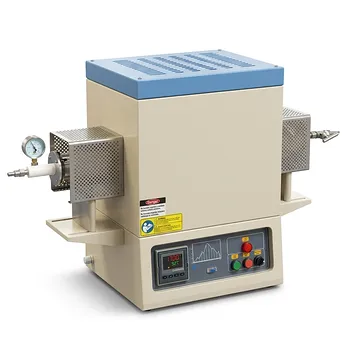
High Temperature Three Zone Tube Furnace 1700C with Alumina Tube and Water Cooled Flanges
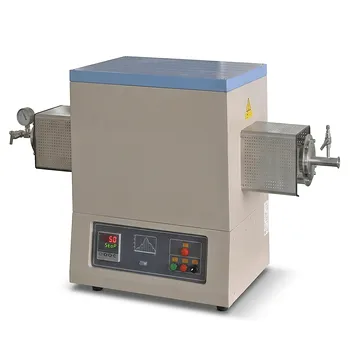
High Temperature 1700C Tube Furnace with 4 Inch OD Alumina Tube and Vacuum Sealing Flanges

High Temperature 1700C Six Zone Split Tube Furnace with Alumina Tube and Water Cooled Flanges
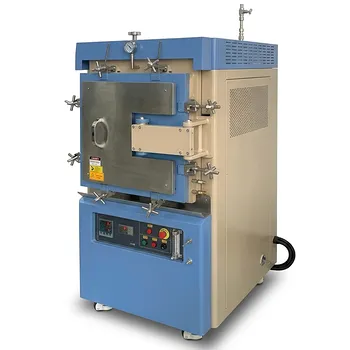
Atmosphere Controlled Muffle Furnace 1700C Maximum Temperature 80L High Capacity Vacuum Inert Gas Box Furnace

High Temperature Automated 5 Inch Tube Furnace for Autonomous Material Research and Advanced Laboratory R&D
