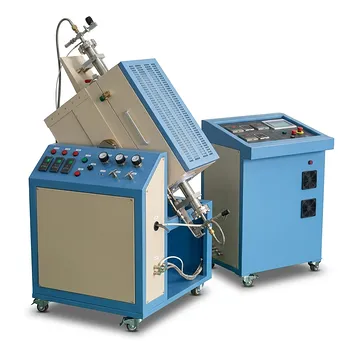
What function does a high-temperature tube furnace serve in synthesizing single-atom Fe–N–C catalysts? Essential Roles.
Updated 3 months ago
In the synthesis of single-atom Fe–N–C catalysts, the high-temperature tube furnace serves as the definitive reactor for high-temperature solid-phase reactions. In its final stage, the furnace provides a controlled 1,000 °C environment under a continuous flow of inert gas. This specific thermal treatment facilitates the reaction between the iron precursor and the nitrogen-doped carbon framework to form the Fe–Nx active sites essential for catalytic activity.
Core Takeaway: The high-temperature tube furnace is the critical instrument that enables the precise anchoring of iron atoms into a nitrogen-doped matrix. It ensures high active site density and electrical conductivity by providing extreme temperature uniformity and a strictly anaerobic environment.
Facilitating the High-Temperature Solid-Phase Reaction
Creating the Fe–Nx Active Sites
The primary function of the furnace is to provide the energy required for a high-temperature solid-phase reaction. At 1,000 °C, the iron precursor interacts chemically with the nitrogen-doped carbon framework.
This interaction facilitates the formation of Fe–Nx coordination sites, which are the specific atomic structures responsible for the catalyst's performance. Without this extreme heat, the precursors would remain separate and inactive.
Inducing Carbonization and Graphitization
Beyond site formation, the furnace drives the carbonization of the precursor framework. This process removes volatile components and transforms organic ligands into a stable, porous carbon substrate.
The high heat also promotes graphitization, which significantly increases the electrical conductivity of the resulting catalyst. High conductivity is vital for efficient electron transfer during electrochemical reactions.
The Role of Atmospheric Control and Sealing
Preventing Framework Oxidation
The tube furnace provides a continuous flow of inert gas (such as nitrogen or argon) to create a protective atmosphere. This is crucial because, at 1,000 °C, any presence of oxygen would cause the carbon framework to oxidize and burn away.
By maintaining atmospheric sealing, the furnace ensures that the carbonization process occurs in a completely oxygen-free state. This preserves the structural integrity of the nitrogen-doped carbon hollow nanorods or porous sheets.
Suppressing Metal Aggregation
A key challenge in single-atom synthesis is preventing iron atoms from clustering into inactive nanoparticles. The furnace's controlled environment helps anchor iron atoms individually into the nitrogen coordination sites.
The stable, anaerobic thermal environment suppresses the aggregation of iron species. This ensures the metal remains "single-atom dispersed," which maximizes the surface area and efficiency of the catalytic centers.
Understanding the Trade-offs
Temperature vs. Site Density
While 1,000 °C is often the benchmark for conductivity, there is a delicate balance regarding temperature. Higher temperatures improve graphitization and stability but can lead to "nitrogen leaching," where nitrogen atoms leave the framework.
If nitrogen content drops too low, there are fewer sites available to anchor the iron atoms. This can lead to a decrease in active site density, even if the remaining sites are highly stable.
Heating Rates and Porosity
The speed at which the furnace reaches its target temperature (the ramping rate) impacts the porous structure of the catalyst. Rapid heating can cause structural collapse, while overly slow heating may not generate the desired pore distribution.
Precise control of the heating rate is necessary to ensure the final material has a high surface area. A high surface area is required to make the Fe–Nx sites accessible to reactants.
How to Apply This to Your Synthesis Goals
Strategic Recommendations for Catalyst Development
- If your primary focus is Maximum Electrical Conductivity: Prioritize the upper limits of the furnace's temperature range (near 1,000 °C) to ensure deep graphitization of the carbon matrix.
- If your primary focus is High Active Site Density: Consider slightly lower temperatures or optimized nitrogen-rich precursors to ensure the carbon framework retains enough nitrogen to anchor the iron atoms.
- If your primary focus is Structural Integrity: Ensure the furnace has superior atmospheric sealing and a high-purity inert gas supply to prevent any oxidative degradation of the nanostructures.
The high-temperature tube furnace is not merely a heat source, but a precision tool for atomic-level engineering of catalytic active sites.
Summary Table:
| Synthesis Function | Process Detail | Impact on Catalyst |
|---|---|---|
| Active Site Formation | Solid-phase reaction at 1,000 °C | Creates essential Fe–Nx coordination sites |
| Structural Evolution | Carbonization & Graphitization | Boosts electrical conductivity & stability |
| Atmospheric Control | Inert gas flow (N2/Ar) | Prevents oxidation & preserves nanostructures |
| Atomic Dispersion | Controlled thermal environment | Suppresses aggregation for single-atom efficiency |
Elevate Your Material Research with THERMUNITS
Precision at the atomic level requires uncompromising thermal control. THERMUNITS is a leading manufacturer of high-temperature laboratory equipment specifically designed for material science and industrial R&D.
Our high-performance Tube Furnaces, CVD/PECVD systems, and Vacuum Atmosphere Furnaces provide the superior temperature uniformity and atmospheric sealing necessary for advanced Fe–N–C catalyst synthesis. From Muffle and Rotary furnaces to Vacuum Induction Melting (VIM) systems, we offer a comprehensive range of thermal processing solutions tailored to your lab's exact needs.
Ready to achieve superior active site density and material stability?
Contact our engineering team today to find your solution.
References
- Weihao Liu, Jianglan Shui. Boosting the Oxygen Reduction Performance of Fe–N–C Catalyst Using Zeolite as an Oxygen Reservoir. DOI: 10.1007/s12209-024-00409-x
Mentioned Products
- High Temperature Tube Furnace 1500C with Sliding Flanges and 50mm OD for Rapid Thermal Processing Fast Heating and Cooling
- High Temperature 1700C Tube Furnace with High Vacuum Turbomolecular Pump System and Multi Channel Mass Flow Controller Gas Mixer
- High Temperature 1700C Benchtop Tube Furnace with 5 Inch Heating Zone High Purity Alumina Tube and Vacuum Sealing Flanges
- 1750°C High Temperature Benchtop Vacuum Atmosphere Tube Furnace with Kanthal Super 1800 Heating Elements and 60mm Alumina Processing Tube
- Compact High Temperature 1600C Tube Furnace with 50mm Alumina Tube and Vacuum Flanges for Material Sintering
People Also Ask
- How are high-temperature tube furnaces utilized to repair etching damage? Precision Lattice Restoration Solutions
- What role does a high-temperature tube furnace play in CVD synthesis of silicon nanowires? Master VLS Growth Precision.
- What core conditions does a high-temperature tube furnace provide for rGO aerogels? Mastering Precision Synthesis.
- What role does a high-temperature tube furnace play in the sulfidation heat treatment of CoS@C/MXene nanocomposites? Guide
- How does precision tube furnace control influence CoFe nanoparticle formation? Master Your Bimetallic Synthesis.

Tech Team · ThermUnits
Last updated on Jun 03, 2026
Related Products

High Temperature Tube Furnace 1500C with Sliding Flanges and 50mm OD for Rapid Thermal Processing Fast Heating and Cooling

High Temperature 1700C Tube Furnace with High Vacuum Turbomolecular Pump System and Multi Channel Mass Flow Controller Gas Mixer

High Temperature 1700C Benchtop Tube Furnace with 5 Inch Heating Zone High Purity Alumina Tube and Vacuum Sealing Flanges

1750°C High Temperature Benchtop Vacuum Atmosphere Tube Furnace with Kanthal Super 1800 Heating Elements and 60mm Alumina Processing Tube

Compact High Temperature 1600C Tube Furnace with 50mm Alumina Tube and Vacuum Flanges for Material Sintering

1700C High Temperature Alumina Tube Furnace with 18 Inch Heated Zone and Vacuum Sealing Flanges

1800C High Temperature Compact Vacuum Tube Furnace with 60mm OD Alumina Tube and Kanthal MoSi2 Heating Elements
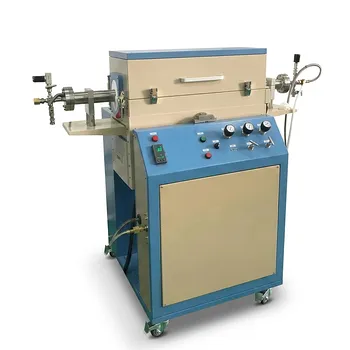
High Temperature Rocking Tube Furnace 1700°C Alumina Processing Tube with Precision Oscillation for Material Synthesis
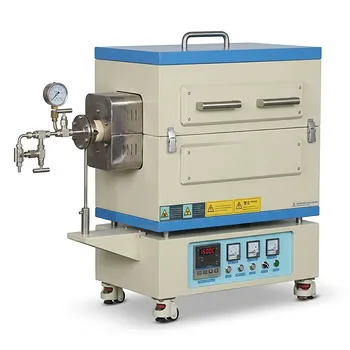
High Temperature Split Tube Furnace 1500C for Material Research Vacuum and Atmosphere Thermal Processing

High Temperature 1700C Vertical Tube Furnace for Powder Spherification and Material Sintering
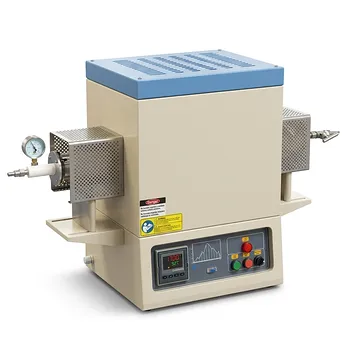
High Temperature Three Zone Tube Furnace 1700C with Alumina Tube and Water Cooled Flanges

High Temperature 1700C Six Zone Split Tube Furnace with Alumina Tube and Water Cooled Flanges
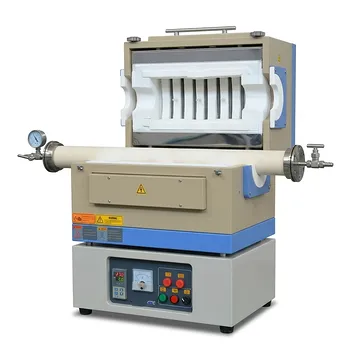
High Temperature 1600C Split Tube Furnace Vacuum Flanges Valves Optional 60mm 80mm Alumina Tube

High Temperature Automated 5 Inch Tube Furnace for Autonomous Material Research and Advanced Laboratory R&D

1100C Tube Furnace with Vacuum Flange and Programmable Temperature Controller for Material Science and Industrial Heat Treatment
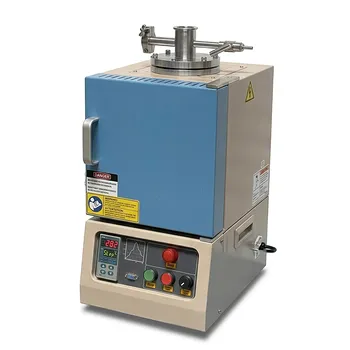
High Temperature Hybrid Muffle and Tube Furnace with Vacuum Capability and PID Control
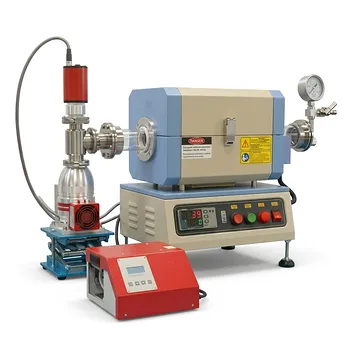
High Vacuum Compact Tube Furnace 1200C with Integrated Turbo Pump System and 8 Inch Heating Zone

1700C Hydrogen Gas Tube Furnace with 60mm Alumina Process Tube and Integrated Hydrogen Safety Detector
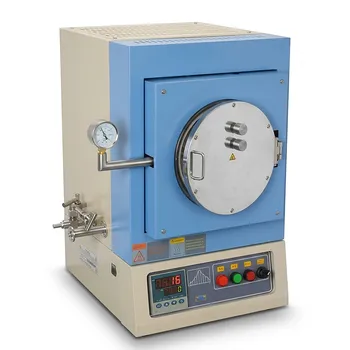
1100°C High Temperature Quartz Chamber Furnace 8 Inch OD with 7.6 Liter Capacity and Vacuum Atmosphere Capability