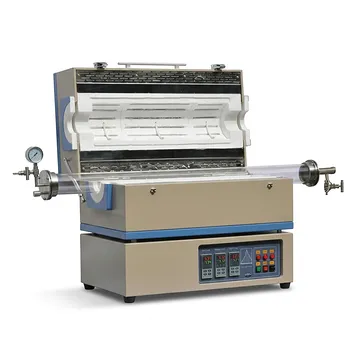
What is the core function of an industrial-grade three-zone tube furnace in MgCO3 layer formation?
Updated 3 months ago
The industrial-grade three-zone controlled tube furnace functions as a high-precision chemical reactor that facilitates the "in-situ restructuring" of a magnesium alloy’s surface. By providing a stable 350 °C thermal environment and a controlled CO2 or Argon atmosphere, the furnace enables a pre-deposited Lithium Nitrate salt to melt and act as a reaction medium. This specific environment accelerates the diffusion of CO2 into the existing magnesium oxide (MgO) layer, transforming it into a dense, corrosion-resistant Magnesium Carbonate (MgCO3) barrier.
Core Takeaway: The furnace is the critical enabler for converting a porous, weak oxide layer into a robust protective shield. It achieves this by precisely balancing temperature to melt catalyst salts while simultaneously managing gas chemistry to drive deep carbon diffusion.
Creating the Optimal Reaction Environment
Precision Thermal Management at 350 °C
The primary role of the furnace is to maintain a consistent temperature, typically around 350 °C, which is the threshold required for the process. At this temperature, pre-deposited Lithium Nitrate salts reach their melting point without damaging the underlying magnesium alloy substrate.
Atmospheric Control for Carbonation
The furnace provides a strictly regulated gas environment, utilizing high-purity CO2 or Argon. This control is essential to ensure that the carbonation reaction occurs uniformly across the surface while preventing unwanted secondary oxidation from ambient air.
The Role of Independent Zone Control
By utilizing a three-zone system, the furnace ensures thermal uniformity across the entire length of the tube. This prevents "cold spots" that would lead to incomplete salt melting or "hot spots" that could cause the alloy to degrade or the protective layer to form unevenly.
The Mechanism of In-Situ Restructuring
Facilitating Ionic Diffusion
Once the Lithium Nitrate melts within the furnace, it acts as a liquid reaction medium. This liquid phase significantly lowers the energy barrier for CO2 diffusion, allowing gas molecules to penetrate the existing MgO layer much faster than a gas-to-solid reaction would allow.
Densification of the Surface Layer
As CO2 is absorbed, the furnace’s heat drives the chemical transformation of the loose, porous Magnesium Oxide (MgO) into Magnesium Carbonate (MgCO3). This process "plugs" the pores of the original oxide, resulting in a significantly denser and more stable surface.
Establishing a Corrosion Barrier
The final output of this furnace-controlled process is a dense corrosion barrier. Because the reaction happens "in-situ" (directly on the surface), the resulting MgCO3 layer is chemically bonded to the substrate, providing superior protection compared to external coatings.
Understanding the Trade-offs and Pitfalls
Temperature Sensitivity and Alloy Integrity
Magnesium alloys have relatively low melting points and can become structurally compromised if temperatures exceed the target threshold. If the furnace calibration drifts, the user risks grain growth or melting the substrate rather than just the salt layer.
Atmospheric Purity Requirements
Any leakage of oxygen into the furnace chamber can lead to oxidative burnout or the formation of brittle oxide scales. Maintaining a high-purity inert or CO2 flow is non-negotiable for achieving a high-quality, repeatable protective finish.
Complexity of Gradient Management
While three-zone control offers superior uniformity, it requires complex PID tuning to manage. Improperly balanced zones can create internal turbulence or vapor pressure fluctuations, leading to a non-uniform protective layer thickness.
Applying This Technology to Your Goals
To achieve the best results in forming protective layers, your operational strategy should align with your specific material requirements.
- If your primary focus is Maximum Corrosion Resistance: Ensure the furnace is calibrated for extreme thermal uniformity to promote the densest possible MgCO3 crystal structure.
- If your primary focus is High Throughput: Utilize the three-zone control to create a stable "hot center" that allows for rapid loading and unloading without significant recovery time between batches.
- If your primary focus is Material Integrity: Monitor the temperature ramps closely to ensure the alloy does not spend unnecessary time at high temperatures, which prevents structural softening.
The three-zone tube furnace is not merely a heater, but a sophisticated tool for precision surface engineering that defines the ultimate durability of magnesium components.
Summary Table:
| Component/Process | Functional Role | Key Benefit |
|---|---|---|
| 350°C Precision | Melts Lithium Nitrate catalyst | Enables liquid-phase ionic diffusion |
| 3-Zone Heating | Ensures thermal uniformity | Prevents grain growth and cold-spot defects |
| Atmosphere Control | Regulates CO2/Argon purity | Drives carbonation while preventing oxidation |
| In-Situ Transformation | Converts MgO to MgCO3 | Creates a dense, chemically bonded barrier |
Optimize Your Surface Engineering with THERMUNITS
As a leading manufacturer of high-temperature laboratory equipment for material science and industrial R&D, THERMUNITS understands that precision is non-negotiable in advanced heat treatment. Our industrial-grade Tube Furnaces and Atmosphere Furnaces are specifically designed to provide the thermal uniformity and gas control required for complex processes like Magnesium Carbonate layer formation.
From Muffle, Vacuum, and Rotary furnaces to advanced CVD/PECVD systems and Hot Press solutions, we offer a comprehensive range of thermal processing equipment tailored to your research and production goals.
Enhance your lab's performance today—Contact our experts to find your solution!
References
- Gyoung Gug Jang, Vineet V. Joshi. Lithium nitrate salt-assisted CO<sub>2</sub> absorption for the formation of corrosion barrier layer on AZ91D magnesium alloy. DOI: 10.1039/d4ra02829e
Mentioned Products
- Three Zone Tube Furnace with 24 Inch Heating Length and Hinged Flange Quartz Tube System
- Three Zone Tube Furnace with 11 Inch or 15 Inch Quartz Tube and Hinged Flanges for Vacuum Atmosphere Heat Treatment
- 1100°C Three Zone Tube Furnace with 8.5 to 11 Inch OD Quartz Tube and Vacuum Flanges for Large Wafer Processing
- 5 Inch Three Zone Rotary Tube Furnace with Integrated Gas Delivery System and 1200C Capability for Advanced Material CVD Processing
- High Temperature 1700C Three Zone Tube Furnace with Alumina Tube 50mm 60mm 80mm OD for Material Research and Industrial Heat Treatment
People Also Ask
- What is the primary function of a three-zone tube furnace in the synthesis process of corn-derived carbon nanotubes?
- What role does an industrial-grade three-zone tube furnace play in VOx@VACNT synthesis? Precision Phase-State Control
- Why Use a Three-Zone vs. Single-Zone Furnace for Fe-Ni-Cu Diffusion? Key Benefits for Lab Accuracy
- What advantages does a three-zone tube furnace offer for nanoparticle synthesis? Unlock Superior Thermal Precision.
- What role does a 3-zone tube furnace play in CCO ceramic conductivity testing? Ensure Isothermal Precision.

Tech Team · ThermUnits
Last updated on Jun 02, 2026
Related Products
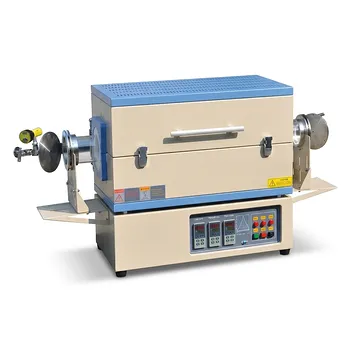
Three Zone Tube Furnace with 24 Inch Heating Length and Hinged Flange Quartz Tube System

Three Zone Tube Furnace with 11 Inch or 15 Inch Quartz Tube and Hinged Flanges for Vacuum Atmosphere Heat Treatment
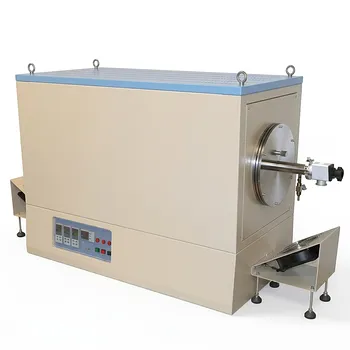
1100°C Three Zone Tube Furnace with 8.5 to 11 Inch OD Quartz Tube and Vacuum Flanges for Large Wafer Processing

5 Inch Three Zone Rotary Tube Furnace with Integrated Gas Delivery System and 1200C Capability for Advanced Material CVD Processing
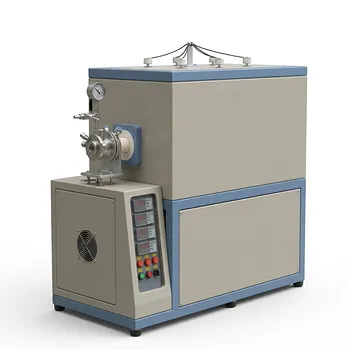
High Temperature 1700C Three Zone Tube Furnace with Alumina Tube 50mm 60mm 80mm OD for Material Research and Industrial Heat Treatment
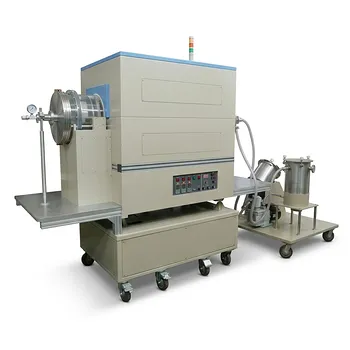
Three Zone Rotary Tube Furnace with Automatic Powder Feeding for Large Scale CVD Coating 1100C
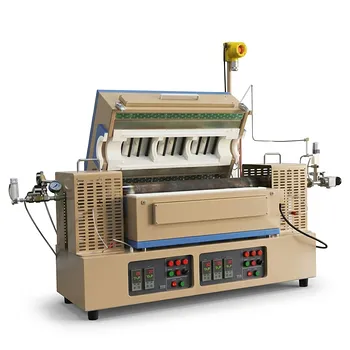
Three Zone Hydrogen Gas Tube Furnace with 82mm Superalloy Tube and Dual Hydrogen Detectors 1200C High Temperature Material Processing System
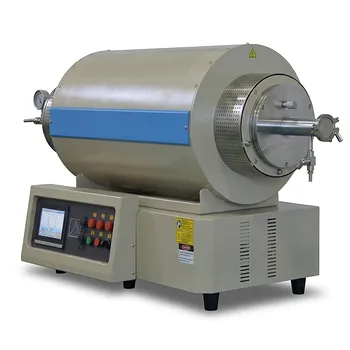
1200C Max Three Zone Tube Furnace 6 Inch OD Max with Tube and Flange
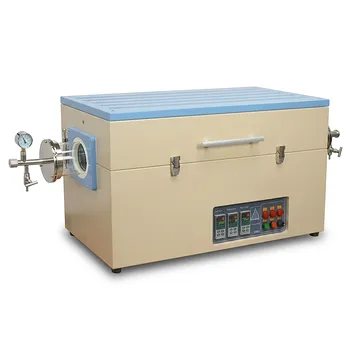
Three Zone Split Tube Furnace 36 Inch Heating Length High Temperature 1200C Material Research Furnace with Vacuum Flanges
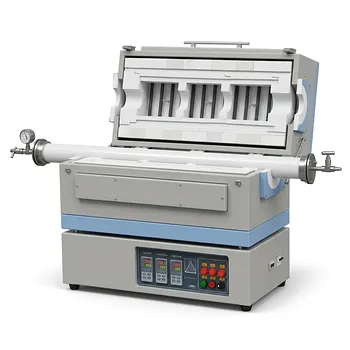
High Temperature 1500C Three Zone Split Tube Furnace with 80mm Alumina Tube and Vacuum Flange
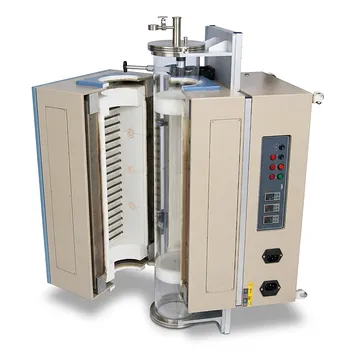
Large Vertical Three Zone Tube Furnace with 8 Inch or 11 Inch Quartz Tube and High Vacuum Flanges 1200C
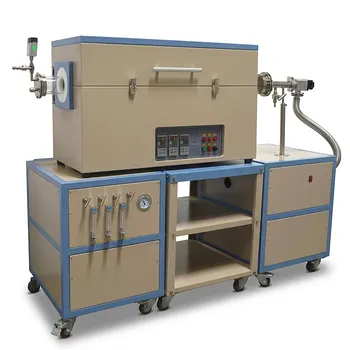
Three Zone Quartz Tube Furnace with 3 Channel Gas Mixer Vacuum Pump and Anti Corrosive Vacuum Gauge
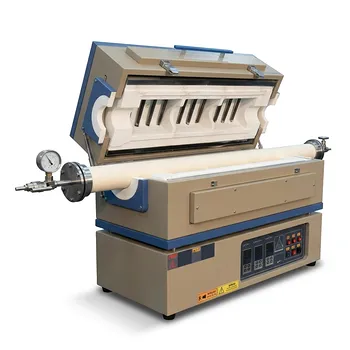
1600C Three Zone Split Tube Furnace with Alumina Tube and Vacuum Flange
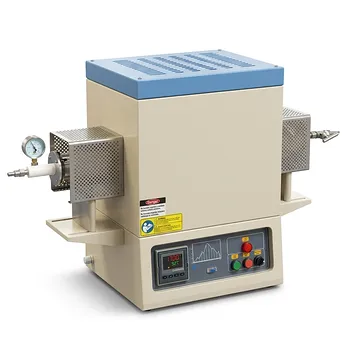
High Temperature Three Zone Tube Furnace 1700C with Alumina Tube and Water Cooled Flanges
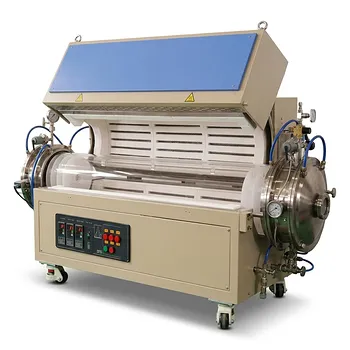
High Temperature Three Zone Split Tube Furnace 1200C Max 35.4 Inch Heating Length 8 Inch ID Tube
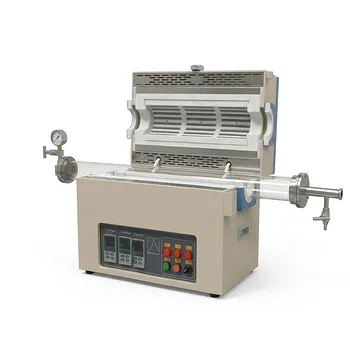
1200°C Three Zone Split Tube Furnace with 18 Inch Heating Length and Vacuum Flanges
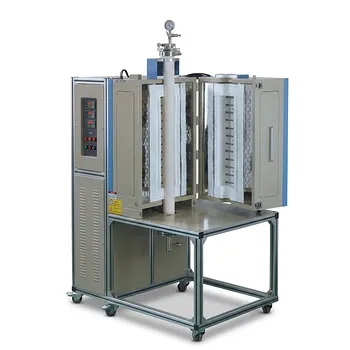
Three Zone Heating Split Vertical Tube Furnace 1700 High Temperature Vacuum Atmosphere Thermal Process System
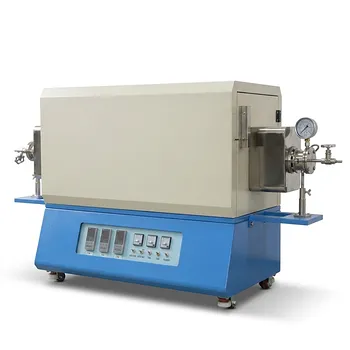
Three Temperature Zone High Temperature Vacuum Tube Furnace for CVD and Material Sintering
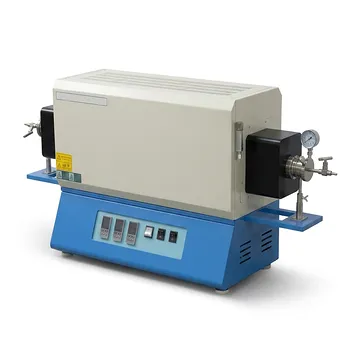
High Temperature Three Temperature Zone Tube Furnace for Advanced Material Science Sintering and Chemical Vapor Deposition Applications