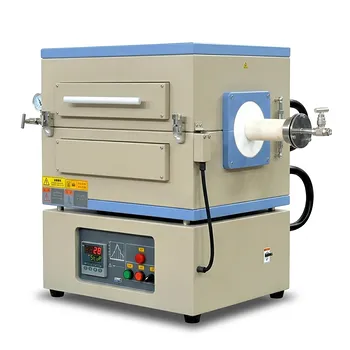
What is the function of a high-precision tube furnace in SWCNT purification? Master Selective Oxidative Cleaning
Updated 3 months ago
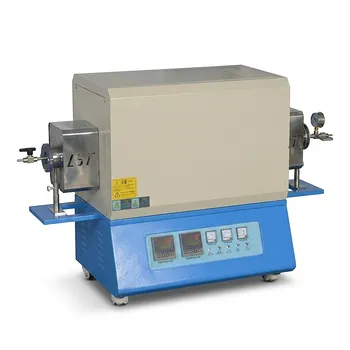
A high-precision tube furnace serves as the critical reactor for the selective oxidative cleaning of single-walled carbon nanotubes (SWCNTs). By maintaining a constant 400°C environment and facilitating multi-channel gas switching, the furnace enables the precise removal of amorphous carbon impurities while simultaneously transforming residual iron catalysts into iron oxides. This specific thermal treatment prepares the nanotubes for deep purification by exposing impurity sites and adjusting surface chemistry without compromising the integrity of the SWCNT structure.
The high-precision tube furnace provides the thermal stability and atmospheric control necessary to differentiate between carbon phases, ensuring that only unwanted amorphous carbon is oxidized. This process cleans the nanotube surface and chemically alters metallic catalysts to facilitate their complete removal in subsequent purification stages.
Achieving Selective Oxidation Through Thermal Control
Precise Temperature Management at 400°C
The furnace maintains a stable thermal field, typically set to 400°C, which is the critical threshold where amorphous carbon begins to oxidize and sublimate. Because single-walled carbon nanotubes have a higher thermal stability than disordered carbon, this precise temperature allows for the selective destruction of impurities while leaving the SWCNTs intact.
Elimination of Amorphous Carbon
During the pre-oxidation phase, the furnace provides the energy required to break the bonds of amorphous carbon on the nanotube surface. This cleaning process is essential for reducing the raw material's mass of non-tubular carbon, which significantly increases the overall purity of the base material for further processing.
Multi-Channel Gas Switching
The furnace's ability to switch between argon and air flows is vital for controlling the start and end of the oxidation reaction. By introducing an inert atmosphere during ramp-up and then switching to air, the operator can ensure that oxidation only occurs once the desired steady-state temperature is reached.
Catalyst Transformation and Surface Preparation
Conversion of Metallic Catalysts
Residual iron metal catalysts used in SWCNT synthesis are often "shielded" by carbon layers, making them difficult to remove with acid. The tube furnace converts these metallic iron catalysts into iron oxides, a process that expands the particles and cracks the surrounding carbon shells.
Exposing Impurity Sites for Deep Purification
By oxidizing the metal and the surrounding carbon, the furnace effectively exposes the impurity sites. This transformation is a prerequisite for subsequent chemical leaching or "deep purification," as it allows acids to reach and dissolve the now-accessible iron oxides.
Adjustment of Oxygen-Containing Functional Groups
Beyond simple cleaning, the thermal environment adjusts the distribution of oxygen-containing functional groups, such as carboxyl and lactone groups. This chemical tuning is critical for enhancing hydrophobic interactions with surfactants, which are often used in later dispersion and sorting steps.
Understanding the Trade-offs and Risks
The Risk of SWCNT Damage
The primary trade-off in air pre-oxidation is the narrow window between removing impurities and destroying the nanotubes themselves. If the furnace temperature exceeds the stable threshold or if the residence time is too long, the oxygen will begin to consume the SWCNTs, leading to significant yield loss.
Thermal Gradients and Non-Uniformity
In lower-quality furnaces, temperature fluctuations or "hot spots" within the tube can lead to uneven purification. This results in a sample where some nanotubes are over-oxidized (damaged) while other areas still contain high levels of amorphous carbon.
Atmospheric Contamination
The success of this phase relies on a strictly controlled atmosphere; any leaks that allow uncontrolled oxygen ingress during the ramp-up phase can trigger premature and aggressive oxidation. Ensuring superior sealing performance is mandatory to prevent the degradation of the nanotubes before the target temperature is reached.
How to Apply This to Your Purification Workflow
Selecting the Right Strategy for Your Goal
To maximize the effectiveness of your high-precision tube furnace during SWCNT pre-oxidation, align your parameters with your specific objective:
- If your primary focus is maximum purity: Prioritize the gas-switching sequence to ensure air is only introduced at the exact peak temperature, maximizing the removal of amorphous carbon.
- If your primary focus is structural integrity: Utilize a slightly lower temperature (e.g., 350°C - 380°C) with a longer duration to minimize the risk of damaging the nanotube lattice.
- If your primary focus is subsequent catalyst removal: Ensure the furnace provides a high-oxygen environment specifically to drive the complete conversion of iron to iron oxide for easier acid leaching.
By mastering the precise thermal and atmospheric variables of the tube furnace, you transform a crude synthetic product into a high-quality, purified nanomaterial ready for advanced applications.
Summary Table:
| Purification Phase | Furnace Function | Key Benefit/Parameter |
|---|---|---|
| Selective Oxidation | Removes amorphous carbon via thermal energy | High purity; maintains SWCNT structure |
| Catalyst Modification | Converts iron catalysts into iron oxides | Cracks carbon shells; assists acid leaching |
| Atmospheric Control | Multi-channel gas switching (Argon to Air) | Prevents premature oxidation; ensures safety |
| Surface Tuning | Adjusts oxygen-containing functional groups | Enhances hydrophobic interactions/dispersion |
Elevate Your Nanomaterial Research with THERMUNITS
Achieving the razor-thin margin between purifying and damaging single-walled carbon nanotubes requires absolute thermal precision. THERMUNITS is a leading manufacturer of high-temperature laboratory equipment, providing the material science and industrial R&D sectors with the exactness needed for advanced thermal processing.
Whether you are conducting SWCNT purification, CVD synthesis, or metal sintering, our comprehensive range of solutions includes:
- Precision Tube Furnaces (Vertical, Horizontal, & Multi-zone)
- Muffle, Vacuum, and Atmosphere Furnaces
- Rotary and Hot Press Furnaces
- CVD/PECVD Systems & Dental Furnaces
- Vacuum Induction Melting (VIM) & High-Quality Thermal Elements
Ready to optimize your lab's efficiency and purity levels?
Contact our technical experts today to discover how THERMUNITS can provide the perfect heat treatment solution for your specific application.
References
- Yiman Huang, Xilai Jia. Freon–CO<sub>2</sub>-assisted purification of single-walled carbon nanotubes. DOI: 10.1039/d4na00610k
Mentioned Products
- High Temperature Dual Zone Split Tube Furnace for Advanced Atmosphere Sintering and Vacuum CVD Applications
- Compact High Temperature 1600C Tube Furnace with 50mm Alumina Tube and Vacuum Flanges for Material Sintering
- High Temperature 1700C Vertical Tube Furnace for Powder Spherification and Material Sintering
- High Temperature Compact Vacuum Tube Furnace 1750C Max 60mm OD Alumina Tube
- High Temperature 1700C Tube Furnace with 4 Inch OD Alumina Tube and Vacuum Sealing Flanges
People Also Ask
- What is the function of a dual-zone tube furnace in CVD for 2D perovskites? Optimize Precision & Film Uniformity
- How is a dual-temperature zone tube furnace configured for MXene-based metal phosphides? Expert Synthesis Guide
- What are the technical advantages of a dual-zone tube furnace for phosphidation? Optimize Cobalt Nanowall Synthesis.
- What are the core functions of a dual-zone tube furnace in the growth of FexTaSe2 single crystals? CVT Synthesis Guide
- What is the primary function of an industrial-grade dual-zone tube furnace? Mastering CuInP2S6 CVT Crystal Growth

Tech Team · ThermUnits
Last updated on Jun 02, 2026
Related Products
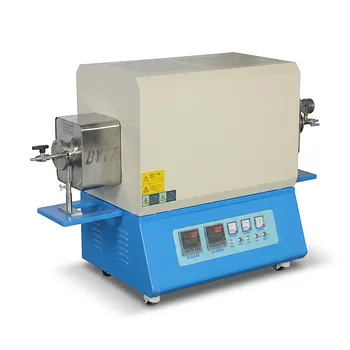
High Temperature Dual Zone Split Tube Furnace for Advanced Atmosphere Sintering and Vacuum CVD Applications

Compact High Temperature 1600C Tube Furnace with 50mm Alumina Tube and Vacuum Flanges for Material Sintering

High Temperature 1700C Vertical Tube Furnace for Powder Spherification and Material Sintering
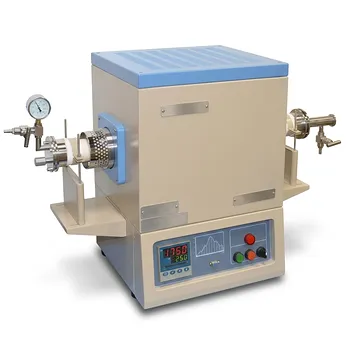
High Temperature Compact Vacuum Tube Furnace 1750C Max 60mm OD Alumina Tube
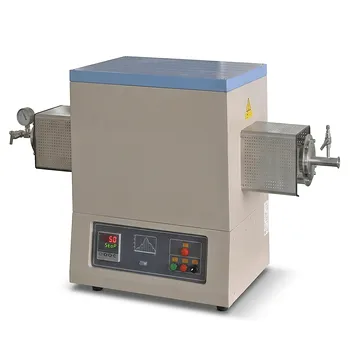
High Temperature 1700C Tube Furnace with 4 Inch OD Alumina Tube and Vacuum Sealing Flanges
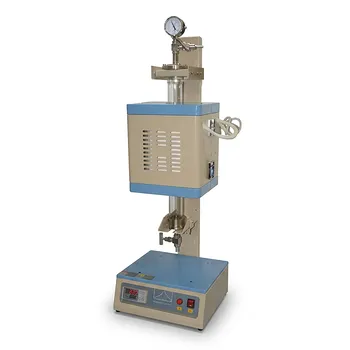
Compact Vertical Split Quartz Tube Furnace with Stainless Steel Vacuum Flanges for Rapid Thermal Quenching and Controlled Atmosphere Material Processing
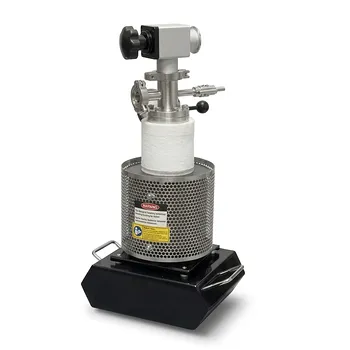
High Temperature 1100C Compact Top Loading Vertical Vacuum Tube Furnace for High Vacuum Noble Metal Melting and Material Research

1800C High Temperature Compact Vacuum Tube Furnace with 60mm OD Alumina Tube and Kanthal MoSi2 Heating Elements

High Temperature Automated 5 Inch Tube Furnace for Autonomous Material Research and Advanced Laboratory R&D
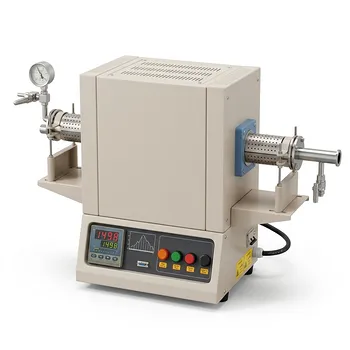
1500C High Temperature Compact Tube Furnace 2 Inch OD with Vacuum Flanges and Complete Accessories
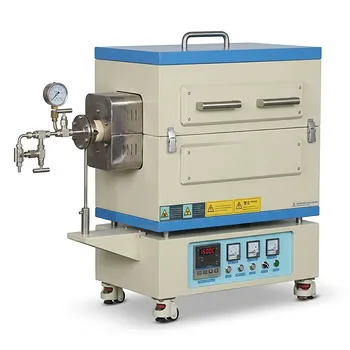
High Temperature Split Tube Furnace 1500C for Material Research Vacuum and Atmosphere Thermal Processing

High Temperature 1700C Benchtop Tube Furnace with 5 Inch Heating Zone High Purity Alumina Tube and Vacuum Sealing Flanges

High Temperature 1700C Tube Furnace with High Vacuum Turbomolecular Pump System and Multi Channel Mass Flow Controller Gas Mixer
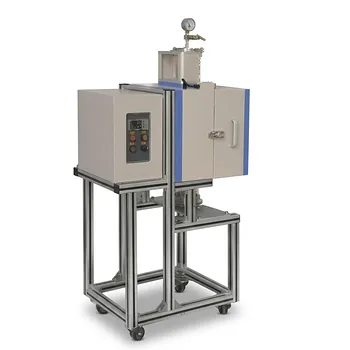
1200°C 5 Inch Vertical Quartz Tube Furnace with Stainless Steel Vacuum Flanges
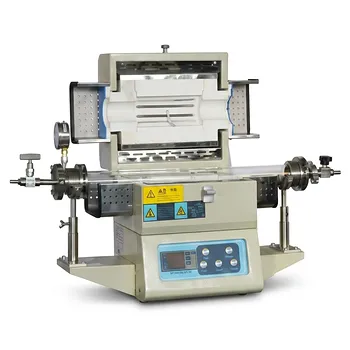
High Temperature 1200C Split Tube Furnace for CVD Research and Vacuum Atmosphere Heat Treatment
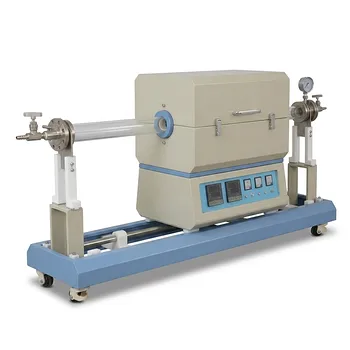
Double Zone Fast Heating Tube Furnace High Temperature Vacuum Atmosphere System
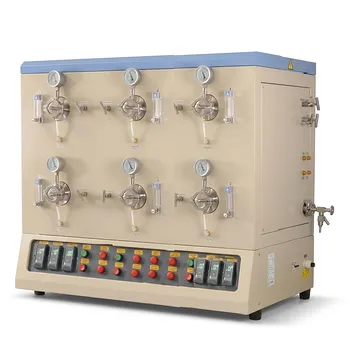
1200C High Throughput Multi Channel Tube Furnace with 50mm Quartz Tubes for Annealing and Material Phase Diagram Research

Vertical 1700C Vacuum and Atmosphere Tube Furnace with 80mm Alumina Tube
High Temperature Dual Zone Vacuum Tube Furnace for Material Research and CVD Processing