What is the function of a high-temperature atmosphere tube furnace in evaluating calcium-looping adsorbent stability?
Updated 3 months ago
The high-temperature atmosphere tube furnace serves as the fundamental testing ground for simulating the cyclic chemical reactions required for carbon capture and energy storage. It provides a precisely controlled thermodynamic environment that allows researchers to alternate between the carbonation stage (650–850 °C) and the calcination stage (exceeding 900 °C) while simultaneously managing the transition between carbon dioxide and nitrogen atmospheres.
Core Takeaway: A high-temperature tube furnace is essential for replicating the harsh, repetitive thermal and chemical stresses of calcium-looping cycles, enabling the study of material durability and the effectiveness of anti-sintering additives.
Simulating the Dual-Stage Calcium-Looping Cycle
Precision Temperature Modulation
The furnace acts as a programmable reactor that can maintain the specific temperature ranges required for the two halves of the calcium-looping cycle. It stabilizes the environment for carbonation at lower temperatures and provides the high-intensity heat necessary for calcination to release captured $CO_2$.
Dynamic Atmosphere Control
Equipped with multiple gas inlet lines, the furnace allows for the immediate switching of gas compositions, such as moving from a $CO_2$ rich environment to an inert $N_2$ or air purge. This capability is critical for mimicking real-world industrial flue gas conditions and ensuring the reaction stoichiometry is strictly maintained.
Programmable Multi-Stage Sequencing
Modern furnaces utilize multi-stage controllers to automate the transition between heating, soaking, and cooling phases. This automation is necessary for conducting long-term cyclic stability tests, where a material must undergo dozens or hundreds of cycles to determine its functional lifespan.
Investigating Material Longevity and Sintering
Evaluating Thermal Stress and Sintering
High temperatures often cause calcium-based adsorbents to undergo sintering, where particles fuse together and lose their reactive surface area. The tube furnace provides a stable thermal field to investigate how different material compositions, such as those treated with chloride salts, can inhibit this structural degradation.
Simulating Accelerated Aging
By maintaining constant thermal stress over extended periods—sometimes hundreds of hours—the furnace simulates the long-term service performance of adsorbents in ultra-supercritical power plants. This allows researchers to predict how a material will behave after months of industrial operation within a compressed laboratory timeframe.
Verification of Structural Integrity
The furnace ensures that the active components of the adsorbent are formed correctly within the pores of the support material. By applying controlled heating rates, such as 3°C/min, the equipment prevents excessive agglomeration and ensures that the active sites remain highly dispersed and accessible for gas capture.
Understanding the Trade-offs
Thermal Inertia vs. Rapid Cycling
While tube furnaces provide excellent thermal uniformity, their high thermal mass can make rapid temperature switching between cycles time-consuming. This can lead to longer testing durations compared to fluidized bed reactors, which may better simulate the kinetic speed of industrial systems.
Static vs. Dynamic Gas Flow
In a standard tube furnace, the adsorbent is often static, which may not perfectly replicate the mass transfer dynamics found in moving-bed or circulating reactors. This limitation means that while the chemical stability is well-tested, the physical attrition of the particles due to friction is not fully captured.
How to Apply This to Your Project
Making the Right Choice for Your Goal
To maximize the utility of a high-temperature atmosphere tube furnace in your research, consider the following strategic focuses:
- If your primary focus is material discovery: Use the furnace to test a wide variety of dopants and additives at small scales to identify which chemical compositions best resist sintering at temperatures exceeding 900 °C.
- If your primary focus is industrial simulation: Focus on long-duration aging tests with multi-gas atmospheric switching to observe how the adsorbent handles the impurities typically found in flue gas.
- If your primary focus is kinetic modeling: Utilize the furnace’s programmable temperature control to apply varied heating rates, helping to define the precise decomposition temperatures of your precursors.
By leveraging the precise thermal and atmospheric control of the tube furnace, you can transform a simple chemical precursor into a robust, high-performance adsorbent capable of enduring the rigors of industrial energy storage.
Summary Table:
| Feature | Function in Calcium-Looping | Key Benefit |
|---|---|---|
| Precision Heating | Alternates between carbonation (650-850°C) and calcination (>900°C) | Replicates industrial thermal stress |
| Atmosphere Control | Switches between $CO_2$ and $N_2$/Air purge | Mimics real-world flue gas conditions |
| Multi-Stage Programming | Automates hundreds of heating/cooling cycles | Enables long-term cyclic stability testing |
| Stable Thermal Field | Maintains constant heat over extended durations | Simulates accelerated material aging and sintering |
Advance Your Material Science Research with THERMUNITS
Precise thermal control is the backbone of groundbreaking carbon capture and energy storage research. THERMUNITS is a leading manufacturer specializing in high-performance laboratory equipment tailored for material science and industrial R&D.
Our comprehensive range of thermal solutions—including Atmosphere Tube Furnaces, Vacuum and Muffle Furnaces, CVD/PECVD systems, and Vacuum Induction Melting (VIM) furnaces—is designed to deliver the exact stoichiometry and temperature uniformity required for complex cyclic stability testing.
Why partner with THERMUNITS?
- Reliability: Built to withstand repetitive, high-intensity thermal cycles.
- Precision: Advanced programmable controllers for exact atmospheric switching.
- Versatility: Solutions ranging from Dental Furnaces to industrial Electric Rotary Kilns.
Ready to enhance your lab's testing capabilities and ensure the structural integrity of your adsorbents? Contact our technical experts today to find the perfect furnace for your specific application!
References
- Dehao Kong, Zhihui Wang. Enhancement of Thermochemical Energy Storage by Alkali Metal Chloride Salts-Doped Ca-Based Sorbents: A Combined DFT and Experimental Study. DOI: 10.3390/molecules29246058
Mentioned Products
- 1750°C High Temperature Benchtop Vacuum Atmosphere Tube Furnace with Kanthal Super 1800 Heating Elements and 60mm Alumina Processing Tube
- 1700C High Temperature Alumina Tube Furnace with 18 Inch Heated Zone and Vacuum Sealing Flanges
- High Temperature 1200C Split Tube Furnace for CVD Research and Vacuum Atmosphere Heat Treatment
- High Temperature Split Tube Furnace 1500C for Material Research Vacuum and Atmosphere Thermal Processing
- High Temperature Vertical Atmosphere Controlled Furnace with Automatic Bottom Loading and 1700°C Capacity for Advanced Material Research
People Also Ask
- What core functions does a high-temperature vacuum tube furnace provide? Optimize np-CuSn Sintering & Joint Integrity
- What is the role of a high-temperature tube furnace in the calcination process of ZnO/In2O3 nanocomposites?
- What role does a high-temperature tube furnace play in the sulfidation heat treatment of CoS@C/MXene nanocomposites? Guide
- Why is a high-temperature tube furnace required for CuAlO2 heat treatment? Master Phase Transformation Today
- What role does a high-temperature tube furnace play in executing nitrogen absorption kinetic experiments? Expert Insights

Tech Team · ThermUnits
Last updated on Jun 03, 2026
Related Products

1750°C High Temperature Benchtop Vacuum Atmosphere Tube Furnace with Kanthal Super 1800 Heating Elements and 60mm Alumina Processing Tube

1700C High Temperature Alumina Tube Furnace with 18 Inch Heated Zone and Vacuum Sealing Flanges
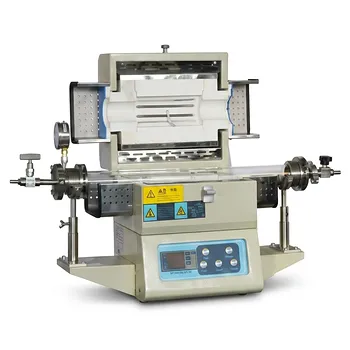
High Temperature 1200C Split Tube Furnace for CVD Research and Vacuum Atmosphere Heat Treatment
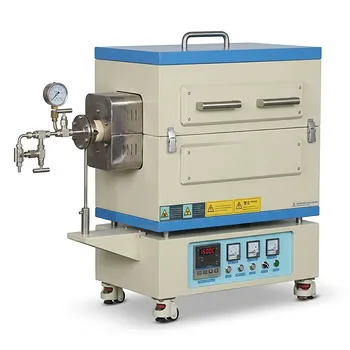
High Temperature Split Tube Furnace 1500C for Material Research Vacuum and Atmosphere Thermal Processing
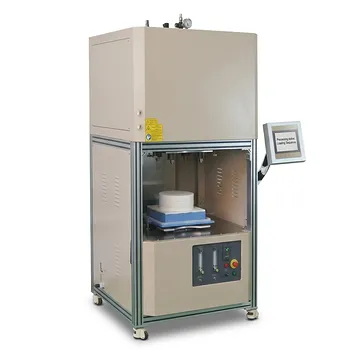
High Temperature Vertical Atmosphere Controlled Furnace with Automatic Bottom Loading and 1700°C Capacity for Advanced Material Research
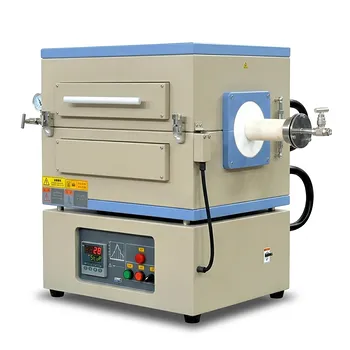
1500°C Split Tube Furnace with Alumina Tube and Vacuum Sealing Flanges for Material Research
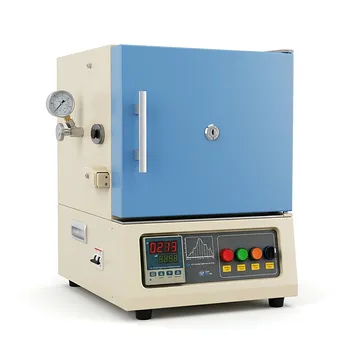
1200C Hybrid Muffle and Tube Furnace for Material Research with Dual Atmosphere Control Quartz Tubes

Vertical 1700C Vacuum and Atmosphere Tube Furnace with 80mm Alumina Tube

1100°C High Temperature Quartz Chamber Furnace 8 Inch OD with 7.6 Liter Capacity and Vacuum Atmosphere Capability

High Temperature Tube Furnace 1500C with Sliding Flanges and 50mm OD for Rapid Thermal Processing Fast Heating and Cooling

High Temperature 1700C Tube Furnace with High Vacuum Turbomolecular Pump System and Multi Channel Mass Flow Controller Gas Mixer

High Temperature 1700C Vertical Tube Furnace for Powder Spherification and Material Sintering

Compact High Temperature 1600C Tube Furnace with 50mm Alumina Tube and Vacuum Flanges for Material Sintering

High Temperature 1700C Benchtop Tube Furnace with 5 Inch Heating Zone High Purity Alumina Tube and Vacuum Sealing Flanges
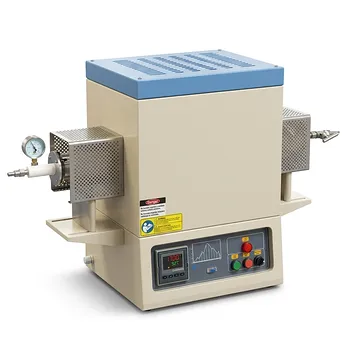
High Temperature Three Zone Tube Furnace 1700C with Alumina Tube and Water Cooled Flanges

High Temperature 1700C Six Zone Split Tube Furnace with Alumina Tube and Water Cooled Flanges

High Temperature 1700C Tube Furnace with 4 Inch OD Alumina Tube and Vacuum Sealing Flanges

High Temperature Automated 5 Inch Tube Furnace for Autonomous Material Research and Advanced Laboratory R&D
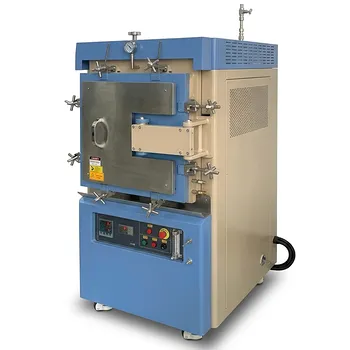
Atmosphere Controlled Muffle Furnace 1700C Maximum Temperature 80L High Capacity Vacuum Inert Gas Box Furnace
