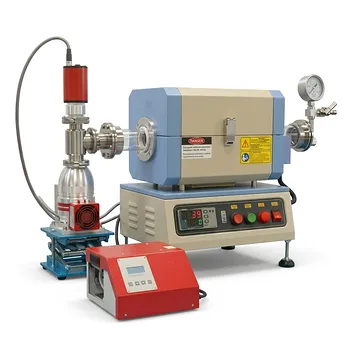
What is the function of a high-temperature tube furnace in NVP/C calcination? Optimize NASICON Phases & Carbon Coating
Updated 3 months ago
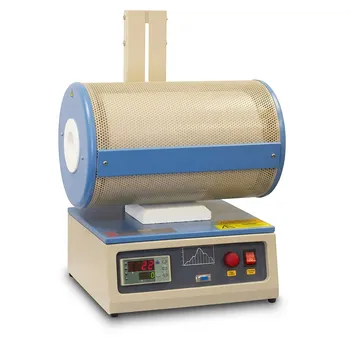
The high-temperature tube furnace acts as the primary reactor for the final thermal synthesis of Na3V2(PO4)3/C (NVP/C) composites. It provides a strictly controlled thermal and chemical environment—typically around 750°C under a reducing or inert atmosphere—to drive the solid-state reactions necessary to form the NASICON crystalline structure. Beyond crystallization, the furnace facilitates the in-situ carbonization of organic precursors into a conductive coating while preventing the unwanted oxidation of vanadium.
Core Takeaway: A high-temperature tube furnace is essential for NVP/C synthesis because it simultaneously manages phase transformation, valence state stabilization (V3+), and the formation of a conductive carbon network through precise atmosphere and temperature control.
Facilitating the Synthesis of the NASICON Structure
Induction of Solid-State Reactions
The furnace provides the critical thermal energy required to trigger solid-state reactions among the dried NVP precursors. By maintaining a steady, high-temperature environment, it enables components like sodium, vanadium, and phosphate sources to rearrange into the specific NASICON-type (Sodium Super Ionic Conductor) crystalline lattice.
Phase Transformation and Crystal Growth
Precise temperature control, often involving specific heating rates (e.g., 5°C per minute), ensures a complete phase transformation. This allows the crystals to grow uniformly with high crystallinity, which is vital for the efficient movement of sodium ions within the final battery material.
Atmosphere Control and Oxidation Management
Stabilization of the V3+ Valence State
The tube furnace allows for the use of specific gases, such as an argon-hydrogen (Ar+H2) mixture or pure nitrogen, to create a reducing or inert environment. This is critical for stabilizing vanadium in its V3+ oxidation state, preventing it from oxidizing to higher, less desirable states that would degrade electrochemical performance.
Prevention of Oxidative Loss
The sealed nature of the tube furnace protects the material from atmospheric oxygen. This ensures that the carbon source and the vanadium components do not undergo oxidative degradation, maintaining the chemical integrity and yield of the NVP/C composite.
In-Situ Carbonization and Conductivity Enhancement
Conversion of Organic Matter
During the final calcination, the furnace triggers the pyrolysis of organic templates or precursors (such as citric acid). This process converts these organic materials into a conductive carbon coating that encapsulates the NVP particles.
Uniform Coating Formation
The stable thermal uniformity within the furnace ensures that the carbon layer forms a uniform conductive network. This coating is essential for enhancing the overall electrical conductivity of the material and stabilizing the interface between the electrode and the electrolyte.
Understanding the Trade-offs and Pitfalls
Temperature Sensitivity and Sintering
While high temperatures are necessary for crystallinity, excessive heat can lead to particle agglomeration or sintering. This reduces the active surface area and can hinder the kinetics of the sodium-ion exchange, making temperature precision a non-negotiable requirement.
Atmosphere Integrity
Any leak in the furnace seals can introduce trace amounts of oxygen, which is catastrophic for NVP synthesis. Even minor oxidation can transition the vanadium from V3+ to V4+ or V5+, fundamentally changing the material's properties and reducing its capacity.
Removal of Volatile Impurities
The furnace must effectively manage the removal of organic impurities and volatile components. If the heating profile is too rapid, these gases can get trapped or cause structural defects, leading to poor mechanical stability in the final composite.
How to Apply This to Your Process
Implementation Guidelines
- If your primary focus is maximimizing ionic conductivity: Prioritize the precision of the 750°C thermal soak to ensure the complete formation of the NASICON crystalline phase.
- If your primary focus is preventing vanadium oxidation: Ensure a strict Ar+H2 reducing atmosphere is maintained throughout both the heating and cooling cycles.
- If your primary focus is high-rate performance: Focus on the ramp rate and organic precursor ratio to achieve a thin, uniform, and fully carbonized surface coating.
The high-temperature tube furnace is the definitive tool for transforming raw precursors into a high-performance NVP/C cathode by balancing delicate chemical reduction with rigorous structural crystallization.
Summary Table:
| Key Function | Primary Objective | Process Detail |
|---|---|---|
| NASICON Synthesis | Phase Transformation | Solid-state reactions at ~750°C to form crystalline lattice. |
| Atmosphere Control | V3+ Valence Stability | Use of Ar+H2 or N2 to prevent vanadium oxidation. |
| In-Situ Carbonization | Conductivity Enhancement | Pyrolysis of organic precursors into a uniform carbon layer. |
| Thermal Management | Crystal Uniformity | Controlled heating rates (e.g., 5°C/min) to prevent sintering. |
Elevate Your Battery Material Research with THERMUNITS
Precise atmospheric control and thermal uniformity are non-negotiable for high-performance NVP/C synthesis. As a leading manufacturer of high-temperature laboratory equipment, THERMUNITS provides the advanced thermal processing solutions required for cutting-edge material science and industrial R&D.
Our extensive range includes:
- Precision Furnaces: Tube, Muffle, Vacuum, Atmosphere, and Rotary Furnaces.
- Advanced Systems: CVD/PECVD systems, Vacuum Induction Melting (VIM), and Hot Press furnaces.
- Specialized Equipment: Dental Furnaces, Electric Rotary Kilns, and high-quality Thermal Elements.
Whether you are stabilizing valence states or perfecting carbon coatings, our equipment ensures repeatable, high-purity results.
Ready to optimize your heat treatment process?
Contact our expert engineers today to find the perfect solution for your laboratory.
References
- Madhav Sharma, R. S. Dhaka. Understanding the Electrochemical Performance and Diffusion Kinetics of HC||Na3V2(PO4)3/C Full Cell Battery for Energy Storage Applications. DOI: 10.56042/ijpap.v62i2.7371
Mentioned Products
- 900°C Max Rotary Tube Furnace with 8 Inch 310S Alloy Tube and Optional Multi Zone Heating for Industrial Material Calcination
- High Temperature Tube Furnace 1500C with Sliding Flanges and 50mm OD for Rapid Thermal Processing Fast Heating and Cooling
- High Temperature 1700C Vertical Split Tube Furnace for Material Quenching and Single Crystal Growth
- High Temperature 1700C Vertical Tube Furnace for Powder Spherification and Material Sintering
- High Temperature 1700C Tube Furnace with High Vacuum Turbomolecular Pump System and Multi Channel Mass Flow Controller Gas Mixer
People Also Ask
- How does a rotary tube furnace improve the processing of granular materials? Enhance Uniformity and Reaction Kinetics
- Why use a rotary tube furnace for FACS carbonization? Ensure uniform morphology and prevent sphere agglomeration.
- Why is the precise optimization of residence time essential in the catalyst calcination process? Maximize Your Yields.
- In what ways do rotary tube furnaces enhance chemical and specialty mineral processing? Drive Precision and Uniformity.
- What parameters must operators control to maintain product quality in a rotary furnace? Master Your Heat Treatment.

Tech Team · ThermUnits
Last updated on Jun 03, 2026
Related Products
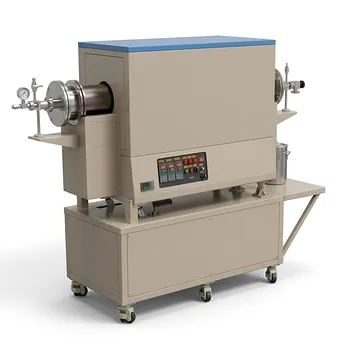
900°C Max Rotary Tube Furnace with 8 Inch 310S Alloy Tube and Optional Multi Zone Heating for Industrial Material Calcination

High Temperature Tube Furnace 1500C with Sliding Flanges and 50mm OD for Rapid Thermal Processing Fast Heating and Cooling
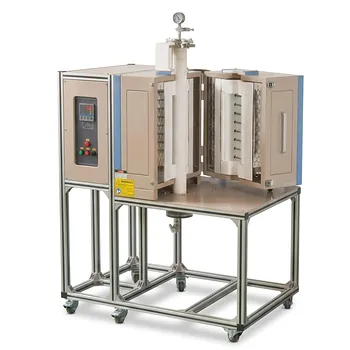
High Temperature 1700C Vertical Split Tube Furnace for Material Quenching and Single Crystal Growth

High Temperature 1700C Vertical Tube Furnace for Powder Spherification and Material Sintering

High Temperature 1700C Tube Furnace with High Vacuum Turbomolecular Pump System and Multi Channel Mass Flow Controller Gas Mixer

Compact High Temperature 1600C Tube Furnace with 50mm Alumina Tube and Vacuum Flanges for Material Sintering
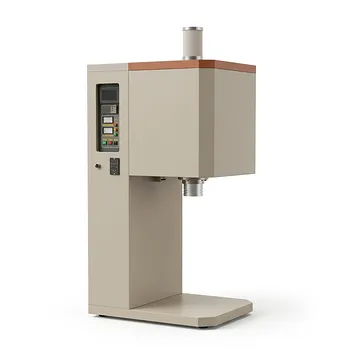
Vertical Openable Tube Furnace 0-1700c High Temperature Laboratory System for CVD and Vacuum Heat Treatment
High Temperature 1800C Atmosphere Tube Furnace for CVD Research and Vacuum Sintering Precision Heat Treatment
1750°C High Temperature Benchtop Vacuum Atmosphere Tube Furnace with Kanthal Super 1800 Heating Elements and 60mm Alumina Processing Tube
High Temperature 1700C Tube Furnace with 4 Inch OD Alumina Tube and Vacuum Sealing Flanges

1800C High Temperature Compact Vacuum Tube Furnace with 60mm OD Alumina Tube and Kanthal MoSi2 Heating Elements
High Temperature Three Zone Tube Furnace 1700C with Alumina Tube and Water Cooled Flanges
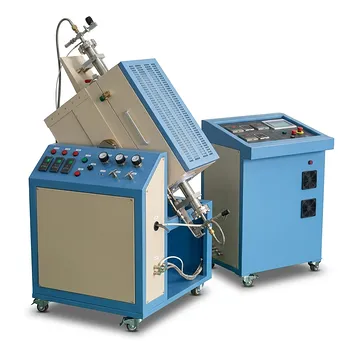
1100C High Pressure Rocking Tube Furnace with 2 Inch Super Alloy Processing Tube for Material Synthesis
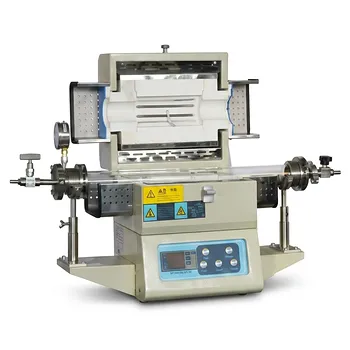
High Temperature 1200C Split Tube Furnace for CVD Research and Vacuum Atmosphere Heat Treatment
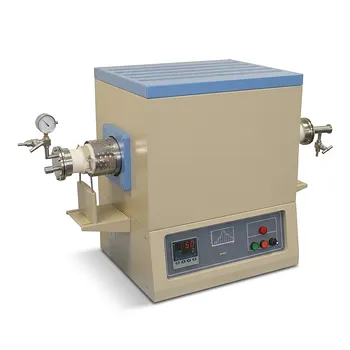
1700C High Temperature Alumina Tube Furnace with 18 Inch Heated Zone and Vacuum Sealing Flanges

High Temperature 1700C Benchtop Tube Furnace with 5 Inch Heating Zone High Purity Alumina Tube and Vacuum Sealing Flanges

High Temperature Automated 5 Inch Tube Furnace for Autonomous Material Research and Advanced Laboratory R&D
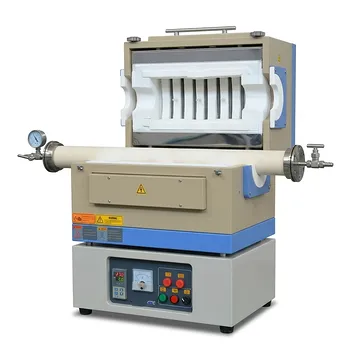
High Temperature 1600C Split Tube Furnace Vacuum Flanges Valves Optional 60mm 80mm Alumina Tube
Multi Position Tube Furnace 1100C for Laboratory Material Research and Advanced Industrial Thermal Processing