What is the function of a high-temperature tube furnace in p-Si@C synthesis? Unlock High-Performance Anode Materials
Updated 3 months ago
In the synthesis of carbon-coated porous silicon (p-Si@C), the high-temperature tube furnace serves as the primary reactor for controlled pyrolysis and structural engineering. It provides the precise thermal environment and inert atmosphere required to transform organic precursors into a nitrogen-doped hard carbon shell while protecting the silicon core from degradation.
Core Takeaway: The high-temperature tube furnace enables the oxygen-free transformation of polydopamine into a conductive carbon coating, a process that simultaneously prevents silicon oxidation and dictates the final electrochemical performance of the composite.
Facilitating the Chemical Transformation of Precursors
Triggering Pyrolytic Carbonization
The furnace provides the high-temperature environment—typically around 800 degrees Celsius—necessary for the pyrolysis of polydopamine (PDA) coatings. During this process, the organic precursor undergoes dehydrogenation and condensation, transforming into a stable, nitrogen-doped hard carbon shell.
Maintaining an Inert Protective Shield
By supplying a constant flow of high-purity argon (Ar), the tube furnace eliminates oxygen from the reaction chamber. This inert atmosphere is critical to prevent the oxidation of the silicon core, ensuring the active material retains its high theoretical capacity and electrochemical integrity.
Enabling In-Situ Nitrogen Doping
The thermal environment facilitates the integration of nitrogen atoms from the PDA precursor into the emerging carbon lattice. This in-situ doping enhances the electronic conductivity of the shell, which is essential for high-rate battery applications.
Engineering the Microstructure and Porosity
Controlling Pore Structure and Interlayer Spacing
Precise temperature management within the furnace determines the pore architecture and interlayer spacing of the hard carbon. These structural factors are the primary drivers of ion storage capacity and diffusion kinetics in the final p-Si@C material.
Ensuring Uniform Nucleation and Growth
The constant temperature zone of a high-quality tube furnace ensures that the carbonization process is uniform across the entire sample. This consistency prevents the formation of structural defects and ensures that the silicon quantum dots or porous structures remain stable during the coating process.
Facilitating Gas-Phase Intermediate Migration
In advanced synthesis, the furnace environment allows gas-phase intermediate products to migrate and deposit uniformly. This controlled movement is necessary to achieve a "conformal" coating, where the carbon shell perfectly mirrors the complex topography of the porous silicon.
Understanding the Trade-offs and Pitfalls
The Risk of Excessive Temperature
While high temperatures promote better graphitization and conductivity, exceeding the optimal range can lead to unwanted silicon grain growth. Excessive heat may also trigger the formation of silicon carbide (SiC) at the interface, which can impede lithium-ion transport.
Gas Flow and Byproduct Accumulation
Inadequate flow rates of the protective gas can lead to the accumulation of reaction byproducts within the tube. These residual gases can contaminate the carbon shell or lead to non-uniform coating thickness, negatively impacting the material's cycle life.
Thermal Gradient Challenges
If the furnace has a narrow "sweet spot" (constant temperature zone), materials placed at the edges may undergo incomplete pyrolysis. This results in a composite with inconsistent electrical properties, leading to localized "hot spots" during electrochemical cycling.
How to Apply This to Your Synthesis Goals
Based on your specific research or production objectives, the furnace parameters should be adjusted as follows:
- If your primary focus is maximizing electronic conductivity: Operate at the higher end of the carbonization range (800°C–1000°C) to promote a higher degree of carbon graphitization.
- If your primary focus is preserving silicon porosity: Utilize a strict inert atmosphere and moderate temperatures (~800°C) to prevent the silicon structure from collapsing or sintering.
- If your primary focus is optimizing ion diffusion: Fine-tune the cooling rate and gas flow to control the density and pore size of the nitrogen-doped carbon shell.
The high-temperature tube furnace is the indispensable tool that bridges the gap between raw organic-silicon mixtures and high-performance battery anodes.
Summary Table:
| Process Element | Furnace Function | Impact on p-Si@C Material |
|---|---|---|
| Pyrolysis | Controlled heating (~800°C) | Transforms organic precursors into conductive carbon shells |
| Atmosphere Control | High-purity Argon flow | Prevents silicon oxidation and ensures active material integrity |
| Nitrogen Doping | Precise thermal environment | Integrates nitrogen for enhanced electronic conductivity |
| Structural Tuning | Constant temperature zone | Determines pore architecture and ensures uniform coating |
| Reaction Safety | Byproduct management | Prevents contamination and avoids unwanted silicon carbide formation |
Elevate Your Material Research with THERMUNITS Precision
Are you looking to optimize the synthesis of p-Si@C or other advanced battery materials? THERMUNITS is a leading manufacturer of high-temperature laboratory equipment specifically designed for material science and industrial R&D.
We provide a comprehensive range of thermal processing solutions, including high-precision Tube Furnaces, CVD/PECVD systems, Vacuum and Atmosphere Furnaces, and advanced Rotary Kilns. Our equipment ensures the uniform heating and strict atmosphere control necessary to achieve superior electrochemical performance and structural integrity in your samples.
Ready to enhance your lab's capabilities? Contact our technical experts today to discuss your specific heat treatment requirements and discover how our solutions can accelerate your research breakthroughs!
References
- Zimu Zhang, Zisheng Guan. Silver-Assisted Chemical Etching for the Fabrication of Porous Silicon N-Doped Nanohollow Carbon Spheres Composite Anodes to Enhance Electrochemical Performance. DOI: 10.3390/ma17133189
Mentioned Products
- High Temperature Tube Furnace 1500C with Sliding Flanges and 50mm OD for Rapid Thermal Processing Fast Heating and Cooling
- High Temperature 1700C Tube Furnace with High Vacuum Turbomolecular Pump System and Multi Channel Mass Flow Controller Gas Mixer
- 1750°C High Temperature Benchtop Vacuum Atmosphere Tube Furnace with Kanthal Super 1800 Heating Elements and 60mm Alumina Processing Tube
- High Temperature 1700C Benchtop Tube Furnace with 5 Inch Heating Zone High Purity Alumina Tube and Vacuum Sealing Flanges
- 1700C High Temperature Alumina Tube Furnace with 18 Inch Heated Zone and Vacuum Sealing Flanges
People Also Ask
- How are high-temperature tube furnaces utilized to repair etching damage? Precision Lattice Restoration Solutions
- What core conditions does a high-temperature tube furnace provide for rGO aerogels? Mastering Precision Synthesis.
- What role does a high-temperature tube furnace play in CVD synthesis of silicon nanowires? Master VLS Growth Precision.
- How does precision tube furnace control influence CoFe nanoparticle formation? Master Your Bimetallic Synthesis.
- What role does a high-temperature tube furnace play in the sulfidation heat treatment of CoS@C/MXene nanocomposites? Guide

Tech Team · ThermUnits
Last updated on Jun 03, 2026
Related Products
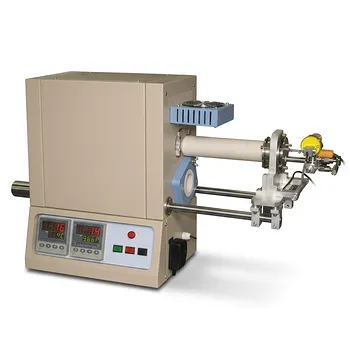
High Temperature Tube Furnace 1500C with Sliding Flanges and 50mm OD for Rapid Thermal Processing Fast Heating and Cooling

High Temperature 1700C Tube Furnace with High Vacuum Turbomolecular Pump System and Multi Channel Mass Flow Controller Gas Mixer
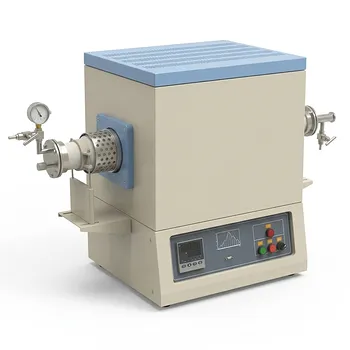
1750°C High Temperature Benchtop Vacuum Atmosphere Tube Furnace with Kanthal Super 1800 Heating Elements and 60mm Alumina Processing Tube

High Temperature 1700C Benchtop Tube Furnace with 5 Inch Heating Zone High Purity Alumina Tube and Vacuum Sealing Flanges
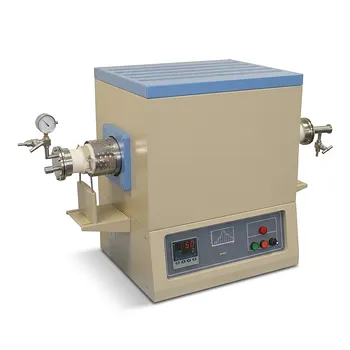
1700C High Temperature Alumina Tube Furnace with 18 Inch Heated Zone and Vacuum Sealing Flanges
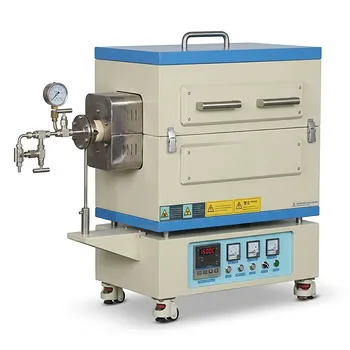
High Temperature Split Tube Furnace 1500C for Material Research Vacuum and Atmosphere Thermal Processing

Compact High Temperature 1600C Tube Furnace with 50mm Alumina Tube and Vacuum Flanges for Material Sintering

1800C High Temperature Compact Vacuum Tube Furnace with 60mm OD Alumina Tube and Kanthal MoSi2 Heating Elements
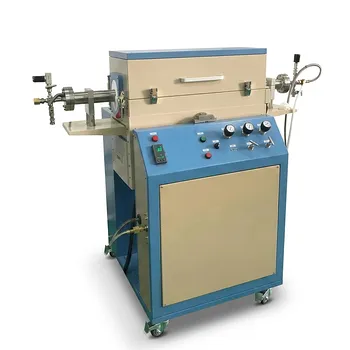
High Temperature Rocking Tube Furnace 1700°C Alumina Processing Tube with Precision Oscillation for Material Synthesis
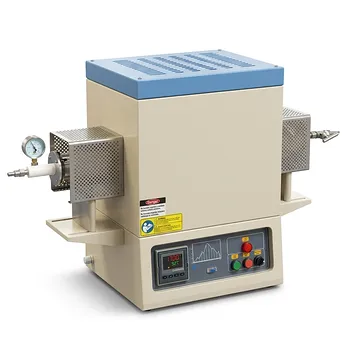
High Temperature Three Zone Tube Furnace 1700C with Alumina Tube and Water Cooled Flanges

High Temperature 1700C Vertical Tube Furnace for Powder Spherification and Material Sintering
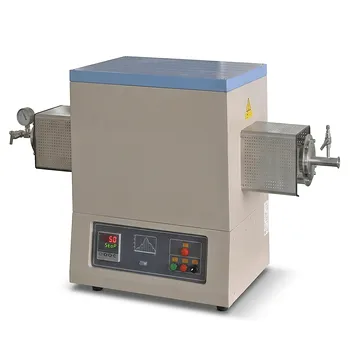
High Temperature 1700C Tube Furnace with 4 Inch OD Alumina Tube and Vacuum Sealing Flanges
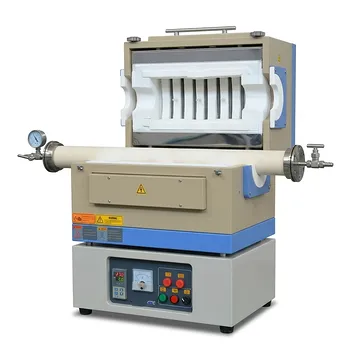
High Temperature 1600C Split Tube Furnace Vacuum Flanges Valves Optional 60mm 80mm Alumina Tube

High Temperature Automated 5 Inch Tube Furnace for Autonomous Material Research and Advanced Laboratory R&D
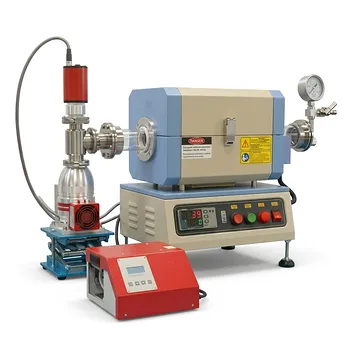
High Vacuum Compact Tube Furnace 1200C with Integrated Turbo Pump System and 8 Inch Heating Zone
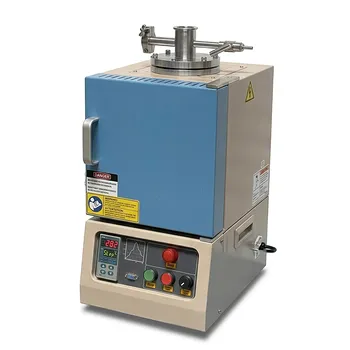
High Temperature Hybrid Muffle and Tube Furnace with Vacuum Capability and PID Control
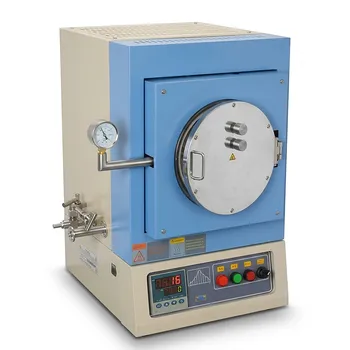
1100°C High Temperature Quartz Chamber Furnace 8 Inch OD with 7.6 Liter Capacity and Vacuum Atmosphere Capability

1100C Tube Furnace with Vacuum Flange and Programmable Temperature Controller for Material Science and Industrial Heat Treatment
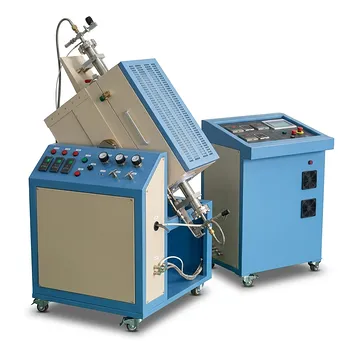
1100C High Pressure Rocking Tube Furnace with 2 Inch Super Alloy Processing Tube for Material Synthesis
