What is the function of high-temperature tube furnaces in GH4099 heat treatment? Optimize Microstructure & Strength
Updated 3 months ago
Industrial-grade high-temperature tube furnaces are the primary thermal processing units used to execute the solution and aging treatments required for GH4099 superalloy. By providing a strictly controlled environment of precise temperature gradients and protective atmospheres, these furnaces facilitate recrystallization, eliminate compositional segregation, and regulate the precipitation of the gamma-prime ($\gamma'$) strengthening phase. This precision is what allows the alloy to achieve the specific microstructure necessary for high-stress, high-temperature industrial applications.
Core Takeaway: The function of a tube furnace in GH4099 processing extends beyond simple heating; it acts as a precision metallurgical tool that engineers the material's internal structure. By managing phase dissolution and re-precipitation, the furnace directly determines the alloy's final tensile strength and creep resistance.
The Role of Solution Treatment in Microstructural Homogenization
Eliminating Compositional Segregation
During the initial solution treatment stage, the furnace maintains temperatures high enough to dissolve brittle phases and secondary precipitates back into the matrix. This process is critical for eliminating casting segregation, ensuring that alloying elements are distributed uniformly throughout the material.
Facilitating Recrystallization
The high-temperature environment provides the thermal energy necessary for recrystallization and residual stress relief. By accurately controlling the "holding time" at these elevated temperatures, the furnace allows the internal grain structure to reset, removing the stresses introduced during previous manufacturing steps.
Regulating the Gamma-Prime ($\gamma'$) Solvus
The furnace allows for precise positioning of the temperature relative to the $\gamma'$ solvus line. Super-solvus treatments (above the line) allow for controlled grain growth, while sub-solvus treatments (below the line) utilize undissolved phases to refine grain size, tailoring the alloy for either creep or fatigue resistance.
Precision Engineering Through Aging Treatments
Inducing Controlled Precipitation
Following solution treatment, the tube furnace is used for multi-stage aging treatments at lower, specifically calibrated temperatures. These stages drive the diffusion of alloying elements to form a fine dispersion of the $\gamma'$ strengthening phase, which is the primary source of the alloy's high-temperature strength.
Achieving Morphological Uniformity
The stability of the furnace’s temperature field ensures that the precipitated phases achieve a regular cubic microstructure. For advanced superalloys, this often results in a high volume fraction of precipitates (approximately 68%) with uniform sizing, which is essential for maximizing steady-state creep strength.
Atmospheric and Vacuum Protection
Many industrial tube furnaces incorporate vacuum or protective gas capabilities to prevent oxidation or decarburization during long soaking periods. This ensures that the chemical purity of the GH4099 surface remains intact, preventing the formation of weak "soft zones" that could lead to premature component failure.
Understanding the Trade-offs and Pitfalls
Grain Growth vs. Phase Dissolution
A common challenge in high-temperature treatment is the balance between dissolving unwanted phases and preventing excessive grain growth. While higher temperatures ensure a cleaner matrix, they also increase grain size, which can significantly reduce the fatigue life of the alloy.
Cooling Rate Sensitivity
The transition from the furnace to the cooling medium is as critical as the heating itself. If the cooling rate is not precisely managed after solution treatment, the $\gamma'$ phase may precipitate prematurely in an uncontrolled, coarse morphology, negating the benefits of the precisely controlled furnace environment.
Thermal Gradient Risks
In industrial-scale production, maintaining a uniform temperature field across the entire length of the tube is difficult. Even minor gradients can lead to inconsistent mechanical properties across a single batch of material, resulting in components that do not meet strict aerospace or power-generation standards.
How to Apply These Principles to Your Process
Making the Right Choice for Your Goal
- If your primary focus is maximizing creep resistance: Use the furnace for super-solvus solution treatment to encourage a larger grain size, which reduces grain-boundary sliding at high temperatures.
- If your primary focus is high fatigue strength: Prioritize sub-solvus treatments within the furnace to maintain a refined grain structure through pinning by undissolved precipitates.
- If your primary focus is chemical homogeneity: Implement multi-stage, long-duration soaking cycles to ensure the full dissolution of refractory metal segregations before beginning the aging process.
By viewing the high-temperature tube furnace as a governor of metallurgical kinetics rather than a simple heat source, engineers can achieve the "deep regulation" of properties required for high-performance superalloys.
Summary Table:
| Heat Treatment Stage | Primary Function | Microstructural Impact |
|---|---|---|
| Solution Treatment | Homogenization & Recrystallization | Eliminates segregation; dissolves brittle phases back into the matrix. |
| Aging Treatment | Controlled Precipitation | Induces uniform $\gamma'$ strengthening phases for high-temperature strength. |
| Atmospheric Control | Surface Protection | Prevents oxidation and decarburization, ensuring chemical purity and integrity. |
Elevate Your Material Research with THERMUNITS Precision
Achieving the perfect microstructure in GH4099 superalloys requires absolute thermal accuracy. THERMUNITS is a leading manufacturer of high-temperature laboratory equipment, providing the advanced thermal processing solutions needed for cutting-edge material science and industrial R&D.
From high-precision Tube and Vacuum Furnaces to specialized VIM (Vacuum Induction Melting) and CVD/PECVD systems, our equipment is engineered to give you total control over phase dissolution and precipitation kinetics. Whether you are optimizing for creep resistance or fatigue strength, our solutions—including Muffle, Rotary, and Hot Press furnaces—ensure repeatable, industry-standard results.
Ready to optimize your heat treatment process?
Contact our technical experts today to find the ideal furnace for your high-performance alloy development.
References
- Jiahao Liu, Qiang Hu. Influence of Various Heat Treatments on Microstructures and Mechanical Properties of GH4099 Superalloy Produced by Laser Powder Bed Fusion. DOI: 10.3390/ma17051084
Mentioned Products
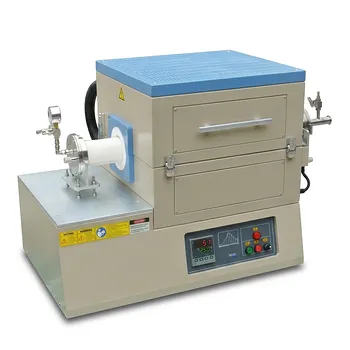
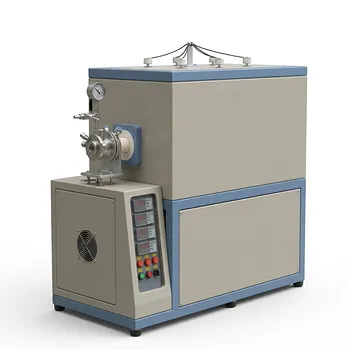
- High Temperature 1700C Three Zone Tube Furnace with Alumina Tube 50mm 60mm 80mm OD for Material Research and Industrial Heat Treatment
- 1100C Tube Furnace with Vacuum Flange and Programmable Temperature Controller for Material Science and Industrial Heat Treatment
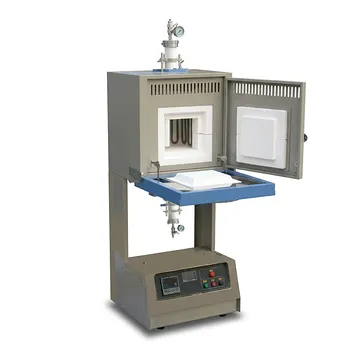
- Vertical Hybrid High Temperature Furnace 1500C Alumina Tube SOFC Fuel Cell Testing Laboratory Heat Treatment Research Equipment
- High Temperature Tube Furnace 1500C with Sliding Flanges and 50mm OD for Rapid Thermal Processing Fast Heating and Cooling
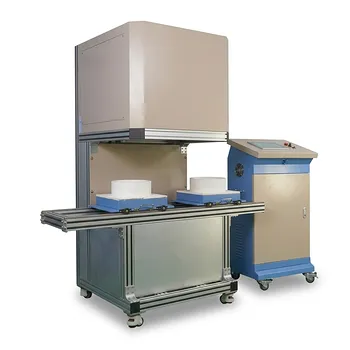
- High Temperature Bottom Loading Vertical Furnace 1700C Dual Stage Sample Processing System 18L Large Capacity Thermal Treatment Equipment
People Also Ask
- What functions does a 3-zone tube furnace provide for graphene-coated alumina fibers? Expert CVD Heat Treatment Guide
- What is the primary function of a three-zone tube furnace in the synthesis process of corn-derived carbon nanotubes?
- Why Use a Three-Zone vs. Single-Zone Furnace for Fe-Ni-Cu Diffusion? Key Benefits for Lab Accuracy
- What advantages does a three-zone tube furnace offer for nanoparticle synthesis? Unlock Superior Thermal Precision.
- What role does an industrial-grade three-zone tube furnace play in VOx@VACNT synthesis? Precision Phase-State Control

Tech Team · ThermUnits
Last updated on Jun 03, 2026
Related Products
High Temperature 1700C Three Zone Tube Furnace with Alumina Tube 50mm 60mm 80mm OD for Material Research and Industrial Heat Treatment

1100C Tube Furnace with Vacuum Flange and Programmable Temperature Controller for Material Science and Industrial Heat Treatment
Vertical Hybrid High Temperature Furnace 1500C Alumina Tube SOFC Fuel Cell Testing Laboratory Heat Treatment Research Equipment

High Temperature Tube Furnace 1500C with Sliding Flanges and 50mm OD for Rapid Thermal Processing Fast Heating and Cooling
High Temperature Bottom Loading Vertical Furnace 1700C Dual Stage Sample Processing System 18L Large Capacity Thermal Treatment Equipment
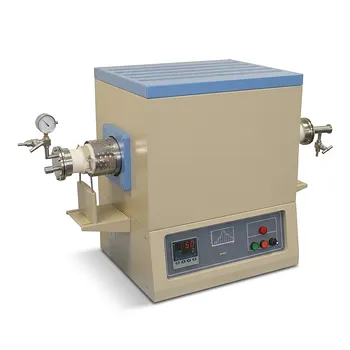
1700C High Temperature Alumina Tube Furnace with 18 Inch Heated Zone and Vacuum Sealing Flanges

1750°C High Temperature Benchtop Vacuum Atmosphere Tube Furnace with Kanthal Super 1800 Heating Elements and 60mm Alumina Processing Tube

1800C High Temperature Compact Vacuum Tube Furnace with 60mm OD Alumina Tube and Kanthal MoSi2 Heating Elements

High Temperature 1700C Benchtop Tube Furnace with 5 Inch Heating Zone High Purity Alumina Tube and Vacuum Sealing Flanges
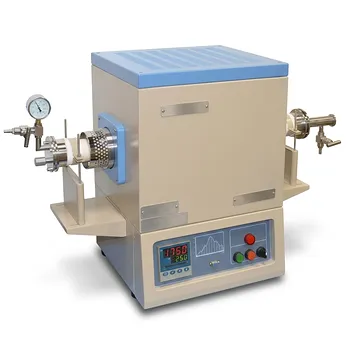
High Temperature Compact Vacuum Tube Furnace 1750C Max 60mm OD Alumina Tube
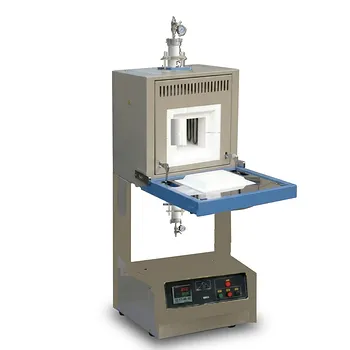
High Temperature Vertical Hybrid Furnace with Alumina Tube and SiC Heating for SOFC Coin Cell Testing and Atmosphere Processing

Compact High Temperature 1600C Tube Furnace with 50mm Alumina Tube and Vacuum Flanges for Material Sintering

1700C Hydrogen Gas Tube Furnace with 60mm Alumina Process Tube and Integrated Hydrogen Safety Detector
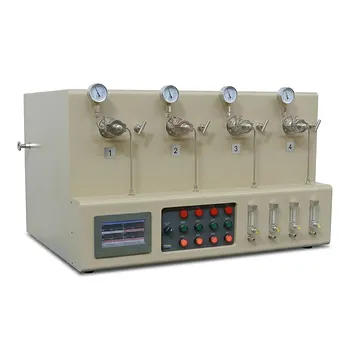
High Temperature 1700C 4 Channel Tube Furnace 1 Inch Alumina Tube for Hi-Throughput Annealing

Vertical 1700C Vacuum and Atmosphere Tube Furnace with 80mm Alumina Tube

High Temperature 1700C Vertical Tube Furnace for Powder Spherification and Material Sintering

High Temperature 1700C Tube Furnace with 4 Inch OD Alumina Tube and Vacuum Sealing Flanges
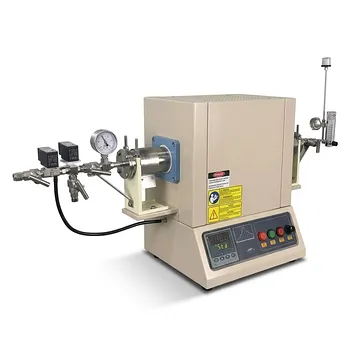
1500C Compact Hydrogen Gas Tube Furnace with 2 Inch Alumina Tube and Hydrogen Detector
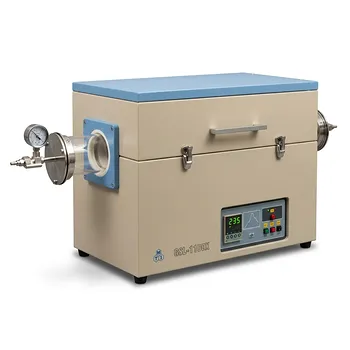
Single Zone Tube Furnace 5 Inch Quartz Tube 36 Inch Heating Zone Vacuum Flanges