What is the objective of using a high-temperature annealing furnace for nitrogen pre-annealing? Optimize Passivation
Updated 3 months ago
High-temperature nitrogen pre-annealing is a critical stabilization step used to optimize the chemical stoichiometry and structural integrity of the interfacial ultra-thin oxide layer before doping. This thermal treatment, typically conducted at approximately 1000°C, ensures the oxide layer can withstand subsequent high-temperature diffusion processes while maintaining superior passivation. By refining this interface, manufacturers can significantly reduce recombination current density ($J_0$) and improve the thermal stability of the final semiconductor contact.
Core Takeaway: Pre-annealing provides the thermal energy necessary to reorganize the interfacial oxide at the atomic level, creating a chemically stable barrier that prevents electrical degradation during the doping process. This results in a more robust contact with optimized charge carrier performance.
Enhancing Interfacial Passivation and Stability
Optimizing Chemical Stoichiometry
The primary objective of the 1000°C nitrogen environment is to refine the chemical stoichiometry of the ultra-thin oxide layer situated between the bulk silicon and the polysilicon.
At these elevated temperatures, oxygen and silicon atoms rearrange to achieve a more stable, uniform ratio.
This chemical refinement is essential for minimizing dangling bonds at the interface, which directly improves the passivation performance of the layer.
Strengthening Structural Integrity
High-temperature annealing provides the necessary energy for lattice rearrangement and the relief of internal stresses.
Similar to how thermal energy allows atoms to find lower-energy, more stable positions in thin films, pre-annealing "hardens" the oxide layer against the rigors of future processing.
This structural stabilization ensures that the thin oxide remains a coherent, effective tunnel barrier during the subsequent doping diffusion steps.
Impact on Electrical Performance and Doping
Improving Recombination Current Density ($J_0$)
In p-type polysilicon contact applications, the quality of the interface is the primary determinant of the recombination current density ($J_0$).
A pre-annealed interface exhibits significantly lower $J_0$ values because the optimized oxide effectively prevents minority carriers from reaching the high-recombination surface area.
This leads to a higher open-circuit voltage and improved overall efficiency in devices like high-performance solar cells.
Enabling Thermal Stability for Doping
Performing this step before the doping diffusion process is vital for maintaining interfacial thermal stability.
If the oxide is not pre-stabilized, the high heat required for dopant diffusion can cause the thin oxide to break up or become non-uniform.
By pre-annealing in an inert nitrogen environment, the interface is prepared to act as a controlled membrane through which dopants can be introduced without compromising the underlying passivation.
Understanding the Trade-offs
The Thermal Budget Constraint
While a high-temperature step is necessary for stoichiometry, it adds to the overall thermal budget of the fabrication process.
Excessive time at 1000°C can lead to unwanted diffusion of impurities or even the deformation (warpage) of the silicon wafer.
Engineers must carefully balance the duration of the pre-anneal to achieve stabilization without inducing secondary thermal defects.
Complexity of Atmosphere Control
Using a nitrogen environment is essential to prevent further, uncontrolled oxidation of the silicon surface.
However, even trace amounts of oxygen or moisture in the furnace can alter the thickness of the ultra-thin oxide, potentially changing the tunneling characteristics of the contact.
Maintaining a high-purity environment is a technical requirement that increases the operational complexity of the annealing furnace.
Making the Right Choice for Your Goal
How to Apply This to Your Project
To optimize your polysilicon contact process, consider the specific requirements of your device architecture:
- If your primary focus is maximizing passivation quality: Ensure a pre-annealing step at 1000°C to minimize $J_0$ and stabilize the interfacial oxide stoichiometry.
- If your primary focus is reducing the thermal budget: Consider shorter annealing durations or slightly lower temperatures if the subsequent doping process is also conducted at high temperatures.
- If your primary focus is p-type contact performance: Prioritize this pre-annealing step, as p-type layers are particularly sensitive to interfacial recombination and thermal instability.
Strategic nitrogen pre-annealing transforms a vulnerable interfacial layer into a robust, high-performance barrier that is essential for modern high-efficiency semiconductor contacts.
Summary Table:
| Objective | Key Process Mechanism | Final Performance Impact |
|---|---|---|
| Chemical Stoichiometry | Atomic rearrangement at ~1000°C | Enhanced interfacial passivation |
| Structural Integrity | Stress relief & lattice alignment | High thermal stability for doping |
| Electrical Efficiency | Reduction of recombination current ($J_0$) | Higher open-circuit voltage ($V_{oc}$) |
| Barrier Protection | Stabilization of ultra-thin oxide | Controlled tunneling & dopant barrier |
Elevate Your Semiconductor Research with THERMUNITS
As a leading manufacturer of high-temperature laboratory equipment for material science and industrial R&D, THERMUNITS provides the precision thermal processing solutions required for critical steps like nitrogen pre-annealing. Our advanced systems are engineered to help you achieve superior chemical stoichiometry and structural integrity in every experiment.
Our comprehensive product range includes:
- Furnaces: Muffle, Vacuum, Atmosphere, Tube, Rotary, and Hot Press furnaces.
- Specialized Systems: CVD/PECVD systems, Dental Furnaces, and Electric Rotary Kilns.
- Advanced Melting: Vacuum Induction Melting (VIM) furnaces and high-quality Thermal Elements.
Whether you are refining p-type polysilicon contacts or developing next-generation solar cells, our equipment ensures the atmosphere control and temperature uniformity your project demands.
Ready to optimize your thermal processing workflow?
Contact THERMUNITS today to request a quote or technical consultation.
References
- Rabin Basnet, Daniel Macdonald. Understanding the Strong Apparent Injection Dependence of Carrier Lifetimes in Doped Polycrystalline Silicon Passivated Wafers. DOI: 10.1002/solr.202400087
Mentioned Products
- Large Bench Top 1700C High Temperature Muffle Furnace with 19L Chamber for Advanced Material Sintering and Annealing
- High Temperature Cold Wall Vacuum Furnace for Advanced Material Sintering and Annealing 1600C Heating Area 200x200x300mm
- High Temperature 1000C Vacuum Furnace with 8 Inch ID Chamber for Material Sintering and Research Annealing
- High Temperature Vertical Atmosphere Controlled Furnace with Automatic Bottom Loading and 1700°C Capacity for Advanced Material Research
- High Temperature 800C Rapid Thermal Processing Furnace with Rotating Sample Holder for Close Spaced Sublimation and Thin Film Solar Cell Research
People Also Ask
- What is the function of a high-temp muffle furnace in Ni-V oxide synthesis? Optimize your material's performance.
- What is the purpose of using muffle or tube furnaces in glass synthesis? Achieve Precise Melt-Quenching & Homogeneity
- What role does a high-temperature muffle furnace play in evaluating the mineral composition of rock samples? LOI & XRF Guide
- What is the function of a high-temperature muffle furnace in phosphorus-modified zeolite catalyst preparation?
- What is the function of a muffle furnace in aluminoborosilicate glass prep? Stabilize Raw Materials for Superior Purity

Tech Team · ThermUnits
Last updated on Jun 02, 2026
Related Products
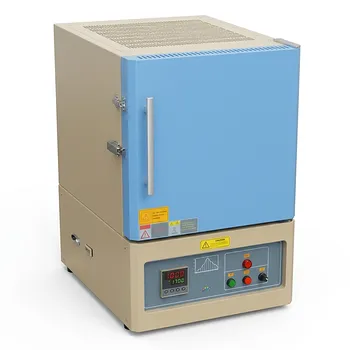
Large Bench Top 1700C High Temperature Muffle Furnace with 19L Chamber for Advanced Material Sintering and Annealing
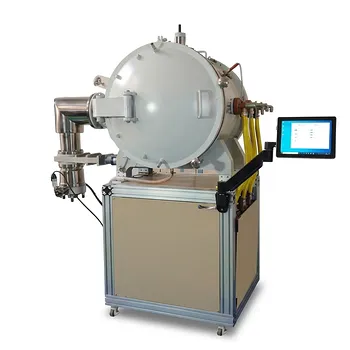
High Temperature Cold Wall Vacuum Furnace for Advanced Material Sintering and Annealing 1600C Heating Area 200x200x300mm
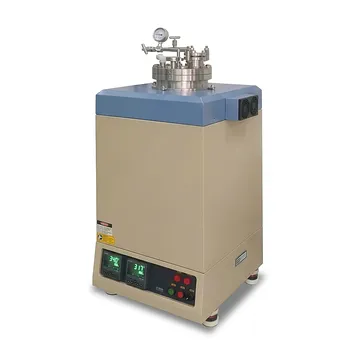
High Temperature 1000C Vacuum Furnace with 8 Inch ID Chamber for Material Sintering and Research Annealing
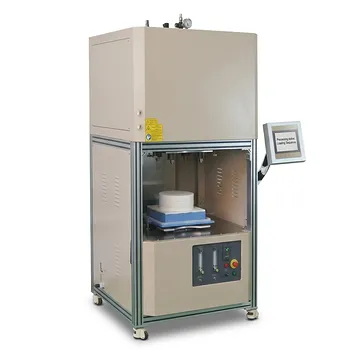
High Temperature Vertical Atmosphere Controlled Furnace with Automatic Bottom Loading and 1700°C Capacity for Advanced Material Research
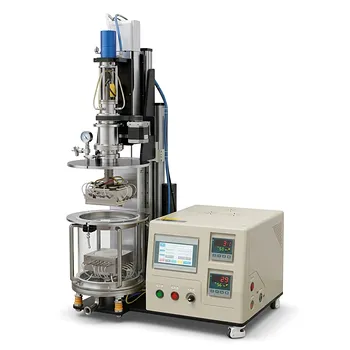
High Temperature 800C Rapid Thermal Processing Furnace with Rotating Sample Holder for Close Spaced Sublimation and Thin Film Solar Cell Research
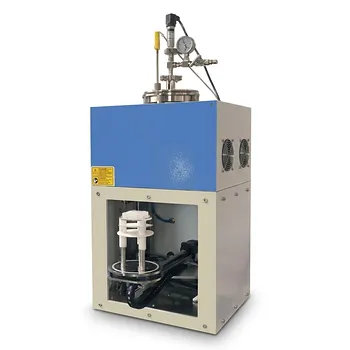
Rapid Thermal Processing Atmosphere Controlled Bottom Loading Furnace 1100C with 50C Per Second Heating Rate for Wafer Annealing
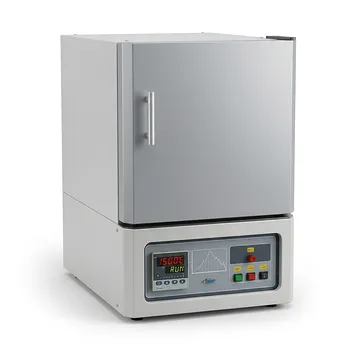
High Temperature 1500C Benchtop Muffle Furnace 3.6L Alumina Fiber Chamber Programmable Controller Sintering Annealing Carbonization Thermal Processing System
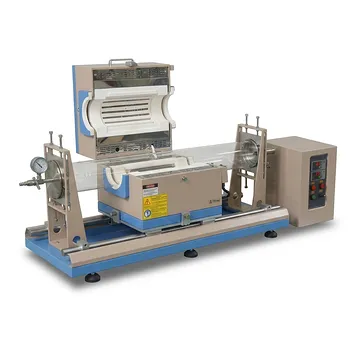
1200C High Temperature 5 Inch Sliding Tube Furnace for Rapid Thermal Processing RTP and Wafer Annealing

High Temperature 1700C Vertical Tube Furnace for Powder Spherification and Material Sintering
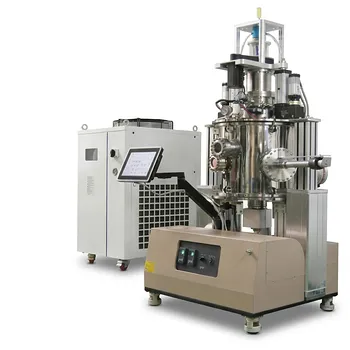
950C Rapid Thermal Processing Furnace for 12 Inch Wafer CSS Coating with Rotating Substrate Holder
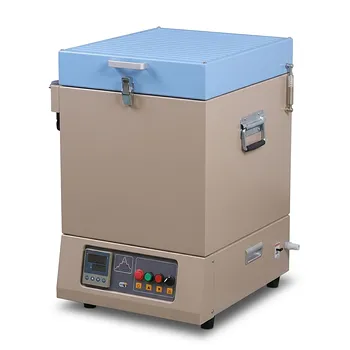
High Temperature Vertical Crucible Furnace with 22L Heating Chamber and 1200C Maximum Temperature

High Temperature Tube Furnace 1500C with Sliding Flanges and 50mm OD for Rapid Thermal Processing Fast Heating and Cooling
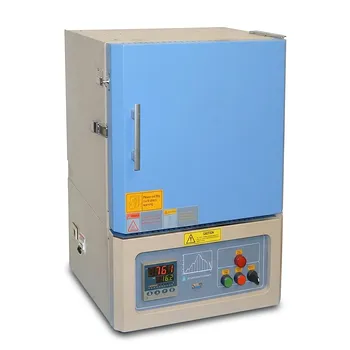
High Temperature 1700C Bench Top Muffle Furnace with Alumina Fiber Insulation and 3.6L Chamber Capacity for Precision Sintering and Heat Treatment

High Temperature 1700C Tube Furnace with High Vacuum Turbomolecular Pump System and Multi Channel Mass Flow Controller Gas Mixer
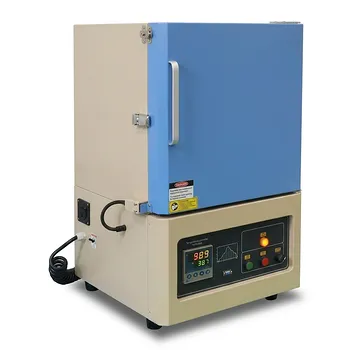
1200°C High Temperature Muffle Furnace 19L Chamber with 50 Segment Programmable Controller
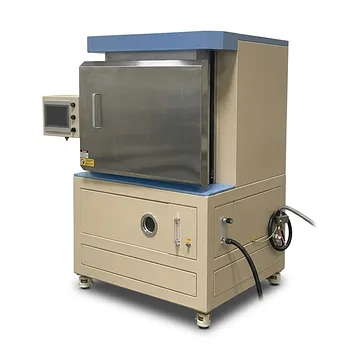
1650C High Temperature Atmosphere Controlled Box Furnace with 65L Chamber for Advanced Material Sintering and Industrial Heat Treatment
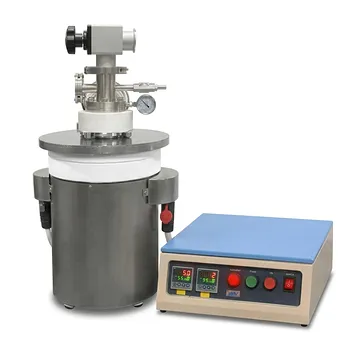
1100C High Temperature Vacuum Crucible Furnace with Quartz Chamber for Thermal Processing and Sintering
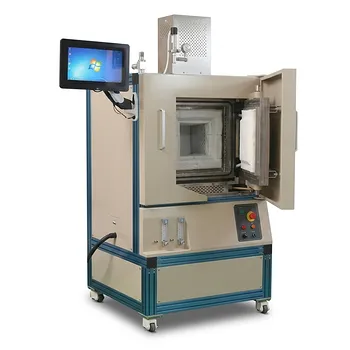
High Temperature Oxygen and Inert Atmosphere Controlled Furnace 8 Liter 1700C Sintering System for Advanced Materials RD
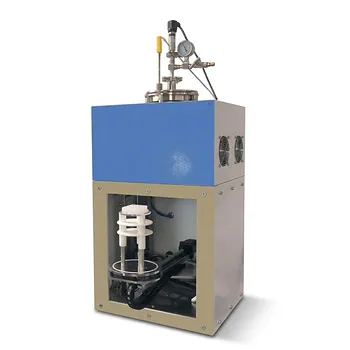
Rapid Thermal Processing Furnace 1100C Atmosphere Controlled Bottom Loading RTP System for Wafer Annealing and Catalysis Research
